

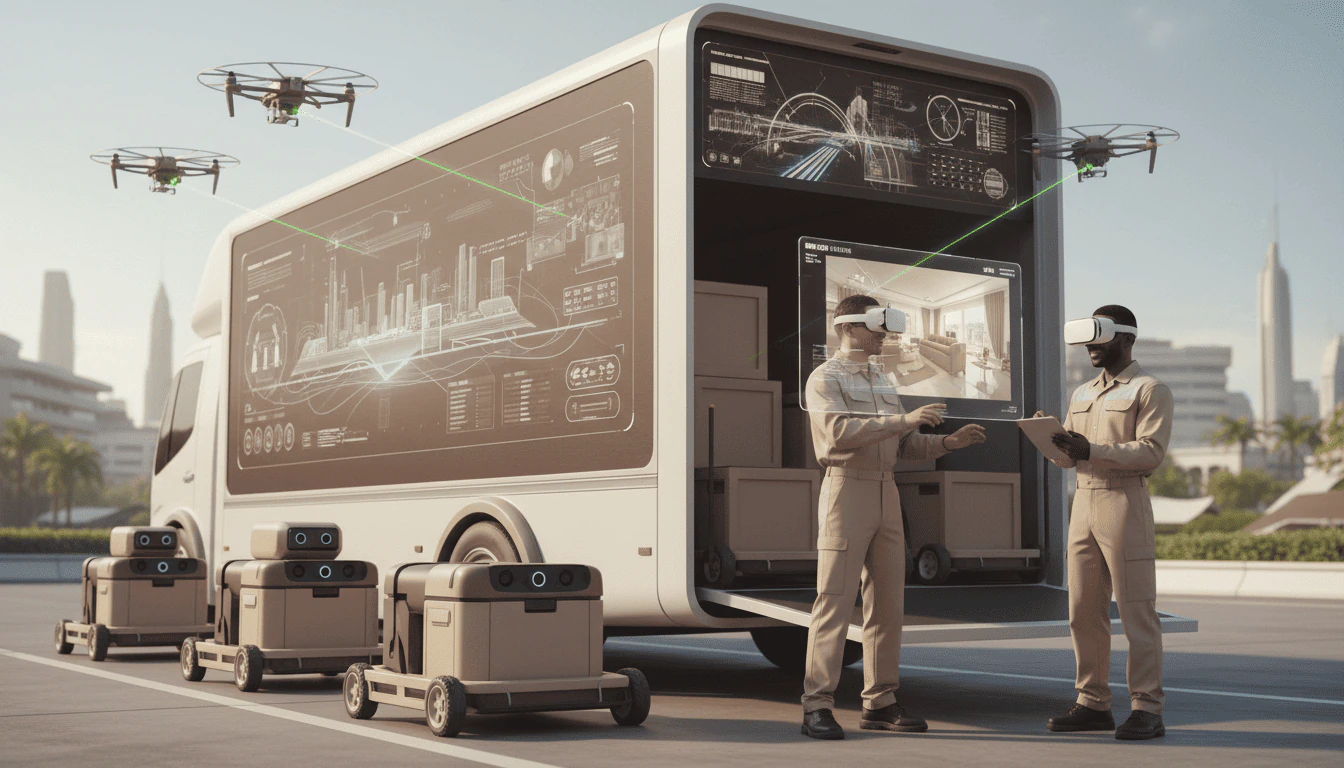
The moving truck pulling up to your LA home in 2026 looks the same as 2020, but everything else has changed. AI calculates quotes in seconds, virtual reality maps your new home before arrival, smart contracts eliminate paperwork, and some companies are testing robotic loading systems. The future of moving isn't coming—it's here, unevenly distributed across Los Angeles. Here's how technology is revolutionizing an industry that hasn't fundamentally changed since trucks replaced horses.
Current Tech Adoption 2026
Already mainstream:
- Digital inventory apps
- GPS tracking
- Online booking
- Electronic payments
- Digital contracts
- Basic automation
Emerging now:
- AI pricing algorithms
- VR space planning
- IoT shipment tracking
- Automated scheduling
- Predictive analytics
- Blockchain documentation
Still experimental:
- Robotic loading
- Autonomous trucks
- Drone delivery
- Exoskeleton suits
The pace accelerates monthly
AI Revolution in Quotes
Traditional quoting (2020):
- In-person estimate: 2 hours
- Phone guesswork: Inaccurate
- Response time: 24-48 hours
AI quoting (2026):
- Video scan: 5 minutes
- AI analysis: Instant
- 95% accuracy
- Immediate pricing
- Multiple options
How it works:Phone scans room → AI identifies items → Database calculates volume → Algorithm prices → Quote delivered
Game changer for transparency
Virtual Reality Planning
VR applications today:
- Tour new home remotely
- Plan furniture placement
- Visualize space before moving
- Identify problems early
- Reduce moving day chaos
Equipment needed:
- Smartphone (basic)
- VR headset (advanced)
- Apps proliferating
Benefits:"Will my couch fit?" answered before moving
Inventory Revolution
Paper inventory dying:
Digital inventory 2026:
- Photo every item
- Automatic cataloging
- Barcode tracking
- Real-time location
- Damage documentation
- Insurance integration
Moving apps creating:
- Complete visual record
- Searchable database
- Chain of custody
- Instant claims
Never lose anything again
Smart Truck Technology
Trucks getting smarter:
- Route optimization (saves 20% time)
- Load monitoring (weight distribution)
- Climate control (automatic)
- Security systems (GPS + cameras)
- Predictive maintenance
- Fuel efficiency tracking
Driver assistance:
- Parking guidance
- Height warnings
- Traffic prediction
- Safety monitoring
Result: Fewer accidents, faster delivery
Blockchain Documentation
Why blockchain matters:
- Immutable records
- Smart contracts
- Instant verification
- Fraud prevention
- Automated payments
Current applications:
- Interstate documentation
- Insurance claims
- Ownership transfer
- International moves
Eliminates: Paperwork, disputes, delays
IoT Tracking Systems
Internet of Things in moving:
- Smart tags on boxes
- Temperature monitoring
- Shock detection
- Humidity sensing
- Location tracking
- Tamper alerts
Customer benefits:
- Real-time visibility
- Condition monitoring
- Peace of mind
- Proof for claims
Cost dropping rapidly
Robotic Assistance
Currently testing:
- Stair-climbing robots
- Automated dollies
- Loading assistants
- Packing robots
Challenges:
- Cost prohibitive
- Reliability issues
- Job displacement
- Customer acceptance
Timeline: 5-10 years for mainstream
Won't replace humans soon
Exoskeleton Development
Wearable strength:
- Lift 200 pounds easily
- Reduce injuries 60%
- Increase efficiency
- Protect workers
Current status:
- Military developed
- Testing in warehouses
- Moving industry interested
- Cost: $5,000-30,000
Potential game-changer for safety
Autonomous Vehicles
Self-driving trucks:
- Long-distance first
- Highway only initially
- Human oversight required
- Regulatory hurdles
Timeline realistic:
- 2030: Highway autonomous
- 2035: City navigation
- 2040: Full autonomous
Local moving: Humans needed for complexity
Drone Integration
Drone applications:
- Inventory scanning
- Traffic monitoring
- Small item delivery
- Site assessment
- Marketing videos
Limitations:
- Weight restrictions
- Battery life
- Regulations
- Weather dependent
Supplementary not primary
Digital Customer Experience
2020 experience:Phone calls, paper, waiting
2026 experience:
- Chat support 24/7
- Video consultations
- Digital signatures
- Mobile app control
- Instant updates
- One-click everything
Expectations transformed completely
Predictive Analytics
AI predicting:
- Optimal moving dates
- Price fluctuations
- Traffic patterns
- Weather impacts
- Equipment needs
- Crew requirements
Benefits:
- Better pricing
- Improved scheduling
- Resource optimization
- Customer satisfaction
Sustainability Tech
Green innovations:
- Electric trucks (limited range)
- Route optimization (less fuel)
- Digital paperwork (no paper)
- Reusable packing materials
- Carbon tracking
- Solar facilities
Customer demand driving change
Price Impact
Technology effects on pricing:
Cost reductions:
- Efficiency gains: -20%
- Fewer errors: -10%
- Better routing: -15%
Cost increases:
- Technology investment: +10%
- Training: +5%
- Maintenance: +5%
Net result: 15% lower prices (theoretical)Reality: Prices same, service better
Labor Evolution
Jobs disappearing:
- Phone schedulers
- Paper processors
- Basic dispatchers
Jobs evolving:
- Tech-savvy movers
- Digital coordinators
- Data analysts
- Customer success
Jobs created:
- App developers
- AI trainers
- Robot technicians
- Digital specialists
Net impact: Transformation not elimination
Security Advances
Digital security crucial:
- Data protection
- Privacy concerns
- Identity verification
- Payment security
- Access controls
Physical security:
- Biometric locks
- GPS tracking
- Camera systems
- Smart seals
- Alert systems
Customer Adoption Rates
Early adopters (20%):Love everything digital
Mainstream (60%):Accepting gradually
Resistant (20%):Want human interaction
Companies must serve all
LA Market Leaders
Tech-forward companies:Investing heavily in innovation
Traditional companies:Adopting slowly but surely
New entrants:Tech-first approaches
Market fragmenting by tech comfort
Challenges Ahead
Technology barriers:
- Implementation costs
- Training requirements
- Customer resistance
- Reliability issues
- Integration complexity
Human factors:
- Job displacement fears
- Privacy concerns
- Digital divide
- Generation gaps
What Won't Change
Despite technology:
- Physical labor needed
- Human judgment crucial
- Customer service matters
- Local knowledge valuable
- Trust essential
Moving remains human business
Investment Requirements
Companies must invest:
- Software systems: $50-500K
- Training programs: $20-100K
- Equipment upgrades: $100K+
- Marketing tech: $20-50K
- Annual updates: 20% of initial
Survival requires modernization
Customer Benefits Summary
Technology delivering:
- Transparent pricing
- Better communication
- Fewer damages
- Faster service
- Lower stress
- More control
The future is customer-centric
Embrace the Future
The future of moving industry tech innovations isn't replacing human movers with robots—it's augmenting human capability with smart tools. Technology handles logistics while humans handle your belongings. The companies surviving 2030 will blend high-tech efficiency with high-touch service.
SOS Moving embraces practical technology that improves service today while preparing for tomorrow's innovations. We invest in systems that matter: accurate quotes, real tracking, digital convenience, and constant communication.
Ready for modern moving? Call 909-443-0004 to experience technology-enhanced moving that still values human service. The future is here—we'll help you move into it.