

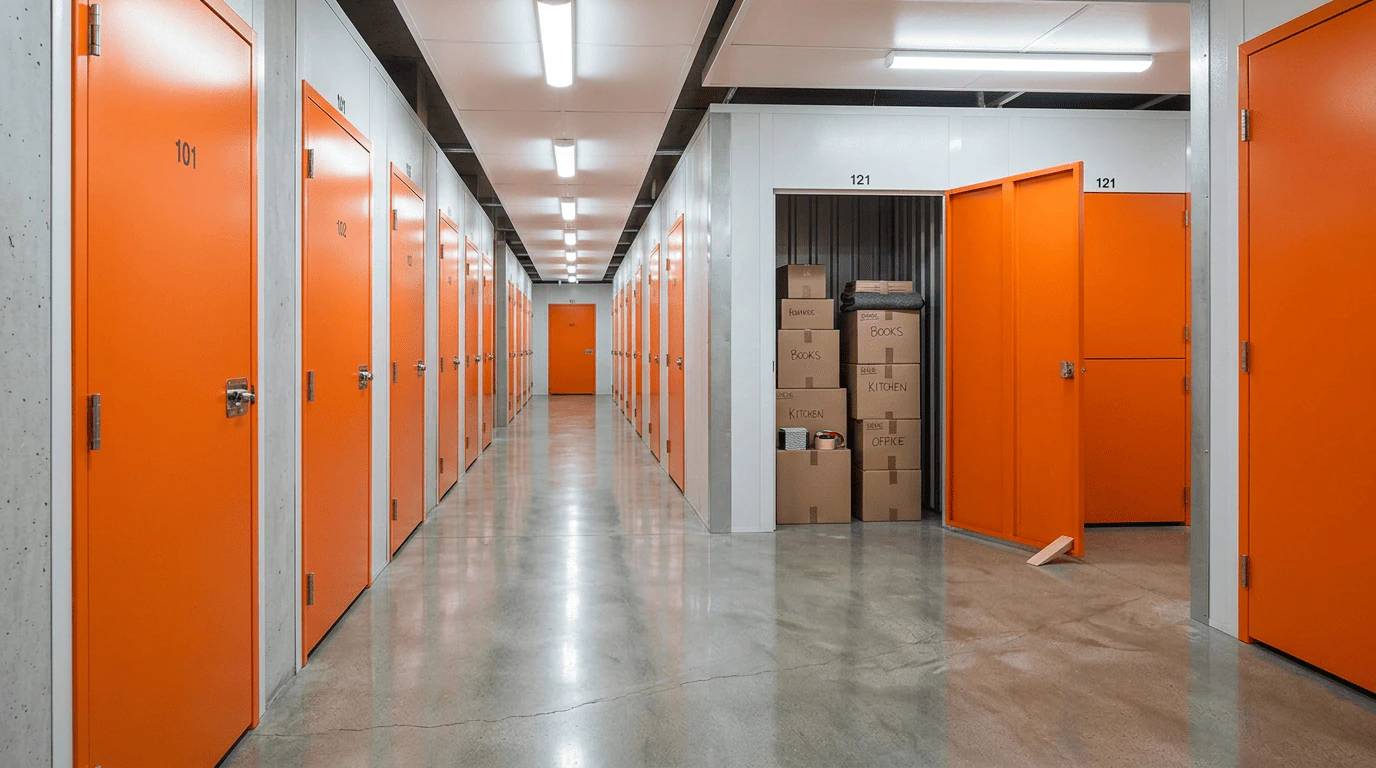
The gap between lease dates is the most expensive week in any small apartment move. Your old lease ends on the 30th, your new place isn't available until the 5th, and suddenly you need somewhere to keep everything you own for five days. Storage lockers exist for exactly this situation — but searching "storage lockers near me" in Los Angeles returns a wall of options that range from $29 per month closet-sized units to $300 per month walk-in spaces that could fit a studio apartment twice over.
At SOS Moving, I talk to renters dealing with this exact problem every week. The studio apartment tenant who needs to stash ten boxes and a mattress for a few days. The one-bedroom renter whose new landlord pushed the move-in date back a week. The couple downsizing from a two-bedroom to a one-bedroom who needs temporary overflow space while they figure out what fits. Each situation calls for a different storage solution, and picking the wrong size or type wastes money you could spend on the move itself.
What Storage Lockers Actually Are
The term "storage locker" gets used loosely, and the distinction matters when you're comparing prices and making a reservation.
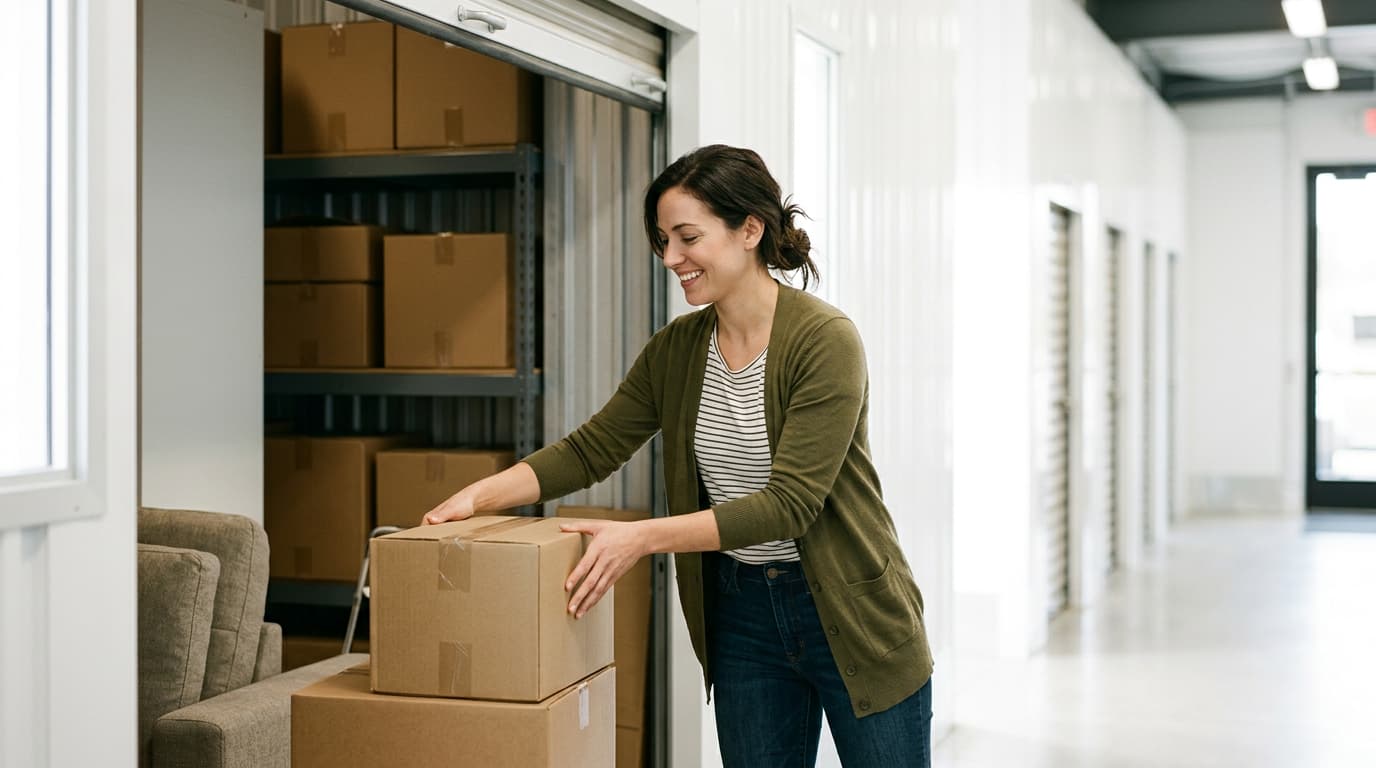
True storage lockers are small units — typically 4x4, 4x5, or 5x5 feet — that function like oversized gym lockers for your belongings. They're usually not walk-in units. You access them from a hallway, open a door or roll-up gate, and load items from the front. Ceiling height varies but averages six to eight feet. A 5x5 locker holds roughly the equivalent of a large walk-in closet — enough for fifteen to twenty boxes, a few small furniture pieces, and some loose items.
Standard storage units start at 5x10 and scale up to 10x30 or larger. These are walk-in spaces where you can stack, organize, and access items from inside the unit. For a full studio or one-bedroom apartment, a 5x10 or 10x10 unit is typically what you need. These aren't lockers in the traditional sense — they're small rooms with roll-up doors.
The pricing difference is significant. A true 5x5 storage locker in Los Angeles runs $50 to $90 per month depending on location and whether it's climate controlled. A 5x10 unit costs $100 to $180. A 10x10 unit — enough for a full one-bedroom apartment — runs $150 to $300. In premium areas like Santa Monica, Marina del Rey, or Beverly Hills, prices push toward the higher end of every range.
Understanding these categories before you search prevents the common mistake of reserving a unit that's too small — forcing you to cram belongings in unsafely — or too large, paying for space you don't use.
How Much Space Your Small Apartment Actually Needs
The biggest question everyone asks is "what size do I need?" and the answer depends on what you're storing, not just where you lived.
A studio apartment with minimal furniture — bed, dresser, small desk, and twenty to thirty boxes — fits comfortably in a 5x10 unit. That's fifty square feet of floor space with eight feet of vertical stacking room. The key word is "comfortably" — you want space to access items if your gap between leases extends longer than planned. A 5x5 locker can hold the same volume if you stack aggressively to the ceiling, but you won't be able to access anything behind the front row.
A one-bedroom apartment typically needs a 10x10 unit. That's enough for a queen bed frame and mattress, a couch, a dining table with chairs, a dresser, a desk, and forty to fifty boxes. If you're storing everything from a one-bedroom, don't try to squeeze it into a 5x10 — you'll damage furniture forcing it into a tight space, and the disassembly and reassembly time at both ends costs more in labor than the price difference between unit sizes.
For partial storage — keeping some items while moving others directly to your new place — a 5x5 locker often works perfectly. Seasonal items, extra boxes, kitchen overflow, and decor that won't fit in a smaller new apartment are the typical candidates for locker-sized storage during a transition.
Here's a practical test: count your boxes and list your furniture. Each standard moving box occupies roughly two cubic feet of floor space when stacked two high. A queen mattress stood on its side takes about fifteen square feet of wall space. A disassembled bed frame leans flat against a wall. Your dresser is roughly six square feet. Add it up and compare against the unit dimensions — the math is more reliable than guessing.
Finding Storage Lockers in Los Angeles
Los Angeles has hundreds of storage facilities, and the search results for "storage lockers near me" will overwhelm you with options. Narrowing the field requires knowing what actually matters for a short-term apartment move.
Location relative to your move matters more than price per square foot. A storage facility that's $20 cheaper per month but thirty minutes from both your old and new apartments costs more in moving time than the savings justify. For a short-term gap between leases, choose the facility closest to whichever address your movers will visit — ideally on the route between your old apartment and your new one.
Access hours determine whether storage works with your schedule. Some facilities offer 24-hour access; others restrict entry to business hours. If your movers are loading your unit at 7 AM on a Saturday, confirm that the facility is open and accessible at that time. Gate codes, office check-in requirements, and elevator access for upper-floor units all affect your timeline.
Ground-floor units save time and money on moving day. An interior unit on the third floor of a multi-story facility requires elevator trips for every load — and those elevators are shared with other customers. A ground-floor unit with drive-up access lets your crew back the truck up to the door and unload directly. The time difference between ground-floor and upper-floor loading can be an hour or more for a full apartment.
Month-to-month contracts are standard in Los Angeles, which works in your favor for short-term storage. Avoid facilities that require multi-month commitments or charge penalties for early termination. You're storing for days or weeks, not years — your contract should reflect that.
Storage Lockers vs Moving Company Storage
The "storage lockers near me" search assumes self-storage is your only option, but moving companies offer an alternative that eliminates an entire step from the process.
With self-storage, the sequence is: movers load your apartment, drive to the storage facility, unload into the unit, then on your move-in date, movers load the unit, drive to your new apartment, and unload again. That's four loading and unloading events — two truck trips, two labor sessions, and two sets of hourly charges.
With moving company storage, the sequence is: movers load your apartment, drive to the moving company's warehouse, and hold your belongings on the truck or in their facility. On move-in day, the same truck delivers directly to your new apartment. That's two loading events instead of four — one at pickup, one at delivery.
At SOS Moving, we offer short-term storage for clients with lease gaps. Your belongings stay protected in our facility, and delivery is scheduled for whenever your new apartment is ready. For a three-to-seven-day gap, this approach typically costs less than renting a self-storage unit plus paying for two separate moving sessions. The math changes for longer storage periods — anything beyond two weeks usually makes self-storage more economical.
The convenience factor is significant. With moving company storage, you book one move with one company and they handle the gap. With self-storage, you coordinate two separate moving sessions, manage the storage rental yourself, and hope the timing aligns. For a small apartment move where simplicity matters, the all-in-one approach saves headaches.

Lease gap stressing you out? SOS Moving offers short-term storage that eliminates double loading and unloading. One crew, one truck, one simple process. Call 909-443-0004 or get your free estimate.
Protecting Your Belongings in Storage
A storage locker keeps your belongings contained but not automatically protected. A few steps ensure everything comes out in the same condition it went in.
Climate control matters in Southern California more than people realize. Summer temperatures inside a non-climate-controlled unit can exceed 120 degrees. Vinyl records warp. Candle wax melts and stains everything nearby. Electronics with batteries can overheat. Wooden furniture expands and contracts with temperature swings, loosening joints and cracking finishes. For anything heat-sensitive, spend the extra $20 to $40 per month for a climate-controlled unit.
Moisture protection is important even in a dry climate. Condensation forms inside sealed units when temperature shifts between day and night. Plastic mattress bags, shrink wrap on upholstered furniture, and sealed plastic bins for documents and photos prevent moisture damage during the storage period. Cardboard boxes in a humid environment soften and collapse — if you're storing for more than a week, plastic bins are worth the upgrade.
Never store anything directly on the floor. Pallets, plywood sheets, or even a layer of cardboard between your belongings and the concrete floor prevents cold-transfer moisture from wicking up into boxes and furniture legs. This is standard practice in professional warehouses and applies equally to your 5x5 locker.
Stack strategically. Heaviest boxes on the bottom, lightest on top. Fragile items never under weight. Leave a narrow aisle down the center if the unit size allows it — accessing one item from the back of a fully packed 5x10 unit requires unpacking half the unit first if there's no pathway.
Common Mistakes With Short-Term Storage
Short-term storage seems simple — put stuff in, take stuff out — but a few recurring mistakes cost renters time and money.
Underestimating the unit size is the most expensive error. A unit that's too small means either leaving items behind, cramming belongings in unsafely, or upgrading on the spot at a higher rate. Measure your items, calculate the total volume, and rent one size up from what the math suggests. The $30 per month difference between a 5x5 and a 5x10 is insignificant compared to the cost of a second trip or damaged furniture.
Forgetting about access is the most frustrating mistake. Storing your winter coat at the back of a packed unit two days before an unexpected cold snap means you're either unpacking half the locker or buying a new coat. Place items you might need during the storage period near the front and mark them clearly.
Not photographing your belongings before storage creates disputes later. If furniture emerges with scratches that you don't remember, you can't prove whether the damage was pre-existing or happened in storage. A five-minute photo session before sealing the unit protects you whether you're filing an insurance claim or disputing charges with the facility.
Leaving the rental running after you've retrieved your belongings is surprisingly common. Short-term renters move everything out and forget to officially end the rental, paying another month's fee before they notice. Set a reminder to formally terminate the rental the same day you clear the unit.
Frequently Asked Questions
What size storage locker do I need for a studio apartment? A 5x10 unit fits a full studio comfortably — bed, dresser, small desk, and twenty to thirty boxes with room to access items. A 5x5 locker works if you're storing partial contents only.
How much does a storage locker cost in Los Angeles? A 5x5 locker runs $50 to $90 per month. A 5x10 unit costs $100 to $180. A 10x10 unit ranges from $150 to $300. Climate-controlled units add $20 to $40 per month. Prices vary by neighborhood — Westside and coastal areas are higher.
Is climate-controlled storage worth it for a short stay? For a three-to-five-day gap in mild weather, standard storage is usually fine. For anything longer than a week during summer, or if you're storing electronics, wood furniture, or vinyl, climate control is worth the premium.
Can my movers load the storage unit for me? Yes. Most moving crews regularly load and unload storage units as part of the move. Let your moving company know the facility address and unit details when booking so they can factor in the extra stop and access logistics.
Should I get storage insurance? Your renter's insurance may cover belongings in storage — check your policy first. If not, storage facility insurance typically costs $10 to $25 per month for $2,000 to $5,000 in coverage. For short-term storage of a small apartment, basic coverage provides peace of mind at minimal cost.
Get Started with Stress-Free Storage
SOS Moving offers both direct-to-storage moves and short-term warehouse holding for clients with lease gaps. Whether you need a crew to load a self-storage unit or want us to hold your belongings in our own facility until your new apartment is ready, we handle the logistics from pickup to final delivery. Call 909-443-0004 or request your free estimate to solve your storage problem before it becomes a moving day crisis.