

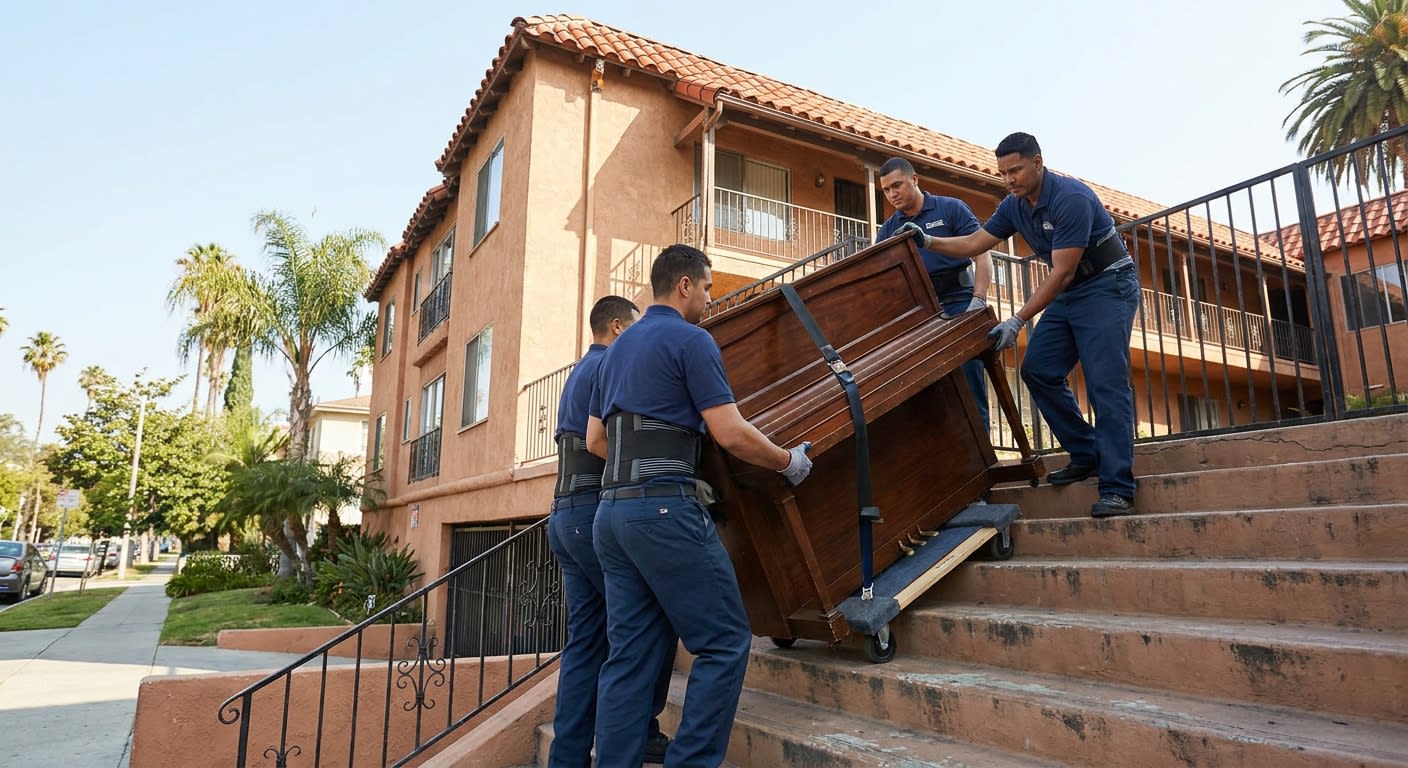
Three weeks ago, I got a call about moving a 1920s Steinway upright from a ground-floor storage unit in Koreatown to a third-floor walkup in Silver Lake. The client had inherited the piano from her grandmother and hadn't played it in five years because she couldn't get it into her apartment. The building had a narrow stairwell with a 90-degree turn at the second landing, original plaster walls that couldn't take a single scuff, and steps that were maybe 28 inches wide. We got that piano into her living room in 2 hours and 45 minutes without a single mark on the walls or the instrument.
I'm Amir, a Senior Move Foreman at SOS Moving, and I've been moving pianos up and down LA's staircases for over eight years. I've personally handled more than 400 piano moves across Los Angeles, from beachfront condos in Santa Monica to hillside homes in the Hollywood Hills where the only access is 67 exterior steps. Moving a piano up stairs isn't just about muscle—it's about geometry, timing, and knowing exactly what you're dealing with before you lift.
Understanding Piano Weight and Dimensions for Stair Moves
Before you even think about moving a piano up stairs, you need to know exactly what you're lifting. I've seen people underestimate piano weight by 200 pounds or more, and that's how accidents happen. Here's what I'm typically working with in Los Angeles homes:
A standard upright piano weighs between 300 and 500 pounds, with older models from the early 1900s often hitting 600 pounds due to their cast iron plates. Console pianos run lighter at 350 to 450 pounds. Baby grands start around 500 pounds and can reach 650 for a 5'7" model. Full concert grands exceed 1,000 pounds, but those rarely go up residential stairs—if they do, we're talking crane rental.
Dimensions matter as much as weight when navigating LA's staircases. An upright piano typically measures 58 inches wide, 24 inches deep, and 48 to 52 inches tall. That 24-inch depth is your critical number for turns. When I'm assessing a stair move, I measure the width of the stairwell, the depth of each landing, and the angle of every turn. In my experience, about 40% of LA apartments built before 1960 have at least one turn that requires us to tip the piano nearly vertical to clear.
The center of gravity shifts dramatically when you tilt a piano. On an upright, most of the weight sits in the upper half because of the iron plate and strings. Tip it back more than 45 degrees without proper control, and that weight wants to keep going. I've trained my crews to always fight gravity from below, never above.
Essential Equipment for Moving a Piano Up Stairs
I don't move a piano anywhere without specific equipment, and stairs demand even more preparation. Here's exactly what my crew loads for every stair move:
A piano board (also called a piano skid) is non-negotiable. This is a reinforced plywood platform with heavy-duty casters and mounting points for straps. We secure the piano to the board before it ever leaves the ground floor, which gives us a stable base and multiple grip points. My boards are custom-built to handle 800 pounds and have rubber edges to protect door frames.
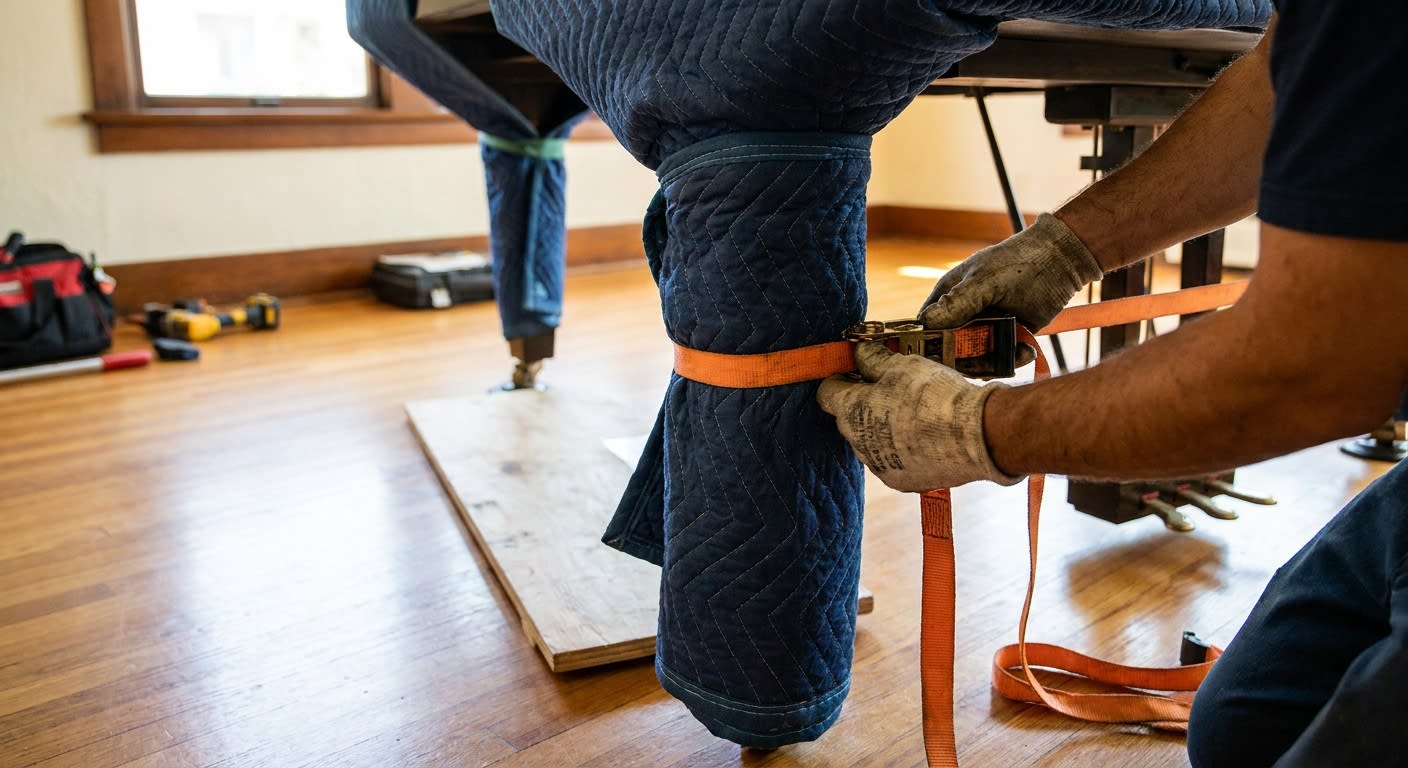
Ratchet straps rated for at least 1,500 pounds keep the piano locked to the board. I use a minimum of four straps on any stair move—two around the body, one securing the keyboard side, and one as a backup. Regular moving straps aren't enough; piano straps have wider webbing that distributes pressure without damaging the finish.
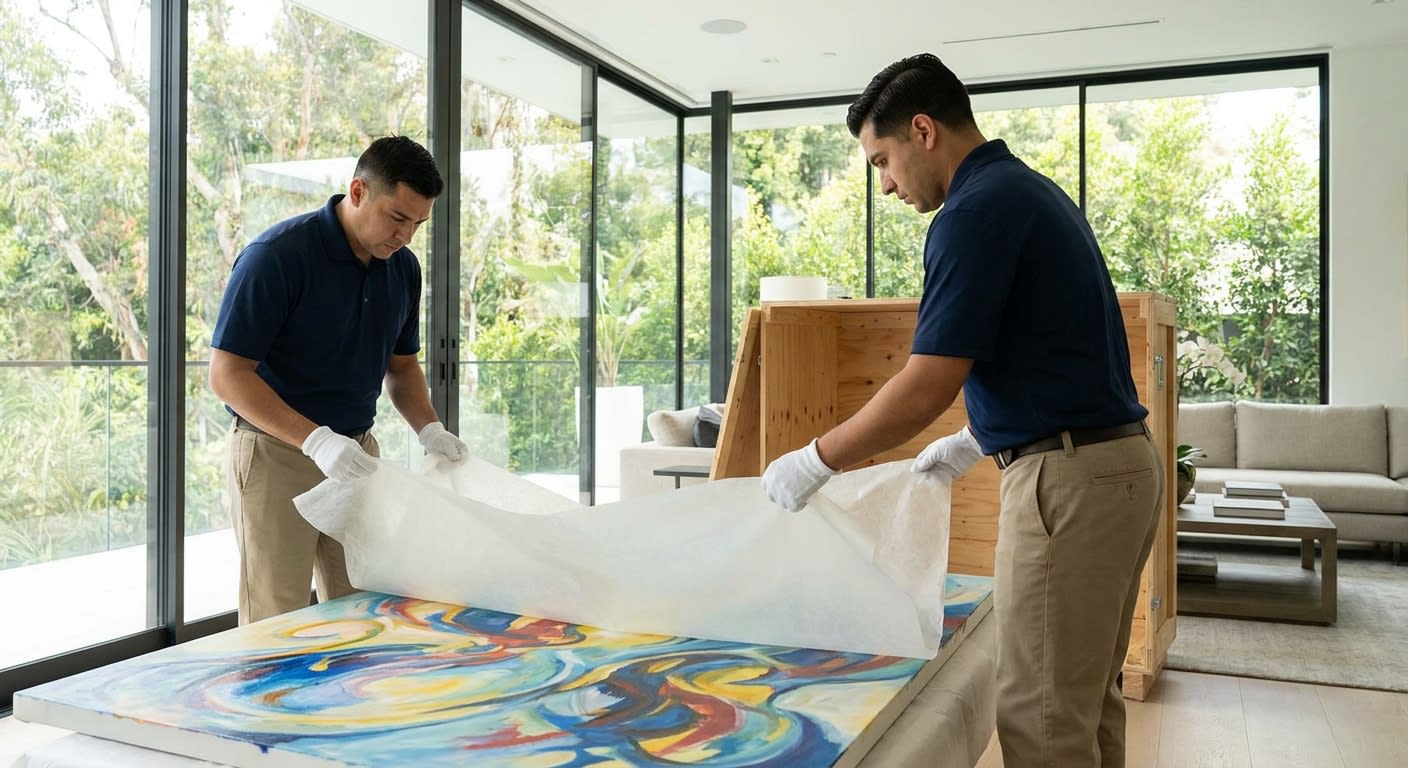
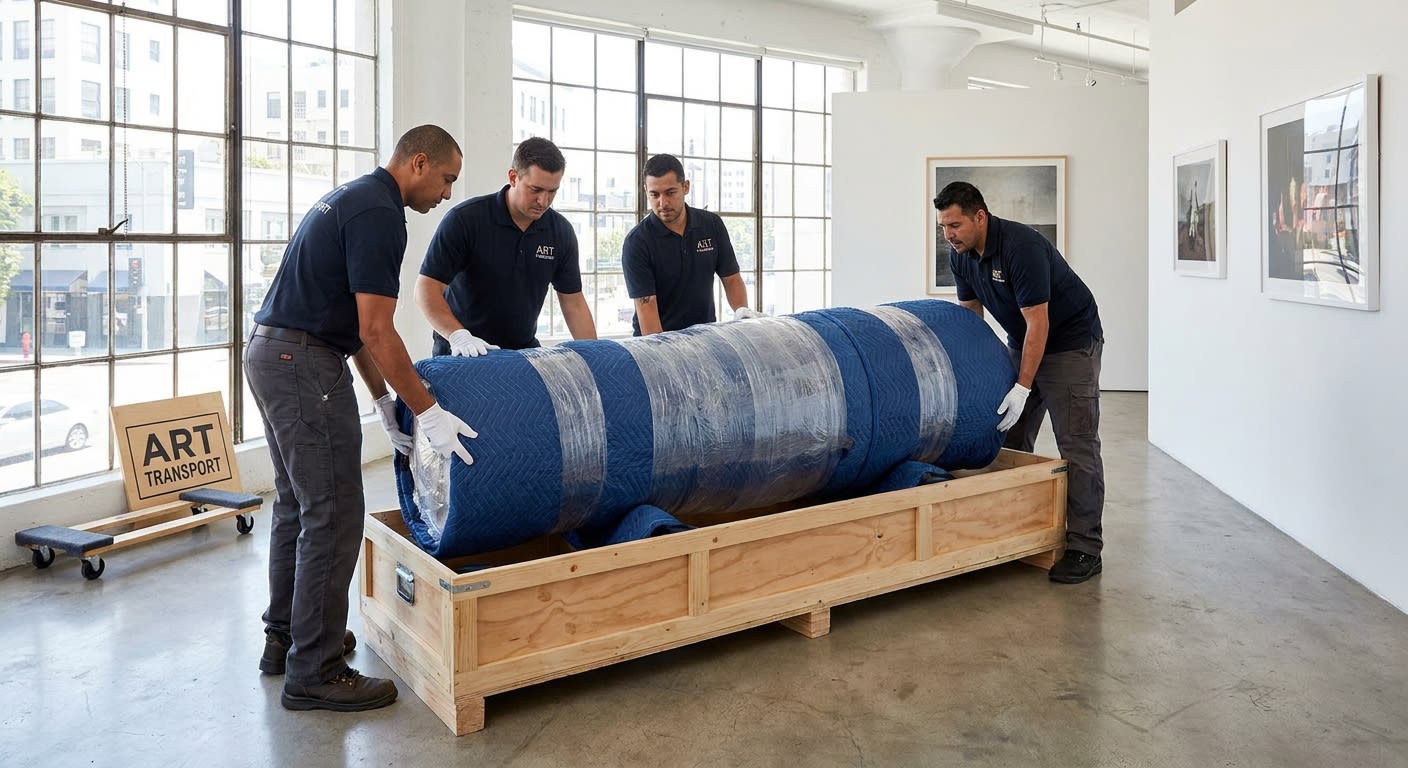
Moving blankets—we call them furniture pads—wrap every exposed surface. A piano on stairs means contact with walls, railings, and door frames is almost guaranteed at some point. I use 12 to 15 blankets per piano, secured with shrink wrap to keep them in place during tilting.
Stair climbing dollies with rubber treads help on straight runs, but they're useless on tight turns. For anything with a landing angle under 36 inches, we go manual with the piano board. Shoulder dollies (lifting straps that distribute weight across your back and shoulders) give each crew member about 30% more effective lifting power.
Assessing LA Staircases Before the Move
I've walked more staircases in Los Angeles than I can count, and no two are identical. The city's architectural diversity—from 1920s Craftsman bungalows to 1970s apartment complexes to modern hillside construction—means every piano stair move requires a custom approach.
Pre-1940 buildings typically have narrower stairs, often 30 to 34 inches wide, with wooden banisters that aren't structural. I never let my crew put weight on vintage railings. These older buildings also have lower ceilings at stair landings, sometimes just 7 feet, which affects how high we can tilt an upright during turns.
Mid-century apartment complexes (the dingbats and stucco boxes that define so much of LA housing) usually have exterior staircases with metal railings and concrete steps. The good news is more headroom and often wider turns. The bad news is exposure to sun and wind, which affects grip and crew fatigue. I schedule exterior stair moves for early morning when the concrete is cool and we've got shade.
Hillside homes present the ultimate challenge. Many properties in the Hollywood Hills, Silver Lake, and the bird streets above Sunset have exterior staircases as the only access. I've moved pianos up 40, 50, even 80 steps on hillside properties. These moves require additional crew members positioned every 15 steps as relief rotation, plus careful planning for rest points where we can safely set the piano board down.
For any stair move, I personally visit the location before scheduling. I measure stair width, riser height, tread depth, landing dimensions, and ceiling clearance at every turn. I photograph problem areas and sketch the path so my crew knows exactly what to expect. This site assessment takes 20 to 30 minutes and has saved countless hours and prevented damage on move day.
🎹 Need to move a piano in Los Angeles? Our white glove moving team specializes in piano transport with the right equipment and trained crews. Call (909) 443-0004 or get your free quote today.
The Four-Person Technique for Moving Piano Up Stairs
After hundreds of piano stair moves, I've refined a four-person technique that works for 90% of LA residential staircases. Here's exactly how my crew executes it:
Position one: the base carrier. This person is at the bottom of the piano, facing up the stairs, bearing the majority of the weight. They set the pace and call every movement. On my crews, this is always the most experienced mover—usually me. The base carrier controls speed and makes all stop calls.
Position two: the top guide. This person is above the piano, facing down, guiding the upper edge and calling out obstacles. They don't carry significant weight but are responsible for keeping the piano from scraping walls and ceilings. They also monitor the base carrier for fatigue signals.
Positions three and four: the side stabilizers. These crew members walk alongside the piano on each side, controlling lateral movement and preventing the instrument from swinging during turns. On narrow stairs, they may need to work in alternating positions, with one stepping ahead while the other stabilizes.
Communication is everything. My crews use specific verbal calls: "Lifting in three, two, one, lift." "Step up." "Hold." "Tilt back 15 degrees." "Rotate right on my call." We never move without a verbal confirmation from every crew member. One unclear signal at the wrong moment can mean a dropped piano or a back injury.
For especially heavy instruments or stairs longer than 15 steps, I bring a fifth crew member who rotates in to relieve the base carrier every 10 steps. Piano moving is exhausting work—a 500-pound upright on a third-floor walkup requires sustained effort equivalent to a serious workout. Fatigue causes mistakes.
Navigating Turns and Landings in LA Buildings
The turn is where most piano stair moves succeed or fail. A straight staircase is relatively simple—it's the 90-degree turn at the landing that separates professionals from amateurs. Here's how I approach them:
First, I calculate the pivot point. For a standard upright piano on a 90-degree turn, you need a landing depth of at least 48 inches to rotate without tilting past 70 degrees. If the landing is smaller, we tilt the piano further back, essentially standing it on its base edge to reduce the footprint during the turn. This is where four-person coordination becomes critical—the base carriers bear maximum weight while the guides control the rotation angle.
Second, I protect every surface. Before we attempt the turn, we tape furniture blankets to the walls and ceiling of the landing area. Sounds excessive, but I've seen a piano corner punch through drywall in a split second. Prevention costs nothing compared to repair.
Third, we rehearse the movement without the piano. My crew physically walks through the turn, calling out their positions and movements. On complex turns, we might rehearse three or four times. When we execute with 500 pounds of piano, everyone knows exactly where they're stepping.
In the Silver Lake move I mentioned earlier, the 90-degree turn had only 38 inches of landing depth and a low ceiling—we had to tilt the Steinway back to nearly 80 degrees, rotate it 90 degrees while two crew members supported it from above, then level it out to continue up the final flight. The whole turn took 12 minutes of coordinated movement. But that piano made it without a scratch, and my client plays it every day now.
Common Mistakes When Attempting DIY Piano Stair Moves
I get calls every month from people who tried to move a piano up stairs themselves and got stuck—literally stuck on a landing, unable to go up or down. Here are the mistakes I see most often:
Underestimating the weight is number one. People recruit friends who've never lifted more than a couch, then discover a 450-pound piano is an entirely different challenge. Pianos don't flex or give—they're dense, rigid, and unforgiving. If you can't deadlift 150 pounds repeatedly for 20 minutes, you're not equipped to be on a piano crew.
Using furniture dollies on stairs is a recipe for disaster. Regular dollies roll, and rolling on stairs means losing control. I've seen DIY movers send pianos tumbling because they thought they could ride the dolly down a few steps. You can't. Piano boards and stair climbing equipment exist for a reason.
Not removing the legs from a grand piano seems obvious, but I've watched people try to carry a baby grand up stairs with the legs attached. Grand piano legs detach for a reason—they're the vulnerable points. We remove all three legs, wrap them separately, and transport the body (called the rim) on its side on a specialized grand piano board.
Ignoring the keyboard. Upright pianos have a keyboard that extends beyond the main cabinet, and it's fragile. That keyboard needs to be locked closed (most have a lock mechanism) and wrapped with padding. If it swings open during a stair move, keys will pop out, hammers will break, and you're looking at a $300-plus repair.
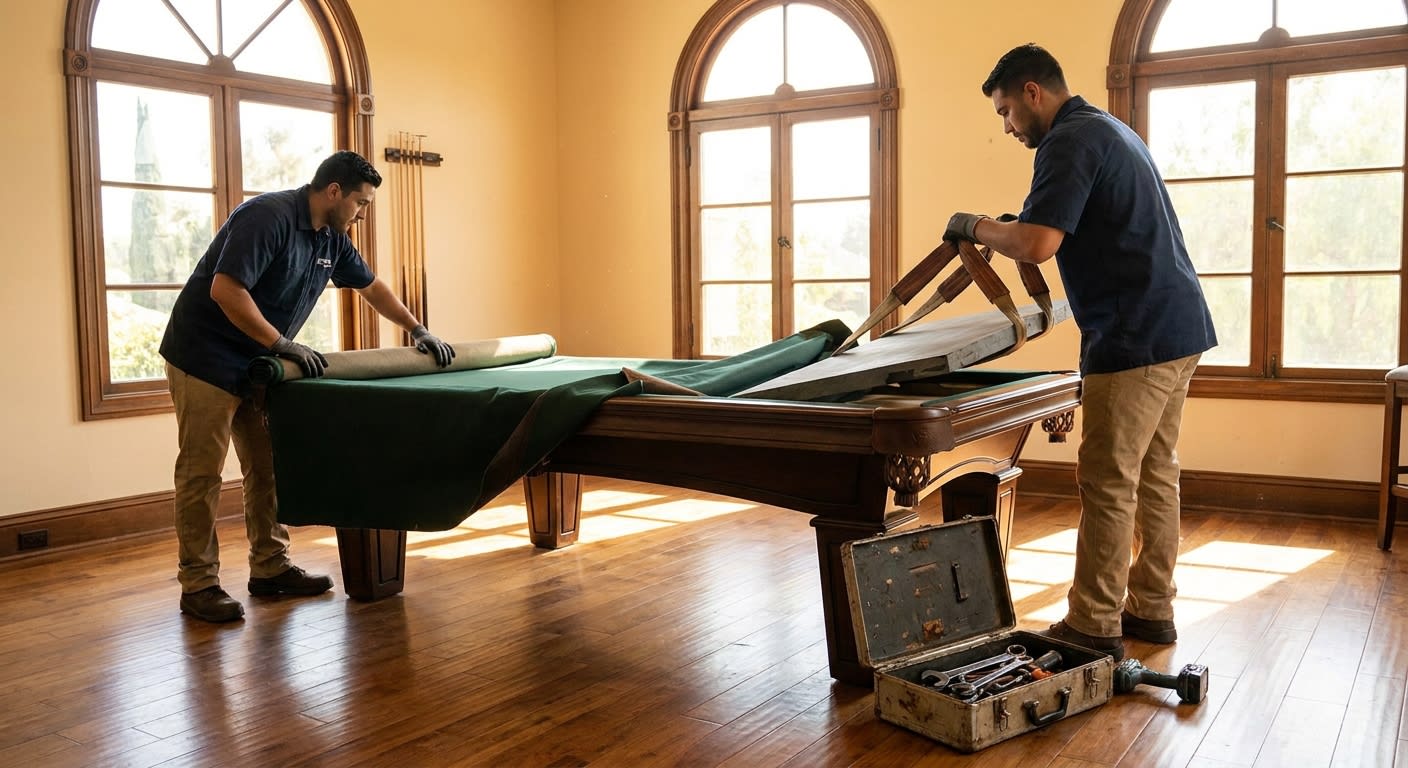
My colleague at SOS Moving covers this topic extensively in the guide on how to move a pool table yourself vs hiring pros, and many of the same principles apply to pianos—specialized equipment and trained labor aren't optional for heavy, delicate items.
When Your LA Building Requires Special Permits or Coordination
Moving a piano up exterior stairs in certain LA buildings requires more than just physical preparation. I've dealt with HOA regulations, city permits, and building management requirements that added days to the planning process.
Some condo buildings in downtown LA and Century City require a certificate of insurance (COI) naming the building as an additionally insured party before any piano move. This isn't unusual—we provide COIs regularly as part of our white glove moving service. But if you're doing this yourself, you'll need your own liability coverage.
Historic buildings in areas like Hancock Park or Angelino Heights may have restrictions on using certain stairwells or require protective coverings approved by the building's preservation guidelines. I've worked in buildings where we had to use specific padding materials to avoid any contact with original woodwork.
For exterior moves involving street access, you may need to coordinate with LA's Department of Transportation for temporary parking or loading zone designation. This is especially true if the piano needs to come off a truck and go directly up exterior stairs in a tight residential street. I covered some of the permit logistics in our moving permits in Los Angeles guide.
Communication with the building is essential. I always contact the building manager or HOA at least a week before a piano move to confirm access times, elevator availability (for reaching the stairwell), and any insurance or notification requirements. Showing up unprepared to a building that won't let you in is a waste of everyone's time.
Protecting the Piano During the Stair Move
A piano isn't just heavy—it's a precision instrument with thousands of moving parts, and stairs subject it to forces it was never designed to handle. Here's how I protect the instrument itself during a stair move:
Temperature and humidity matter. If a piano has been in storage or a climate-different space, moving it directly up stairs into a new environment can cause tuning instability and soundboard stress. I recommend letting the piano acclimate in the new space for at least two weeks before scheduling a tuning. The wood needs time to adjust.
Tilting limits exist for all pianos. Upright pianos can handle being tilted on their side or back for short periods, but keeping them tilted for extended time can allow internal components to shift. Grand pianos should only be transported on their side (flat side down), never on end. Any piano tilted past 60 degrees for more than 30 seconds is at risk of internal damage.
The pedal assembly on uprights is vulnerable during stair moves. Those rods connecting the pedals to the internal mechanism can bend if the piano is set down hard or impacts an obstacle. I wrap the pedal area with extra padding and ensure the base carriers know to set down gently at every rest point.
After the move, I advise every piano owner to have a tuner visit within a month. Pianos go out of tune during any move—vibration, tilting, and environmental change all affect string tension. This isn't damage; it's normal. But you won't get the best sound until it's been professionally tuned in its new home.
Cost Factors for Professional Piano Stair Moving in LA
When clients ask me about piano stair move pricing, I'm always straightforward: stair moves cost more than ground-level moves because they take more time, more crew, and more equipment. Here's what influences the final cost in the current 2026 LA market:
Piano type is the starting point. Upright pianos typically run $350 to $600 for a local move with stairs in Los Angeles. Baby grands range from $500 to $900. Full concert grands requiring crane service can exceed $2,500 depending on site complexity.
Number of stairs and turns adds to the base price. Most companies (including ours) charge per flight or per landing. A straightforward two-flight walkup might add $75 to $150 to the base rate. A hillside home with 50+ exterior steps and multiple turns could add $300 to $500.
Building access requirements affect pricing. If we need a COI, a specific time window, or additional protective measures required by the building, that adds administrative and material costs. Exterior moves requiring street permits add permit fees plus the coordination time.
Geographic location within LA plays a role. Moving a piano to a fourth-floor walkup in Hollywood is different than the same move in a hillside home in Bel Air with a winding private road and 100 steps. Travel time, parking challenges, and site complexity all factor in.
At SOS Moving, we're licensed & insured full-service moving and storage, from $119/hour—but piano moves are quoted individually because of these variables. I'd rather give an accurate quote after assessing the site than lowball and surprise you with add-ons on move day.
FAQ
Can I move an upright piano up stairs with just two people?
I don't recommend it. While physically possible for a light console piano on a straight, short staircase, two people don't provide enough control for safe movement. One stumble or loss of grip means the entire weight shifts to the other person, and that's when injuries and damage happen. Four trained movers is the minimum I use for any piano stair move.
How long does it take to move a piano up three flights of stairs?
In my experience, a typical three-flight walkup in an LA apartment building takes 45 minutes to 2 hours, depending on stair width, turns, and piano type. A straightforward upright with wide turns might take under an hour. A baby grand with tight 90-degree turns could take the full 2 hours. Site assessment tells us what to expect.
Will moving a piano up stairs damage it?
Not if done correctly with proper equipment and technique. Pianos are built to withstand some movement—they've been shipped across oceans and hauled into concert halls for centuries. The key is controlling the tilt angle, avoiding impacts, and securing all components. You will need to retune afterward, but that's normal, not damage.
What if my piano won't fit around the stair turn?
This happens occasionally with older buildings and larger grands. Options include crane lifting through a window (common for hillside homes), partial disassembly beyond standard leg removal (for some uprights, the upper panel can be removed to reduce dimensions), or in rare cases, determining that the piano simply can't go in that space. I always assess before move day so we know in advance.
Should I tune my piano before or after moving it up stairs?
After, always. Moving vibrates the strings and soundboard, and environmental changes in the new space affect tuning stability. I recommend waiting 2 to 4 weeks after the move for the piano to acclimate, then scheduling a professional tuning. Tuning beforehand is wasted money.
Do I need to be present during the piano move?
Yes, I require it. You need to show us the final placement location, sign off on the move completion, and be available if we encounter unexpected obstacles requiring decisions (like removing a door temporarily). Plan to be on-site for the entire move window.
Ready to Move Your Piano?
Ready to get your piano safely up those stairs? SOS Moving serves Los Angeles, Orange County, and San Francisco Bay Area with specialized piano moving crews. Call (909) 443-0004, email info@sosmovingla.net, or get your free quote today. Licensed & insured—your instrument is in professional hands.