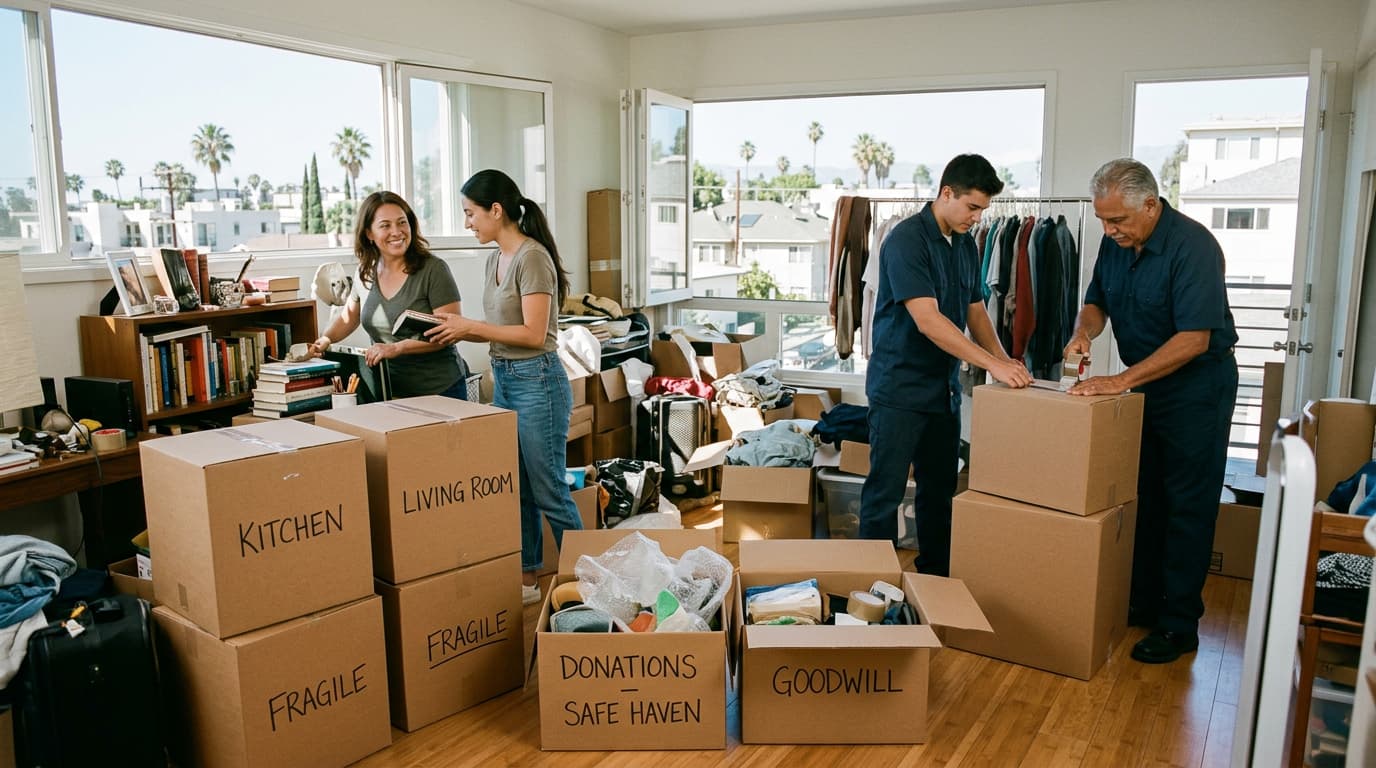


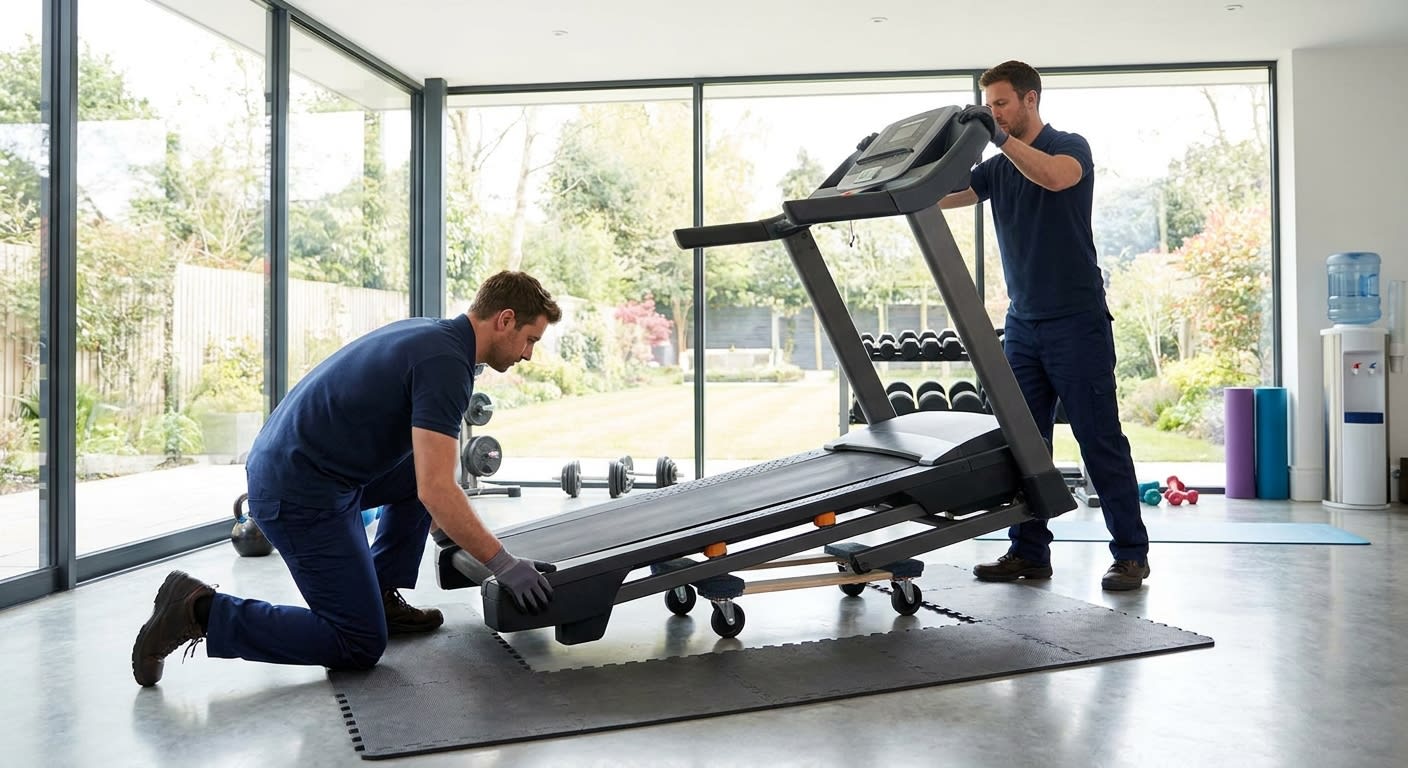
Three days ago, I moved a NordicTrack Commercial 2950 out of a third-floor condo in Brentwood—285 pounds of motor, belt, and steel frame, with original oak hardwood floors that the owner had just refinished for $4,200. One wrong move, one dragged wheel, and I'd have put a scratch line from the spare bedroom to the elevator that would've cost more than the treadmill itself. We got it out without a mark on the floor or the machine, and the client literally hugged my crew member Marcus when we finished.
I'm Amir, a Senior Move Foreman at SOS Moving, and I've moved hundreds of treadmills across Los Angeles—from high-end Peloton Treads in Beverly Hills mansions to budget ProForm units in Koreatown walkups. Treadmills are one of the most commonly damaged items during DIY moves, and the floors underneath them take even more abuse. Here's exactly how to move a treadmill without destroying either one.
Understanding Treadmill Weight Classes and What You're Dealing With
The first thing I assess on any treadmill move is weight class, because it determines everything else—crew size, equipment needed, and whether the homeowner can realistically do this themselves. Here's what I've learned from moving every major brand:
Entry-level folding treadmills (like basic Sunny Health models) typically weigh 60-100 pounds. These are genuinely manageable for two people, though you still need proper technique. Mid-range machines from NordicTrack, ProForm, and Horizon usually fall between 150-250 pounds—heavy enough that most people underestimate them. Commercial-grade treadmills like the ones you see in gym settings (Life Fitness, Precor, Woodway) can hit 350-500 pounds. I've moved Woodway Curves that weighed 450 pounds—those aren't two-person jobs no matter how strong you think you are.
The weight distribution matters as much as total weight. Treadmills are front-heavy because that's where the motor sits. When you lift or tilt one, that motor end wants to drop. I've seen people lose control of a treadmill on stairs because they didn't account for that front weight bias—the machine essentially pivoted out of their hands.
Before you move anything, find your model's exact weight in the owner's manual or on the manufacturer's website. Add 10% for the safety factor when planning crew and equipment. A 200-pound treadmill becomes a 250-pound problem on stairs.
Essential Tools and Equipment for Safe Treadmill Moving
I don't touch a treadmill without specific equipment, and neither should you. Here's what I load on my truck for every treadmill job:
An appliance dolly is non-negotiable for anything over 150 pounds. Regular furniture dollies don't have the strap points or the wheel clearance you need. The appliance dolly lets you secure the treadmill upright and wheel it without lifting—critical for protecting your back and the floors. I use a Cosco 3-in-1 for lighter machines and a heavy-duty 800-pound capacity unit for commercial equipment.
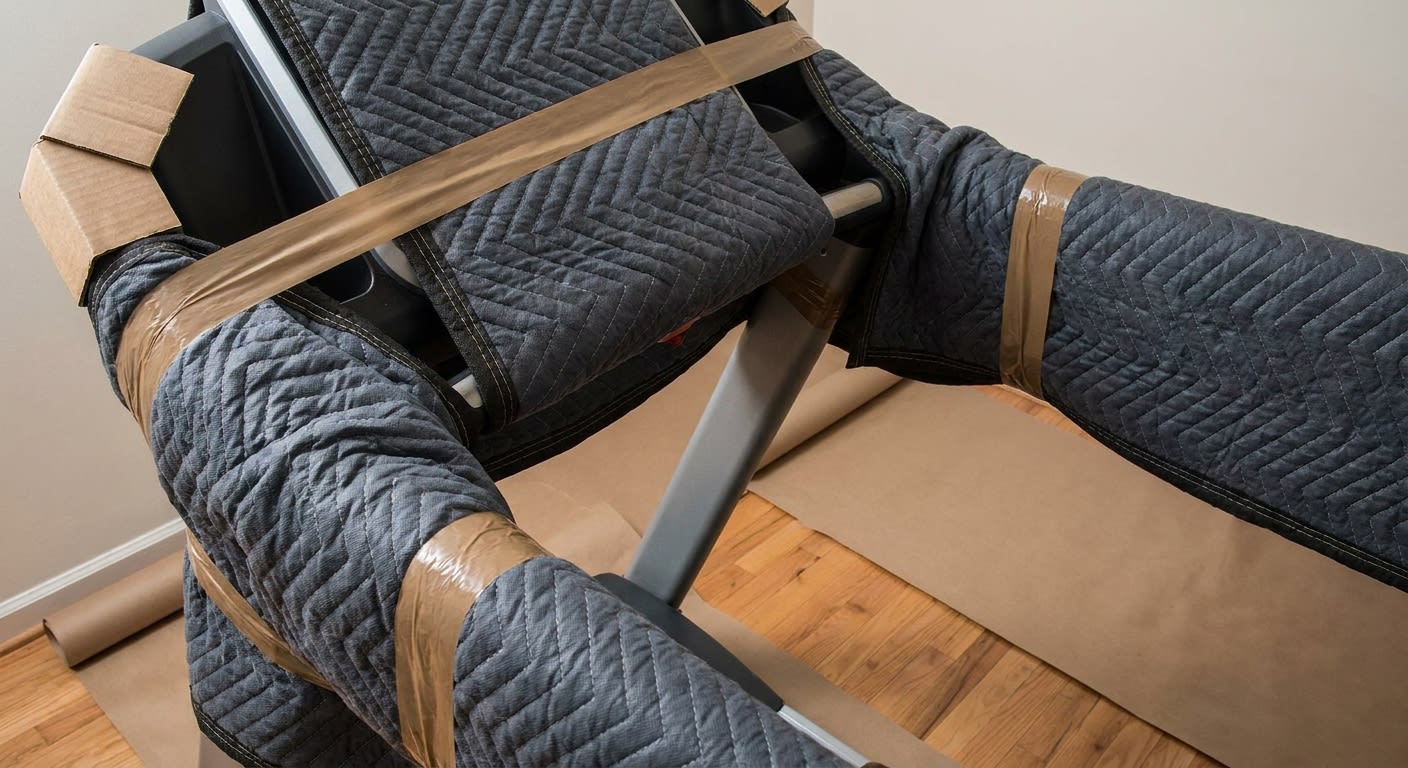
Moving blankets go under, around, and over the treadmill. I typically use four blankets per machine—two wrapped around the console and frame, one underneath during the slide phase, and one spare for wrapping any detached components. As I covered in my guide to moving blankets, the thickness matters: cheap blankets compress and let hard surfaces through.
Floor runners or Masonite sheets protect the path from the treadmill's current location to the truck. I lay down 4-foot sheets of hardboard on hardwood floors, overlapping them like shingles. For carpet, heavy-duty plastic runners work—you can get them at any hardware store.
Ratchet straps secure the treadmill to the dolly and inside the truck. Bungee cords aren't strong enough for equipment this heavy. I use 1-inch ratchet straps rated for at least 500 pounds of working load.
Floor Protection Strategy Before You Move Anything
Here's my floor protection sequence, refined over hundreds of moves in LA homes with floors worth more than my truck:
First, I clear the entire path from the treadmill to the truck. Every piece of furniture, every rug, every shoe rack. People underestimate how much space a 30-inch-wide treadmill on a dolly actually needs—you want at least 40 inches of clearance at every point, more at turns. Doorways in older LA homes are often exactly 30 inches, which means the treadmill might need to be tilted or the door removed from its hinges.
Next, I lay down protection starting from the truck and working backward toward the treadmill. This sounds counterintuitive, but it means you're never walking on unprotected floor while carrying heavy equipment. I use Masonite hardboard sheets on hardwood, laminate, and tile. For carpet, I use Ram Board or heavy plastic runners—something that won't bunch up under wheels.
At pivot points and doorways, I double up protection. These are where 90% of floor damage happens. When you pivot a dolly, the wheels scrape sideways with enormous pressure. Two layers of hardboard, or hardboard over a moving blanket, prevents that scrape from reaching the floor.
The mat under the treadmill itself needs special attention. Most people put their treadmill on a rubber gym mat, and that mat has been compressing for years under 200+ pounds. When you lift the treadmill, that mat will want to come with it—and then fall, potentially scratching whatever's underneath. I peel the mat back first, clean under it, and remove it separately.
🏋️ Moving heavy fitness equipment? Our white glove moving team specializes in treadmills, ellipticals, and home gym setups. Call (909) 443-0004 or request your free quote.
Preparing Your Treadmill: The 15-Minute Pre-Move Checklist
I spend about 15 minutes preparing any treadmill before it moves an inch. This prevents most of the problems people have:
Unplug the power cord and wrap it around the base or secure it with tape. Loose power cords catch on doorframes, get run over by dolly wheels, and trip people carrying heavy equipment. I've seen a loose cord yank a treadmill sideways mid-move—not pretty.
If your treadmill folds, fold it and engage the safety lock. Most modern treadmills have a hydraulic folding mechanism with a pin or latch that locks the deck in the upright position. Find that lock and make sure it's engaged. I've had folding treadmills release mid-move when the hydraulic got jostled—the deck swings down with serious force.
Remove the safety key and store it somewhere you won't lose it. This isn't just about preventing the motor from engaging—it's about keeping track of a small, essential component that's easy to drop during a move.
Check for loose components. Console screens, tablet holders, water bottle racks, side rails—anything that attaches to the main frame should either be secured tightly or removed and packed separately. I wrap removed components in packing paper and put them in a labeled bag that stays with the treadmill.
If you can, photograph the console settings. Higher-end treadmills have customized user profiles, calibration settings, and saved workouts. A move shouldn't erase these, but electrical interruption sometimes resets them. Having the photos means you can restore your settings.
How to Move a Treadmill That Folds: Step-by-Step Technique
Folding treadmills are easier to move—when the folding mechanism actually works. Here's my process:
With the treadmill unplugged and the deck folded into the upright locked position, you've cut the footprint in half. Now the treadmill can be rolled on its transport wheels if it has them (most do—look near the front base), or loaded onto a dolly if it doesn't.
Position your appliance dolly against the motor housing (the front, heavy end). Have a partner tilt the treadmill slightly backward while you slide the dolly lip underneath. The weight should settle onto the dolly, not your arms. Secure the treadmill to the dolly with ratchet straps—one around the frame mid-height, one around the base.
Walk the dolly backward, keeping the weight balanced. The front-heavy motor section should be at the bottom of the dolly, closest to the ground. This keeps the center of gravity low and stable. Your partner walks in front, guiding and watching for obstacles.
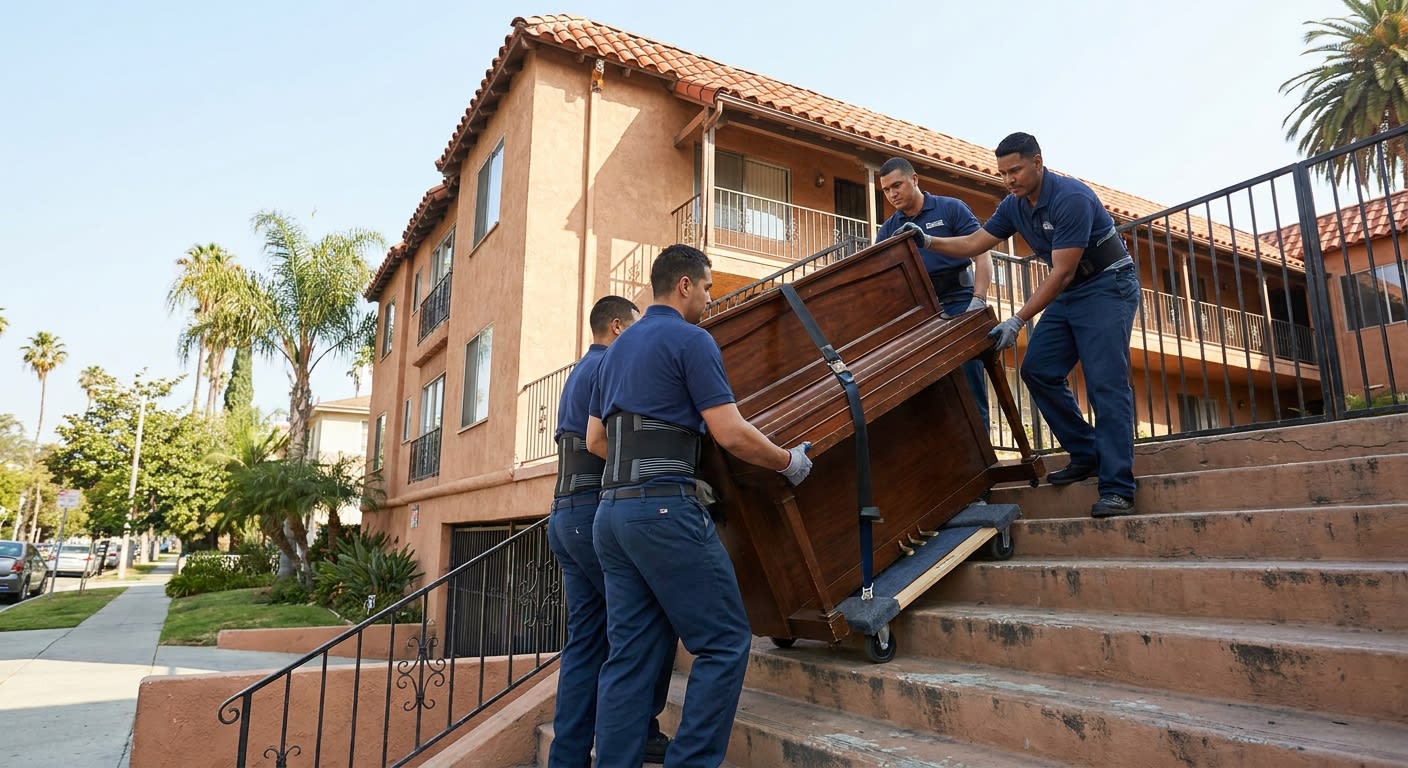
For stairs with a folded treadmill, I keep the dolly wheels on the stair edges and lower one step at a time. The person at the bottom controls the descent with the dolly handles. The person at the top stabilizes and prevents forward tipping. We move on a count—"step, secure, step, secure"—never rushing.
How to Move a Non-Folding or Commercial Treadmill
Non-folding treadmills and commercial-grade equipment are a different challenge. These require more crew, more equipment, and more patience.
My crew uses the "slide and load" technique for heavy non-folding machines. We put a moving blanket under the treadmill, then use it to slide the machine across the floor to the loading point. This works because a blanket on hardwood has very low friction, and it protects the floor from the plastic or rubber feet on the treadmill base. We're not lifting 300 pounds—we're sliding it.
For commercial treadmills over 300 pounds, I often recommend partial disassembly. The console can usually be removed (4-6 bolts, disconnect the wire harness), which drops 20-30 pounds off the top and lowers the center of gravity. The side rails might detach as well. Document everything with photos before you disconnect anything—wire harnesses have specific routing that matters for reassembly.
Loading into the truck requires a ramp, not a lift gate, for most treadmills. The angle matters: too steep, and you're fighting gravity with a 300-pound machine that wants to roll backward. I use a ramp with no more than 20-degree incline, and I have a crew member at the back of the treadmill preventing rollback while I guide from the truck.
Inside the truck, the treadmill should be positioned against the wall, strapped at multiple points, and surrounded by blankets or pads to prevent shifting. I never stack anything on top of a treadmill—even a "sturdy" machine can have its console crushed by a box of books sliding during a hard brake.
Navigating LA's Worst Stairwells and Tight Corners
Los Angeles architecture throws some challenges at treadmill moves that other cities don't have. I've developed specific techniques for the problems I see constantly:
Pre-war apartment buildings in neighborhoods like Hancock Park and Los Feliz have narrow stairwells with tight 180-degree turns. A full-size treadmill won't make these turns on a dolly. We have to hand-carry through the turn section, which means positioning one crew member at each end and walking the turn in coordinated steps. The person at the heavy (motor) end controls the pace.
Mid-century condos often have elevators too small for a non-folded treadmill. I measure the elevator interior before every move—dimensions vary more than people realize. If it won't fit, we're taking stairs, and the client needs to know that before we show up. As my colleague William discusses in his guide to high-rise apartment moves, elevator reservations are essential for buildings that have them.
Hillside homes in areas like the Hollywood Hills and Laurel Canyon often have exterior stairs—sometimes dozens of them—leading from street to door. These moves are physically demanding and time-intensive. I quote hillside treadmill moves at a premium because they take twice as long and require additional crew.
Garage gym setups in single-family homes are usually the easiest—roll it out the garage door, down the driveway, onto the truck. But even here, watch for the garage-to-driveway transition. That lip can catch dolly wheels and jar the entire machine.
Common Treadmill Moving Mistakes I See Every Week
I've been called to finish jobs that DIYers started and couldn't complete. These are the mistakes I see most often:
Underestimating weight is number one. People think because they can stand on their treadmill, they can carry it. Standing on something and controlling it through a doorway are completely different. A 200-pound machine with awkward dimensions and a biased weight distribution feels like 300 pounds in a stairwell.
Skipping the fold-and-lock step costs people. I've responded to a call where a homeowner was moving a Sole F85, didn't lock the deck, and it swung down mid-carry. The deck hit the stairwell wall, cracked the drywall, and the sudden jolt caused them to drop the machine. The motor housing cracked on the stairs. Total damage: about $1,800 between the wall repair and a new motor unit.
Using furniture dollies instead of appliance dollies leads to control problems. Furniture dollies have four casters that swivel independently—fine for dressers, terrible for heavy equipment with high center of gravity. Appliance dollies have two fixed wheels and a stable platform specifically designed for this purpose.
Rushing through doorways causes most of the cosmetic damage I see. People get impatient, clip the doorframe, and scratch both the frame and the treadmill. I literally stop at every doorway, measure the clearance, and adjust angle if needed. Those 30 seconds prevent hundreds of dollars in damage.
When DIY Doesn't Make Sense: Calling Professionals
I'm going to be honest with you about when to call a professional moving crew instead of attempting this yourself:
If your treadmill weighs over 250 pounds, hire movers. At that weight, you need proper equipment and trained technique that takes years to develop. SOS Moving offers white glove moving services specifically for heavy equipment like this—we're licensed and insured for exactly these situations, starting from $119/hour.
If you have more than one flight of stairs, hire movers. Stair moves are where injuries happen. Professional crews have the conditioning, the communication protocols, and the insurance coverage for when things go wrong.
If your floors are high-value—original hardwood, marble, or recently refinished—hire movers. The cost of floor repair after a DIY mistake will exceed professional moving costs every time. I've seen floor refinishing bills that were ten times what the move would have cost.
If you're moving other heavy items too (ellipticals, weight machines, safes), bundle them into one professional move. The cost-per-item drops significantly when we're already there with the right equipment. Check out my guide to moving gun safes if you've got one of those in the mix—similar weight, similar techniques.
Reassembly and Post-Move Treadmill Care
Once the treadmill is in its new location, don't just plug it in and start running. There's a post-move process:
Let the treadmill acclimate for 24 hours before use, especially if it was in a moving truck or storage unit with temperature variation. Lubricants and electronics do better when they've returned to stable room temperature. This is particularly important if you've moved from a cool garage gym to a warm interior room or vice versa.
Check the belt alignment before your first run. Moving can shift the running belt slightly off-center. Run the treadmill empty at low speed and watch the belt—it should track down the center without drifting to either side. Most treadmills have adjustment bolts at the rear if you need to correct alignment.
Inspect for loose components. Walk around the treadmill, grab the console, wiggle the handrails, check that all the bolts you loosened for the move are now retightened. One overlooked bolt can lead to a component failure during use.
Reapply belt lubricant if your treadmill uses it. The manual will specify whether your model has a pre-lubricated belt or needs periodic silicone application. Moving is a good time to refresh this maintenance item.
Position the treadmill on a proper mat in its new home. I recommend at least 3/4-inch thick rubber gym flooring—it protects the floor underneath, reduces vibration noise for downstairs neighbors, and keeps the treadmill stable during use.
FAQ
Can I move a treadmill by myself if it has transport wheels?
Transport wheels help for short distances on flat, hard surfaces—like repositioning the treadmill within a room. They're not designed for moving through doorways, over thresholds, or down hallways. For any real move, you need at least two people even with transport wheels, because you'll encounter transitions where the wheels don't roll smoothly.
Will moving a treadmill void the warranty?
Most manufacturer warranties cover the machine itself, not damage from improper moving. If you damage the motor or frame during a move, that's typically not covered regardless of warranty status. However, professional movers carry cargo insurance that protects you if we cause damage—something you don't get when moving yourself.
How long does it take professionals to move a treadmill?
For a single treadmill with reasonable access (first floor or elevator building), my crew typically completes the pickup and load in 30-45 minutes. Delivery and setup at the new location is another 30-45 minutes. Stairs, tight access, or additional disassembly adds time—I've spent two hours on a single treadmill in a challenging hillside home.
Should I disassemble my treadmill completely before moving?
Full disassembly usually isn't necessary and can create problems—you'll have dozens of bolts to track, wire harnesses to reconnect, and potential calibration issues on reassembly. I recommend folding (if possible), removing the console if access is tight, and keeping everything else assembled. Save full disassembly for situations where no other option exists.
What's the biggest treadmill you've moved?
I moved a Woodway 4Front from a private gym in Bel Air last year—that machine weighs around 425 pounds. It required four crew members, an extra-heavy-duty appliance dolly, and about three hours total. The client had bought it used from a closing gym without realizing what moving it would involve. We got it done, but it was a project.
How do I protect my treadmill in a moving truck?
Position the treadmill against the truck wall with the motor end down if standing, or lay it flat on moving blankets if you have the floor space. Strap it to the truck's anchor points at multiple heights. Surround it with soft items—blankets, mattresses, or cushions—that can absorb vibration. Never stack heavy boxes on or against a treadmill.
Ready to move your treadmill without the stress? SOS Moving serves Los Angeles, Orange County, and San Francisco Bay Area with professional equipment moving services. Call (909) 443-0004, email info@sosmovingla.net, or get your free quote online. We're licensed and insured, handling thousands of local and long-distance relocations stress-free.