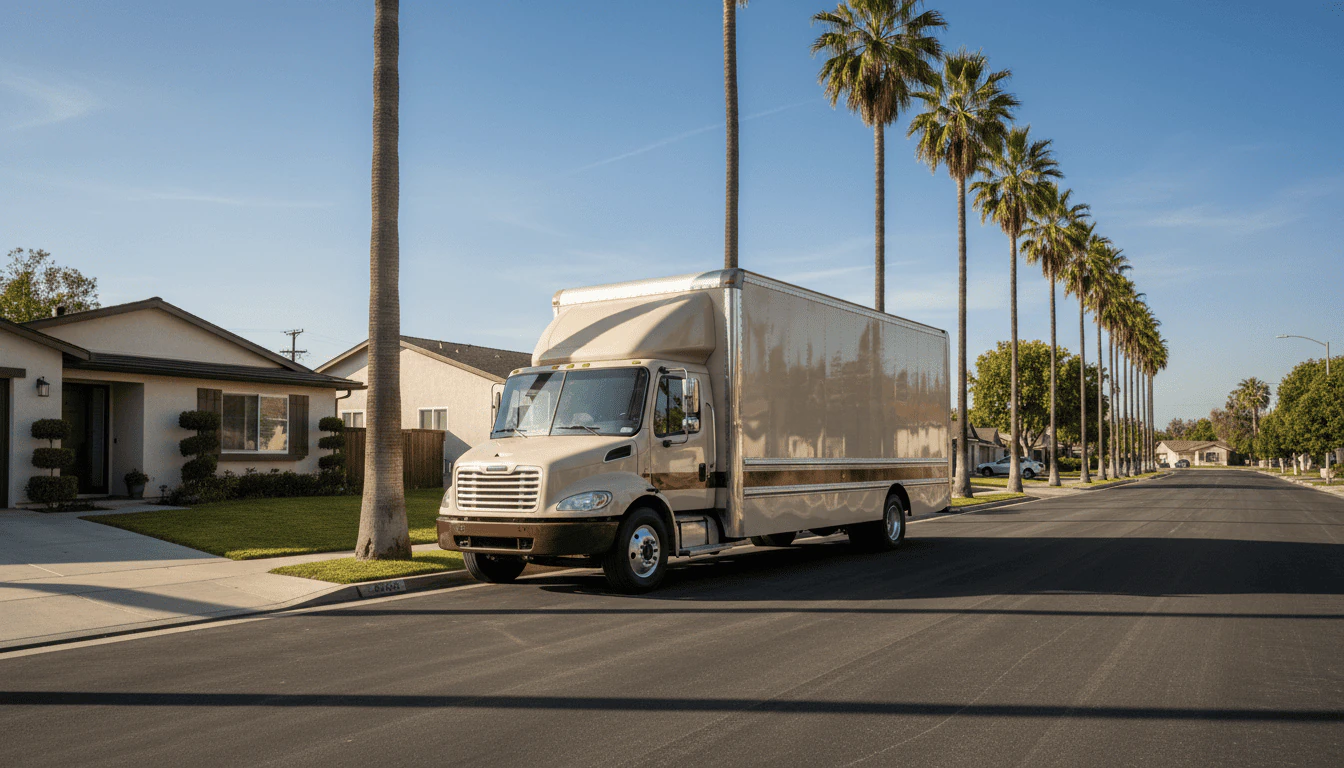


Three weeks ago, I was coordinating a move from a third-floor walk-up in Silver Lake to a ground-floor unit in Echo Park when everything that could go wrong did. The client's phone died at 7 AM, her toolkit was packed in box number 47 of 52, and the elevator at the new building was out of service—something the landlord forgot to mention. We got through it because I've learned to prepare for chaos, and I had my emergency kit in the truck. That move finished two hours late instead of being a complete disaster, and the difference was literally a $40 bag of supplies.
I'm William, Operations Manager at SOS Moving, and I've overseen thousands of relocations across Los Angeles, Orange County, and the San Francisco Bay Area since joining the company. In that time, I've seen moves derailed by dead batteries, dehydrated crews, missing screwdriver bits, and once, memorably, a swarm of bees that had nested in a client's outdoor furniture overnight. A proper moving day emergency kit isn't paranoid planning—it's the difference between a manageable problem and a move that spirals out of control.
Why LA Moves Require a Specialized Emergency Kit
Moving in Los Angeles isn't like moving in the Midwest or even the Bay Area. Our climate, traffic patterns, and building layouts create unique challenges that your standard moving checklist doesn't address. I've coordinated moves in 108-degree Valley heat where crews needed electrolyte packets every 30 minutes. I've dealt with parking enforcement officers who arrived exactly 61 minutes after the meter expired in West Hollywood. LA has its own rhythm, and your emergency kit needs to match it.
The sprawl matters too. When you're moving from Pasadena to Torrance, you're looking at 35+ miles through some of the worst traffic in the country. If you forget something critical at the old place, that's potentially a two-hour round trip. I tell my clients to treat moving day like a camping trip where the nearest store is three hours away. Even if there's a Target two blocks from your new apartment, you won't want to stop mid-move to hunt for a Phillips head screwdriver.
Building access in LA presents challenges I don't see as often in other cities. We've got historic buildings in DTLA with freight elevators that require 48-hour advance booking. We've got hillside homes in the Hollywood Hills with driveways that won't fit a moving truck. We've got beach communities where sand gets into everything and salt air corrodes anything metal left outside. Your emergency kit needs to account for the specific LA neighborhood you're moving to—a Westside beach move requires different supplies than a move to the eastern suburbs.
The Core Emergency Kit Every LA Mover Needs
After coordinating moves for years, I've narrowed down the essentials that should be in every single client's emergency kit. This is the baseline—the stuff you cannot skip regardless of whether you're moving across the street or across the county.
First, documentation. Keep a folder with your lease or closing documents, photo ID, a printed copy of your moving contract, and contact numbers for your moving crew, building manager, and utilities. Yes, printed. When your phone dies or you can't get signal in that underground parking garage in Century City, paper saves you. I've seen clients locked out of their own new apartments because they couldn't pull up the lockbox code with no phone battery.
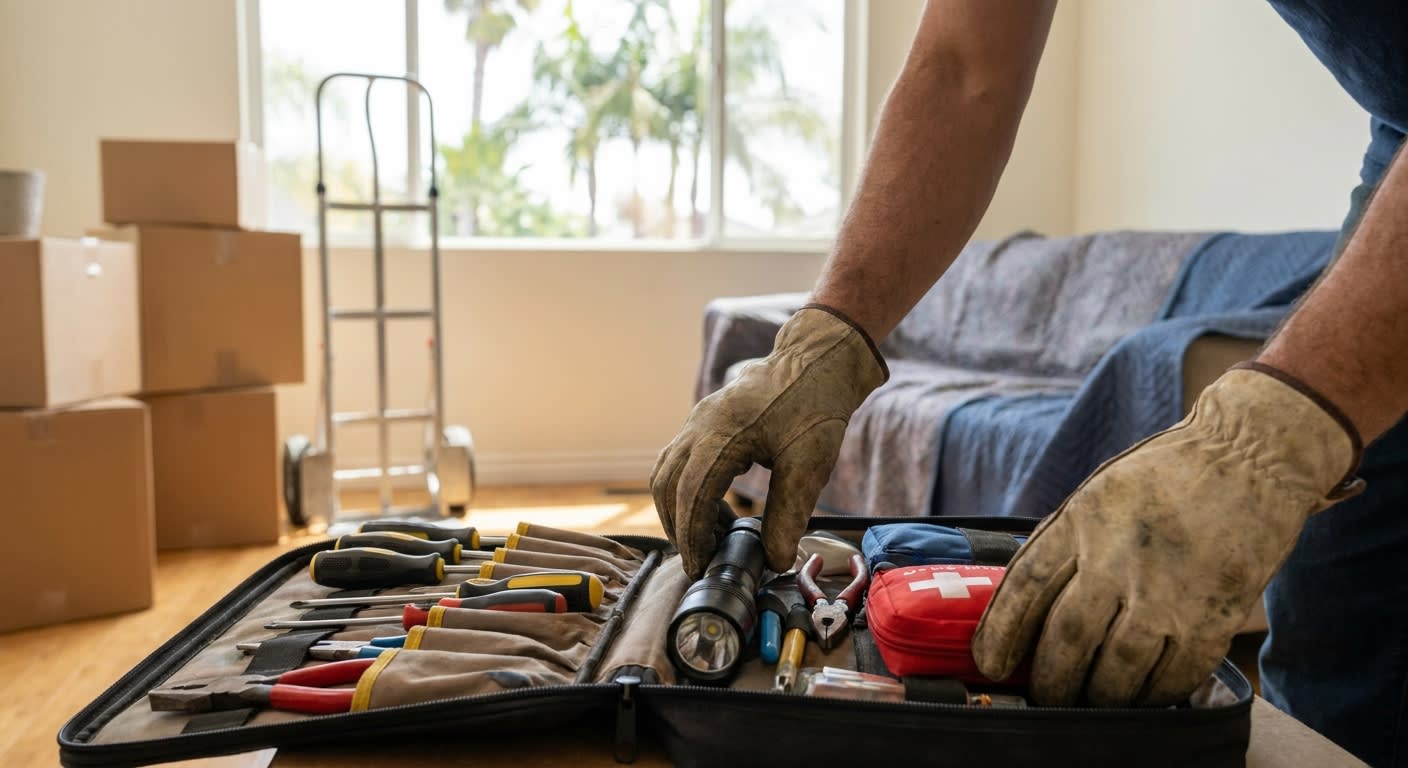
Basic tools are non-negotiable: a multi-bit screwdriver, adjustable wrench, utility knife, tape measure, and a small hammer. These should be in a hard case that stays with you, not packed in a box. At least once a month I watch a client dig through 30 boxes looking for a screwdriver to reassemble their bed frame. That's an hour wasted because of poor planning.
Cleaning supplies get overlooked constantly. Bring a roll of paper towels, all-purpose cleaner, trash bags, and a small broom with dustpan. Your old place needs a final sweep, and your new place probably needs attention before you unpack. LA apartments often sit vacant for weeks between tenants, collecting dust, dead bugs, and whatever the maintenance crew tracked in during repairs.
Hydration and Heat Management Essentials
This is where LA moves diverge sharply from moves in temperate climates. I've had to stop moves in July because clients were showing signs of heat exhaustion—not the crew, the clients who insisted on helping. The Valley regularly hits triple digits from June through September, and even coastal areas can surprise you with heat waves.
Pack a cooler with at least a gallon of water per person on moving day. Not water bottles that sit in a hot car and turn lukewarm—actual cooler-chilled water with ice packs. Add electrolyte packets or tablets; plain water isn't enough when you're sweating through eight hours of loading and unloading. I keep a case of Liquid IV in my truck because I've seen too many dehydration headaches turn into full-day problems.
Sunscreen is essential, even if your move starts at 7 AM. You'll be going in and out of buildings all day, and accumulated sun exposure adds up. SPF 30 minimum, reapplied every two hours. I also recommend a cooling towel—those microfiber towels you wet and snap to activate. They look silly but they've prevented more than a few heat-related delays on my watch.
Don't forget about your stuff, either. Electronics, vinyl records, candles, and medications can all be damaged by heat. Designate a cooler or insulated bag specifically for temperature-sensitive items and keep it in the air-conditioned cab of the truck, not in the cargo area where temperatures can hit 140 degrees during a Valley summer.
📦 Need a crew that comes prepared for LA conditions? Our apartment moving team brings professional equipment and knows how to handle the heat. Call (909) 443-0004 or get a free quote.
The Phone and Power Station Kit
Your phone is your lifeline on moving day. It's your GPS, your communication with the crew, your camera for documenting damage, your access to utility accounts, and probably your only way to pay for that emergency pizza when everyone's starving at 3 PM. It cannot die.
I recommend bringing at least two fully charged portable battery packs with a combined capacity of 20,000mAh or more. One stays in your bag, one stays in your car as backup. Bring charging cables for every device you might need—your phone, your partner's phone, a tablet if you use one. Don't assume you can charge off the truck; most rental trucks don't have working USB ports, and professional moving trucks need those outlets for equipment.
A power strip with a 6-foot extension cord is essential for the new place. Your power outlets won't be where you expect them, and you'll need to charge devices while simultaneously running box cutters, flashlights, and whatever else needs power. I've lost count of how many times a client's new apartment had exactly two outlets in the living room, both behind where the couch was going.
Consider bringing a small battery-powered Bluetooth speaker too. This might seem like a luxury, but I've noticed that moves with background music have noticeably better morale. Eight hours of grunting and furniture scraping wears on everyone. A little music keeps the energy up.
First Aid and Personal Care Supplies
Moving involves heavy lifting, sharp edges, and long hours. Minor injuries are common—cuts from box edges, stubbed toes, strained muscles, blisters from new shoes you shouldn't have worn on moving day. A basic first aid kit should include bandages in multiple sizes, antiseptic wipes, gauze pads, medical tape, pain relievers, and antihistamines.
The antihistamines aren't just for allergies. LA has significant air quality issues, and moving day kicks up enormous amounts of dust. I've seen clients develop respiratory irritation from disturbing dust in their old apartment that had been accumulating under furniture for years. If you have asthma, bring your inhaler even if you haven't needed it in months—the exertion plus the dust is a combination that catches people off guard.
Pack a personal care bag that stays accessible: toothbrush, toothpaste, deodorant, face wipes, hand sanitizer, and a change of clothes. You will get sweaty and dirty. You might not have access to your bathroom boxes until evening. Being able to freshen up at 2 PM can reset your entire mental state for the afternoon push.
Don't forget prescription medications. Whatever you take regularly should be in your personal bag, not packed in a box. I've had clients realize at 8 PM that their blood pressure medication was somewhere in a stack of 40 boxes, and the pharmacy was already closed. That's a preventable crisis.
Snacks and Meal Planning That Actually Works
Moving day nutrition is consistently underestimated. You're burning serious calories—probably 400-600 per hour if you're actively moving boxes—and your regular eating schedule is completely disrupted. I've watched moves slow to a crawl at 2 PM because everyone's blood sugar crashed and nobody planned lunch.
Pack non-perishable, high-protein snacks that won't make a mess: nuts, protein bars, beef jerky, peanut butter crackers. Avoid anything that requires utensils or creates crumbs you'll have to clean up. Energy gels designed for marathon runners are actually excellent moving day fuel—compact, fast-acting, and they won't spoil in a hot car.
As I mentioned in my article about summer moving tips, have a meal plan for the day. Identify food options near both addresses before moving day. Know where you'll order from and have the apps downloaded with payment info saved. Nothing kills momentum like a 30-minute debate about where to get lunch while standing in an empty apartment surrounded by boxes.
Coffee drinkers need to plan carefully. If you're dependent on your morning coffee, figure out where you'll get it on moving day. Your coffee maker will be packed, your favorite mug will be in a box, and you'll be starting earlier than usual. Scope out the nearest coffee shop to your old apartment and plan to hit it on your way out for the last time.
LA-Specific Emergency Items Most People Forget
Beyond the basics, LA moves require some specific items that clients from other regions never think to bring. These are the supplies I've added to my recommended list based on situations I've actually encountered in this city.
Parking permits and quarters. Street parking in LA is ruthlessly enforced, and many neighborhoods require permits for large vehicles. Check with your new building about loading zone access, and bring at least $20 in quarters for meters. Some areas now accept apps, but the apps crash, cards get declined, and quarters always work. My colleague Sarah wrote about moving permits in LA and covered the permit process in detail.
A doorstop is more essential than you'd think. Propping open doors during loading and unloading saves hundreds of trips and countless minutes. Most apartment buildings have fire codes about propped doors, but a doorstop lets you work quickly during active loading without a door swinging closed every time.
Furniture sliders for hardwood floors are critical in LA, where a huge percentage of apartments have original hardwood from the 1920s-1960s. These floors scratch easily, and landlords will absolutely take it out of your deposit. Bring felt-bottom sliders for heavy furniture and consider floor protection film for high-traffic pathways.
A flashlight with fresh batteries handles the inevitable moment when you need to check inside a dark closet, read meter numbers in a utility room, or navigate a garage during a power flicker. Your phone flashlight drains battery fast, and you need that battery for everything else.
The "Things Go Wrong" Contingency Kit
This is my paranoid kit—the supplies I carry for situations that shouldn't happen but somehow always do. I've used every single one of these items on actual moves.
Duct tape and zip ties can temporarily fix almost anything. Drawer that keeps sliding open during transport? Tape it. Cabinet door swinging wildly? Zip tie the handles together. I've even used duct tape to temporarily secure a rear bumper that got knocked loose pulling out of a tight driveway in Los Feliz.
A tarp or drop cloth protects against unexpected rain (yes, it does rain in LA sometimes) and provides a clean surface for setting down furniture in dirty areas. Also useful for covering things you need to leave outside temporarily while making space inside.
WD-40 or similar lubricant can save a move when hinges squeak so badly the crew can't work efficiently, or when a dolly wheel locks up, or when the new place has a sliding door that's been stuck for months. I keep a small can in every truck.
Cash. At least $100-200 in twenties. Tips for the moving crew should be in cash. Emergency purchases when card readers fail should be in cash. The locksmith you have to call when you realize the old tenant never surrendered all the keys—also cash. You can hit an ATM on moving day, but you won't want to.
Building Your Kit: The Day-Before Checklist
I tell all my clients to assemble their emergency kit the night before, not the morning of. You'll be tired, stressed, and running late on moving day—it's the worst possible time to remember you forgot something important.
Use a medium-sized bag or backpack that you can carry comfortably. This kit stays with you all day, not in the truck or in your car's trunk where you can't access it easily. Everything should fit in one bag that you can sling over your shoulder while directing movers with both hands.
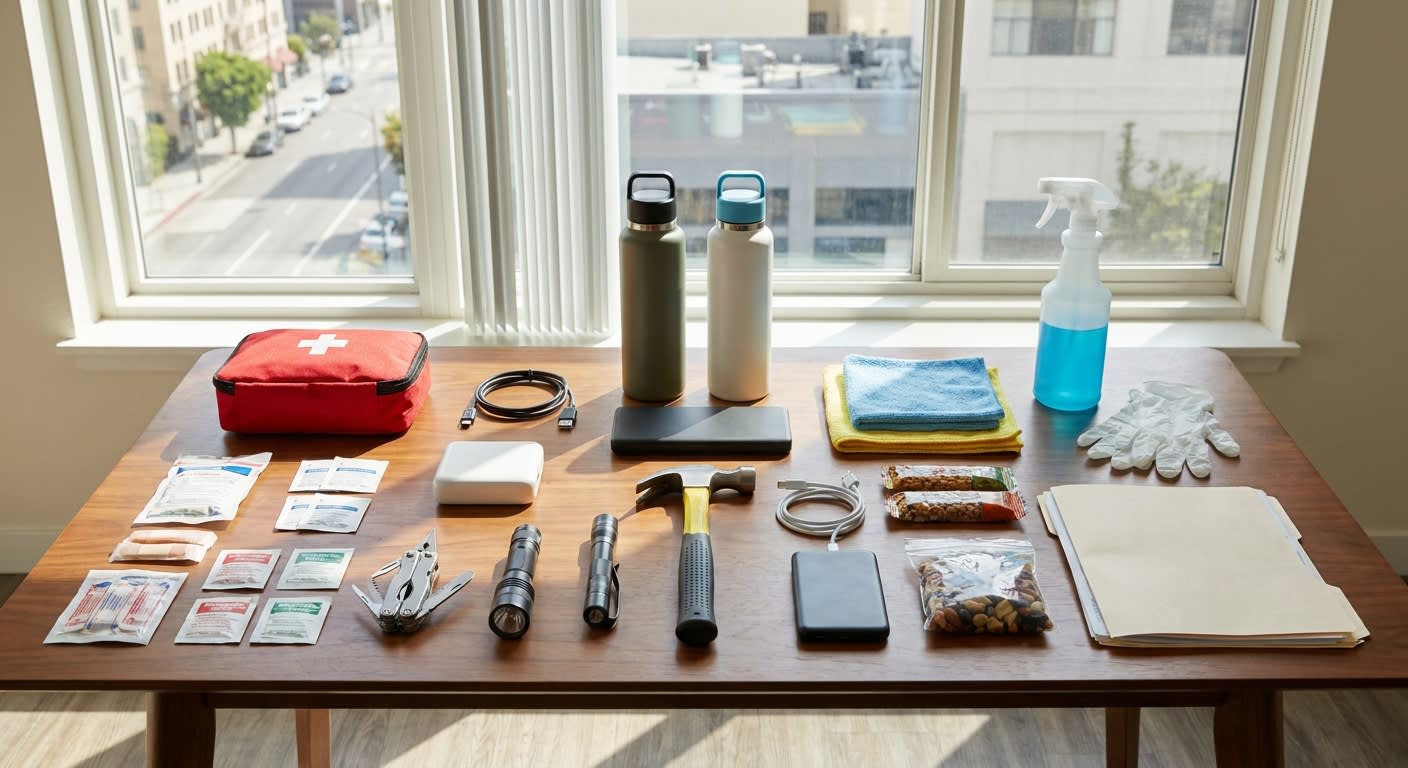
Lay everything out on your bed or table and go through this list methodically. Check that batteries are charged, liquids aren't leaking, and you actually have the items you think you have. I once had a client who swore they had a toolkit, but when they went to use it, there was nothing inside but an instruction manual from something they'd assembled two years ago.
Make sure your partner, roommate, or whoever is helping you knows where the kit is. If you're in the bathroom at the old place and someone needs scissors at the new place, they need to know exactly where to find them without calling you.
When to Call for Backup: Recognizing Overwhelm
Even the best-prepared moving day emergency kit can't fix everything. Part of being prepared is knowing when a situation has escalated beyond DIY solutions. Here's what I tell clients about when to call for professional help.
If anyone shows symptoms of heat illness—confusion, stopped sweating, rapid heartbeat, fainting—stop the move immediately and call 911. This is a medical emergency. Your furniture can wait; heatstroke can kill. Don't try to tough it out because you're worried about the moving timeline.
If there's a significant issue with the new place—major water damage, pest infestation, someone else's belongings still there—don't just start unloading. Document everything with photos, contact the landlord or seller, and potentially put items in temporary storage rather than into a compromised space. As I covered in my short term storage options article, having a backup plan for your belongings can save you from worse problems later.
If your moving truck breaks down, gets in an accident, or gets stuck somewhere, you need professional assistance. This is where working with a licensed, insured moving company like SOS Moving pays off. When you hire us at our rates starting from $119/hour, our dispatch team handles those emergencies so you don't have to figure out what to do with a 26-foot truck that won't start in a West Adams parking lot.
FAQ
What size bag do I need for a moving day emergency kit?
A standard backpack or medium duffel bag works best—something around 25-35 liters that you can carry comfortably. It needs to fit everything listed above while still being portable enough that you'll actually keep it with you throughout the day. Avoid rolling suitcases since you'll need quick access without unzipping and digging.
Should I buy a pre-made emergency kit or build my own?
Build your own. Pre-made kits often include items you don't need and skip items critical for LA conditions. You probably already own most of what's needed—a charger, basic tools, first aid supplies. Building your own ensures everything works, fits together properly, and includes LA-specific items like extra sunscreen and electrolytes that generic kits skip.
How much should I budget for a complete moving day emergency kit?
If you're starting from scratch, budget around $75-150 depending on what you already own. The biggest expenses are typically portable battery packs ($25-50 each), a quality multi-tool or toolkit ($15-30), and the cooler with ice packs ($20-40). Many items like cleaning supplies and first aid materials you likely already have at home.
Can the moving company provide emergency supplies if I forget something?
Professional moving companies carry basic supplies like tape, dollies, and moving blankets, but don't rely on them for personal items. We can't stock individual medications, your specific phone charger, or snacks that fit your dietary restrictions. Our crews focus on moving your belongings safely—personal preparedness is your responsibility.
What's the most commonly forgotten item on moving day?
In my experience, it's phone chargers and cables. People pack them the night before because they need to charge their phone overnight, then forget to unpack them in the morning rush. The second most common is toilet paper—both places need it, and it's awkward to realize you forgot it at the moment you need it most.
Do I need different supplies for a long-distance move versus a local LA move?
Yes. Long-distance moves require additional documentation like your moving contract and inventory list, more substantial food supplies, medications for multiple days, and potentially an overnight bag that travels with you separately. For a local LA move, the kit I've described covers most situations since you're never more than a few hours from retrieving something you forgot.
Ready to plan your LA move with a team that comes prepared for anything? SOS Moving serves Los Angeles, Orange County, and the San Francisco Bay Area with licensed and insured full-service moving and storage, from $119/hour. Call (909) 443-0004, email info@sosmovingla.net, or get your free quote today.