

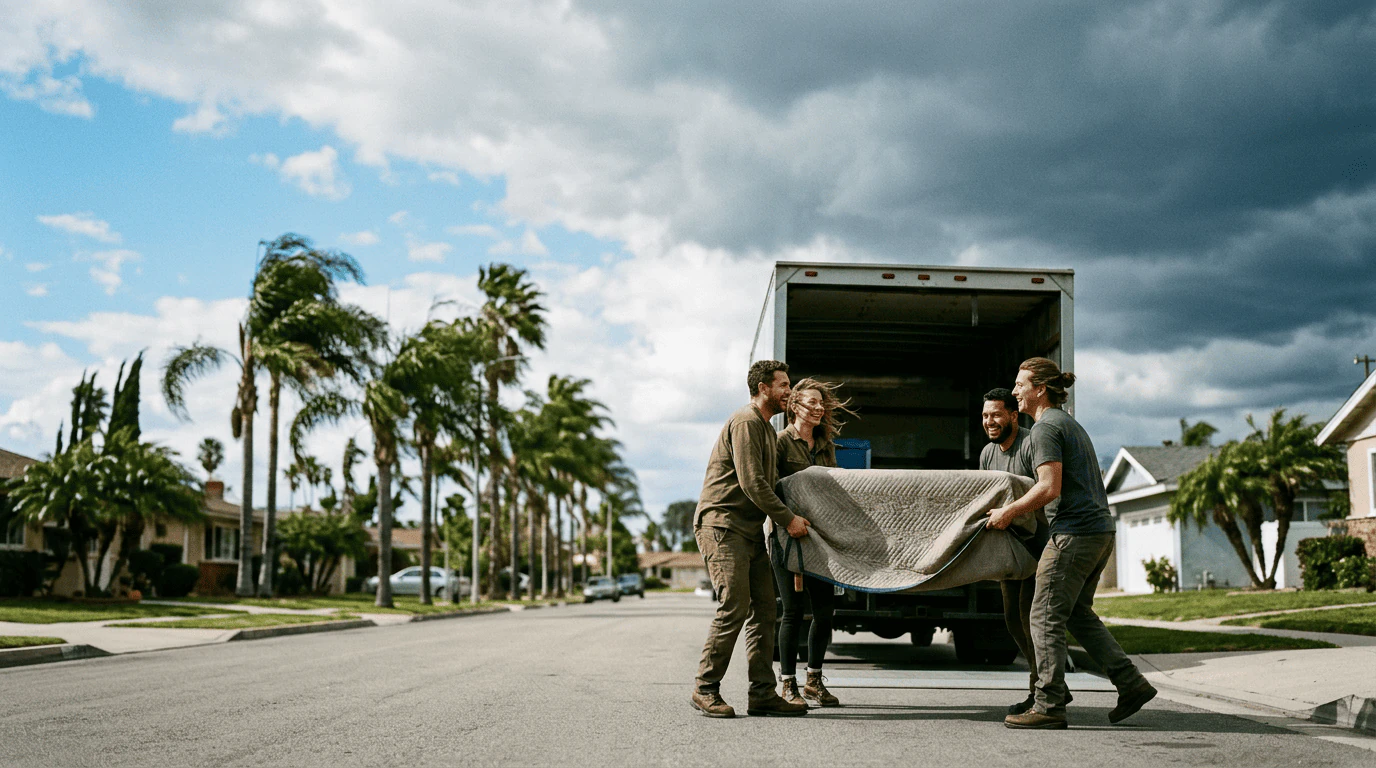
You checked the forecast ten days ago and it showed sunshine. You checked again at five days and saw partly cloudy. Then you woke up on moving day and the sky looks like a different city entirely — dark clouds rolling in from the Pacific, wind picking up, and your moving crew arriving in thirty minutes. What now?
Los Angeles weather is predictable most of the year, but "most" doesn't help when your move falls on one of the exceptions. Heat waves push temperatures past 110 degrees in the Valley. Santa Ana winds gust to 60 mph and turn lightweight items into projectiles. Winter storms dump enough rain in a single afternoon to flood intersections across the city. Each of these scenarios requires a different contingency plan, and building those plans before moving day — not during it — is what separates a stressful disaster from a manageable adjustment.
At SOS Moving, we've moved people through every weather event Los Angeles produces. The moves that go well in bad weather aren't the ones with perfect luck — they're the ones where someone thought ahead.
Heat Waves and Extreme Temperatures
Los Angeles heat waves are the most common weather disruption for moving day, and they're the one most people underestimate because sunshine feels normal until it doesn't.
Summer temperatures in coastal neighborhoods like Santa Monica and Marina del Rey stay manageable — mid-80s with ocean breeze. But ten miles inland, Sherman Oaks, Encino, and Van Nuys regularly hit 100 to 110 degrees during summer heat waves. The difference between a coast move and a Valley move in August isn't just comfort — it's a safety issue.
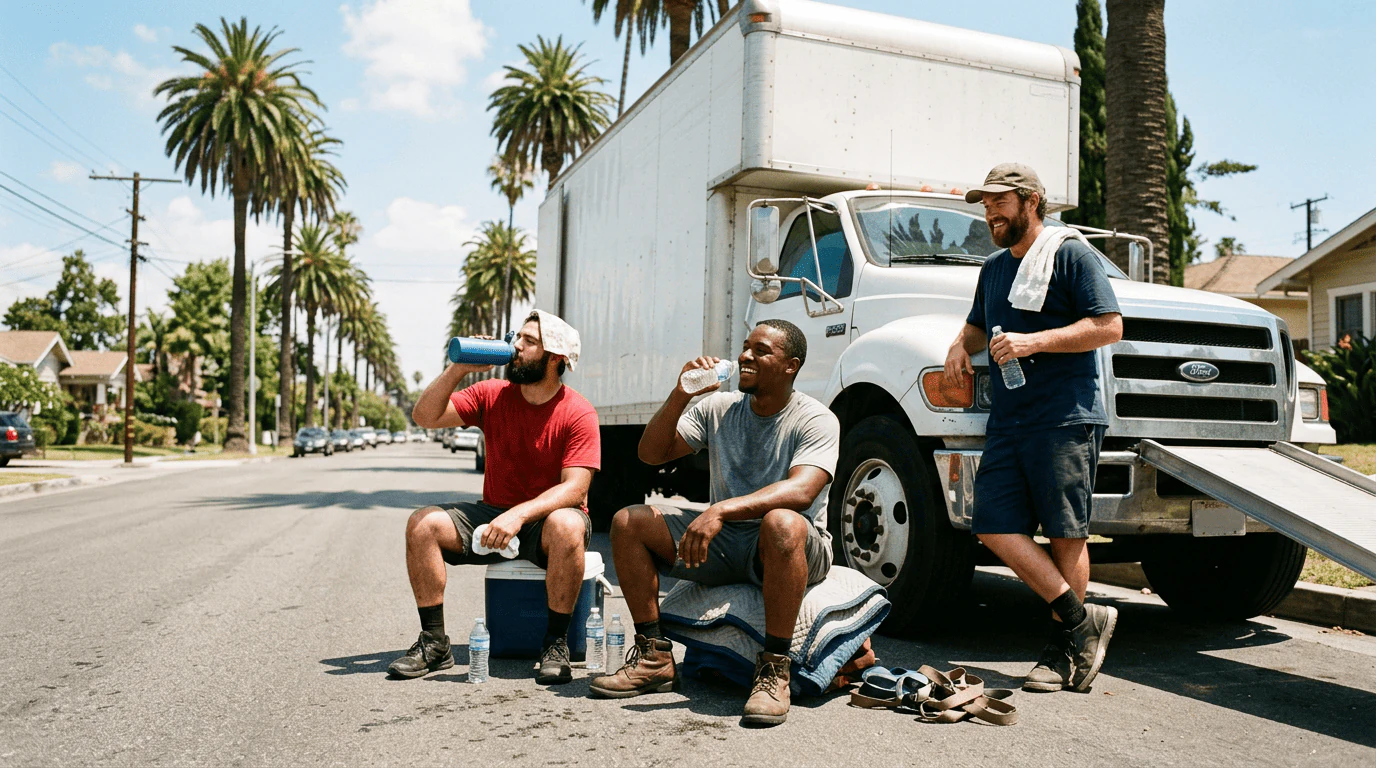
Professional movers working in extreme heat need mandatory hydration breaks every thirty to forty-five minutes. At SOS Moving, our crews carry water coolers on every summer job, but heat still slows the pace. A four-hour move in 75-degree weather can take five hours in 105-degree heat. Factor that extra time into your budget and expectations.
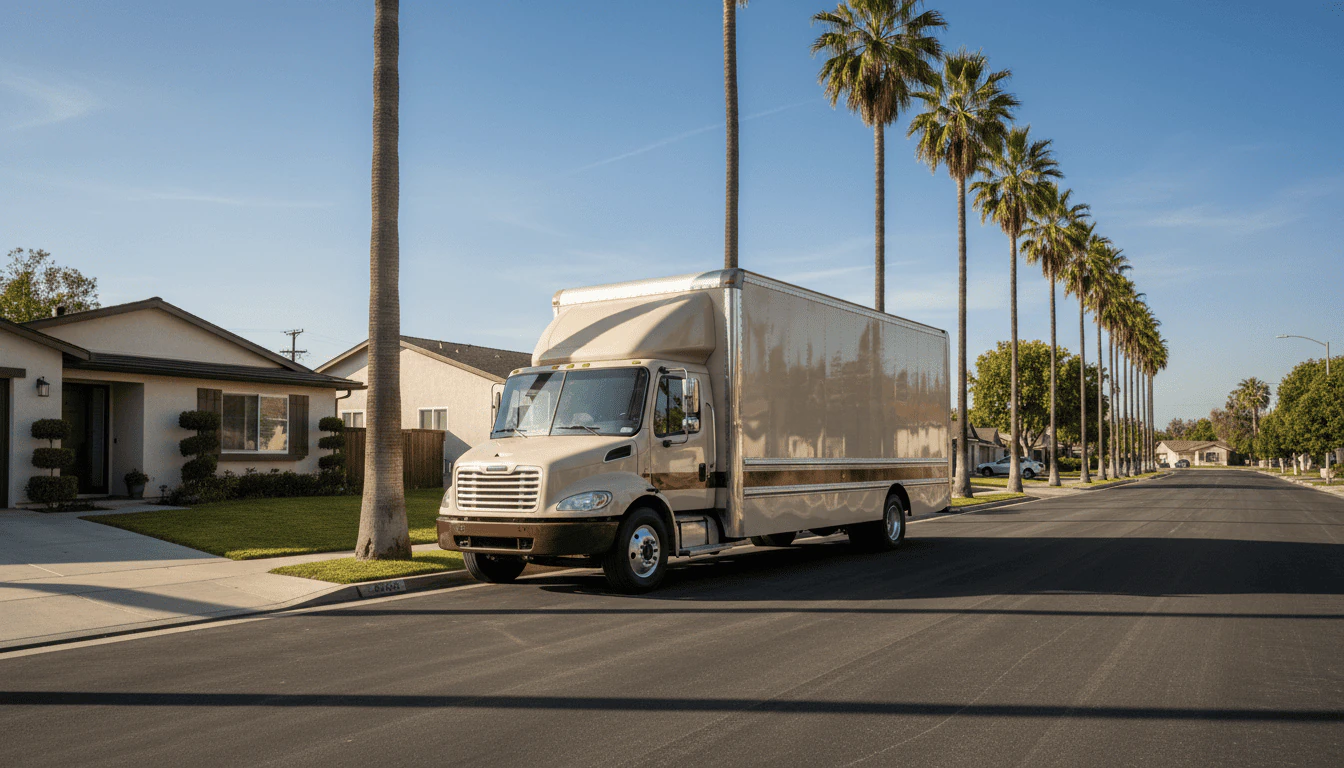
Start early. A 7 AM start on a heat-wave day means your crew works through the coolest hours and finishes before the afternoon peak. By 2 PM on a 110-degree day, the inside of a moving truck parked in direct sun exceeds 140 degrees. Belongings that sit in that environment — candles, vinyl records, electronics, anything with adhesive — can warp, melt, or suffer permanent damage.
Keep the truck cargo door closed between loading trips. Every time the door opens, hot air floods in. Loading in rapid bursts with the door closed between them maintains a lower interior temperature. If your move involves a long drive between locations, park the truck in shade at the destination whenever possible.
Items that are heat-sensitive need special handling. Candles go in your air-conditioned car, not the truck. Electronics travel in the cab if space allows. Wine bottles and anything with wax seals should be packed with ice packs or transported personally. Packing fragile items properly matters even more when heat adds a second threat beyond physical impact.
Rain and Storms
Rain in LA is infrequent but high-impact when it arrives. The city averages 36 rainy days per year, concentrated between November and March, and the infrastructure isn't built for sustained wet weather.
The contingency plan for rain starts five days before your move. Check the hourly forecast — not just the daily summary. LA rainstorms often follow patterns: morning rain clearing by noon, or building through the afternoon with heavy evening downpours. If the forecast shows a narrow dry window, shift your start time to align with it. Most moving companies accommodate time changes with 24 to 48 hours' notice.
If rescheduling isn't possible, preparation is everything. Plastic sheeting over every box that travels between building and truck. Shrink wrap on all upholstered furniture. Mattress bags sealed completely. Moving blankets absorb water like sponges, so wrap items in plastic first, then blankets over the plastic for padding.
The truck cargo area must stay dry. A crew member stationed at the truck door with a tarp during loading keeps rain from entering the cargo space. Floor runners inside both the old and new homes protect against muddy boot prints — which matter when your security deposit is on the line.
The hidden cost of rain is drive time. LA freeways during rain slow to half their normal speed as accident rates spike. A cross-town move that takes twenty minutes dry can take an hour in heavy rain. For hourly-rate moves, that extra time adds directly to your bill. Plan for it rather than being surprised.
Santa Ana Winds
Santa Ana winds are LA's most underestimated moving hazard. These hot, dry winds blow from the inland deserts toward the coast, typically between October and March, with gusts that can exceed 60 mph in canyons and hillside neighborhoods.
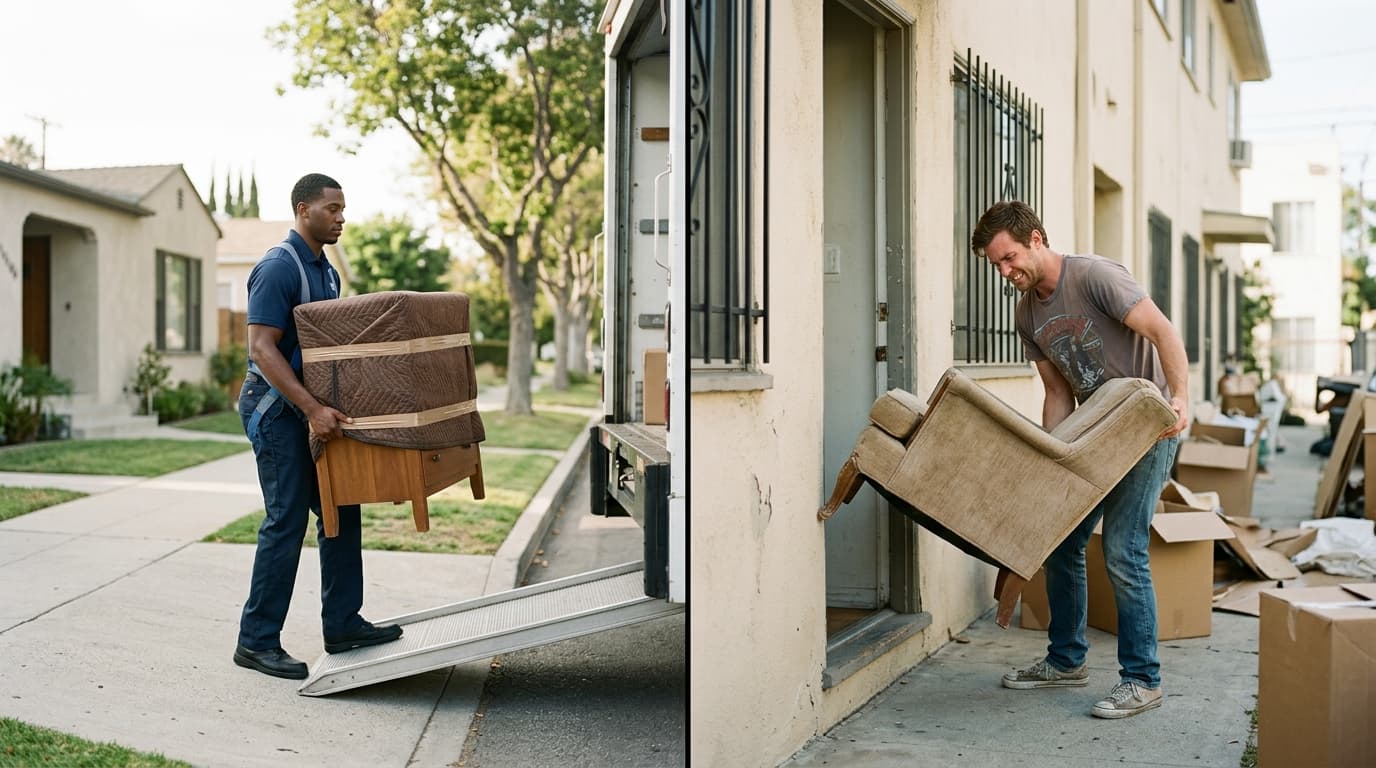
Wind doesn't stop a move the way rain can, but it changes every outdoor operation. Lightweight items — lampshades, empty bookshelves, framed artwork, decorative pieces — catch wind and become difficult or dangerous to carry. A gust that hits a mover carrying a large flat item like a mirror or painting can wrench the item out of their hands or push them off balance.
The contingency plan for wind is sequence-based. Load heavy, dense items first when the wind is typically lighter in the morning. Save lightweight and flat items for calm moments or carry them in groups where multiple people provide stability. Fragile items like mirrors and framed artwork should be packed in padded boxes before the trip between door and truck rather than carried unwrapped.
Truck doors are a specific hazard in high winds. A cargo door caught by a gust swings with enough force to injure someone standing nearby or damage the side of a parked car. Crews working in wind should have one person managing the door at all times — holding it open during loading, securing it closed between trips.
Santa Ana winds also bring extremely low humidity and elevated fire risk. During red flag warnings, some hillside neighborhoods may have active evacuations or road closures that affect your route. Check fire conditions before moving day if your origin or destination is in a canyon or hillside area like Malibu, Calabasas, or the Hollywood Hills.
Building Your Contingency Plan
A weather contingency plan doesn't need to be complicated. It needs to answer four questions before moving day arrives.
First: what's the reschedule policy? Confirm with your moving company how much notice they need for a weather reschedule and whether there's a fee. At SOS Moving, we allow reschedules with 48 hours' notice at no charge. Knowing this in advance means you can make a calm decision based on the forecast rather than panicking the night before.
Second: what's the backup window? If your original date gets rained out, when's your next available slot? Having a backup date in mind — even tentatively — prevents scrambling for last-minute availability. In peak season this matters more, but even in slower months a backup date provides peace of mind.
Third: what materials do you need for each scenario? Heat requires water, shade strategy, and early timing. Rain requires plastic sheeting, mattress bags, and floor runners. Wind requires padded boxes for flat items and door management. Buy or confirm these materials before moving day so you're not shopping at Home Depot at 6 AM while your crew waits.
Fourth: who makes the call? If you're moving with a partner or roommate, decide in advance who has authority to reschedule, adjust timing, or approve weather-related changes. A crew standing at your door while two people debate whether to proceed wastes money and time.
Weather won't wait — but your plan can be ready. SOS Moving crews arrive prepared for every LA weather condition with protective materials, flexible scheduling, and the experience to adapt on the fly. Call 909-443-0004 or get your free estimate.
What Your Moving Company Should Provide
A professional moving company's weather response tells you a lot about their overall quality. Here's what to expect from a crew that knows what they're doing.
Protective materials should be standard, not upsold during a crisis. At SOS Moving, every job includes unlimited shrink wrap, premium moving blankets, heavy-duty tape, and wardrobe boxes at no extra cost. On rain days, we add plastic sheeting and tarps from our own inventory. A company that charges extra for rain protection on the day of your move is a company that profits from your bad luck rather than solving your problem.
Crew communication should be proactive. If your movers see concerning weather in the forecast, they should contact you before moving day to discuss options — not wait for you to call them. A text or call 24 hours before the move saying "tomorrow's forecast shows rain from 8 to 11 AM, would you like to push the start time to noon?" demonstrates the kind of professionalism that separates reliable companies from ones that just show up and hope for the best.
Flexible timing should be available without penalty when weather is the cause. Shifting a start time by two or three hours to work around a storm window is reasonable, and a company that charges a rescheduling fee for weather-related adjustments is one to think twice about hiring. Weather is neither party's fault, and penalizing the customer for it is poor business practice.
Equipment adaptation means the crew adjusts their technique to conditions. In heat, they pace themselves and hydrate. In rain, they manage the truck door and lay runners. In wind, they secure loose items and handle flat pieces with extra hands. These aren't heroic measures — they're basic competence for a company that works in Southern California year-round.
The Decision to Move or Wait
Sometimes the right call is to postpone, and knowing when to make that call saves more than it costs.
Postpone if the forecast shows sustained heavy rain for your entire moving window with no dry breaks. A full-day rain move costs more in extra hours, risks water damage despite precautions, and creates stress that makes an already demanding day miserable. Rescheduling by 24 to 48 hours to hit a dry window is almost always the better financial and emotional decision.
Postpone if temperatures exceed 110 degrees and your move involves outdoor exposure — ground-floor houses, street-level apartment loading, or moves without covered loading docks. Heat exhaustion is a real risk for movers working in extreme temperatures, and a crew that pushes through dangerous heat is a liability, not an asset.
Proceed with adjustments if rain is intermittent with clear dry windows, if temperatures are high but manageable with early timing and hydration, or if wind is steady but below 30 mph. Most weather challenges in LA are inconveniences, not showstoppers. A professional crew with proper materials handles these conditions routinely.
The cost of postponing is typically limited to schedule disruption. The cost of proceeding without preparation can include damaged belongings, injury, extended labor hours, and stress that colors your entire first week in your new home. When in doubt, wait.
Frequently Asked Questions
Should I cancel my move if it's going to rain? Not necessarily. Light to moderate rain with dry breaks is manageable with proper preparation. Heavy sustained rain for the full day warrants rescheduling. Check the hourly forecast, not just the daily summary.
Does extreme heat damage my belongings during a move? Yes. The interior of a moving truck in direct sun can exceed 140 degrees. Candles, vinyl records, electronics, and adhesive-based items are vulnerable. Start early, keep the cargo door closed between loads, and transport heat-sensitive items in your air-conditioned car.
Will my moving company charge extra for bad weather? Reputable companies don't add weather surcharges. However, bad weather typically extends the move duration, which increases the total cost on hourly-rate jobs. Budget an extra one to two hours for rain or extreme heat moves.
What wind speed is too dangerous for moving? Sustained winds above 40 mph with gusts exceeding 50 mph make outdoor carrying of large or flat items dangerous. Most moves proceed safely in winds up to 25 to 30 mph with adjusted techniques. Check wind forecasts for your specific neighborhood, as canyon and hillside areas experience stronger gusts.
How far in advance should I check the weather before my move? Monitor the ten-day forecast starting two weeks out for general awareness. Make decisions based on the five-day forecast, which is significantly more accurate. Check the hourly forecast the evening before for final timing adjustments.
Get Started with a Weather-Ready Move
SOS Moving prepares for every weather scenario Los Angeles can produce — heat, rain, wind, or all three in the same week. Our crews carry protective materials on every job, communicate proactively about weather concerns, and adjust scheduling without penalty when conditions require it. Call 909-443-0004 or request your free estimate to book a move that's planned for sunshine but ready for anything.