

Three weeks ago I spent an hour on the phone with a client moving from Boston's Back Bay to Pasadena — she had two kids, a remote tech job, an aging golden retriever, and no idea whether to look in Bungalow Heaven, Hastings Ranch, or somewhere closer to Old Town. She'd already signed with my team for the cross-country leg, but the neighborhood question kept her up at night. By the end of that call we'd mapped her short list, talked through school boundaries, and figured out which streets would actually fit a 26-foot truck on delivery day. That conversation is exactly why I wrote this Pasadena neighborhood guide Los Angeles 2026 — because the questions she asked are the questions I get every single week.
I'm Sarah Mitchell, a Customer Relations Manager at SOS Moving, and I've walked hundreds of new Pasadena residents through the same decisions: where to live, what to pay, how to insure the move, and what to expect that first month. Below is the honest version — what I tell my clients on the phone, with current 2026 numbers and the specific local quirks that don't show up on real estate sites.
Why People Are Choosing Pasadena in 2026
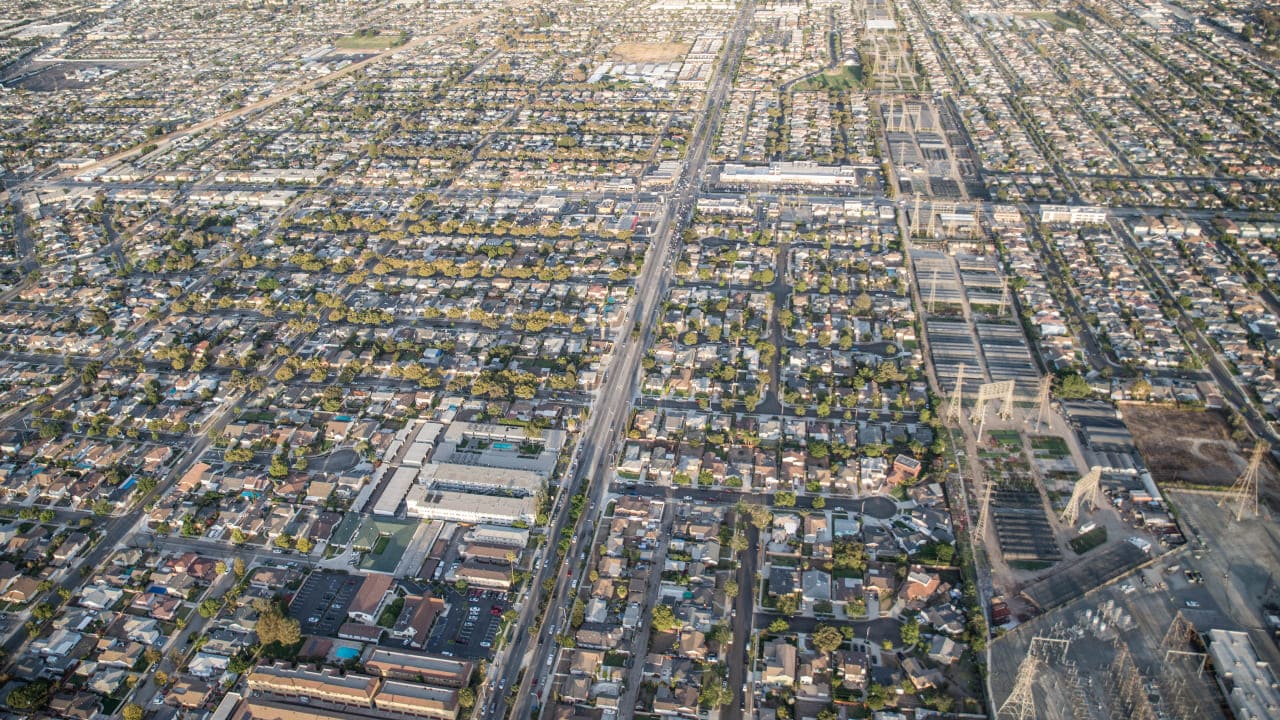
Pasadena sits about 11 miles northeast of downtown LA, tucked against the San Gabriel foothills, and it's a different animal from the rest of the metro. The streets are wider, the trees are older, and the architecture skews Craftsman, Spanish Colonial, and Mid-Century in a way that makes the entire city feel curated. As of 2026, I'm seeing three groups gravitate here consistently: families priced out of Santa Monica and the Westside, remote workers who want a real downtown without high-rise density, and Caltech and Huntington Hospital staff who want a short commute. We run that 11-mile corridor with Pasadena movers weekly.
The pull factors I hear most often on intake calls: top-rated public and private schools (especially in the Linda Vista and San Rafael pockets), the Gold Line Metro A connection straight into DTLA, walkable Old Town and South Lake retail districts, and a noticeable drop in traffic noise compared to anywhere west of the 5. The tradeoff is summer heat — Pasadena routinely runs 8–12 degrees warmer than the coast — and you'll want central AC on your must-have list. Property taxes are standard California (roughly 1.1–1.25% effective rate), and homeowner's insurance has gotten more attentive to brush-fire zones in the foothill ZIPs, which I'll cover below.
Bungalow Heaven, Madison Heights & the Historic Core
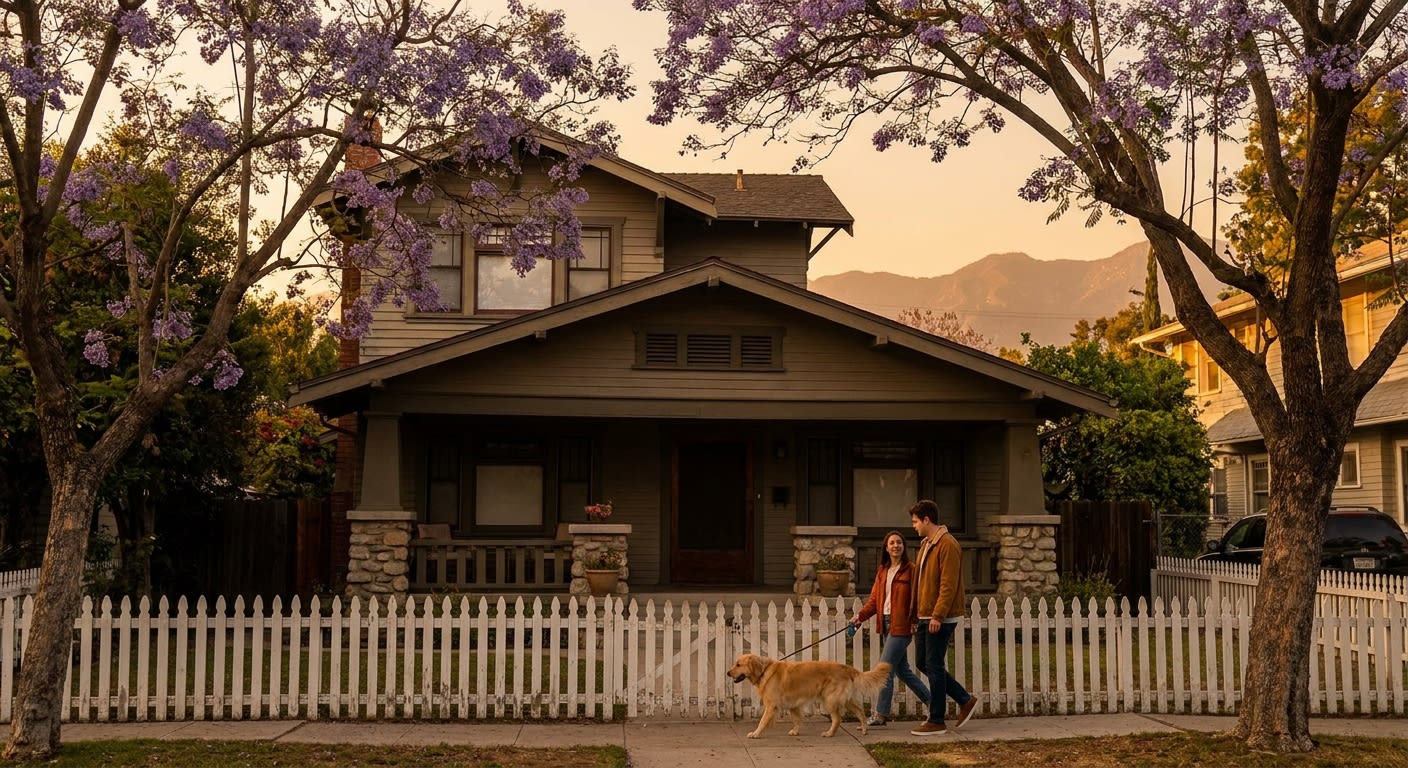
If you want the postcard version of Pasadena, you want one of the historic landmark districts. Bungalow Heaven is the most famous — 16 blocks of preserved 1900s–1930s Craftsman homes between Lake Avenue and Hill Avenue, north of Orange Grove. As of early 2026, restored 2–3 bedroom bungalows in this pocket trade in the roughly $1.3M–$1.8M range, and rentals (when they appear) run about $4,200–$5,800 a month for a 3-bedroom.
Madison Heights, just south of the 210 and bordered roughly by Lake, Los Robles, California, and Del Mar, gives you a similar architectural feel with slightly larger lots. Both districts have strict historic preservation rules — exterior changes, even paint colors, often need Design Review approval, and I always warn clients before they buy: budget extra time and money for any cosmetic work.
On moving day, these streets are narrow and tree-canopied. My crews almost always shuttle from a 26-foot truck into a smaller vehicle for the last 100 feet, or we negotiate temporary parking with neighbors. If you're targeting these neighborhoods, expect a 7–8 hour move-in for a 3-bedroom rather than the usual 5–6, and tell your mover about the canopy clearance issue upfront.
South Lake, Playhouse District & Walkable Pasadena
For clients who want to ditch the second car, I steer them toward South Lake Avenue or the Playhouse District. South Lake is the upscale retail corridor — think bookstores, boutique fitness, sit-down restaurants — and the surrounding side streets have a mix of 1920s duplexes, mid-rise condos, and a handful of new builds. Rents in 2026 for a 1-bedroom apartment run roughly $2,400–$3,100, and 2-bedrooms sit around $3,200–$4,400.
The Playhouse District, centered around the Pasadena Playhouse on El Molino, is slightly more bohemian, with the Vroman's Bookstore corridor and a steady stream of cafés. It's my personal favorite recommendation for young professionals who don't need a yard. Both areas put you within a 10-minute walk of a Gold Line station, which means a 22-minute train ride to Union Station and a much shorter commute to DTLA than driving the 110.
Linda Vista, San Rafael & the Westside Foothills
These are the family-and-money neighborhoods. Linda Vista sits west of the Arroyo Seco, San Rafael is just south, and together they hold some of Pasadena's most desirable single-family homes — large lots, hillside views, and the highest-rated public elementary schools in the district. As of 2026, single-family homes here typically list from $1.6M into the $4M+ range, depending on view and lot size.
The catch: these are hillside streets with steep driveways, switchbacks, and tight turning radii. When I quote moves into Linda Vista or upper San Rafael, I always ask for photos of the driveway approach and the front door access. A standard 26-foot moving truck cannot make some of those turns, and a shuttle adds time and cost. If you're considering one of these homes, ask my colleague William about ops planning in his guide to moving truck parking regulations LA — it covers the kind of permitting and access issues that come up in these foothill streets.
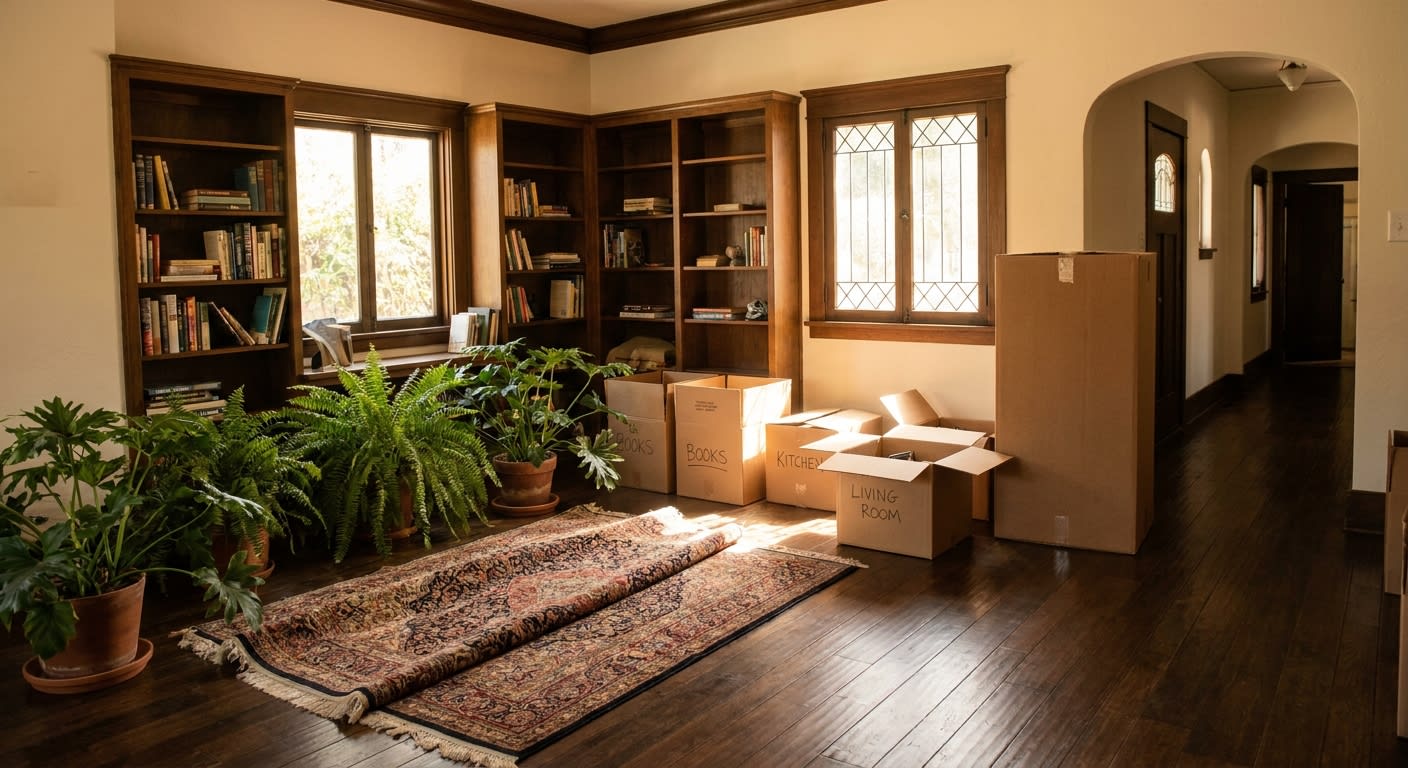
📦 Moving into a historic Pasadena home with delicate built-ins and original woodwork? My white glove moving team handles antique furniture, art, and protected-surface moves the right way. Call (909) 443-0004 for a free walkthrough.
Hastings Ranch, East Pasadena & Family-Friendly Suburbia
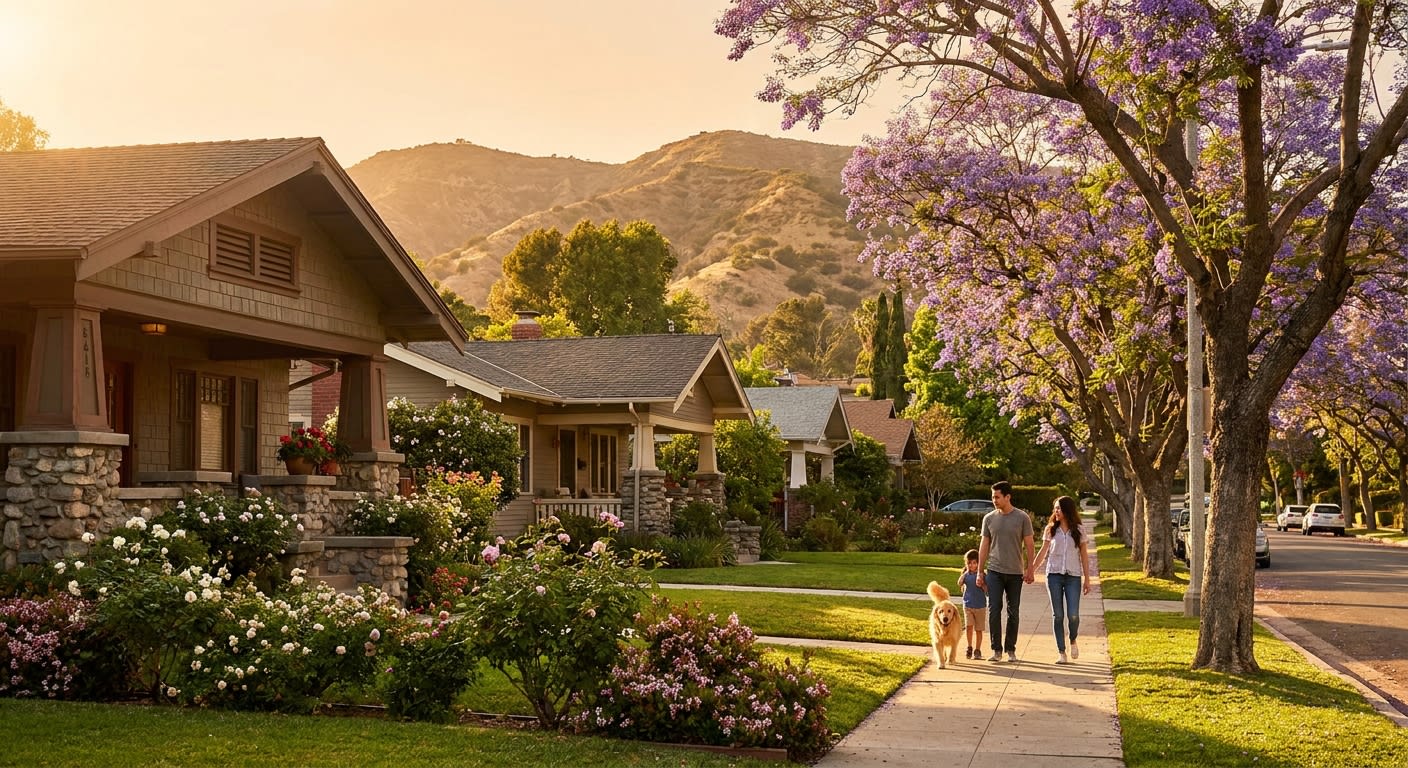
If your priority list is "good schools, big yard, garage, under $1.5M," Hastings Ranch is where I send you. It sits in the northeast corner of the city, bordered roughly by Sierra Madre Boulevard, Altadena Drive, and the 210. The homes are mostly 1950s ranch-style on flat, walkable streets — ideal for kids on bikes. As of 2026, 3-bedroom homes here run roughly $1.1M–$1.6M, and the Hastings Ranch Shopping Center anchors the daily errands.
East Pasadena, a bit further south around Foothill Boulevard, has a more eclectic mix — older apartments, condos, and a strong Asian and Armenian community presence with great food along Colorado Boulevard. Rents are noticeably lower here than west of Lake: 2-bedroom apartments often sit in the $2,400–$3,000 range. For moving logistics, these areas are the easiest in Pasadena — wide streets, regular driveways, no historic permitting. A typical 2-bedroom move runs 5–6 hours with my crew.
Moving Logistics: What to Know Before Your Truck Arrives
SOS Moving is a licensed and insured full-service moving and storage company operating from $119/hour, with thousands of local and long-distance relocations completed stress-free. That hourly rate covers a 2-person crew and truck for in-town moves, and it's the same baseline whether you're going from Eagle Rock to Bungalow Heaven or from San Francisco to South Lake. For Pasadena specifically, I always tell new clients three things during the booking call.
First: Pasadena requires a moving truck permit for any street-side staging on residential blocks longer than the standard load/unload window — my office handles this, but plan 5–7 business days lead time. Second: many historic district HOAs and condo buildings (especially in South Lake) require a Certificate of Insurance naming the building before move day; ask my team to send one as soon as you book. Third: summer afternoons in the foothills regularly hit 95°F+, so I push for morning start times (7–8 AM) between June and September to protect your crew, your belongings, and your move-in pace.
If you're coming from out of state, my colleague Jacob has a useful breakdown in his Dallas to Los Angeles moving guide that walks through interstate transit windows and delivery scheduling — most of his logic applies to any cross-country move ending in Pasadena.
Settling In: Your First Month in Pasadena
This is the section my Boston client said she wished she'd had. Here's what I tell every new arrival to focus on in the first 30 days, drawn from this Pasadena neighborhood guide Los Angeles 2026 conversation I've now had hundreds of times.
Saturday mornings belong to the Victory Park farmers market. It runs year-round on Sierra Madre Boulevard, it's one of the larger certified markets in LA County, and it's the fastest way to feel like a local. The Pasadena Saturday market at Victory Park is where I send everyone for produce, prepared food, and a quick social orientation.
Get your library card the first week. The Pasadena Central Library on Walnut is a 1927 landmark building and the card gives you access to museum passes (including the Huntington and the Norton Simon — both worth real money).
Learn the Rose Bowl loop and the Arroyo trails. The 3.1-mile loop around the Rose Bowl is the city's social treadmill — runners, dog walkers, stroller crews. The flea market on the second Sunday of each month is its own Pasadena institution.
Update your address quickly — DMV, voter registration, USPS forwarding, and your auto insurance (rates change by ZIP). My colleague's guide on how to update your address after moving in Los Angeles covers the specific California sequence and saves you from missing the 10-day DMV window.
Insurance, Valuation & Protecting Your Move
This is the part of my job I care about most. Every California intrastate move comes with default basic valuation — 60 cents per pound, per item — which is essentially nothing on anything modern and electronic. A 70-pound flat-screen TV worth $1,800 is "covered" at $42 under basic valuation. That's the math, and it shocks people.
For Pasadena moves, especially into historic homes with tight access or out of homes with built-in cabinetry and high-value décor, I recommend Full Value Protection. Under FVP, the mover is liable for the actual repair or replacement value of damaged items, subject to the declared valuation on your bill of lading. For a typical 3-bedroom Pasadena home, declaring $60,000–$100,000 in valuation usually costs $400–$700 added to the move, and it's the single best money you'll spend.
If you have art, sculpture, or pieces over $5,000 individually, list them separately on the high-value inventory form before the truck arrives. I also recommend reading my colleague Amir's guide on how to move fine art and sculptures safely in LA before your packing day — it explains the crating and documentation steps that protect those pieces.
FAQ
What's the best Pasadena neighborhood for families with young kids in 2026?
For top-rated elementary schools and big lots, I send families to Linda Vista, San Rafael, or Hastings Ranch. Linda Vista and San Rafael are pricier but offer hillside lots and walkable parks; Hastings Ranch is flatter, more affordable, and has the easiest day-to-day logistics for school drop-off and errands.
How much does it cost to move a 2-bedroom apartment within Pasadena?
As of 2026, a typical 2-bedroom local move with my crew runs roughly $800–$1,400 all-in, depending on stairs, access, and packing needs. Hourly billing starts at $119/hour with a 2-person crew; most 2-bedroom apartments finish in 5–6 hours. Historic district addresses add 1–2 hours for shuttle and access.
Is Pasadena a good choice if I commute to downtown LA?
Yes, especially if you're near a Gold Line Metro A station. The train runs from Pasadena into Union Station in about 22 minutes, which beats driving the 110 during rush hour. Driving without traffic is 20 minutes; with traffic, you're looking at 45–60 minutes each way.
Do I need a permit to park a moving truck in Pasadena?
For most residential blocks, yes — particularly if you're staging more than the standard load/unload window or blocking part of the roadway. My office handles the permit application, but I need 5–7 business days of notice. Historic districts and South Lake high-rises also typically require a building Certificate of Insurance.
What should I budget for renter's or homeowner's insurance in Pasadena?
Renter's insurance in 2026 averages roughly $18–$28 a month for $30,000 in personal property coverage. Homeowner's insurance varies more, especially in foothill ZIPs near Altadena and the brush-fire boundary — expect anywhere from $1,400 to $4,000+ annually depending on construction, square footage, and fire zone designation.
When is the cheapest time to move to Pasadena?
Mid-week, mid-month, between October and April. Summer weekends are peak — rates and crew availability tighten significantly from Memorial Day through Labor Day. If your timing is flexible, a Tuesday in November will save you 15–20% over a Saturday in July.
Ready to plan your Pasadena move with someone who knows the streets, the permits, and the historic district quirks? SOS Moving serves Los Angeles, Orange County, and the San Francisco Bay Area. Call (909) 443-0004, email info@sosmovingla.net, or get a free quote. Licensed & insured — full-service moving and storage from $119/hour.


.jpg)