

Dallas and Los Angeles are two of the largest metro areas in the country, but they operate on completely different logic. Dallas sprawls across flat prairie with cheap land, no zoning restrictions, and highways designed for speed. Los Angeles sprawls across mountains, valleys, and coastline with expensive land, dense regulations, and highways designed for capacity that they exceeded decades ago. Moving between them isn't just changing your address — it's changing the rules of how a city works around you.
At SOS Moving, the Dallas-to-LA corridor ranks among our busiest Texas routes alongside Austin. The clients who make this move typically fall into two categories: entertainment and media professionals who need to be in LA for their career, and people who've decided that Dallas's rapid growth has pushed the city past the tipping point where its advantages — affordability, space, no income tax — no longer outweigh what they're missing on the coast. This guide covers the cost, the route, and everything that changes when you trade the DFW Metroplex for the LA basin.
What the Dallas to LA Move Costs
The 1,435-mile distance puts Dallas-to-LA firmly in full-service interstate territory with flat-rate pricing based on inventory weight and service level.
A one-bedroom apartment runs $3,000 to $5,000 for full-service professional movers including loading, transport, and unloading. A two-bedroom home costs $5,000 to $8,000. A three-bedroom house with a garage — and Dallas garages tend to be large, accumulating more belongings than LA equivalents — pushes $8,000 to $13,000. Full packing services where the crew handles everything add $500 to $1,500 depending on household size.
The DIY approach at this distance involves trade-offs that go beyond money. A one-way U-Haul from Dallas to LA costs $2,200 to $3,800 for a 26-foot truck. Add $350 to $450 in fuel for the two-day drive, one to two nights of hotels at $100 to $150 each, road meals, and the physical reality of loading and unloading a full household without professional help. Total DIY cost: $2,800 to $4,600 — savings of $200 to $2,000 over professional movers, but at the cost of two exhausting days behind the wheel and the risk of damage to belongings that weren't professionally packed or loaded.
At SOS Moving, Dallas-to-LA moves are quoted as flat-rate interstate jobs. The quote includes all protective materials — moving blankets, unlimited shrink wrap, heavy-duty tape, and wardrobe boxes — at no extra cost. Standard transit runs five to eight business days, with expedited delivery in three to four days available for time-sensitive moves.
Route Options and Transit
Two primary routes connect Dallas to Los Angeles, and professional carriers choose based on season, weather, and efficiency.
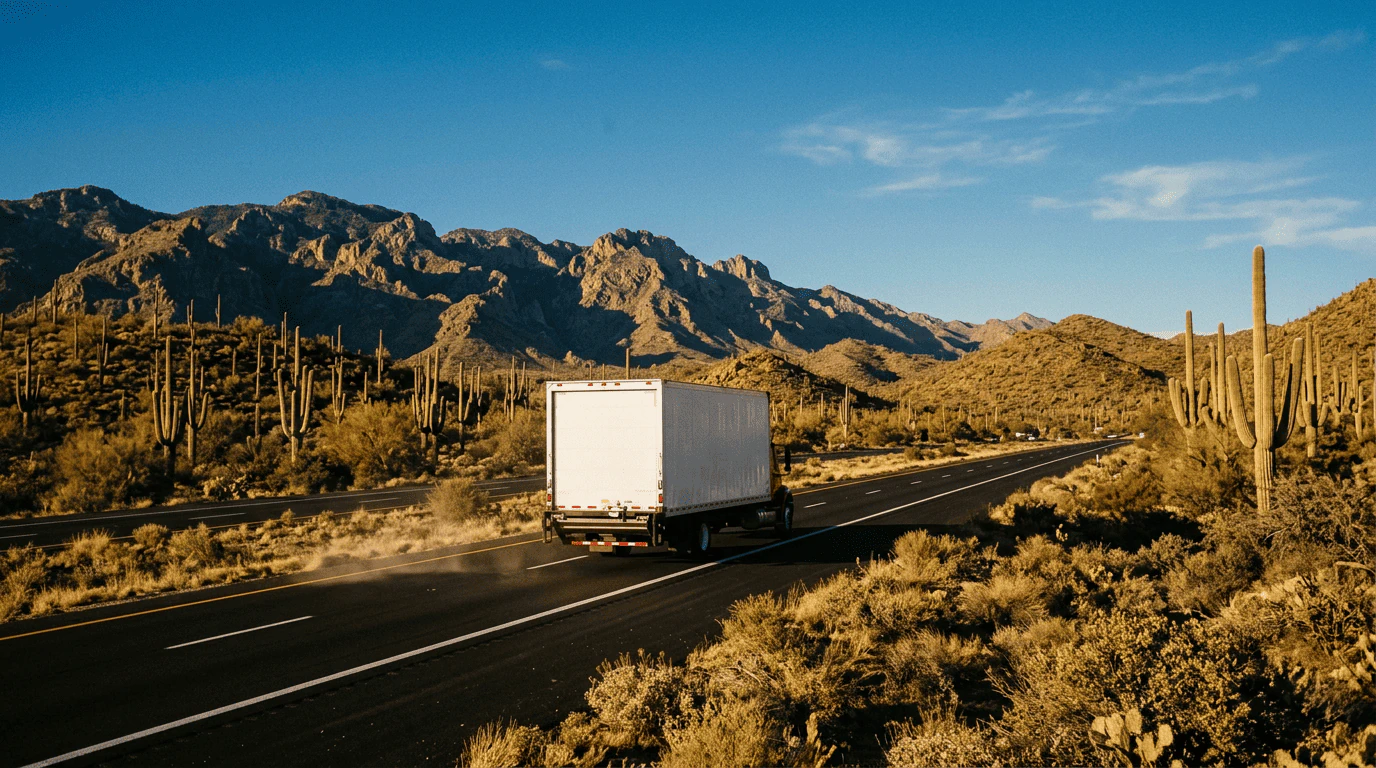
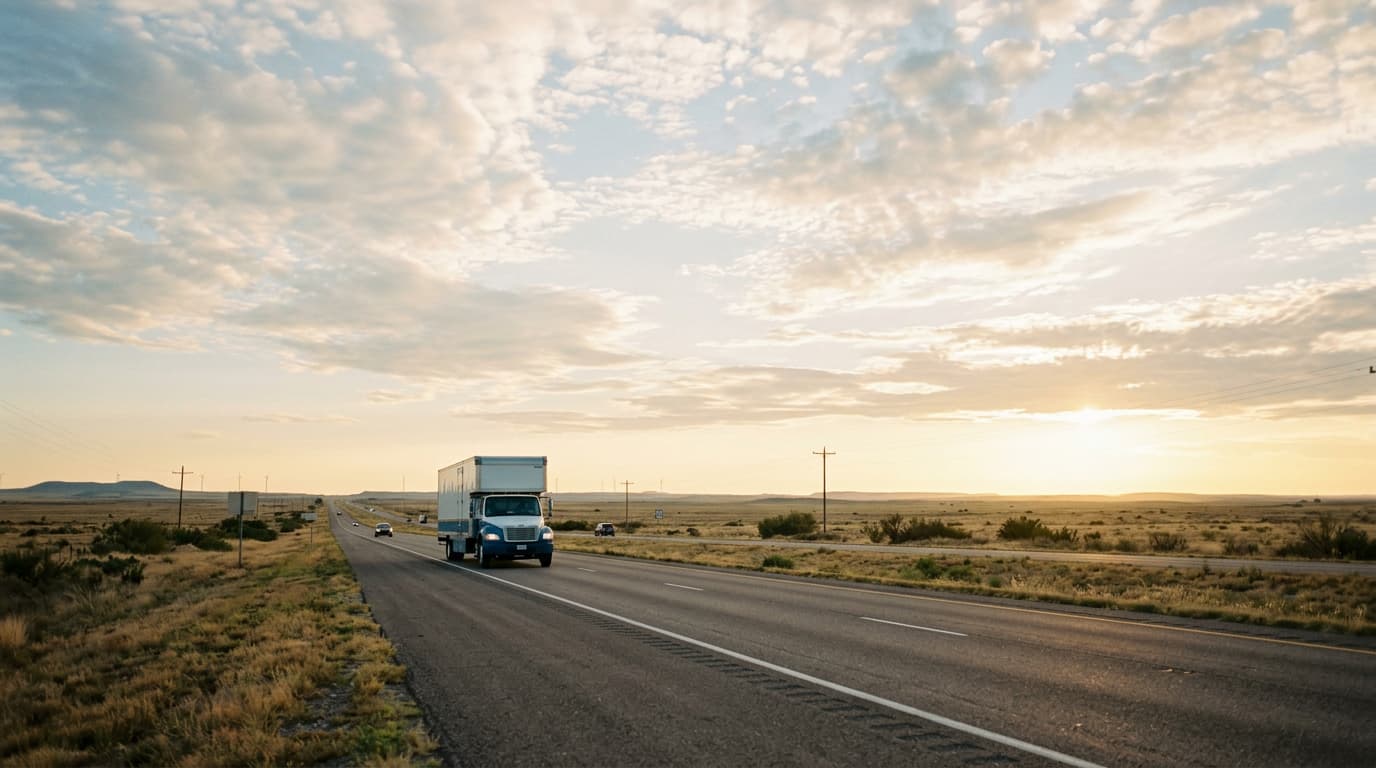
The I-20/I-10 southern route heads west from Dallas through Midland-Odessa, crosses into New Mexico at El Paso, continues across southern New Mexico and Arizona, and enters LA from the east through the Inland Empire. This route covers approximately 1,435 miles and is the most direct path. Professional drivers prefer it year-round because it stays at relatively low elevation, avoids mountain passes, and has consistent fuel and rest stop access along the entire corridor. The only weather variable is summer heat through West Texas and Arizona, where temperatures regularly exceed 110 degrees between June and September.
The I-40 northern route goes west through Amarillo, across the Texas Panhandle, through Albuquerque, and into LA via Flagstaff and the Mojave Desert. This adds roughly 50 to 75 miles but passes through more varied terrain and slightly cooler temperatures at the higher elevations through New Mexico and Arizona. Winter moves benefit from this route when I-10 through southern New Mexico occasionally sees ice storms, though the Flagstaff section of I-40 itself can see snow between November and March.
Transit time for professional movers is five to eight business days for standard delivery. Your belongings are loaded in Dallas, transported by our carrier network, and delivered to your LA address. Expedited service with dedicated truck space reduces transit to three to four days. If your LA lease starts on a specific date, discuss delivery windows during the quoting process — a day or two of buffer between expected delivery and your first day at a new job prevents the stress of living out of a suitcase while waiting for your furniture.
The same heat protection protocols that apply to desert moves apply here. Both routes cross hundreds of miles of terrain where the interior of a moving truck exceeds 140 degrees. Candles, electronics, vinyl records, and anything heat-sensitive should travel in your air-conditioned car rather than the truck's cargo area.
The Financial Reality: Dallas to LA
The cost-of-living adjustment from Dallas to Los Angeles is the most significant financial change in this move, and understanding the numbers before you arrive prevents the budget shock that catches every unprepared transplant.
State income tax is the headline. Texas has none. California's progressive rate starts at one percent and climbs past thirteen percent for high earners. For a household earning $120,000, the California state income tax bill is approximately $5,500 to $6,500 annually — money that didn't exist as an expense line in Dallas. On $200,000, the hit approaches $13,000 to $15,000. This is real, recurring, and non-negotiable. Factor it into your LA budget from day one.
Housing is where the numbers hit hardest. Dallas's median home price of roughly $350,000 buys a four-bedroom house with a two-car garage in a good school district. That same $350,000 in Los Angeles buys nothing in any neighborhood you'd want to live in — LA's median exceeds $900,000. Rental markets show a similar gap: a two-bedroom apartment averaging $1,500 to $1,800 in Dallas runs $2,800 to $3,500 in comparable LA neighborhoods.
The scale difference is dramatic enough that many Dallas transplants downsize significantly. A 2,500-square-foot Dallas house becomes a 1,200-square-foot LA apartment at the same monthly cost. This downsizing directly affects your move — furniture, appliances, and accumulated belongings that fit comfortably in a Dallas home may not fit in an LA apartment. Consider your new floor plan before paying to ship everything across 1,435 miles.
The offsets that partially compensate: LA salaries generally run 15 to 30 percent higher for equivalent positions, particularly in entertainment, tech, healthcare, and professional services. California's consumer protections, tenant rights, and labor laws provide financial benefits that don't appear as salary line items. Mild coastal climate eliminates the $200 to $400 summer electric bills that Dallas AC generates. And you'll never buy another ice scraper.
What Dallas Transplants Notice First
Every city-to-city move involves a period of adjustment, and Dallas transplants consistently mention the same surprises during their first months in LA.
Space shrinks immediately. Dallas is built on the assumption that land is cheap and abundant — oversized parking lots, wide highways, sprawling floor plans, and garages that double as storage units. LA is built on the assumption that space is precious — compact apartments, street parking, narrow lots, and the constant feeling that your physical world contracted. The adjustment is real and takes roughly three months before the smaller scale stops feeling like a downgrade and starts feeling like efficiency.
Traffic operates differently, not just worse. Dallas traffic is fast-moving until it stops — the sudden congestion around I-35/I-635 interchanges or the I-30/I-35 merge creates abrupt slowdowns that clear relatively quickly. LA traffic is slow-moving consistently — the 405, the 10, and the 101 during rush hour maintain a steady crawl speed that can extend for twenty miles. Dallas transplants describe LA traffic as "more predictable but less escapable." You'll spend more total time in traffic, but you'll learn to predict when and plan around it.
The food shift is lateral, not downward. Dallas's barbecue, Tex-Mex, and steak culture has no equivalent in LA. You will miss Pecan Lodge brisket. You will miss breakfast tacos. But LA's Mexican food — different regional styles than Tex-Mex — is extraordinary. The Korean food in Koreatown, the Japanese food in Little Tokyo, the Thai food in Thai Town, and the taco culture across the Eastside offer a culinary breadth that Dallas is still developing. The food doesn't get worse — it changes entirely.
The weather adjustment is almost entirely positive. Dallas's summer heat (100+ degrees with 60 percent humidity) and occasional ice storms (Snowmageddon memories) are replaced by LA's coastal temperatures that sit between 60 and 85 degrees year-round with minimal humidity. The first Dallas transplant who walks outside in January wearing a t-shirt and finds it comfortable has a conversion moment that justifies the entire move.

Making the move from Dallas to LA? SOS Moving handles the Los Angeles side of your Texas relocation with flat-rate pricing, all materials included, and a crew that knows LA logistics inside out. Call 909-443-0004 or get your free estimate.
Downsizing Strategy for the Dallas to LA Move
The space difference between Dallas and LA living means most transplants need a downsizing strategy before the moving truck loads.
Start with the garage. Dallas garages are de facto storage units — seasonal decorations, sporting equipment, tools, lawn care equipment (you won't have a lawn in most LA apartments), and the accumulated overflow of spacious living. Most of this doesn't transfer to LA. Sell power tools you won't need without a yard. Donate the Christmas decorations that don't fit in a 1,200-square-foot apartment. The lawn mower, leaf blower, and garden tools stay in Texas.
Furniture scaling is critical. The king-size bedroom set that fills a Dallas master bedroom won't fit in most LA bedrooms, which are proportionally smaller. A six-person dining table that works in a Dallas dining room overwhelms an LA apartment's dining area. Measure your new LA space — request floor plans from the landlord or visit in person during your house-hunting trip — and compare against your current furniture dimensions before paying to ship pieces that won't work.
The consolidation approach often works better than storage for Dallas transplants. Rather than shipping everything to LA and renting a storage unit for the overflow, sort and downsize in Dallas where selling furniture is easier — the Dallas market for used furniture is active and prices are fair. Every item you sell in Dallas is an item you don't pay to transport and don't pay to store in LA's more expensive storage market.
A practical benchmark: if your Dallas household fills a 26-foot truck, plan to reduce by 30 to 40 percent for a comfortable fit in an average LA apartment. That means a 17-foot truck's worth of belongings or roughly twenty to twenty-five fewer boxes and three to four fewer major furniture pieces.
Setting Up in Los Angeles
The administrative transition from Texas to California follows a specific sequence that new arrivals should complete during their first month.
California driver's license within twenty days of establishing residency. The DMV appointment system works — book online the day you arrive. Walk-in waits at busy locations can exceed two hours. The Glendale and Culver City offices tend to have shorter queues than Hollywood or Santa Monica.
Vehicle registration and smog check within ten days. California's smog requirements are stricter than Texas's inspection standards, but most well-maintained vehicles pass without issue. Budget $50 for the smog test and have it completed before your DMV appointment so you can handle license and registration in a single visit.
Renter's insurance before your landlord hands over keys. Most LA landlords require proof of renter's insurance as a move-in condition. Policies cost $15 to $30 per month and cover personal property, liability, and temporary housing. Understanding how moving insurance works alongside renter's insurance ensures you're fully covered during and after the transition.
Explore neighborhoods the first two weekends. Dallas transplants often choose their LA neighborhood based on commute distance — which is logical but incomplete. LA neighborhoods have distinct personalities that online research can't capture. Silver Lake feels completely different from Marina del Rey, which feels nothing like Sherman Oaks. Walk the neighborhoods, eat at local restaurants, check parking at 7 PM on a weekday, and make sure the community fits your lifestyle before committing to a twelve-month lease.
Frequently Asked Questions
How long does the Dallas to LA move take? Professional movers deliver within five to eight business days for standard service. Expedited delivery takes three to four days. The driving distance is approximately 1,435 miles, or roughly twenty to twenty-two hours of drive time split across two days.
What is the cheapest time to move from Dallas to LA? January through March offers the lowest rates and best availability. Summer months — June through August — see peak pricing on both ends. Mid-month moves are consistently cheaper than end-of-month transitions when lease cycles create demand spikes.
Should I ship my car from Dallas to LA? If you're not driving yourself, open-carrier auto transport from Dallas to LA costs $1,000 to $1,500 and takes seven to ten days. Enclosed transport for luxury vehicles runs $1,500 to $2,400. If you are driving, the route takes two days with one hotel stop.
How much more expensive is LA than Dallas? Housing costs are 80 to 120 percent higher. State income tax adds 5 to 13 percent depending on income. Groceries are 10 to 15 percent higher. Gas costs roughly $1.00 to $1.50 more per gallon. Salaries are typically 15 to 30 percent higher in comparable roles.
What LA neighborhoods feel most like Dallas suburbs? The San Fernando Valley — Sherman Oaks, Encino, Studio City — offers the closest suburban feel with larger homes, wider streets, and a more car-dependent lifestyle. The South Bay communities — Manhattan Beach, Hermosa Beach, Torrance — offer family-friendly suburban character with beach access.
Get Started with Your Dallas to LA Move
SOS Moving coordinates the Los Angeles side of your Dallas relocation with flat-rate pricing, all materials included, and local expertise that gets you settled efficiently. Call 909-443-0004 or request your free estimate to start planning your move from the Metroplex to the City of Angels.