


The Austin-to-LA migration runs against the dominant traffic pattern. For every person moving from Austin to Los Angeles, roughly three move the opposite direction. That means you're making a deliberate choice — trading Texas affordability, zero state income tax, and a booming tech scene for California's coast, entertainment industry access, and a metro area ten times the size of what you're leaving. The people who make this move typically have a specific reason: a career in entertainment or media, a partner who lives on the West Coast, or the realization that Austin's rapid growth has turned it into something different from the city they originally chose.
At SOS Moving, the Austin-to-LA route is one we coordinate regularly. The 1,375-mile distance puts it squarely in full-service interstate territory — too far for a casual weekend drive with a rental truck, too important to hand off to a broker who subcontracts to whoever is cheapest. This guide covers what the move costs, how the route works, and what changes when you swap Barton Springs for Santa Monica beach.
What the Austin to LA Move Costs
Interstate moving costs on the Austin-to-LA corridor depend on shipment weight, service level, and timing. Here's where the numbers land for real moves in 2026.
A one-bedroom apartment runs $2,800 to $4,500 for full-service professional movers. A two-bedroom home with standard furnishings costs $4,500 to $7,500. A three-bedroom house with a garage pushes $7,000 to $11,000. These ranges cover loading in Austin, interstate transport, and unloading in Los Angeles. Full packing services — where the crew packs everything for you before loading — add $500 to $1,500 depending on household size.
The DIY comparison is less appealing at this distance than it is for shorter routes. A one-way U-Haul from Austin to LA runs $2,000 to $3,500 for a 26-foot truck, plus $300 to $400 in fuel for the two-day drive, plus hotels, meals, and the physical toll of loading and unloading without professional help. The savings over professional movers narrow significantly when you factor in the full cost of doing it yourself — and the risk of driving an unfamiliar large vehicle across 1,375 miles of highway eliminates any savings if something goes wrong.
At SOS Moving, Austin-to-LA moves are quoted as flat-rate interstate jobs based on your inventory and timeline. The quote includes all protective materials — moving blankets, unlimited shrink wrap, heavy-duty tape, and wardrobe boxes — at no extra cost. No surprise charges for stairs, long carries, or multiple stops.
Route Options and Transit Time
Two primary routes connect Austin to Los Angeles, and the choice depends on season, weather, and personal preference.
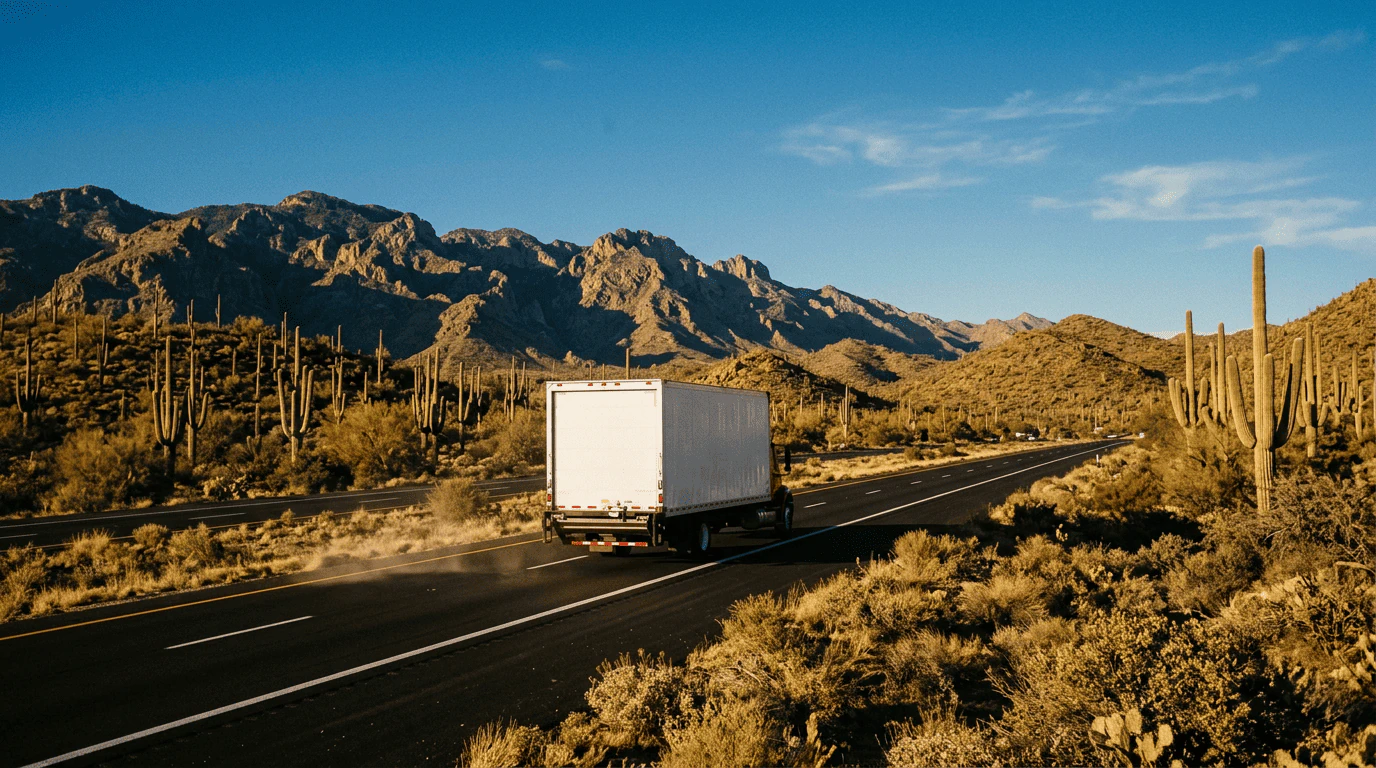
The southern route follows I-10 west through San Antonio, across the vast emptiness of West Texas, through El Paso, across southern New Mexico and Arizona, and into LA via the eastern suburbs. This route covers approximately 1,375 miles and takes roughly twenty hours of drive time. It's the most direct path and the route professional drivers prefer year-round because it avoids mountain passes and stays at relatively low elevation throughout.
The northern route takes I-40 west through Dallas-Fort Worth area, across the Texas Panhandle, through Albuquerque, and into LA via Flagstaff and the Mojave Desert on I-40 to I-15. This adds roughly 100 miles and an extra two hours of drive time but passes through more interesting terrain — and avoids the desolate 550-mile stretch of I-10 between San Antonio and El Paso that breaks the spirits of even experienced road-trippers.
Professional moving trucks typically take the I-10 route for efficiency. Transit time for a full-service move is five to eight business days from loading to delivery. Expedited delivery — where your shipment gets dedicated truck space rather than sharing with other loads — reduces transit to three to four days but costs more. If timing is critical — your LA lease starts on a specific date, your new job begins Monday — discuss expedited options during the quoting process.
The one seasonal consideration is summer heat. Both routes cross desert terrain where temperatures exceed 110 degrees between June and September. The heat protection protocols that apply to Phoenix moves apply here too — sensitive items like candles, electronics, and vinyl need either personal transport in your air-conditioned car or specialized packing with thermal protection.
The Financial Shift: Texas to California
The financial impact of moving from Austin to Los Angeles is the single biggest adjustment Texas transplants face, and understanding the numbers before you arrive prevents the budget shock that catches people off guard.
State income tax is the headline difference. Texas has no state income tax. California's progressive rate scales from one percent to over thirteen percent for high earners. On a $100,000 salary, you'll pay approximately $5,500 to $6,000 in California state income tax that didn't exist in Texas. On $150,000, the hit is roughly $10,000 to $11,000. This is real money that disappears from your paycheck starting with your first California pay period.
Housing absorbs the biggest share of your budget increase. A two-bedroom apartment in Austin that rented for $1,600 to $2,000 per month costs $2,800 to $3,500 in comparable LA neighborhoods. If you were a homeowner in Austin, the adjustment is even more dramatic — Austin's median home price of roughly $450,000 buys nothing in most LA neighborhoods where the median exceeds $900,000.
The savings that partially offset these increases come from areas Austin transplants don't expect. California's mild coastal climate eliminates the electric bills that Texas summers generate — a $300 August electricity bill in Austin from running AC around the clock drops to $80 to $120 in most LA neighborhoods where you barely need air conditioning. Car insurance can decrease depending on your specific zip codes. And California's consumer protections, tenant rights, and labor laws provide financial benefits that don't show up as line items but affect your bottom line over time.
Salaries in Los Angeles generally run higher than Austin for comparable positions, particularly in entertainment, media, tech, and healthcare. A software engineer making $130,000 in Austin might command $155,000 to $175,000 in LA. Whether that salary premium fully offsets the cost-of-living increase depends on your specific role, industry, and lifestyle choices.
What Austin Transplants Miss Most
Every city-to-city move involves trade-offs, and being honest about what you're giving up helps you make a realistic decision rather than an idealized one.
Austin's food culture — specifically the barbecue, Tex-Mex, and taco scene — has no equivalent in Los Angeles. LA has extraordinary food diversity, arguably the best in the country, but the specific comfort of Franklin Barbecue brisket or a breakfast taco from Veracruz All Natural doesn't translate to the West Coast. You'll find excellent Mexican food in LA — different regional styles, different preparations — but Tex-Mex as Austin knows it barely exists here.
The Austin live music scene is difficult to replicate. Sixth Street, the Red River Cultural District, and the sheer density of live performances per square mile create an atmosphere that LA distributes across a much larger geography. LA has more venues and bigger acts, but the walk-out-your-door-and-stumble-into-great-music experience that defines Austin nightlife requires more planning in a city that stretches fifty miles in every direction.
Community size is the subtler loss. Austin at 2.3 million metro residents feels like a big town where you run into people you know at the grocery store. LA at 13 million metro residents is a collection of communities within a metropolis. You'll build community in your specific neighborhood — Silver Lake, Echo Park, Culver City — but the sense of citywide familiarity that Austin provides takes longer to develop or may not develop at all.
The commute trade-off surprises some Austin transplants who expected LA traffic to be categorically worse. Austin's traffic has deteriorated significantly over the past five years as population growth outpaced infrastructure. If you were commuting on I-35 or MoPac during rush hour, LA traffic may not feel dramatically different — just longer distances at similar speeds.
Making the jump from Austin to LA? SOS Moving coordinates the entire 1,375-mile relocation — flat-rate pricing, all materials included, and a crew that handles the LA side with local expertise. Call 909-443-0004 or get your free estimate.
What Austin Transplants Love About LA
The adjustments are real, but so are the gains — and the people who stay in LA after moving from Austin typically cite the same reasons.
Weather consistency is the most cited upgrade. Austin's climate swings between triple-digit summer heat, ice storms that shut down the city, and spring tornado watches. LA's coastal temperatures stay between 55 and 85 degrees year-round with minimal variation. The reliability of the weather affects daily planning, wardrobe, outdoor activities, and mental health in ways that compound over months and years.
Career access in entertainment, media, and creative industries is unmatched. Austin's tech scene is genuine and growing, but if your career involves film, television, music production, gaming, or any intersection of technology and entertainment, LA is where the decisions are made and the opportunities concentrate. The networking density alone — the ability to take a lunch meeting with someone at every major studio or label — doesn't exist elsewhere.
Geographic diversity within a short drive is something Austin simply can't offer. From LA, you're two hours from ski slopes in Big Bear, one hour from desert in Joshua Tree, forty minutes from wine country in Malibu, and zero minutes from the Pacific Ocean. The physical variety of landscapes accessible from a single home base is a quality-of-life factor that Austin's central Texas flatlands can't compete with.
Diversity of food, culture, and people is broader in LA than almost any other American city. The depth of Korean food in Koreatown, Japanese food in Little Tokyo, Mexican food across the Eastside, Ethiopian food on Fairfax, and Thai food in Thai Town reflects immigrant communities that have been building culinary traditions in LA for generations. Austin's food scene is excellent but narrower in its cultural range.
Setting Up in Los Angeles
The practical steps of establishing yourself in LA after arriving from Austin follow a predictable sequence.
California driver's license within twenty days of establishing residency. The DMV appointment system works — book online immediately after arriving. Walk-in wait times at popular locations like Hollywood or Santa Monica can exceed two hours. The Culver City and Glendale offices tend to have shorter waits.
Vehicle registration and smog check within ten days. Texas vehicles almost always pass California's smog requirements, but budget $50 for the test and have it done before your DMV appointment so you can handle everything in one visit.
Renter's insurance if you're leasing. California landlords commonly require proof of renter's insurance before handing over keys. Policies run $15 to $30 per month and cover personal property, liability, and sometimes temporary housing if your apartment becomes uninhabitable. Understanding your insurance options before signing a lease speeds up the move-in process.
Neighborhood exploration during the first two weeks. LA neighborhoods have distinct personalities that online research can't fully capture. Spend weekends visiting the areas you're considering — Manhattan Beach for families, Marina del Rey for waterfront living, Silver Lake for creative culture, Santa Monica for beach-urban balance. The neighborhood you choose shapes your daily experience more dramatically than in Austin, where the city's smaller footprint means most areas feel accessible.
Frequently Asked Questions
How long does the Austin to LA move take? Professional movers typically deliver within five to eight business days from loading. Expedited service reduces transit to three to four days. The driving distance is approximately 1,375 miles, or twenty hours of drive time.
What is the cheapest time to move from Austin to LA? January through March offers the lowest rates due to reduced demand. Avoid summer months when both cities see peak moving activity. Mid-month moves are also cheaper than end-of-month transitions.
Should I ship my car separately? If you're not driving to LA yourself, open-carrier auto transport from Austin to LA costs $900 to $1,400 and takes seven to ten days. Enclosed transport for luxury vehicles runs $1,400 to $2,200. If you are driving, take your car and let the movers handle everything else.
How much more expensive is LA than Austin? Housing costs are 50 to 80 percent higher. State income tax adds 5 to 11 percent depending on income. Groceries are 10 to 15 percent higher. Gas costs roughly $1.00 more per gallon. Salaries in comparable roles are typically 15 to 30 percent higher, partially offsetting the increased costs.
What neighborhoods in LA feel most like Austin? Silver Lake and Echo Park offer the closest vibe match — creative communities with independent coffee shops, live music venues, and a walkable neighborhood feel. Highland Park is another option with a similar emerging-neighborhood energy that Austin had ten years ago.
Get Started with Your Austin to LA Move
SOS Moving handles the Los Angeles side of your Austin relocation with flat-rate pricing, all materials included, and local expertise that gets you settled into the right neighborhood efficiently. Call 909-443-0004 or request your free estimate to start planning your move from the Live Music Capital to the City of Angels.