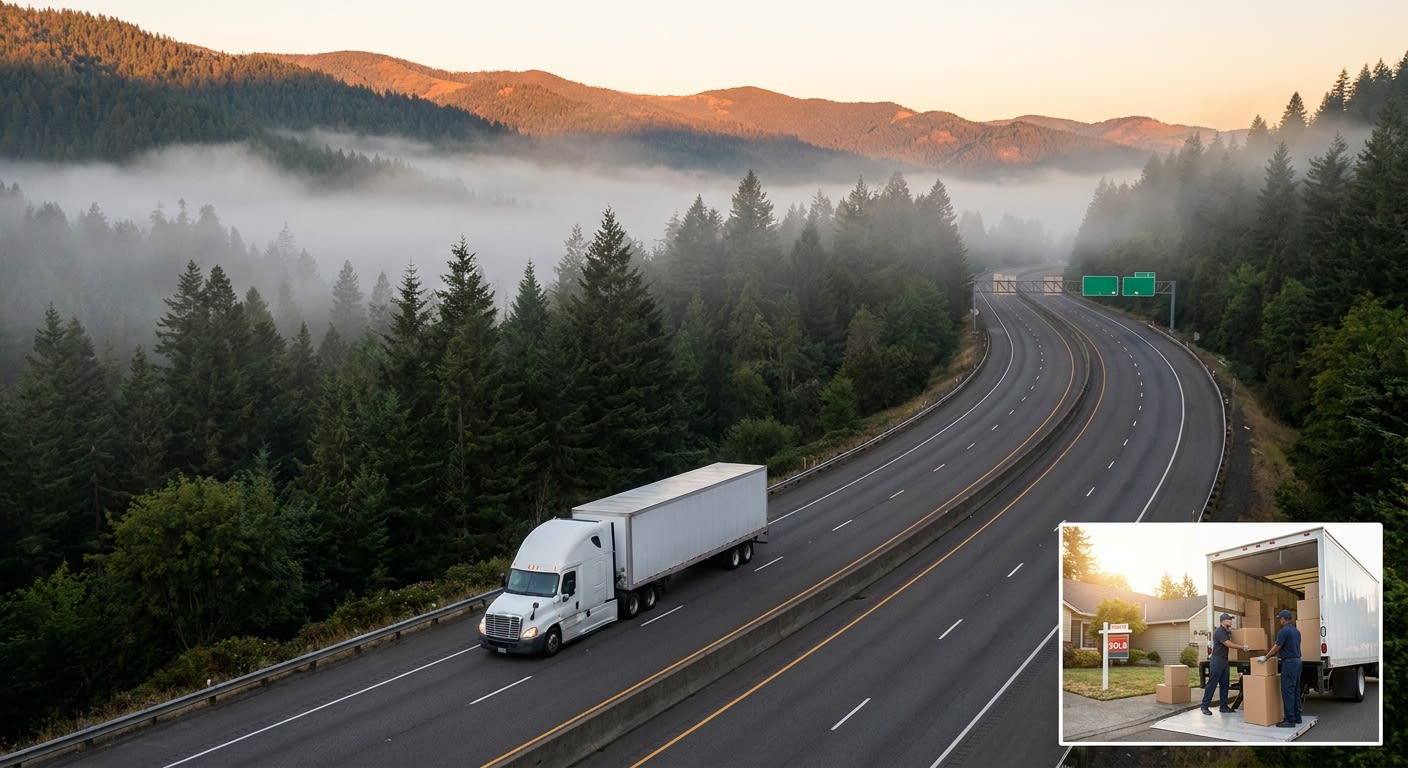



Three weeks ago, I coordinated a move for a state employee transferring from a 3-bedroom home in Natomas to a townhouse in Glendale. Her shipment weighed 6,200 pounds, traveled the 386-mile I-5 corridor, and her total cost came to $4,847 — about $780 per thousand pounds. She'd gotten quotes ranging from $3,200 to $7,500 from other companies, and she couldn't figure out why the numbers were so different. That confusion is exactly why I'm writing this breakdown.
I'm Jacob, the Long Distance Moving Coordinator at SOS Moving, and I've planned hundreds of Sacramento-to-LA relocations since joining the team. This particular route is one I know inside and out — the weigh stations, the traffic patterns around the Grapevine, the delivery windows that actually work in LA neighborhoods. Every week I'm building quotes for families making this exact move, and I've learned that the more transparent I am about costs upfront, the smoother everything goes on moving day.
Understanding the Sacramento to Los Angeles Moving Cost Structure
The Sacramento to Los Angeles moving cost depends on three primary factors: shipment weight, services required, and timing. Unlike local moves that charge by the hour, long-distance relocations in California are typically priced by weight and distance. The distance from Sacramento to Los Angeles is approximately 386 miles via I-5, which puts this move solidly in the long-distance category but keeps it within California's intrastate regulations.
As of 2026, most reputable movers charge between $0.50 and $0.85 per pound for this route. That means a 5,000-pound shipment (typical for a 2-bedroom apartment) runs between $2,500 and $4,250 for transportation alone. A 10,000-pound shipment (common for a 4-bedroom house with garage contents) lands between $5,000 and $8,500. These ranges exist because of variables like packing services, specialty items, and whether you're moving during peak season.
I always tell my clients to think of their quote in three buckets: transportation (the largest portion, usually 60-70% of total), labor (loading and unloading, around 20-25%), and materials/services (packing, crating, specialty handling, the remaining 10-20%). When you understand this breakdown, comparing quotes becomes much easier because you can see exactly where companies differ.
Weight Estimation: The Foundation of Your Quote
Every accurate Sacramento to Los Angeles moving cost starts with a proper weight estimate. I've developed a pretty reliable mental calculator after years of walking through homes, but here's the general framework I use. A furnished room averages 1,000-1,500 pounds. A studio apartment typically weighs 2,000-3,000 pounds. A 1-bedroom comes in around 3,000-4,000 pounds. A 2-bedroom hits 4,000-6,000 pounds. A 3-bedroom house usually weighs 6,000-9,000 pounds. And a 4-bedroom with a full garage can easily reach 10,000-14,000 pounds.
These numbers assume typical furnishings. If you've got a home gym, a piano, or a workshop full of tools, add accordingly. I had a client last month in Elk Grove with a seemingly modest 3-bedroom ranch — except his garage held a complete woodworking shop. That added 2,400 pounds to what I'd initially estimated. The truck gets weighed at a certified scale before loading and after, so there's no guesswork on the final bill.
What throws people off is their own estimation abilities. We consistently underestimate how much stuff we own. That junk drawer weighs more than you think. Those boxes in the attic you forgot about? They're going on the truck too. I recommend my clients add 10-15% to whatever they think they have, and they usually end up right around their estimate.
Complete Cost Breakdown by Move Size
Let me give you real numbers I've quoted in Q1 2026 for Sacramento to LA moves. For a studio apartment (approximately 2,500 pounds), basic transportation runs $1,500-$1,800. Add packing services for $400-$600, basic valuation coverage at $75-$150, and you're looking at $1,975-$2,550 total. This assumes standard furniture — a bed, couch, dining set, and personal belongings.
A 2-bedroom apartment (roughly 5,000 pounds) costs $2,800-$3,500 for transportation. Full packing adds $800-$1,200. Materials run $150-$250. Total range: $3,750-$4,950. Most of my 2-bedroom clients land around $4,200 when everything's tallied.
For a 3-bedroom house (averaging 7,500 pounds), transportation hits $4,000-$5,200. Packing services add $1,200-$1,800. You'll need more materials — figure $250-$400. Typical total: $5,450-$7,400. I quoted a family moving from Land Park to Pasadena last week at $6,100 for this exact scenario.
A 4-bedroom home (around 10,000-12,000 pounds) sees transportation at $5,500-$7,500. Full-service packing runs $1,800-$2,800. Materials hit $400-$600. Grand total: $7,700-$10,900. These larger moves often include specialty items that add to the cost, which brings me to my next point.
Specialty Item Surcharges You Should Know About
Certain items require extra handling, and that means extra cost. I'm always upfront about these because surprise charges are the fastest way to destroy trust. Pianos are the big one — an upright piano adds $300-$500 to your move, while a baby grand or grand piano runs $500-$800 extra. My colleague Amir has detailed guidance on this in his piece about moving pool tables, and the same principles apply to pianos: specialized equipment, extra crew members, and careful planning.
Pool tables themselves add $300-$600 depending on whether disassembly and reassembly are included. Gun safes, depending on weight, run $200-$500. Hot tubs (which I don't recommend moving, honestly) start at $800. Large workout equipment like Pelotons or treadmills add $75-$150 per piece. Antique furniture requiring white-glove handling typically adds 20-30% to the item's proportional shipping cost.
Here's something people don't always consider: stairs and long carries. If your Sacramento home has a third-floor walk-up or your LA destination requires carrying items 100+ feet from the truck, there's usually a $75-$150 charge per location. Elevators help, but buildings often restrict moving hours, which can affect scheduling and crew time.
📦 Planning a long-distance move from Sacramento? Our long-distance moving team handles everything from packing to delivery. Call (909) 443-0004 or get your free quote.
The I-5 Corridor: Route Details and Transit Times
I've driven or coordinated trucks on the I-5 corridor between Sacramento and Los Angeles more times than I can count. The route takes approximately 6-7 hours of driving time without stops, but commercial trucks don't work that way. With mandatory rest periods, fuel stops, and weigh station checks, the actual transit typically spans 1-2 days.
Most moves I coordinate from Sacramento arrive in LA within 2-4 business days. This isn't because the drive takes that long — it's because we're optimizing truck space and routes. If you need guaranteed same-day or next-day delivery, that's available as an expedited service, but it costs roughly 40-60% more because we're dedicating a truck to your shipment alone.
The route itself is straightforward until you hit the Grapevine — that stretch through the Tehachapi Mountains between Bakersfield and LA. In winter months (roughly December through February), the Grapevine occasionally closes due to snow and ice. I always build buffer time into winter moves for this reason. Last January, I had a truck wait 14 hours for the pass to reopen. The clients weren't charged for the delay, but their delivery window shifted by a day.
Traffic entering Los Angeles is the other variable. I instruct drivers to aim for early morning arrivals — ideally before 6 AM — to avoid the worst of LA's legendary congestion. Deliveries to West LA, Santa Monica, or anywhere near the 405 during rush hour can add 2-3 hours to unloading schedules.
Seasonal Pricing: When to Move for Maximum Savings
Timing matters enormously for your Sacramento to Los Angeles moving cost. Peak season runs from May through September, with the absolute highest prices in June, July, and August. During these months, demand spikes 40-60% above winter levels, and prices follow. A move that costs $4,500 in February might run $5,800 in July.
The sweet spot for savings is mid-September through mid-December, and then January through April. I tell clients that if they have flexibility, booking a mid-week move (Tuesday through Thursday) in October or March can save them 15-25% compared to a Saturday move in June. Weekends are always more expensive because that's when most people can actually move.
State government employees transferring between Sacramento and LA often have some flexibility in their start dates. I've worked with several who pushed their move date by 2-3 weeks to land in a cheaper window and saved $600-$800. That's real money that can go toward settling into a new city.
End-of-month moves are also more expensive than mid-month. Most leases end on the 30th or 31st, so everyone's trying to move the same weekend. If you can overlap your leases by even a few days and move on the 15th, you'll have more scheduling options and potentially better rates.
DIY vs. Full-Service: A Realistic Cost Comparison
I understand the temptation to rent a truck and do it yourself. Let me walk through the actual numbers so you can make an informed choice. A 26-foot U-Haul from Sacramento to Los Angeles runs approximately $180-$280 for the rental itself as of 2026. But that's just the beginning.
Fuel for that trip — and those trucks get 8-10 miles per gallon — adds $150-$200. Insurance on the rental is another $50-$150 depending on coverage level. Then you need to factor in the value of your time. Loading a 3-bedroom house takes 6-8 hours with a couple of friends who may or may not know what they're doing. Driving takes 7-8 hours. Unloading takes another 6-8 hours. You're looking at a 20+ hour commitment minimum.
What people don't calculate is the cost of mistakes. Damaged furniture, scraped walls, injured backs. I've quoted plenty of "rescue moves" for people who started DIY, hurt themselves or broke something important, and called us to finish the job. Those last-minute arrangements always cost more than just hiring professionals from the start.
The break-even point is usually around a 1-bedroom apartment. Below that, DIY often makes financial sense if you value your time appropriately. Above that, professional moving typically wins on both cost and stress reduction. For a detailed breakdown of these tradeoffs, I recommend checking out our comparison of U-Haul vs. professional moving companies.
Hidden Costs Most Quotes Don't Mention
Transparency is one of our core values at SOS Moving — we're licensed and insured full-service moving and storage, from $119/hour, and we've handled thousands of local and long-distance relocations stress-free. But I've seen enough quotes from other companies to know what often gets buried in fine print.
Fuel surcharges are common and can add 5-12% to your total. Some companies quote a base rate and then tack on fuel costs separately. Always ask if fuel is included in your quote. Similarly, watch for "peak season surcharges" or "high demand fees" that appear at booking time but weren't mentioned during the estimate.
Shuttle fees apply when the moving truck can't access your location directly. Many LA neighborhoods have narrow streets, low-hanging trees, or permit restrictions that prevent 53-foot trucks from parking nearby. If your belongings need to be transferred to a smaller truck for final delivery, that's typically $300-$500 extra. I always check both addresses on Google Street View before quoting to anticipate this.
Storage-in-transit is another hidden cost. If there's a gap between your Sacramento move-out and LA move-in dates, your belongings need to go somewhere. Most companies charge $150-$300 per week for warehouse storage plus an additional delivery fee when you're ready. Plan your dates carefully to avoid this. Our storage services are transparent about these costs upfront.
Getting Accurate Quotes: What to Provide and What to Ask
When you call for quotes, the more detail you provide, the more accurate your estimate will be. I need to know: both addresses (specific street addresses, not just cities), your approximate move date or window, a complete inventory of large items and specialty pieces, whether you need packing services, and any access concerns at either location (stairs, elevators, parking restrictions).
Questions you should ask every company: Is this a binding or non-binding estimate? What's included in the price? What's not included? How is weight verified? What's the payment schedule? What happens if my delivery is delayed? Are your drivers employees or contractors? What's your process for handling damage claims?
I recommend getting three quotes minimum. Not necessarily to choose the cheapest — in fact, I'd be suspicious of any quote that's significantly lower than the others — but to understand the market range and identify which companies are being thorough versus which are lowballing to get your business.
Virtual surveys have become standard, and I prefer them for efficiency. A 15-minute video call where you walk me through your home gives me more accurate information than a phone conversation listing items from memory. If a company won't do an in-person or virtual survey and just quotes based on bedroom count, that's a red flag.
Neighborhood-Specific Considerations in Los Angeles
Where you're landing in LA affects your costs and logistics. Downtown LA and the Arts District have strict loading zone regulations and often require permits that add $100-$200 to your move. High-rise buildings typically restrict move-in hours to weekdays between 9 AM and 5 PM, which limits scheduling flexibility.
Santa Monica and Venice have notoriously difficult parking. Many streets prohibit commercial vehicles over certain weights, and the narrow residential streets near the beach weren't designed for moving trucks. Shuttle fees are common for these areas.
The Valley (Sherman Oaks, Encino, Woodland Hills) is generally easier for logistics — wider streets, more accessible homes, fewer restrictions. Same goes for Pasadena and Glendale on the east side. These areas typically don't incur the access fees that Westside moves often do.
Hills neighborhoods — Hollywood Hills, the Bird Streets, Bel Air — present unique challenges. Steep driveways, switchback roads, and homes perched on hillsides require experienced drivers and sometimes specialized equipment. Expect surcharges of $200-$500 for these locations.
Timeline Planning: From Quote to Completion
Here's how I recommend clients plan their Sacramento to Los Angeles move timeline. Eight weeks out: start researching companies and collecting quotes. Six weeks out: book your mover and lock in your date. Four weeks out: begin decluttering and donating items you don't want to pay to ship.
Three weeks out: start packing non-essential items or schedule packing services. Two weeks out: confirm all details with your moving company and begin address changes. One week out: pack remaining items, clean, and prepare both homes for the move.
This timeline assumes a typical move. If you're relocating for a job with a fixed start date, you might need to compress this schedule. I've coordinated moves with as little as 5 days notice, but costs increase and options decrease with shorter timelines.
The packing phase is where most people underestimate time. A 3-bedroom house takes 20-30 hours to pack properly if you're doing it yourself. That's nearly a week of work after your regular job. Professional packing crews do it in 4-6 hours because that's all we do. For packing strategies, my colleagues have put together a solid room-by-room packing guide.
FAQ
How much does it cost to move from Sacramento to Los Angeles in 2026?
The typical range is $2,500-$10,000 depending on shipment size and services. A 2-bedroom apartment averages $3,750-$4,950, while a 4-bedroom house runs $7,700-$10,900. Weight, packing services, and specialty items all affect your final cost. I recommend getting quotes from at least three companies to understand your specific situation.
How long does a Sacramento to LA move take?
Transit time is typically 2-4 business days. The driving distance is about 386 miles via I-5, which takes 6-7 hours of actual drive time. However, commercial moving trucks operate on different schedules with rest requirements and route optimization. Expedited next-day delivery is available at premium rates.
What's the cheapest month to move from Sacramento to Los Angeles?
January through April and mid-September through mid-December offer the lowest rates, with potential savings of 15-25% compared to peak summer months. Mid-week moves (Tuesday through Thursday) during these periods provide the best combination of availability and pricing.
Should I get a binding or non-binding moving estimate?
Binding estimates guarantee your price won't exceed the quoted amount as long as your inventory doesn't change. Non-binding estimates can fluctuate based on actual weight. I generally recommend binding estimates for peace of mind, though they may be slightly higher upfront. Always get the estimate in writing regardless of type.
Are there any items movers won't transport from Sacramento to LA?
Yes. Hazardous materials, flammable liquids, propane tanks, ammunition, and perishable food items can't go on moving trucks. Plants are tricky — California's agricultural inspections can be strict even for intrastate moves. I recommend transporting plants yourself or gifting them to friends rather than risking confiscation.
How do I verify a moving company is legitimate?
Check for a Cal-T number (California Public Utilities Commission license) for intrastate moves. Verify insurance coverage and ask for a certificate. Look up reviews on Google, Yelp, and the Better Business Bureau. Be wary of companies that only accept cash, won't provide written estimates, or have prices dramatically lower than competitors.
Ready to start planning your Sacramento to Los Angeles move? SOS Moving serves the entire I-5 corridor with transparent pricing and reliable service. Call us at (909) 443-0004, email info@sosmovingla.net, or get your free quote online. We're licensed and insured, and we'll give you an honest estimate you can count on.