

Three weeks ago I coordinated a move for a software engineer leaving a 2-bedroom craftsman in Northeast Portland for a hillside rental in Silver Lake. The route was 963 miles down I-5, an estimated 6,800 pounds of household goods, and a 4-day delivery window because his lease in Portland ended on a Saturday and his new landlord wouldn't release keys until Wednesday. That gap — between origin pickup and destination delivery — is the single biggest variable that shapes what an Oregon-to-California move actually costs in 2026.
I'm Jacob Rivera, a Long Distance Moving Coordinator at SOS Moving, and I plan routes like that one almost every week — Eugene to San Diego, Bend to the Bay Area, Ashland to Pasadena. In this guide I'll walk through the real Oregon to California moving cost numbers I'm quoting in Q1 2026, what drives those numbers up or down, and where I see clients overspend without realizing it.
What an Oregon to California Move Actually Costs in 2026
For a typical 2-bedroom household — roughly 5,000 to 7,000 pounds — moving from the Portland metro to the Los Angeles area, I'm quoting between $4,200 and $6,800 in 2026 for a fully insured carrier-direct move. That spread reflects access (stairs, long carries, tight streets), packing scope, and whether the client needs guaranteed delivery dates or a flexible window.
Here's how I break it down for clients on the phone:
- Studio / 1-bedroom (2,000–3,500 lbs): $2,400 – $3,900
- 2-bedroom (5,000–7,000 lbs): $4,200 – $6,800
- 3-bedroom (8,000–11,000 lbs): $7,200 – $10,500
- 4+ bedroom (12,000+ lbs): $11,000 and up
Bend and Eugene origins typically run 5–8% higher than Portland because the back-haul is less efficient — fewer trucks naturally route through Central Oregon. Ashland and Medford, sitting close to the California border, often come in slightly cheaper since the I-5 corridor is dense with carrier traffic. The Oregon to California moving cost equation is really a function of three things: weight, distance, and how much flexibility you give the carrier on dates.
The Five Cost Drivers I Watch Closest
Every quote I write hinges on the same five variables. I'd rather tell clients up front what moves the needle than have a surprise on delivery day.
1. Weight. Long-distance moves are priced per hundred pounds (CWT) plus mileage. A king bedroom set runs about 800 lbs. A full kitchen with appliances and pantry can hit 1,200 lbs. Books are the silent budget killer — a single packed bookshelf can push 600 lbs.
2. Mileage. Portland to LA is 963 miles. Eugene to LA is 854. Bend to San Francisco is 539. Carriers price the line haul on actual route miles, not a straight line.
3. Access on both ends. A second-floor walk-up in Portland's Pearl District plus a hillside delivery in Echo Park with no truck access can add $400–$900 in shuttle and stair fees.
4. Packing scope. Full-pack service averages $1,200–$2,400 on a 2-bedroom. Partial packing (kitchen and fragile items only) is usually $400–$700.
5. Delivery window. A flexible 5–10 day window is standard. Guaranteed-date delivery — the kind my engineer client needed — adds 10–18% because the truck has to dedicate capacity rather than consolidating with other shipments.
Route Planning: I-5 vs. Coastal vs. Inland
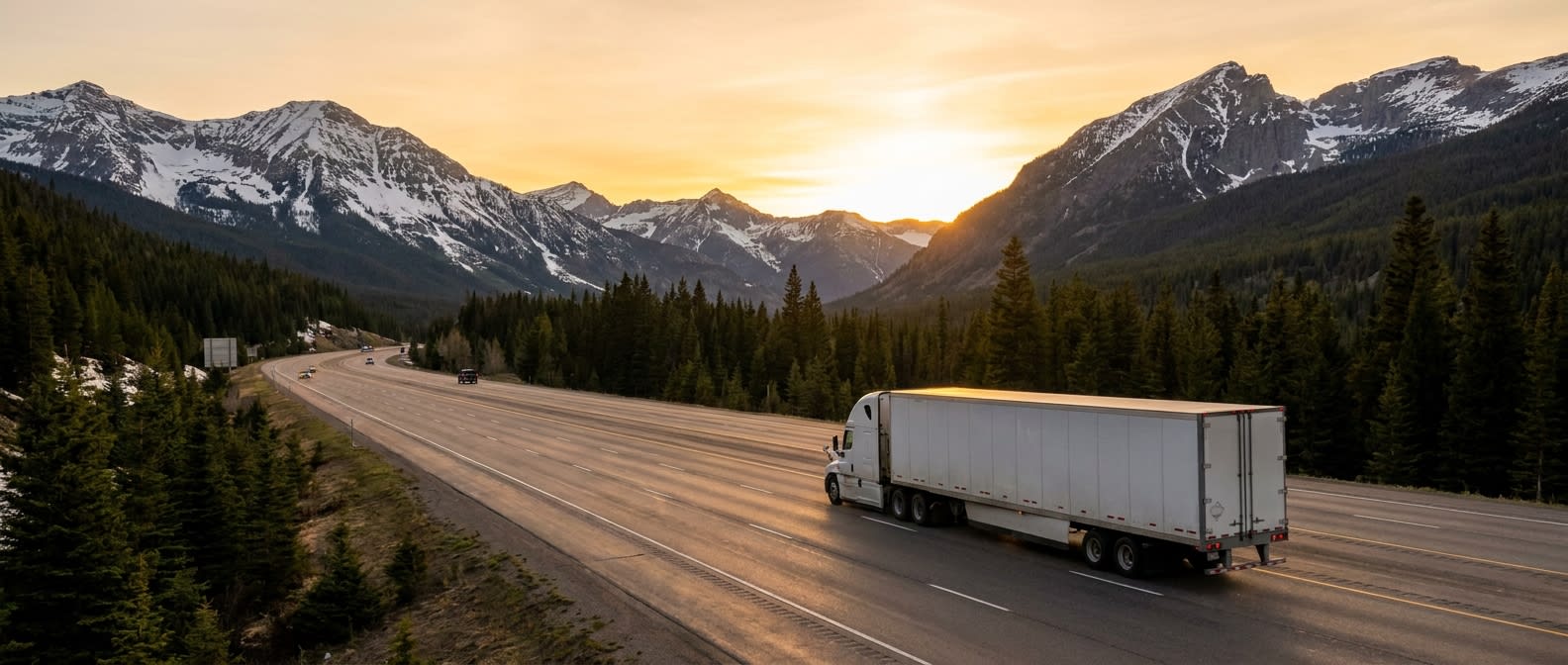
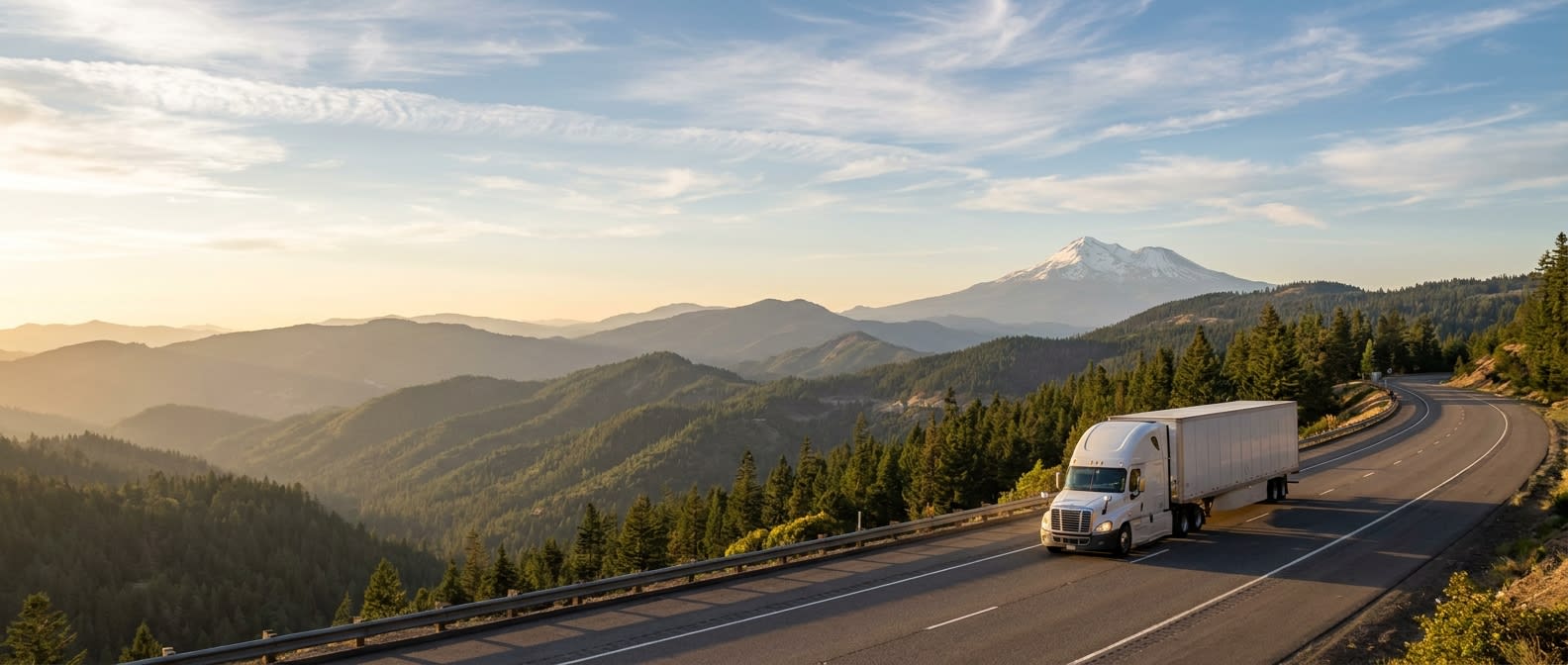
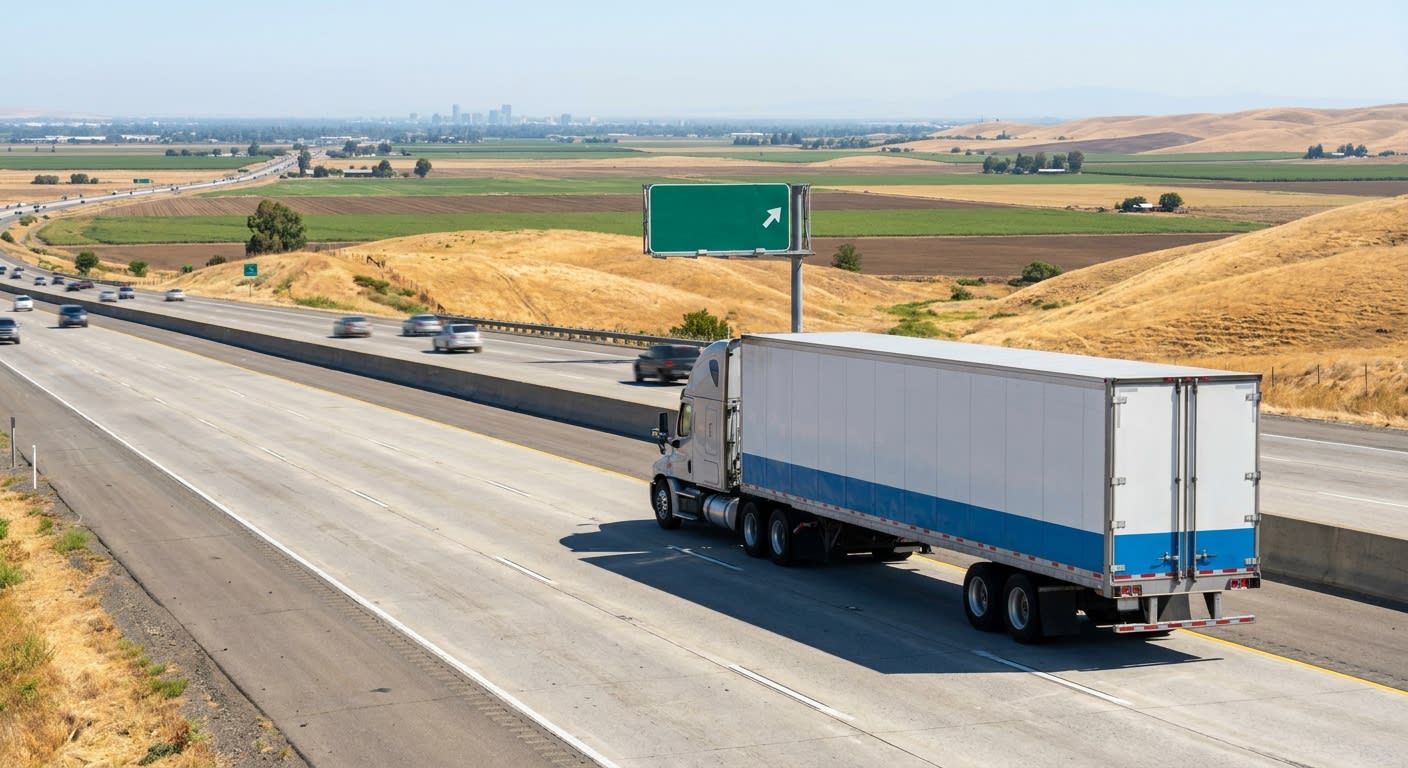
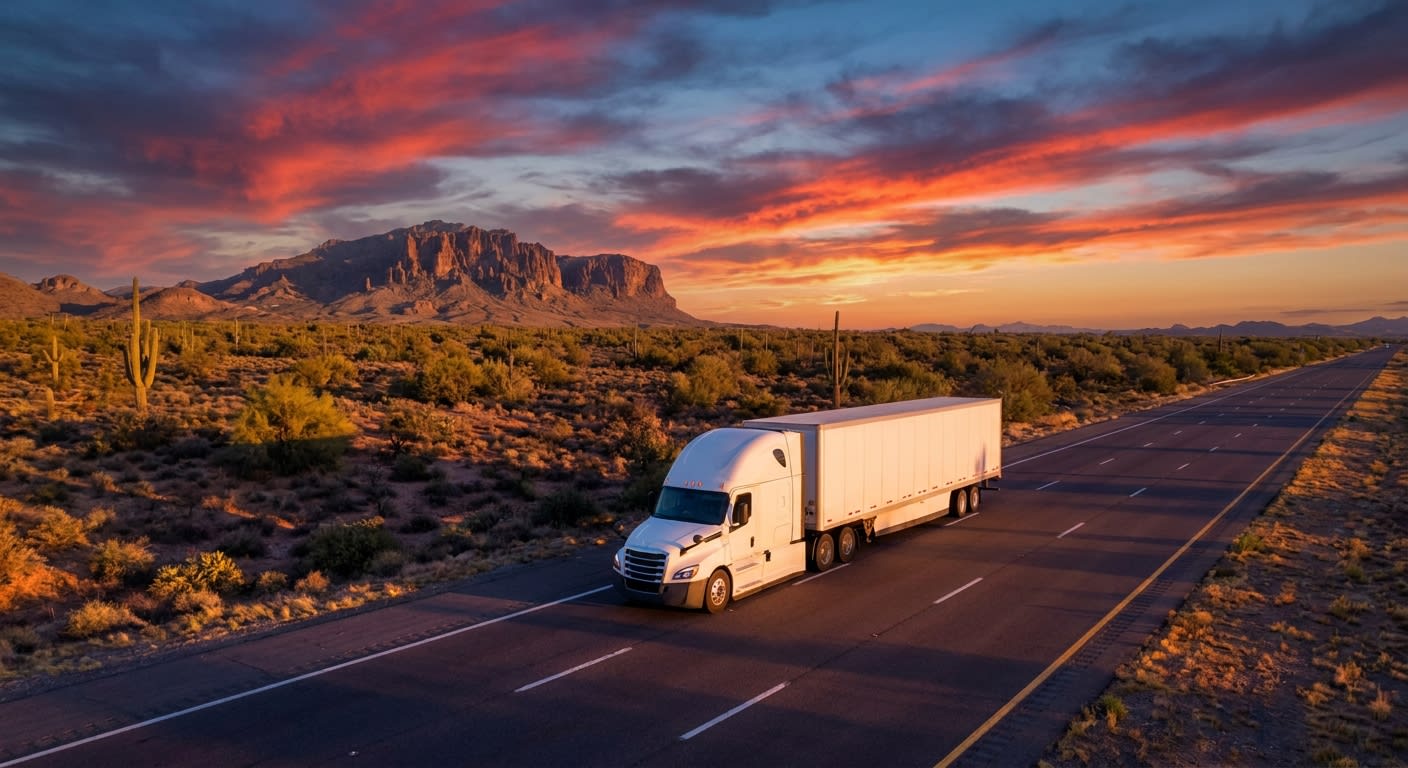
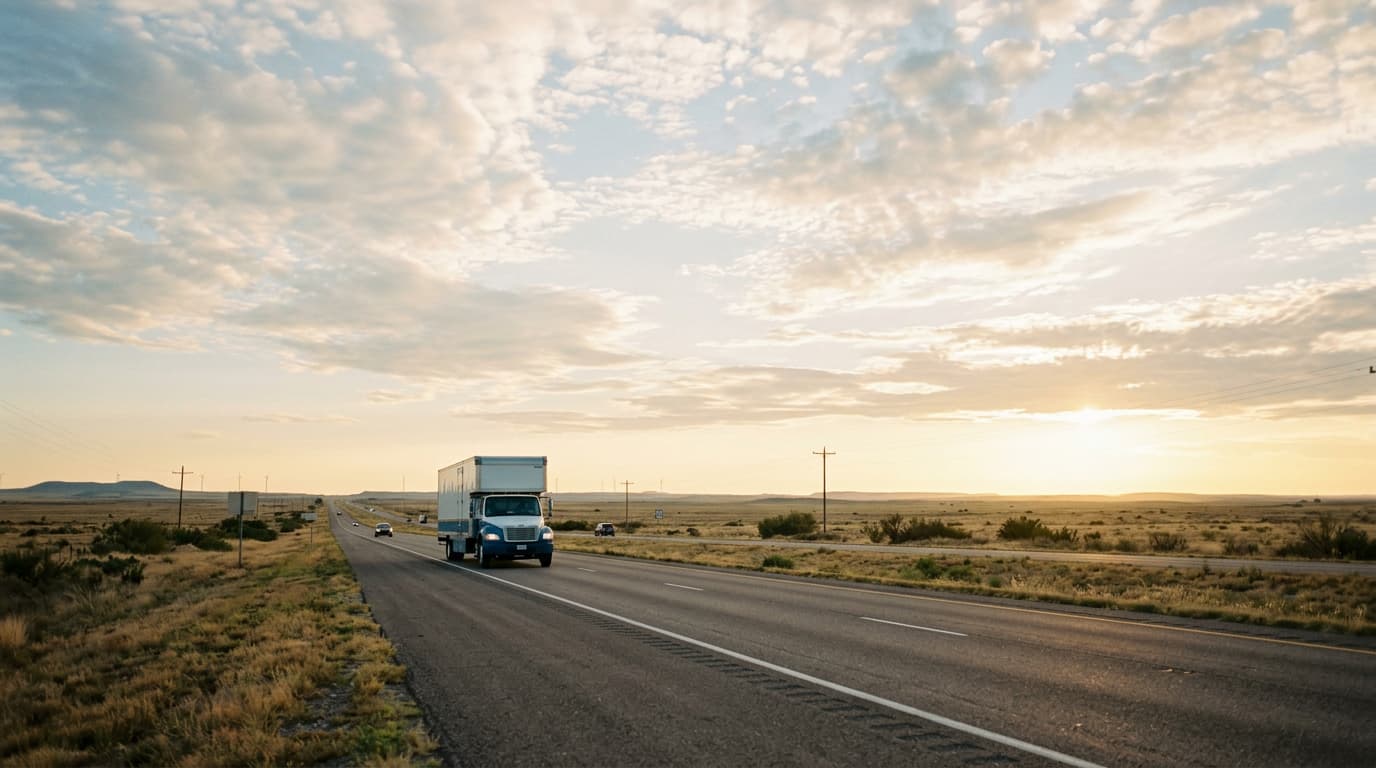
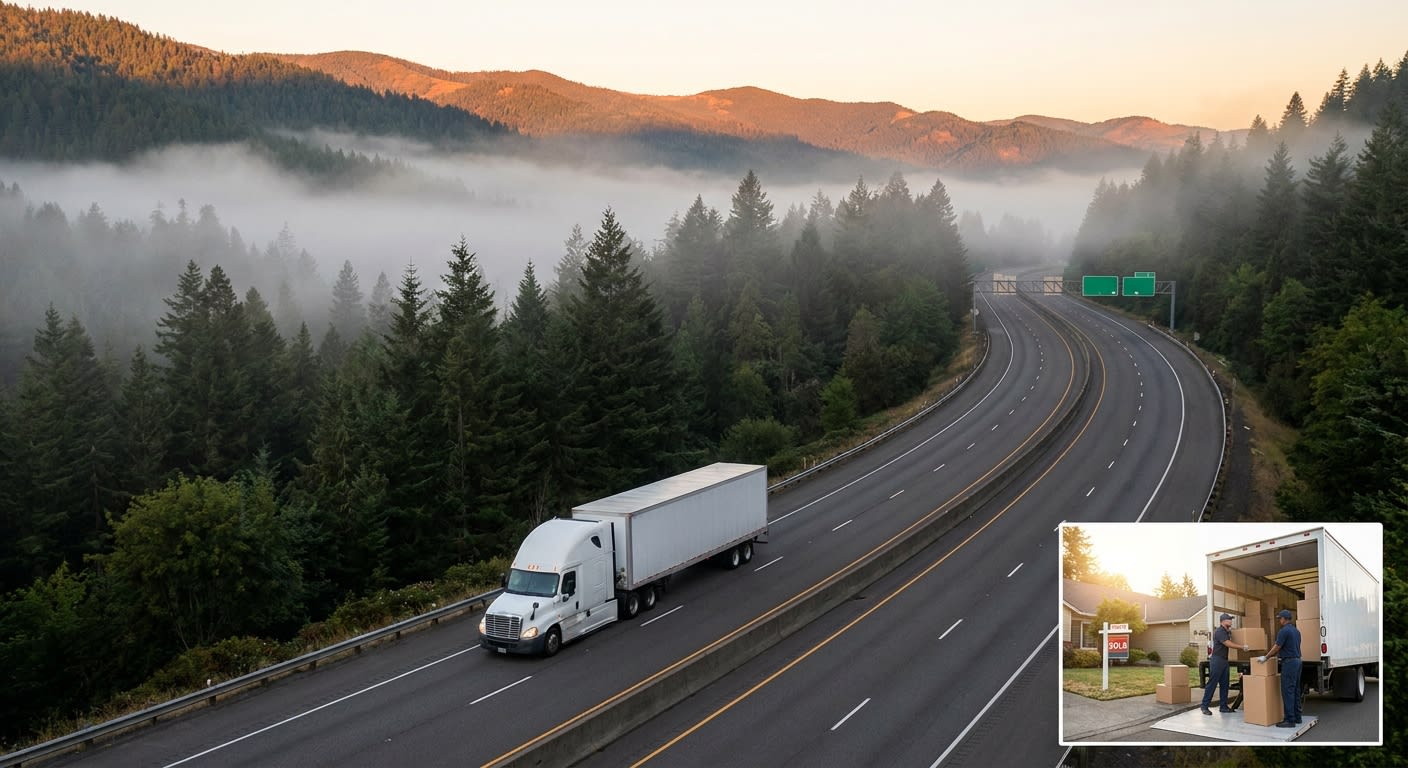
Ninety percent of the Oregon-to-California moves I plan run straight down I-5 through the Siskiyou Pass. It's the most fuel-efficient corridor and the most predictable for transit times. From Portland, my crews typically hit Medford by hour 5, cross into California, overnight near Redding, and reach the LA basin by end of day 2. Total drive time is around 16 hours of road time spread across two driver shifts.
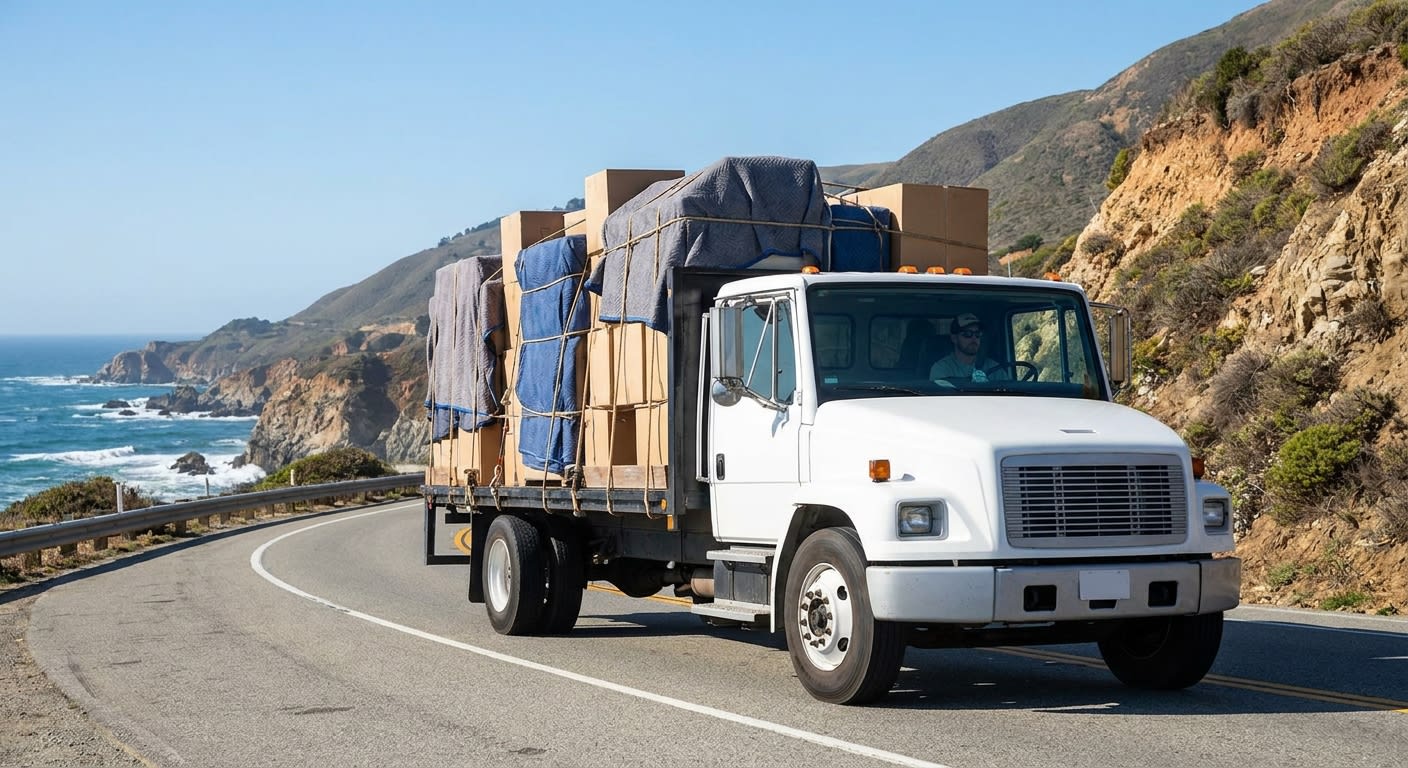
I avoid Highway 101 for furniture loads. The coastal route is gorgeous, but the curves through Humboldt and Mendocino County add 4–6 hours, fuel surcharges, and unnecessary stress on packed contents. I only route 101 when a client specifically requests it for a coastal destination like Mendocino or Bodega Bay.
The Siskiyou Pass itself is the one variable I watch in winter. Between November and March, chain controls can shut the pass for 6–24 hours during storms. If your move is scheduled in that window, I build a 24-hour weather buffer into the delivery estimate. My colleague's coverage of winter moving and rain preparation walks through some of the same logic for the LA arrival side.
Transit Times and Delivery Windows
For Oregon-to-California long-haul moves in 2026, here are the realistic transit windows I'm quoting:
- Portland → LA / Orange County: 2–5 business days
- Portland → San Francisco Bay Area: 1–3 business days
- Eugene → LA: 2–4 business days
- Bend → LA: 3–5 business days (less direct routing)
- Medford / Ashland → LA: 1–3 business days
The window exists because most long-distance shipments are consolidated — your goods share trailer space with one or two other moves heading the same direction. That's how carriers keep per-pound rates reasonable. If you book an exclusive-use truck, transit drops to 1–2 days but the price jumps 35–50%.

🚚 Planning an Oregon-to-California relocation? My long-distance moving team handles route planning, weight estimates, and guaranteed-date delivery from any Oregon city. Call (909) 443-0004 for a free estimate.
What Licensed and Insured Actually Means on This Route
Any mover crossing the Oregon-California state line is regulated by the Federal Motor Carrier Safety Administration and must carry an active USDOT number plus MC authority. I tell every client: before you sign anything, look up the carrier's USDOT number on the FMCSA's SAFER system. Check the active authority status, the insurance on file, and the complaint history.
SOS Moving is a licensed & insured full-service moving and storage operation, from $119/hour for local work, and we've handled thousands of local and long-distance relocations stress-free. On the long-haul side, we operate as a carrier — meaning your goods stay on our truck from pickup to delivery, not transferred between brokers. That matters because broker-arranged moves are where most of the horror stories I hear about originate. My colleague's piece on broker vs. carrier moving company types explains the distinction in detail.
Standard valuation coverage is $0.60 per pound per item by federal default. That's not insurance — that's a release of liability. For a 50-lb TV, that's $30 of coverage. Full-value protection, which I recommend on every Oregon-to-California move, runs about 1–2% of the declared value of your shipment and covers actual replacement cost.
Storage-in-Transit: The Gap Between Lease Dates
About a third of my Oregon-to-California clients need storage on one end. Lease dates rarely line up — you move out of Portland on the 30th, your San Francisco lease starts the 5th. Rather than pay for an exclusive-use truck to wait, I move the shipment into our LA warehouse for the gap.
Storage-in-transit pricing in 2026 runs roughly $1.50–$2.25 per cubic foot per month, with a typical 2-bedroom shipment occupying 700–1,000 cubic feet. That's $1,050–$2,250 a month, but most clients only need 1–3 weeks. I prorate it. Climate-controlled storage adds about 20%, which I recommend if you're moving wood furniture, vinyl records, electronics, or artwork into the Central Valley summer heat.
Where I See Clients Overspend
After mapping out hundreds of these routes, the same overspend patterns show up:
Paying to move what they should sell. A $400 IKEA couch costs about $180 in line-haul to move from Portland to LA. Same for older mattresses, particle-board dressers, and treadmills. Sell, replace, save weight.
Underestimating book weight. Every long-distance client tells me "I don't have that much stuff." Then we weigh the truck and there are 1,400 lbs of books. Donate before you pack.
Skipping the in-home or video survey. Phone-only quotes are guesses. I do a video walk-through with every Oregon client because a binding estimate based on a real inventory protects you from the day-of weight surprise.
Buying packing materials retail. Boxes from a hardware store run $4–$7 each. We supply them at cost when bundled with professional packing services, and the labor savings on a properly packed truck usually offset the packing fee.
Settling In: Your First Month in California
For Oregon transplants landing in LA or the Bay Area, a few logistics matter in the first 30 days:
- DMV deadline: California requires you to register your vehicle within 20 days of establishing residency. Bring your Oregon title, smog certificate (most Oregon vehicles need a California smog test), and proof of insurance.
- Driver's license: 10 days from residency. Schedule the appointment online before you move — walk-ins can mean 4-hour waits.
- Weather adjustment: Oregon-acclimated houseplants and wood furniture take 2–3 weeks to settle into the drier California climate. Don't be surprised by minor wood splitting on heirloom pieces.
- Utility setup: SoCal Edison/LADWP and PG&E both run 5–10 business day connection windows. Schedule before your delivery date.
FAQ
How far in advance should I book an Oregon to California move?
For peak season (May through September), I recommend booking 6–8 weeks ahead. Off-peak (October through April), 3–4 weeks is usually fine. Last-minute bookings under 10 days out cost 15–25% more because carriers have to scramble capacity.
Is my Oregon to California moving cost tax-deductible?
For most people, no. Federal moving expense deductions were eliminated in 2017 except for active-duty military. However, if your employer is reimbursing the move, the reimbursement is taxable income and the move itself isn't deductible. California has its own rules — check with a CPA.
Do you handle vehicle transport along with household goods?
Yes. I coordinate auto transport on the same I-5 corridor through partner carriers. A standard sedan from Portland to LA runs roughly $850–$1,200 in 2026, with 3–7 day transit. Open carrier is standard; enclosed transport for a collector vehicle adds 60–80%.
What happens if the Siskiyou Pass closes during my move?
I build weather contingency into every winter route. If the pass closes, the truck holds at a safe staging area in Medford or Yreka and resumes when CalTrans reopens the road. Delivery window extends but pricing doesn't change — that's the carrier's risk, not yours.
Can I pack my own boxes to save money?
Yes, with one caveat: any box you pack yourself (PBO — packed by owner) carries reduced liability. If something inside breaks, the carrier isn't responsible unless there's external damage to the box. For dishes, glassware, and electronics, I recommend professional packing for the insurance coverage alone.
How do I avoid moving scams on a long-distance route?
Verify USDOT number, refuse to pay large deposits up front (10–20% is normal, 50% is a red flag), and get a written binding estimate after a video or in-home survey. My colleague covers the warning signs in detail in their guide to deposit scams.
Ready to plan your Oregon to California move? SOS Moving serves Los Angeles, Orange County, and the San Francisco Bay Area with carrier-direct long-distance service from any Oregon origin. Call (909) 443-0004, email info@sosmovingla.net, or get a free quote. Licensed & insured — thousands of moves completed.