

Three weeks ago, I sat across from a client in Silver Lake who'd already gotten quotes from four moving companies—all claiming to be "carbon neutral" or "eco-friendly." She'd spread the estimates across her kitchen table, and every single one had a green leaf logo somewhere on it. "Alex," she said, "I work in environmental consulting. I can tell you right now that at least two of these are greenwashing, but I can't figure out which two." That conversation stuck with me because it captures exactly where the moving industry is in 2026: everyone's claiming sustainability, but the gap between marketing and reality has never been wider.
I'm Alex Park, CEO and Founder of SOS Moving. When I started this company in 2020, I wanted to fix the one thing every LA resident complains about—hidden fees on moving day. But over the past six years, I've watched another problem emerge: the explosion of unverified environmental claims in our industry. As someone who cares about building a company that actually stands behind its promises, I've spent the past year researching what "carbon neutral" really means in the context of a Los Angeles moving company, and I want to share what I've found.
What "Carbon Neutral" Actually Means for Moving Companies
Let's start with the basics, because I've learned that even well-intentioned companies sometimes misuse these terms. A carbon neutral moving company is one that calculates its total carbon emissions—from fuel consumption, electricity, packaging materials, and operations—and then either eliminates or offsets those emissions to reach net zero. The key word is "net." You're not necessarily producing zero emissions; you're balancing what you produce with verified reductions elsewhere.
In Los Angeles as of 2026, the average local move generates roughly 200-400 pounds of CO2 equivalent, depending on distance, truck size, and the number of trips required. A long-distance move from LA to San Francisco might produce 800-1,200 pounds. These aren't massive numbers compared to, say, a cross-country flight, but when you consider that LA County sees approximately 400,000 household moves annually, the cumulative impact becomes significant.
True carbon neutrality requires three things: accurate measurement, verified offsets or actual reductions, and third-party certification. I've found that most companies claiming eco-credentials have maybe one of these elements, rarely all three. Some have none—they've just slapped a green logo on their website and called it a day.
The Four Types of Green Moving Claims in LA
After analyzing dozens of competitors and talking with environmental consultants, I've categorized the green moving claims you'll encounter in Los Angeles into four distinct types. Understanding these categories will help you cut through the marketing noise.
First, there are the certified carbon neutral companies. These are rare—I'd estimate fewer than 5% of LA movers fall into this category as of early 2026. They've partnered with organizations like Climate Neutral, Green Business Bureau, or similar third-party certifiers. They can show you their emissions calculations, their offset purchases, and their certification documentation. When you ask for proof, they have it.
Second, you'll find partial offset programs. These companies offer carbon offsets as an add-on service—you pay an extra $25-75 per move, and they purchase offsets on your behalf. This approach is better than nothing, but it shifts the burden to the customer and doesn't address the company's baseline operations. I've seen some companies charge for offsets without actually purchasing them, which is why receipts matter.
Third are the operational efficiency claims. These movers highlight fuel-efficient trucks, route optimization software, or reusable packing materials. They're not claiming carbon neutrality, just reduced impact. This is actually more honest than many alternatives, even if it sounds less impressive. A company with a modern fleet and smart routing genuinely produces less emissions than one running 20-year-old trucks with no planning.
Finally, there's pure greenwashing—companies using words like "eco-friendly," "green," or "sustainable" without any substantive backing. They might have a recycling bin in their office. That's about it.
How to Verify Environmental Claims Before You Book
I tell every client asking about sustainability to request three specific things. First, ask for the company's carbon footprint calculation methodology. A legitimate operation can explain how they measure emissions—whether they use EPA conversion factors, partner with a sustainability consultant, or use software like the GHG Protocol calculator. If they can't explain their math, they haven't done it.
Second, ask for offset verification. Carbon offsets should come from registries like Gold Standard, Verra (formerly VCS), or the American Carbon Registry. These organizations verify that offset projects—reforestation, methane capture, renewable energy—actually deliver the emissions reductions they claim. A company buying unverified offsets might as well be lighting that money on fire.
Third, look for third-party certification. Climate Neutral Certified, B Corp certification with environmental focus, or Green Business Bureau certification all require external audits. Self-declared "carbon neutral" status is essentially meaningless without verification.
I've had prospects tell me they're surprised when I recommend they verify our claims too. But that's exactly my point—any company confident in their environmental practices should welcome scrutiny.

🌱 Planning an eco-conscious move in Los Angeles? Our packing services use sustainable materials and efficient methods. Call (909) 443-0004 or request your free estimate to learn about our environmental practices.
Electric and Alternative Fuel Fleets in LA: The 2026 Reality
One of the most visible ways a moving company can reduce emissions is through their fleet. As of 2026, we're finally seeing viable electric and alternative fuel options for medium-duty trucks, though the transition is slower than many expected. Here's what's actually happening on LA streets.
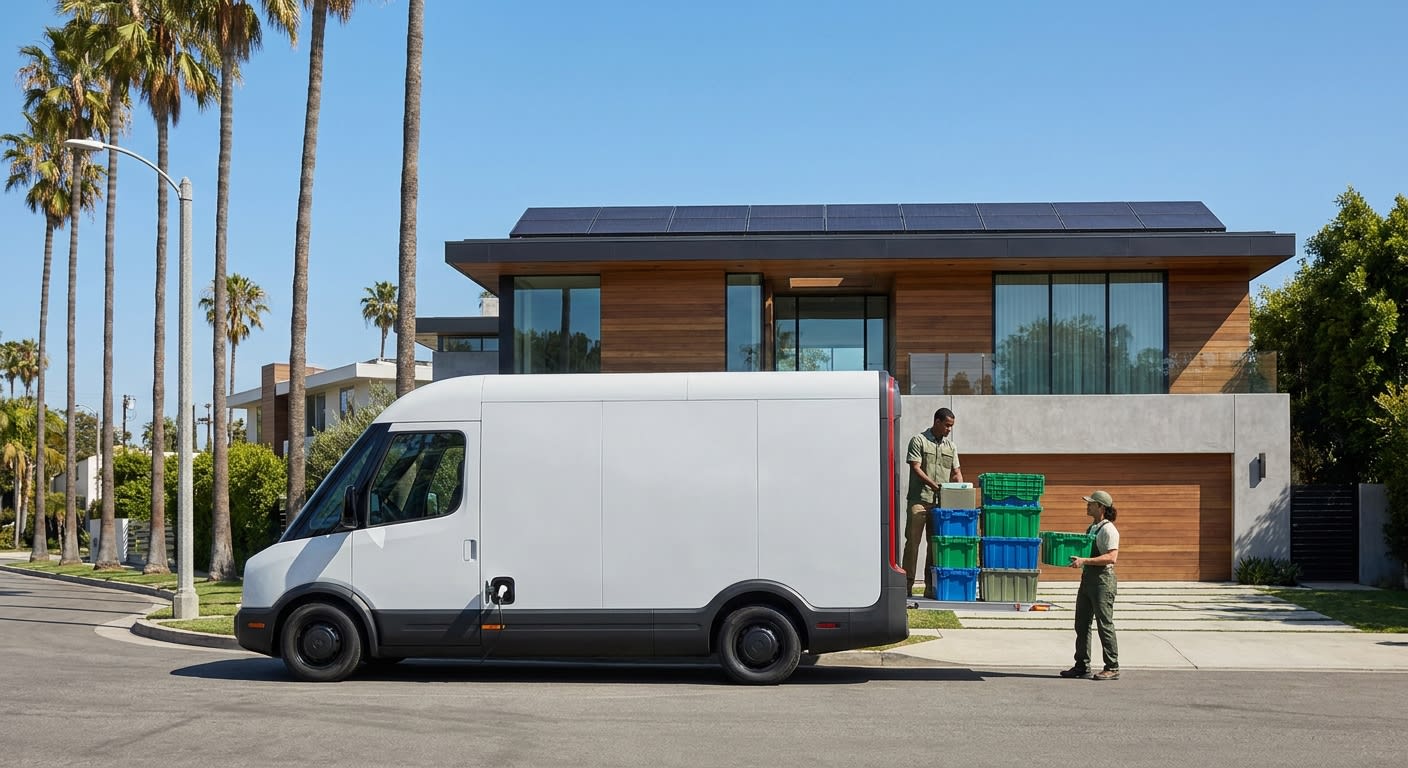
Several companies have added electric box trucks to their fleets—typically the Rivian commercial van or Lightning eMotors conversions. These work well for apartment moves and shorter local routes. However, they're still limited to roughly 100-150 miles of range when fully loaded, which means they're not practical for moves across the sprawling LA metro or into the Inland Empire without charging infrastructure coordination.
Compressed natural gas (CNG) trucks have been around longer and offer about 20-25% emissions reduction compared to diesel. A few larger moving companies in LA run partial CNG fleets, particularly for warehouse-to-residence routes where they can refuel at commercial stations near their facilities.
The honest truth is that most LA moving companies—including many claiming environmental credentials—still run predominantly diesel fleets. That's not necessarily deceptive if they're transparent about it and offsetting appropriately, but it becomes problematic when they imply they've gone electric without actually having done so.
My colleague William, our Operations Manager, has written extensively about the future of moving industry technology, including where fleet electrification is headed. The infrastructure is improving, but we're still 3-5 years from electric trucks being standard for most move types.
Carbon Offset Quality: Not All Programs Are Equal
This is where I see the most confusion among environmentally conscious clients. They hear "carbon offset" and assume it's a standardized product, like buying a gallon of milk. In reality, carbon offset quality varies enormously, and cheap offsets often don't deliver real environmental benefit.
High-quality offsets meet criteria known as "additionality"—the project wouldn't have happened without offset funding. A reforestation project in Brazil that was already planned and funded before any offset money arrived doesn't actually reduce net emissions; it just creates a financial windfall for developers. Verified registries like Gold Standard require proof that projects are additional.
Price is actually a reasonable indicator of quality. As of 2026, legitimate carbon offsets typically cost $15-50 per metric ton of CO2 equivalent. If a company is charging you $10 to offset a move that produced 500 pounds of emissions (about 0.23 metric tons), the math suggests they're either subsidizing heavily, using low-quality offsets, or not actually offsetting anything.
The best offset programs also prioritize permanence (the carbon stays sequestered long-term), verifiability (third-party audits confirm results), and co-benefits (projects also support local communities or biodiversity). When I evaluate offset partners, I look for all four criteria: additionality, permanence, verification, and co-benefits.
Sustainable Packing Materials: What's Real, What's Marketing
Beyond fleet and offsets, packing materials represent a significant portion of a move's environmental footprint. The moving industry consumes enormous quantities of cardboard, plastic wrap, bubble wrap, and foam—most of which ends up in landfills after a single use. Here's how green packing claims typically break down.
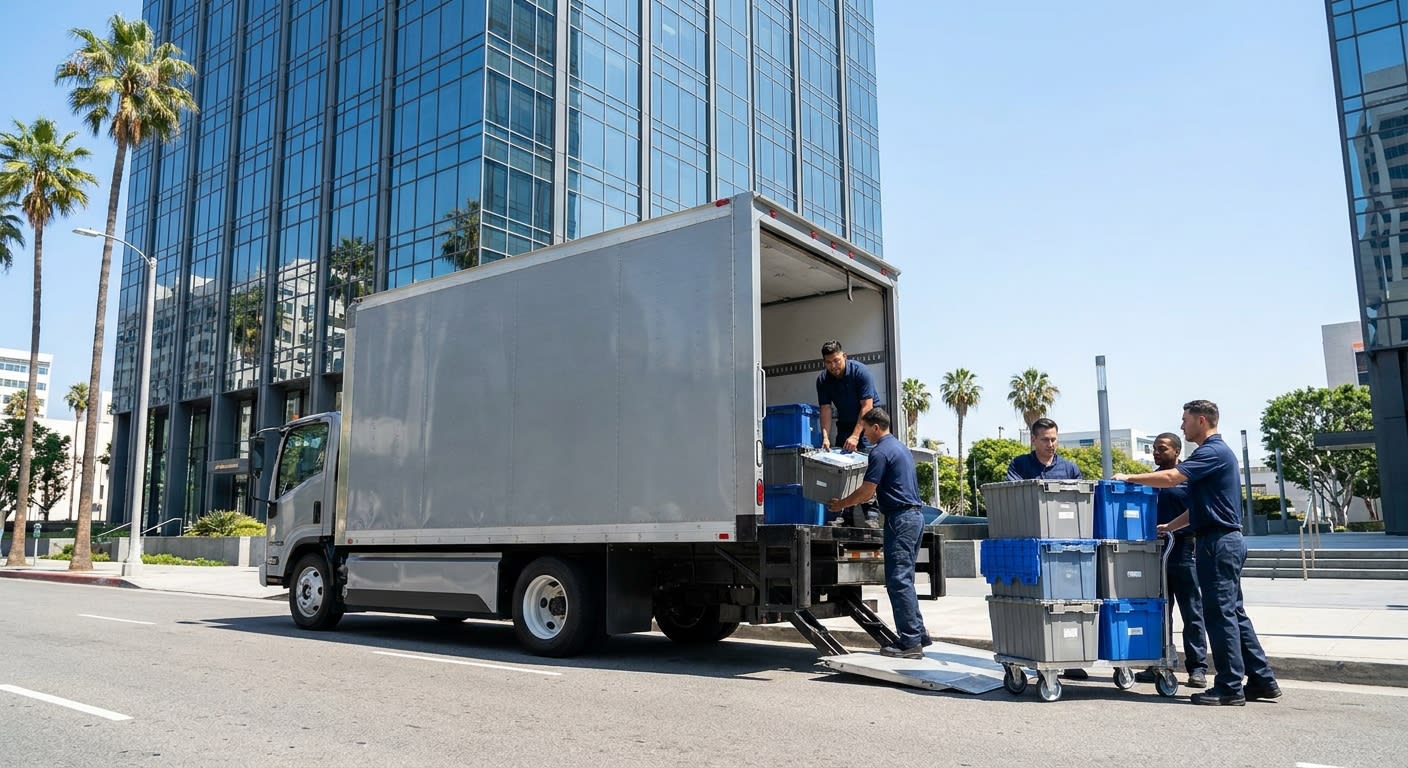
Reusable plastic bins are the gold standard for sustainable packing. Companies that offer bin rental programs—where plastic crates are delivered, used for your move, then collected and sanitized for the next customer—can reduce packing waste by 80-90% compared to cardboard. Several LA moving companies have adopted this model, and it's something I've been exploring for our own operations.
Recycled cardboard is better than virgin cardboard but still ends up in waste streams. The "eco-friendly boxes" many companies advertise are often just standard recycled-content cardboard—the same stuff you'd get from any box supplier. It's not bad, but it's not special either.
Biodegradable packing peanuts (typically made from cornstarch) and recycled paper fill genuinely reduce plastic waste. Kraft paper instead of plastic wrap works for furniture protection in many cases. These substitutions make a real difference and are worth asking about.
As I covered in our article on eco-friendly moving boxes and green packing, the most sustainable approach often combines several strategies: reusable bins for fragile items, recycled cardboard for irregularly shaped objects, and paper-based protection instead of plastic where possible.
Comparing LA's Top Eco-Conscious Moving Options
Without naming specific competitors—which wouldn't be appropriate—I can share the categories of green moving options I've observed in the LA market as of 2026 and what to expect from each.
Large national carriers with sustainability programs: These typically offer carbon offset add-ons through partnerships with established environmental organizations. Expect to pay $30-75 extra per move. Their fleet investments vary widely; some have genuine electric vehicle pilots, others are still planning. Verification is usually available if you ask.
Local companies with green positioning: This is the most variable category. Some have invested significantly in sustainable operations—reusable bins, modern fleets, verified offset programs. Others have invested primarily in marketing. Due diligence is essential.
Specialty eco-movers: A few LA companies have built their entire brand around sustainability, often charging 20-30% premiums for fully carbon-neutral moves with reusable packing systems. If environmental impact is your top priority and budget is flexible, these can be excellent options.
Standard movers with sustainable options: Many traditional moving companies now offer green add-ons—offset purchases, reusable bin upgrades, paper-based packing materials. This approach lets you choose your level of environmental investment without paying premium pricing for your entire move.
The Cost Difference: Green Moving Premiums in 2026
Let's talk money, because sustainability often comes with price implications. Based on quotes I've seen from various LA movers and our own cost analysis, here's what environmental options typically add to a standard move.
Carbon offset add-ons usually run $25-75 for a local move, $50-150 for long-distance, depending on the offset quality and methodology. Reusable packing bin programs typically add $50-150 per move but may save you money on cardboard purchases. Premium "fully green" moving services from specialty providers often cost 15-30% more than comparable standard services.
However, some sustainable practices actually reduce costs. Efficient route planning burns less fuel and takes less time. Reusable materials, once purchased, have lower ongoing costs than disposables. Properly maintained modern trucks break down less often. I've found that companies genuinely committed to sustainability often run tighter operations overall—which can translate to competitive pricing despite higher standards.
The key is understanding what you're paying for. A $50 offset fee that actually purchases verified Gold Standard offsets is worthwhile. A $50 "green fee" that disappears into general revenue without any environmental action is not.
Questions to Ask Before Booking a "Green" Mover
I've distilled my research into a practical checklist you can use when evaluating any mover's environmental claims. Ask these questions directly, and pay attention to how they respond—confident answers with documentation are very different from vague reassurances.
What specific certifications do you hold, and can you provide documentation? Third-party verification matters more than self-declared status. Who calculates your carbon footprint, and what methodology do they use? Companies doing this properly can explain their approach. Where do you purchase carbon offsets, and from which registry? Gold Standard, Verra, and American Carbon Registry are reputable; unknown sources are red flags.
What percentage of your fleet runs on alternative fuels or electric power? Specifics beat generalizations. Do you offer reusable packing materials, and how does that program work? Actual bin rental programs differ from "we can recycle your boxes after" gestures. How do you train your crews on sustainable practices? Environmental commitment should extend beyond marketing to actual operations.
Any company genuinely invested in sustainability will be happy to answer these questions in detail. Hesitation, deflection, or generic responses suggest the commitment is more superficial than real.
FAQ
How much does carbon offsetting actually add to moving costs?
For a typical LA local move generating 200-400 pounds of CO2, quality offsets cost approximately $5-15 at current market rates of $15-50 per metric ton. Most companies charge $25-75 because they're covering administrative overhead and partner fees. If a company charges significantly more without additional services, ask where the money goes.
Are electric moving trucks really available in Los Angeles?
Yes, but they're still rare. As of 2026, a handful of LA moving companies operate electric box trucks for shorter local moves, typically within 50-75 mile radiuses. Range limitations and charging infrastructure mean they're not yet practical for full-house moves across the metro area or any long-distance work. Expect wider availability by 2028-2029.
What's the difference between "eco-friendly" and "carbon neutral" claims?
"Eco-friendly" is an unregulated marketing term that can mean almost anything—or nothing. "Carbon neutral" has a specific meaning: total emissions calculated and offset to net zero. However, even carbon neutral claims should be verified through third-party certification, since self-declared status lacks accountability.
Can I trust moving company sustainability claims without certification?
I'd approach uncertified claims with healthy skepticism. A company might genuinely have sustainable practices without formal certification—certifications cost money and time to obtain. But without verification, you're relying entirely on their word. Ask for documentation: fleet records, offset purchase receipts, methodology explanations. Transparency indicates genuine commitment.
Do sustainable packing materials work as well as traditional options?
In my experience, yes—often better. Reusable plastic bins are sturdier than cardboard and stack more securely in trucks. Recycled kraft paper protects furniture without the disposal hassle of plastic wrap. Cornstarch peanuts cushion as effectively as styrofoam. The main limitation is availability; not all movers stock sustainable options.
What's the most impactful environmental choice I can make when moving?
Reducing the volume of stuff you move has the biggest single impact—fewer items means smaller trucks, fewer trips, and less fuel consumption. Beyond that, choosing a mover with modern, fuel-efficient trucks and verified offset programs addresses the transportation emissions that typically dominate a move's footprint.
Making an Informed Decision for Your Move
The LA moving market's embrace of sustainability language is, in many ways, a positive development—it signals that customers care about environmental impact and companies are responding. The challenge is separating genuine commitment from opportunistic marketing.
I've tried to give you the tools to make that distinction: understanding what carbon neutrality actually means, knowing which certifications matter, recognizing the difference between quality offsets and questionable ones, and asking the right questions before you book. Environmental responsibility in moving isn't about perfection—no moving company has eliminated emissions entirely—but about honest effort, measurable progress, and transparent communication.
Ready to discuss sustainable options for your upcoming move? SOS Moving serves Los Angeles, Orange County, and San Francisco Bay Area with licensed and insured full-service moving and storage, from $119/hour. Call (909) 443-0004, email info@sosmovingla.net, or get your free estimate to learn how we're working to reduce our environmental footprint while delivering the reliable service our clients expect.