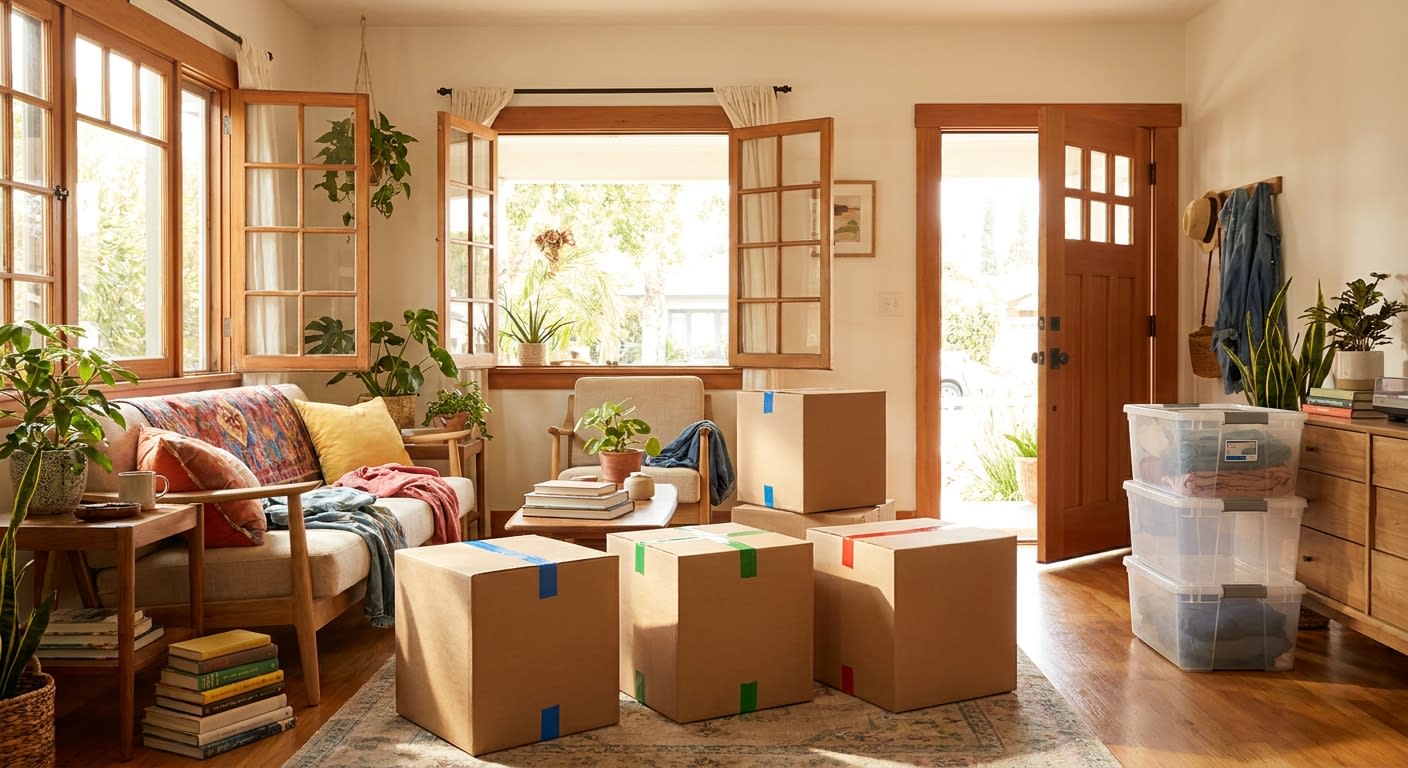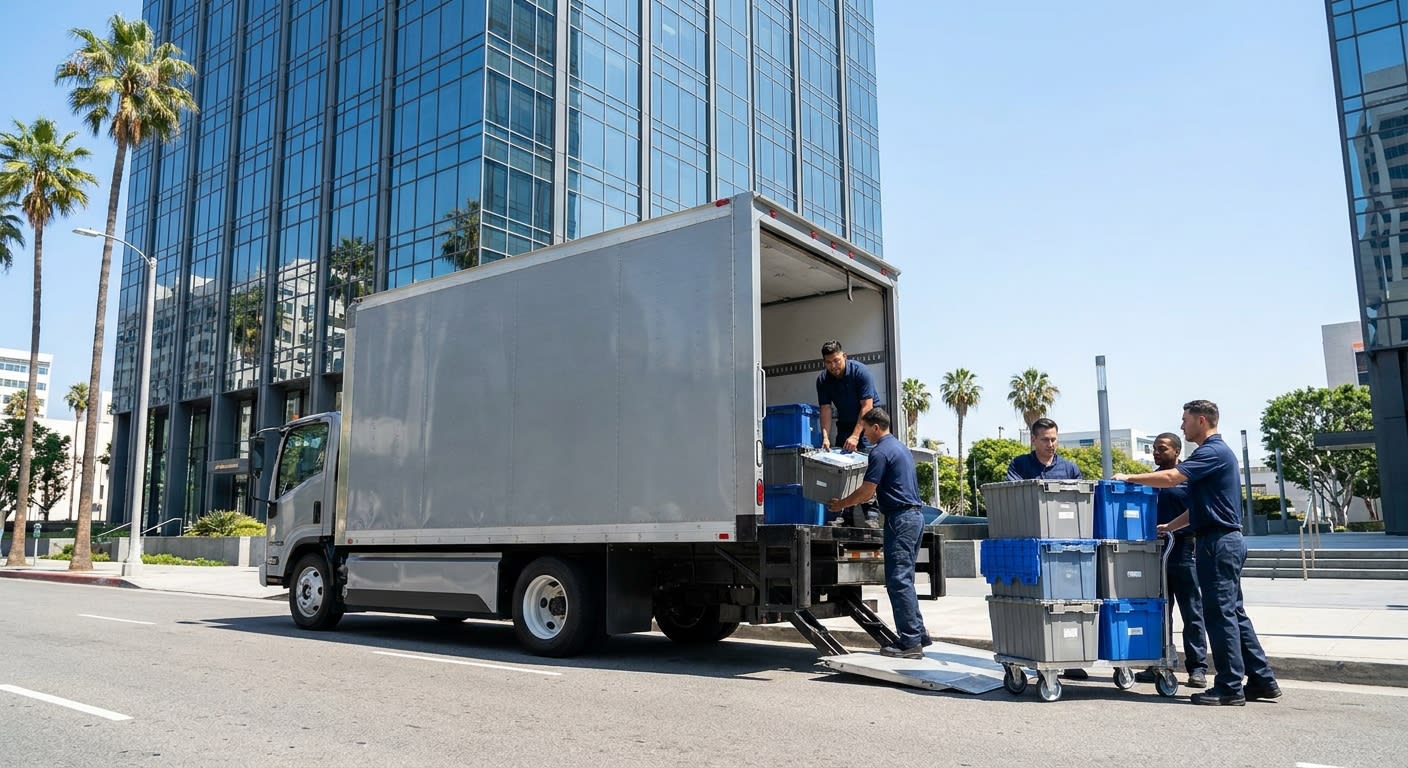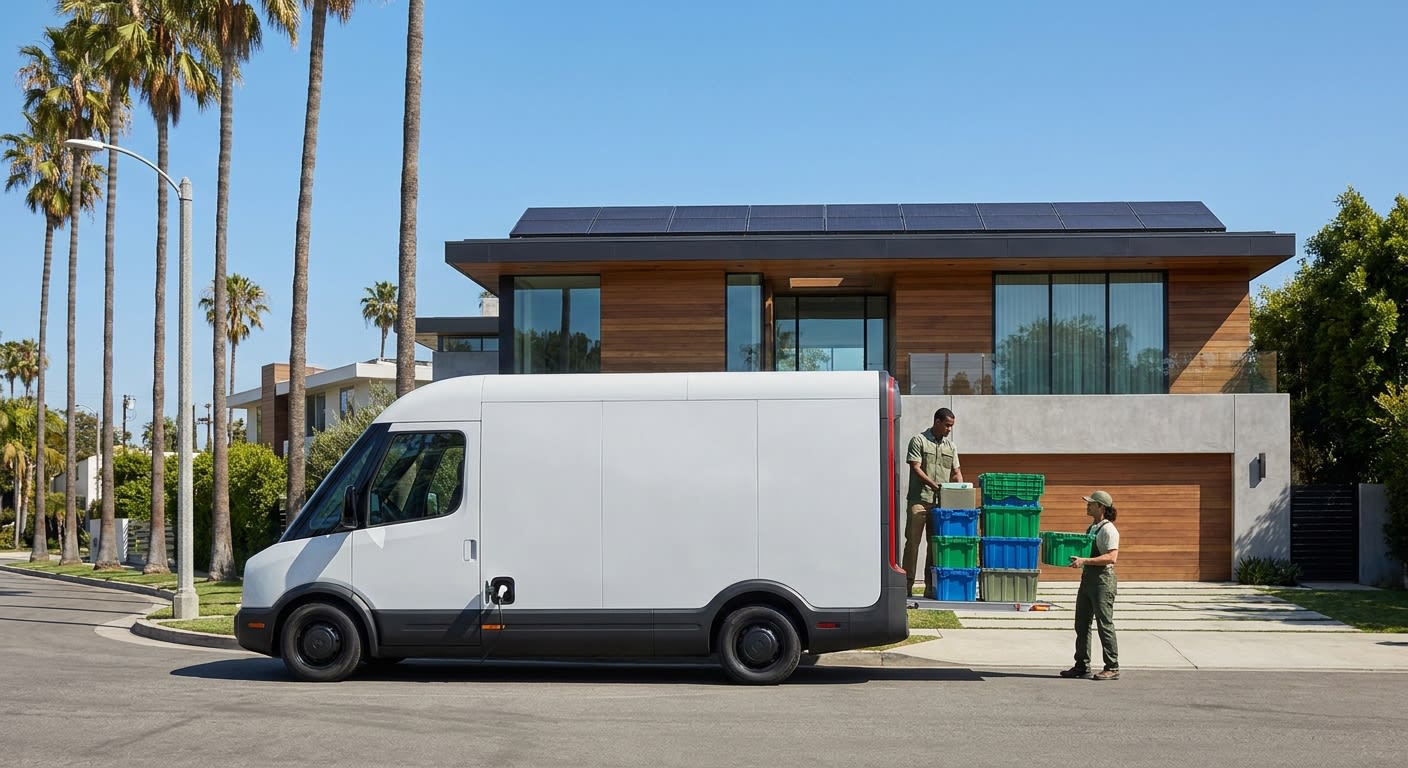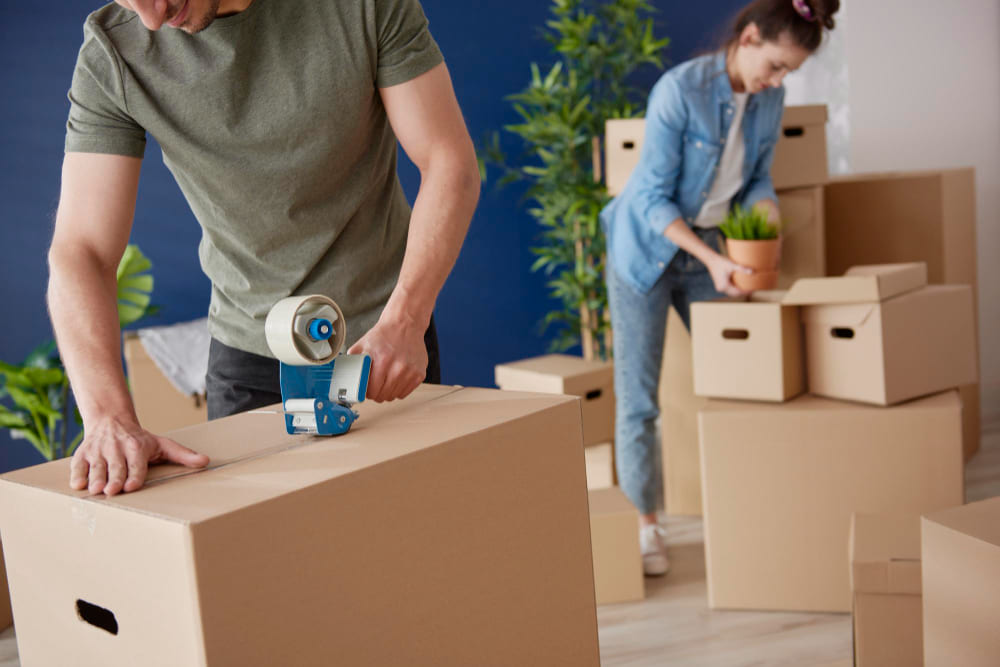


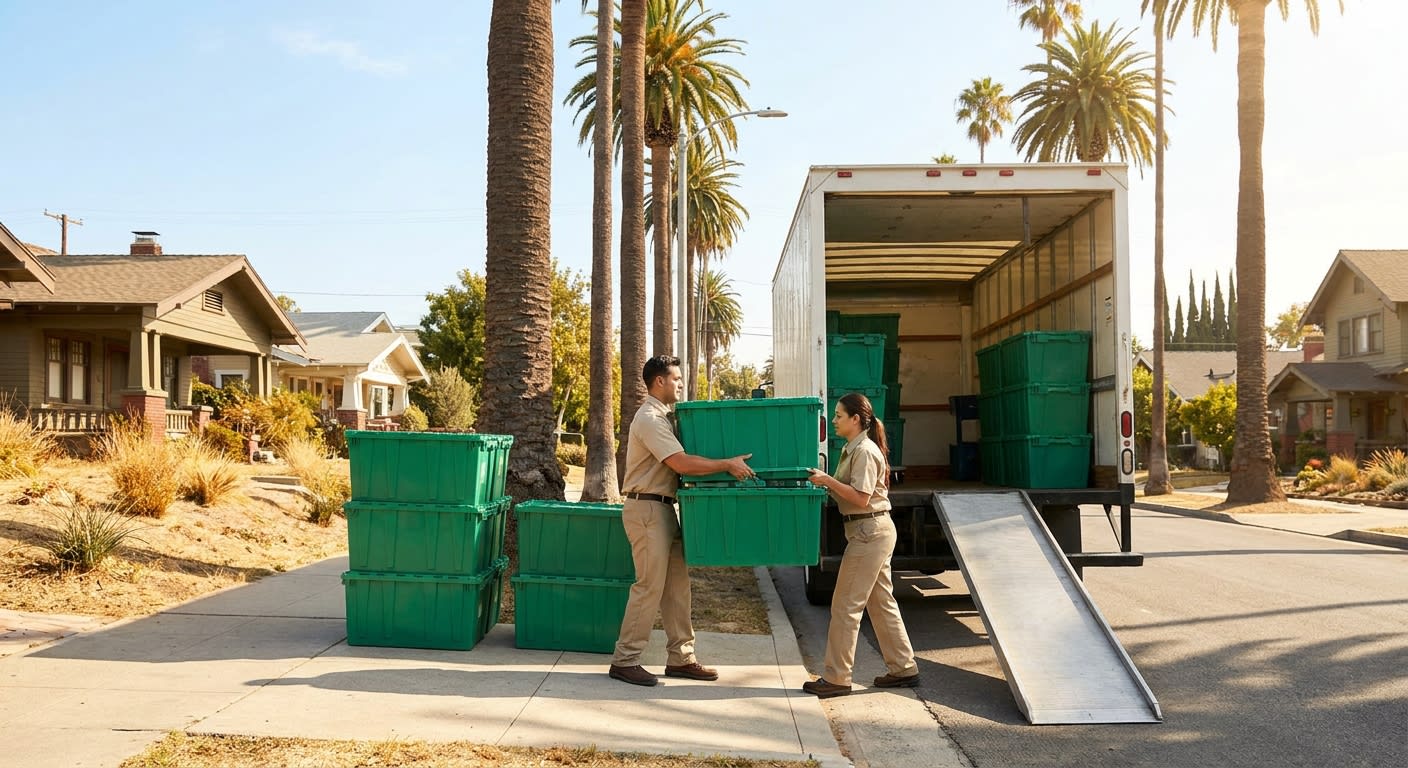
Three weeks ago, I coordinated a move for a sustainability consultant in Silver Lake who refused to use a single cardboard box. She'd researched every reusable moving containers LA option available and had strong opinions about each one. By the end of that move—a 1-bedroom apartment to a townhouse in Echo Park—I'd learned more about the current state of reusable container systems than I had in the previous two years combined. Her move took 4.2 hours with a 3-person crew, and we didn't generate a single piece of cardboard waste.
I'm William, Operations Manager at SOS Moving, and I've been scheduling and overseeing moves across Los Angeles for years now. I've watched the reusable container market explode from a niche eco-friendly option to a mainstream choice that roughly 23% of our clients now request in some form as of 2026. The landscape has gotten complicated, though—there are at least seven major providers serving the LA market, each with different bin sizes, rental periods, delivery models, and pricing structures.
This comparison breaks down everything I've learned from coordinating hundreds of moves using these systems, including the operational realities that most comparison articles miss entirely.
Understanding the Reusable Container Market in Los Angeles
The reusable moving container market in LA has matured significantly. When I first started seeing these bins on jobs around 2021, there was basically one major player and a few local startups. Now I'm tracking at least seven providers with active delivery networks covering Los Angeles, Orange County, and parts of the Inland Empire.
Here's what's driving the growth: a standard 2-bedroom apartment move generates between 40 and 60 cardboard boxes, most of which end up in landfills within two weeks of the move. Even when clients recycle, the environmental impact of producing, shipping, and processing all that cardboard adds up. Reusable containers, by contrast, typically last 400-500 moves before they're recycled themselves.
The LA market specifically benefits from the dense urban environment. Delivery logistics that would be cost-prohibitive in sprawling suburbs work efficiently when a single delivery truck can drop bins at three or four locations within a 5-mile radius. I've seen delivery efficiency improve about 35% in central LA zip codes compared to outlying areas.
What most people don't realize is that these systems aren't just about being green—they're often faster to pack, more protective for your belongings, and eliminate the post-move box breakdown and recycling hassle. I've timed it repeatedly: my crews pack reusable bins roughly 20% faster than cardboard because the uniform sizes stack predictably and the rigid walls don't require careful bottom-taping.
Major Reusable Container Providers Serving LA in 2026
Let me break down the main players I encounter regularly on jobs. I'm not endorsing any particular company here—just sharing what I've observed operationally.
ZippGo remains the largest provider I see in the field. They've been in the Bay Area market for years and expanded aggressively into LA. Their standard bin holds roughly 2.5 cubic feet, which fits about 65 pounds of household goods comfortably. Rental periods typically run 7 days, with extensions available. I've noticed their delivery reliability is solid in central LA but can be inconsistent in the South Bay.
Bin It operates primarily in West LA and the beach communities. Their bins are slightly larger—closer to 3 cubic feet—which works better for bulky items like bedding and winter clothes. They offer a premium tier with attached locking lids, which I recommend for multi-day moves where bins might sit in a garage or storage unit.
GreenBox focuses on the eco-luxury market, offering bins made from 100% post-consumer recycled plastic with integrated handles and ventilation slots. They're priced roughly 30% higher than competitors but include white-glove delivery and pickup. I see them most often in Beverly Hills, Brentwood, and Pacific Palisades moves.
Several smaller local providers have emerged, including ReBox LA in the Valley and EcoMove Bins in Orange County. These regional players often offer better pricing for moves within their service areas but can be tricky to coordinate for cross-county relocations.
Cost Comparison: Reusable Bins vs. Cardboard Boxes
I've tracked costs across dozens of moves to give you real numbers, not marketing claims. For a typical 2-bedroom apartment move requiring 50-60 boxes worth of capacity:
Traditional cardboard route: Buying new boxes from a moving supply store runs approximately $180-$250. Used boxes from Craigslist or Nextdoor might cut that to $50-$80, but they're often damaged, inconsistent sizes, and require more tape. Add packing tape ($25-$40), packing paper ($30-$50), and your total lands between $285 and $340 for new materials.
Reusable container rental: A 7-day rental for 50-60 bins from major providers currently runs $150-$220 in the LA market as of 2026. That includes delivery and pickup, so no trips to the store. The bins come with attached lids, eliminating tape costs. You'll still need packing paper or sustainable alternatives for wrapping fragile items, adding roughly $30-$50.
The math favors reusable containers for most moves, especially when you factor in your time. I've watched clients spend 3-4 hours sourcing, transporting, and assembling cardboard boxes. With reusable bins, they show up assembled and ready at your door.
Where cardboard still wins: very small moves (under 20 boxes) where minimum rental fees make bins less economical, and long-distance moves where you'd need to coordinate bin return logistics across state lines. For local LA moves, reusable containers typically save $75-$150 compared to new cardboard, while being faster and more protective.
Bin Sizes and What Actually Fits Inside
This is where most comparison guides fail you—they list cubic footage without explaining what that means for actual household items. I've packed thousands of these bins, so let me give you the practical breakdown.
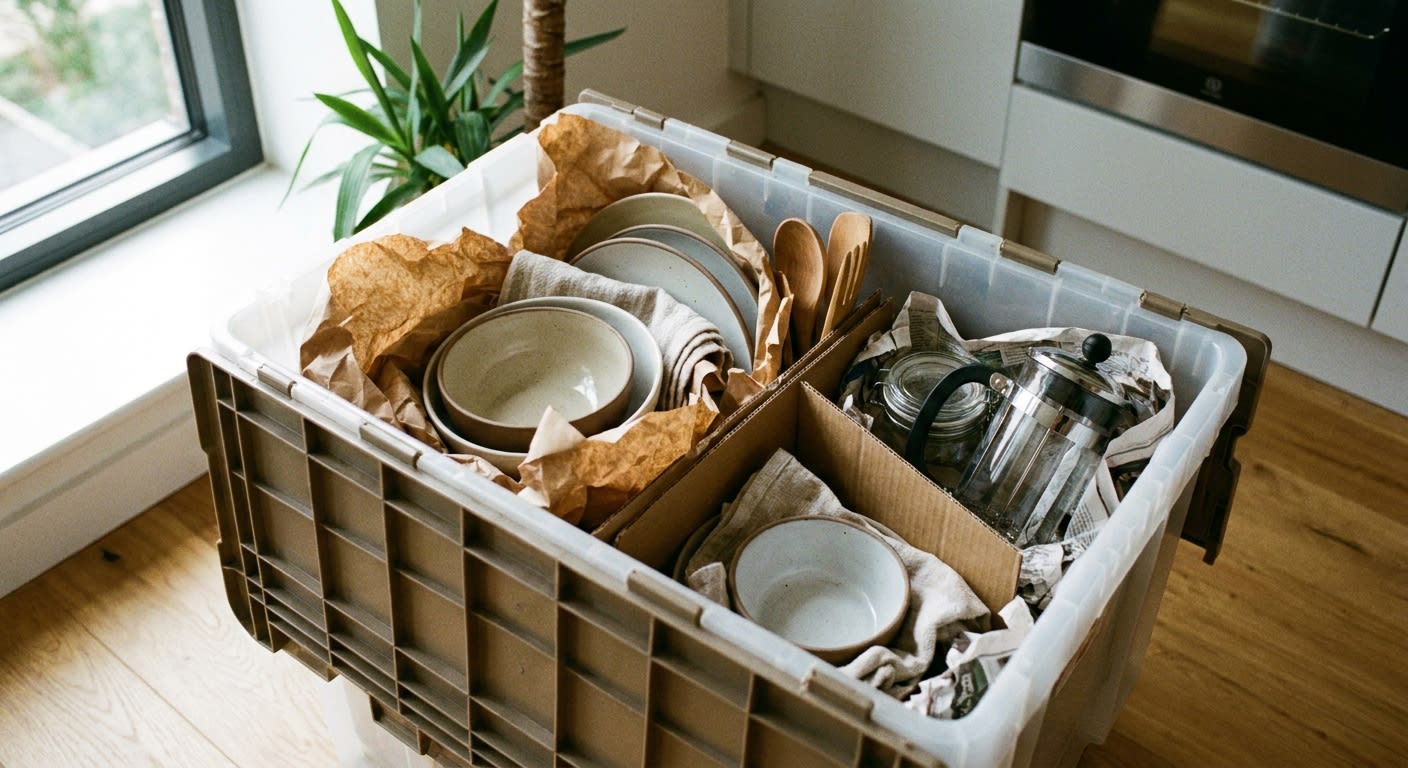
Standard bins (2.0-2.5 cubic feet): These are your workhorses. I use them for books, kitchen items, bathroom supplies, small electronics, and office materials. A standard bin holds approximately 25-30 books, or a complete set of dishes for four, or the contents of a typical bathroom cabinet. Weight capacity is usually 65-75 pounds, but I tell clients to stay under 50 pounds for anything they'll be lifting themselves.
Large bins (3.0-3.5 cubic feet): These work for bedding, towels, winter clothes, and bulky kitchen appliances. One large bin fits a queen comforter plus two pillows, or about 15-20 bath towels. They're also perfect for toys, sports equipment, and garage items that don't fit standard bins.
Wardrobe bins: Some providers offer tall, narrow bins with integrated hanging bars. These typically hold 15-20 garments on hangers and eliminate the need for wardrobe boxes. They're pricier to rent—often $8-$12 per bin compared to $3-$5 for standard—but they save significant packing and unpacking time for clients with extensive wardrobes.
Specialty containers: A few providers now offer dish-pack bins with adjustable cell dividers, file-box bins for office moves, and even art-transport bins with foam inserts. As I covered in my colleague Amir's piece on moving fine art and sculptures safely, specialized containers can make a huge difference for valuable items.
📦 Planning a sustainable move? Our packing services team works seamlessly with reusable container systems. Call (909) 443-0004 or request a free quote to discuss your options.
Delivery Logistics and Timing Considerations
Here's where operational reality gets complicated. Reusable container companies operate on delivery schedules that don't always align with your moving timeline, and I've seen this create problems on move day more times than I'd like.
Most providers require 48-72 hours advance notice for delivery. In peak moving season (May through September), that window can stretch to 5-7 days. I had a client in Culver City last June who tried to book bins three days before her move and couldn't get delivery until two days after her scheduled moving date. She ended up scrambling for cardboard boxes at the last minute.
Pickup timing matters even more. You'll typically schedule pickup for 1-2 days after your move, but you need to have all bins emptied and ready. If unpacking takes longer than expected—which happens constantly when clients underestimate how long it takes to organize a new space—you're either rushing to empty bins or paying extension fees.
My recommendation: build a 3-day buffer into your rental period. The extra $30-$50 buys you peace of mind and eliminates the pressure to unpack at an unrealistic pace. I've coordinated moves where clients paid for the minimum rental, then spent their first night in the new place frantically unpacking because bins were being picked up at 8 AM.
For the scheduling complexities of coordinating multiple vendors, my colleague's guide on moving day weather contingency plans covers backup planning that applies to bin delivery coordination as well.
How Reusable Containers Affect Moving Crew Efficiency
From an operations standpoint, I've tracked how different packing materials affect my crews' speed and efficiency. The data consistently favors reusable containers, with some caveats.
Loading time improves roughly 15-20% with uniform reusable bins compared to mixed cardboard boxes. The standardized sizes mean my crews can plan truck loading patterns in advance. A truck bed fits a predictable number of bins in each row, which eliminates the Tetris game that happens with mismatched cardboard boxes.
Stacking stability is dramatically better. Reusable bins have flat tops and bottoms designed to interlock. I've never had a bin stack collapse in transit. Cardboard boxes, especially ones that have been packed top-heavy or have soft contents, shift and topple regularly. Last month alone, my crews dealt with three collapsed cardboard stacks that added 15-20 minutes of reorganization each.
The weight consistency also helps. Cardboard boxes come in dozens of sizes, and clients pack them unpredictably—I've lifted "small" boxes that weighed 80 pounds because someone filled them with tools. Reusable bins have clear weight limits printed on them, and the rigid construction makes it obvious when a bin is overloaded before anyone lifts it.
The caveat: my crews need to know in advance that we're working with reusable bins. The dolly configurations and truck loading patterns are different. If a client books without mentioning they're using bins, and my crew shows up expecting cardboard, we lose 10-15 minutes adapting. Always mention your packing system when booking.
Sustainability Impact: Real Numbers
I know "sustainability" can feel like marketing fluff, so let me share the actual environmental math I've calculated for LA moves.
A single cardboard moving box, even recycled, generates approximately 2.5-3 pounds of CO2 in its lifecycle—manufacturing, transportation to the store, your trip to buy it, and eventual recycling or landfill processing. Multiply that by 50 boxes for a typical apartment move, and you're looking at 125-150 pounds of carbon emissions just from boxes.
Reusable containers amortize their manufacturing impact across hundreds of uses. The per-move carbon footprint works out to roughly 0.3-0.5 pounds per bin, or about 15-25 pounds total for that same apartment move. That's an 80-85% reduction in packing-related emissions.
There's also the waste diversion factor. LA's landfills receive an estimated 50,000 tons of cardboard from residential moves annually as of 2026 data. Reusable container adoption at current rates diverts roughly 8,000-10,000 tons of that. If adoption continues growing at its current pace, projections suggest we could hit 25,000 tons diverted by 2028.
At SOS Moving, we've embraced sustainable practices across our operations. We're a licensed and insured full-service moving and storage company, from $119/hour, and we've handled thousands of local and long-distance relocations stress-free—increasingly with reusable container systems. For a deeper dive into eco-friendly packing options, check out our guide to eco-friendly moving boxes and green packing.
Best Use Cases for Each Container System
After coordinating hundreds of moves with various container systems, I've developed clear recommendations for which approach works best in different scenarios.
Studio and 1-bedroom apartments: Standard reusable bin packages (25-35 bins) work perfectly. The uniform sizes fit apartment layouts well, and the total rental cost stays under $120 in most cases. I've moved dozens of studios using nothing but reusable bins and wardrobe containers.
2-3 bedroom homes: Mixed systems often make sense here. Use reusable bins for kitchen, bathroom, bedroom, and office contents. Cardboard might still work better for oddly-shaped items, garage contents, and anything going into long-term storage. A 60-40 split between reusable and cardboard typically optimizes both cost and convenience.
Large homes (4+ bedrooms): At this scale, the logistics of reusable container delivery and pickup become complex. You might need 150+ bins, requiring multiple delivery trips. Some providers cap single-delivery orders at 75-100 bins. I'd recommend reusable bins for specific high-value areas (kitchen, master bedroom, home office) and cardboard for bulk items.
Office moves: Reusable file boxes and standard bins excel for commercial relocations. The security features (locking lids, numbered bins) help with chain-of-custody tracking. For weekend office relocations, my guide on commercial movers and weekend office moves covers the logistics in detail.
Long-distance moves: This is where reusable containers get tricky. Most providers only service specific metro areas, so you'd need to empty and return bins before loading for a cross-country move. Some national providers are emerging, but coverage remains spotty outside major markets. For interstate relocations, cardboard or hybrid systems currently make more operational sense.
Common Mistakes I See with Reusable Container Moves
Let me save you from the errors I've witnessed repeatedly over the years.
Underestimating bin quantities: Clients consistently order 20-30% fewer bins than they need. The rental company's online calculator asks for bedroom count and square footage, but it can't account for your book collection, kitchen gadget obsession, or garage full of camping gear. When in doubt, order more—returning unused bins is free with most providers, but emergency next-day delivery of additional bins costs $25-$50.
Forgetting fragile item protection: Reusable bins protect against crushing and moisture, but they don't pad fragile items. You still need packing paper, bubble wrap, or sustainable alternatives like newsprint and fabric wraps. I've unpacked bins where clients assumed the rigid walls would protect glassware—they don't when items can shift during transit.
Ignoring weight limits: Those 65-pound weight limits exist for good reasons. Overpacked bins damage the containers (you'll be charged replacement costs), hurt people's backs (including my crews'), and can exceed what delivery drivers will accept. Books are the usual culprit—a bin full of hardcovers easily hits 80+ pounds.
Scheduling pickup too early: I mentioned this before, but it's worth repeating. Schedule pickup for 2-3 days after you think you'll finish unpacking. The stress of forced-pace unpacking ruins the experience of settling into your new home.
Not communicating with your moving company: Tell your movers what system you're using when you book. Let them know bin quantities and sizes. Send photos if possible. This helps us schedule the right crew size and truck configuration. Surprises on move day cost everyone time and money.
Hybrid Approaches That Work Well
Pure reusable-only moves aren't always practical, and I've developed hybrid strategies that capture most of the sustainability benefits while maintaining flexibility.
The "core rooms" strategy uses reusable bins for kitchen, bathrooms, bedrooms, and home office—the areas with the most uniform, packable items. Garage, attic, and storage areas get cardboard, which often contains items that won't fit standard bin dimensions anyway.
The "valuable items" strategy reserves reusable bins for your most important belongings—electronics, documents, collections, fragile decor—while using cardboard for bulkier, less breakable items like bedding, seasonal clothes, and outdoor furniture cushions.
The "no-waste" strategy uses reusable bins for everything packable, but sources cardboard exclusively from neighborhood giveaways and stores discarding inventory boxes. This achieves zero new cardboard purchases while handling the oddball items bins can't accommodate. I've written about how my colleague covers this in our guide on where to get free moving boxes in Los Angeles.
For clients counting every dollar, the "minimum rental" strategy rents just 15-20 reusable bins for kitchen and fragile items—the categories where bin protection matters most—and uses free sourced cardboard for everything else. Total added cost runs roughly $60-$80 for significant improvement in protection for your breakables.
Frequently Asked Questions
Are reusable moving containers more expensive than cardboard boxes?
For most LA moves, reusable containers actually cost less than buying new cardboard boxes when you factor in tape, packing paper, and your time sourcing materials. A typical 2-bedroom apartment move runs $150-$220 for reusable bin rental versus $285-$340 for new cardboard supplies. The breakeven point shifts if you're comparing against free used boxes, but the time and protection advantages often still favor reusable systems.
How far in advance should I book reusable container delivery?
I recommend booking at least 7-10 days in advance, and 2-3 weeks during peak season (May-September). Last-minute availability is rare, and I've seen clients scramble when they try to book within 48 hours of their move. Most providers allow free rescheduling up to 24-48 hours before delivery, so early booking doesn't lock you into an inflexible timeline.
Can I use reusable containers for long-distance moves?
Currently, most reusable container providers only service specific metro areas, making them impractical for interstate moves. You'd need to empty and return bins before loading for a cross-country relocation. A few national providers are emerging, but coverage remains limited. For long-distance moves, I typically recommend cardboard or a hybrid approach where you use reusable bins for packing, then transfer contents to cardboard before the truck loads.
What happens if I damage a reusable container during my move?
Most providers include normal wear and tear in their rental fees. Significant damage—cracked walls, broken lids, missing bins—typically incurs replacement charges ranging from $15-$40 per bin depending on the provider and container type. These charges are rare in my experience; the bins are designed to withstand hundreds of moves and handle typical moving conditions without issue.
How many reusable bins do I need for my apartment?
As a rule of thumb: studios need 20-30 bins, 1-bedrooms need 30-45 bins, and 2-bedrooms need 45-65 bins. Add 10-15% if you have extensive collections (books, vinyl, kitchen equipment) or haven't decluttered before packing. I always recommend ordering slightly more than the calculator suggests—returning unused bins is free, but emergency delivery of additional bins costs extra.
Do moving companies charge extra for reusable container moves?
At SOS Moving, we don't charge extra for reusable container moves—in fact, they often run more efficiently than cardboard-only moves. The standardized sizes improve our loading speed and reduce the risk of shifting during transit. Some companies might add fees if they need specialized equipment or if the bins require unusual handling, so always confirm when booking.
Ready for a Sustainable Move?
Ready to explore reusable container options for your LA move? SOS Moving serves Los Angeles, Orange County, and the San Francisco Bay Area with licensed and insured full-service moving and storage. Call (909) 443-0004, email info@sosmovingla.net, or get your free quote online. We'll help you coordinate the most efficient, sustainable move possible—whether you're going all-in on reusable bins or taking a hybrid approach.