

Three weeks ago I packed up a serious home gym in a Sherman Oaks garage — a Rogue R-3 power rack, a 1,200-pound plate collection, a Concept2 rower, a Peloton, a wall-mounted mirror the owner paid $1,800 for, and about 400 square feet of horse-stall rubber flooring. The client was moving to a new build in Calabasas and his contractor was finishing the new garage in 48 hours. I had one shot to get everything out clean, organized, and ready to drop into the new space without scratched plates, bent uprights, or a cracked mirror. We pulled it off, but only because I'd already learned the hard way on a job two years ago when a rookie crew loaded loose 45-pound plates against a drywall and put a fist-sized hole through it.
I'm Amir Tabrizi, a Senior Move Foreman at SOS Moving, and home gyms are one of the most underestimated jobs in this business. People look at a rack and think "it's just metal, throw it on the truck." Then we get there and the rack alone weighs 250 pounds, the plates weigh more than a piano, and there's a $3,000 treadmill with electronics that will never work again if you tip it wrong. Below is exactly how I pack a home gym so nothing — equipment, walls, floors, or backs — gets damaged.
Start With an Inventory and a Disassembly Plan
Before I touch a single dumbbell, I walk the room with my phone and shoot video of every piece — close-ups of bolt patterns, cable routing on the functional trainer, belt position on the treadmill, and any factory stickers with model numbers. If a client ever needs a warranty claim or wants to reassemble exactly the way it came out, that footage saves hours. I also photograph the wall anchors and stud locations because half my clients forget where their rack was bolted in.
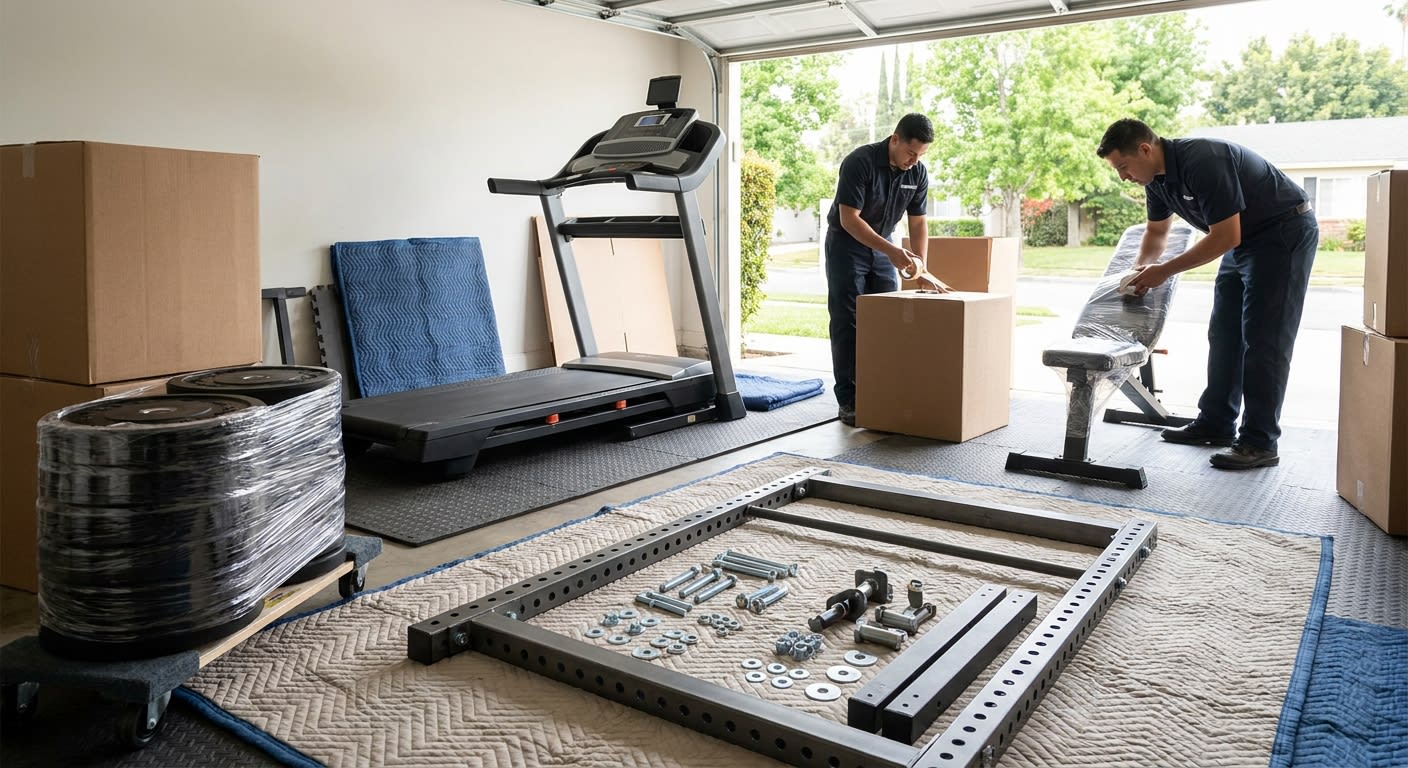
Then I write a disassembly order on a notepad. Big stuff first: power rack uprights, cable machines, treadmill folding mechanism. Small stuff last: dumbbells, kettlebells, accessories. The reason is floor space — once you start breaking down a rack, you need clear ground to lay out hardware, blankets, and boxes. I knock down a typical garage gym in roughly 90 minutes with a two-person crew if it's planned, or four hours if I'm winging it. Knowing how to pack home gym equipment starts with respecting the order of operations, not the muscle of the crew. A 22-year-old can deadlift 400 pounds and still ruin a $2,000 rack by rushing the breakdown.
Hardware Management: The Detail That Saves Reassembly
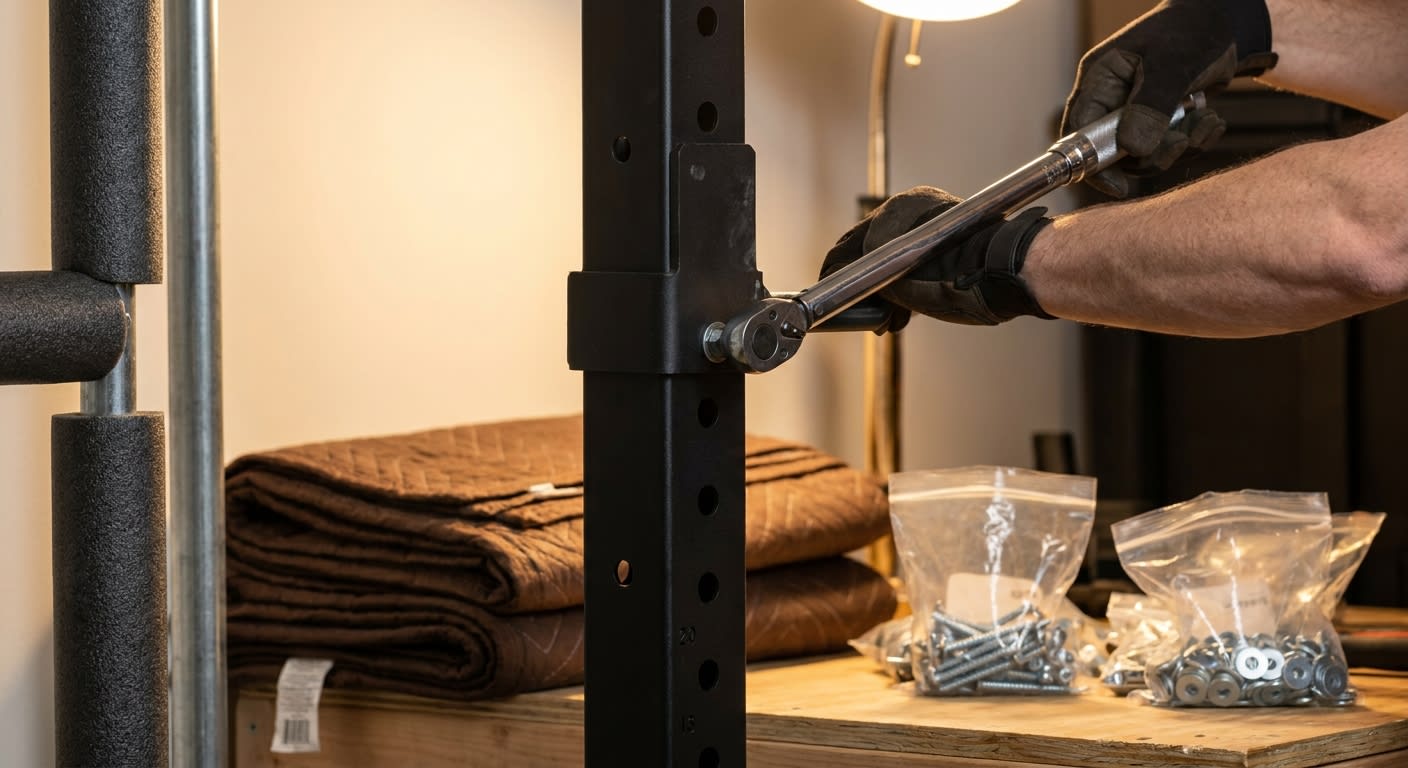
Every bolt, J-hook pin, safety strap clip, and Allen key gets bagged and labeled. I use quart-size zip bags with a Sharpie label: "Rack — front uprights, 8x M12 bolts" or "Cable machine — pulley housing, 4x carriage bolts + washers." Each bag goes into one master hardware box that rides in the cab of the truck, not the trailer. I never let hardware ride loose with the equipment because vibration on the 405 will scatter a bag inside a moving blanket and you'll never see those bolts again.
For the rack itself, I tape the hardware bag directly to the upright it came from after I'm done disassembling. That way reassembly at the new house becomes a paint-by-numbers job instead of a treasure hunt. On the Sherman Oaks move, the client thanked me specifically for that — his contractor reassembled the rack in 40 minutes the next morning because every piece was labeled and every bolt was where it needed to be.
Plates, Dumbbells, and the Weight Problem
Plates are the single most dangerous item in a home gym move. Not because they break — they almost never do — but because they break everything else. A loose 45-pound plate sliding in a truck will punch through a mattress, a dresser, or a drywall corner without slowing down. Here's my system:
Bumper plates get stacked on edge in heavy-duty plastic bins, max 6 plates per bin to stay under 270 pounds. I wrap each stack in stretch film first to keep them from rattling. Iron plates go into small sturdy boxes — I'm talking 12x12x12 max, double-walled, no exceptions. A standard book box overloaded with iron plates will blow out the bottom in under ten feet. My colleague Sarah covers weight-distribution principles in her guide on packing books without breaking boxes, and the same physics apply to plates: small box, dense weight, reinforced bottom.
Dumbbells get individually wrapped in moving blankets or pad-wrapped in pairs and laid flat on the truck floor as ballast. Never stack dumbbells in a box — the handles concentrate the weight onto two points and they'll punch through anything underneath them.
Treadmills, Rowers, and Cardio Electronics
Cardio equipment is where I see the most expensive damage on amateur moves. A treadmill is not a piece of furniture — it's a motor, a belt, a deck, and a console with a circuit board. If you tip it on its side without locking the deck, you can bend the frame or stress the motor mounts. Every treadmill I move gets the deck folded and locked per the manual, the console wrapped separately in bubble and a moving blanket, and the whole unit strapped upright on a four-wheel dolly.
Rowers like the Concept2 break down into two pieces in 30 seconds — separate them. The rail and the flywheel housing travel as two padded units. Pelotons and other connected bikes get the screen detached if possible, foam-wrapped, and boxed separately. The frame rides upright, never on its side, because the weighted flywheel can shift and stress the bearings.
🏋️ Moving a serious home gym setup? My white glove moving team handles racks, plates, and electronics like the equipment they are — not generic furniture. Call (909) 443-0004 for a walk-through estimate.
Mirrors, Rubber Flooring, and Wall-Mounted Gear
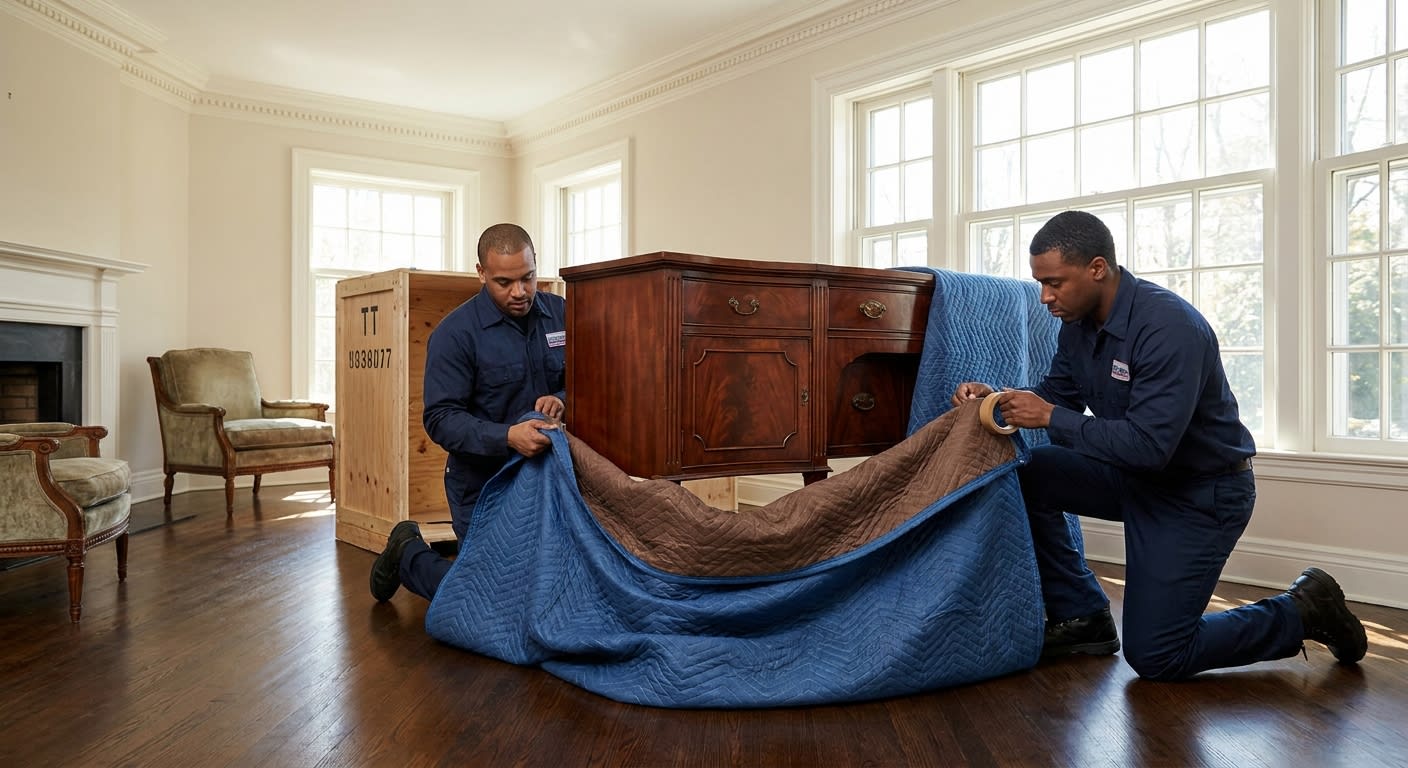
Gym mirrors are the silent killers of home-gym moves. Most are 60x80 inches or larger, frameless, and tempered. I crate them. I will not transport an unframed gym mirror in anything less than a custom cardboard mirror box with foam corner protectors and a hard backing. On the Sherman Oaks job we built a quick frame from 1x4s around the $1,800 mirror because off-the-shelf mirror boxes only go up to 60 inches. Budget an extra hour and roughly $40-60 in materials for any mirror over 5 feet.
Horse-stall rubber flooring — those 4x6 foot pieces from Tractor Supply or similar — gets rolled, not folded. Folding cracks the rubber along the crease, especially in cooler weather. I roll each piece tight, strap it with two ratchet straps, and stand them upright in the truck like wine bottles. Interlocking foam tiles stack flat in tall garment boxes.
Wall-mounted gear — pull-up bars, gymnastic rings, resistance band anchors — gets removed with the mounting hardware bagged and taped to the piece. I document the wall holes with photos so the client knows what patching they owe the landlord. If you're in a rental, this is a lease-compliance issue, not just a moving issue.
Loading Order and Truck Strategy
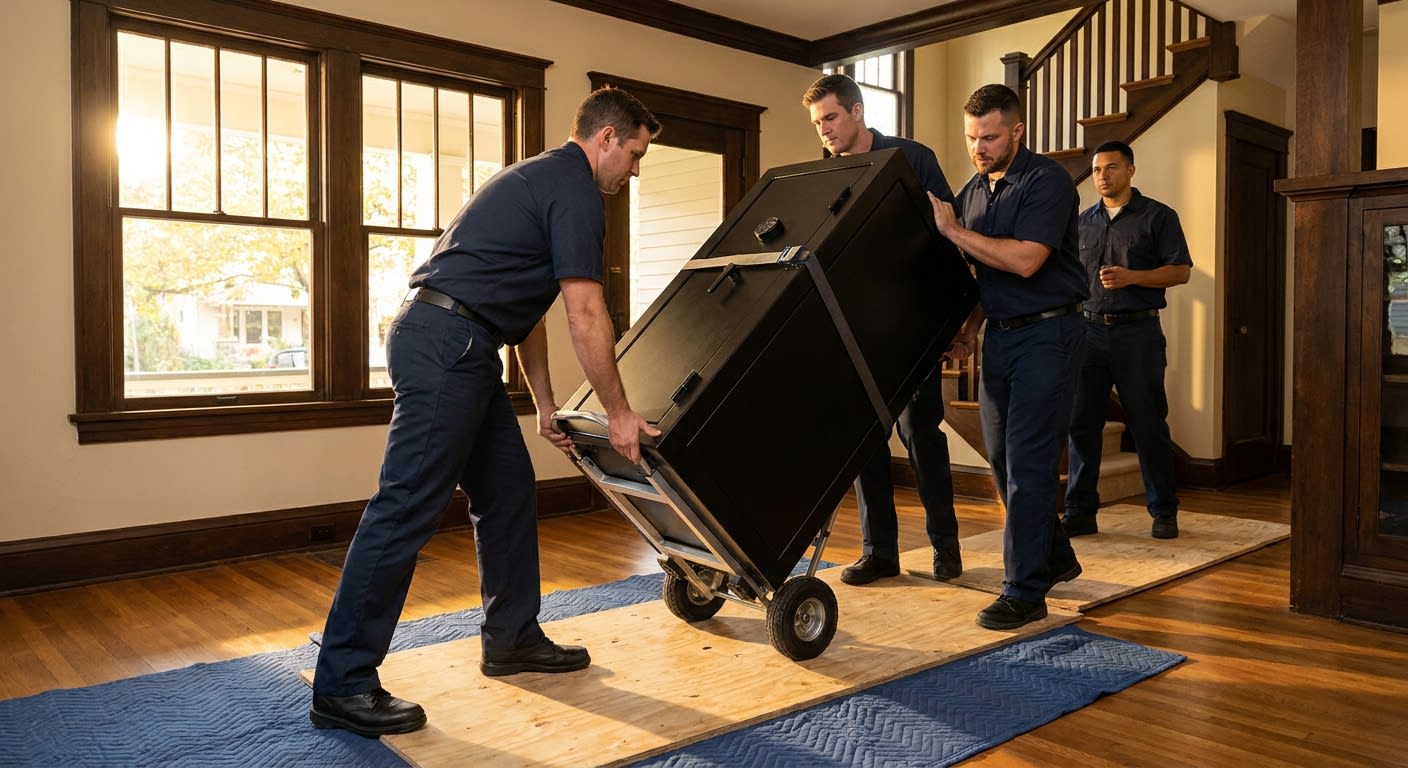
Heavy goes first, low, and against the cab wall. Plates and dumbbells become the foundation. Rack components — long uprights, crossmembers — go in next, blanket-wrapped and standing upright along the wall. Treadmills and rowers come in upright on dollies and get strapped to the E-track. Mirrors ride last, against a flat wall surface, padded and strapped, never near the door where load-shift can crush them.
For a typical two-car garage gym, I'm filling roughly a third of a 26-foot truck with gym equipment alone. That means it's almost never the only thing in the truck — household goods need to load around it, and the loading order has to account for the weight balance over the rear axle. This is where licensed and insured full-service moving and storage matters: a crew that knows weight distribution won't tip your truck on the I-405 onramp. My colleague William wrote about truck parking and staging in LA if you're trying to plan curb access for a heavy load.
Storage Considerations for Gym Equipment
About a third of my home-gym moves involve a storage gap — the new home isn't ready, or the client is downsizing temporarily. Gym equipment needs climate-controlled storage. Plates rust in standard units when LA marine-layer humidity sneaks in overnight. Treadmill and rower electronics fail in heat above 95°F, which standard units regularly hit during summer in the Valley. Rubber flooring off-gasses and warps in non-ventilated spaces.
I always quote climate-controlled storage services for gym jobs, even if it's only for two weeks. The cost difference is roughly $40-60 per month over standard as of 2026, and it's cheap insurance against a $3,000 Peloton console going dead because it baked in 110-degree storage in Sun Valley.
FAQ
How long does it take professionals to pack a full home gym?
For a two-car garage gym with a rack, cable machine, treadmill, rower, and a full plate set, my two-person crew needs about 4-5 hours for disassembly, packing, and loading. Add an hour if there's a wall mirror over 5 feet or wall-mounted equipment to remove. Reassembly at the destination runs another 2-3 hours.
Can I move a power rack without disassembling it?
Technically yes, if it's small and the doorways and stairwells allow. Practically no. Most full-size racks won't clear a standard 36-inch interior door, and the weight when assembled (often 250-400 pounds) makes it a serious injury risk. I disassemble every rack I move except for compact wall-mounted folding racks.
What's the biggest mistake people make packing their own home gym?
Putting too many plates in one box. I've seen large moving boxes loaded with 200 pounds of iron plates blow through the bottom on the first lift, scratching floors and risking injuries. Use small boxes — 12x12x12 max — and never exceed 50 pounds per box.
Do I need special insurance for expensive gym equipment?
For anything over $5,000 in total value — racks, treadmills, Pelotons, smart mirrors — I recommend declared-value coverage rather than the default released-value liability. Standard coverage pays roughly 60 cents per pound, which won't replace a $3,500 treadmill that weighs 250 pounds.
How should I pack a Peloton or other smart fitness equipment?
Detach the screen if the model allows, foam-wrap and box it separately. Wrap the frame in moving blankets, transport it upright on a dolly, and never lay it on its side — the weighted flywheel can shift and damage the bearings or frame welds.
Ready to move your home gym without bent racks, scratched plates, or a cracked mirror? SOS Moving serves Los Angeles, Orange County, and the San Francisco Bay Area with licensed and insured full-service moving and storage from $119/hour. Call (909) 443-0004, email info@sosmovingla.net, or get a free quote. Licensed & insured — over 2,500 five-star reviews and thousands of moves completed.