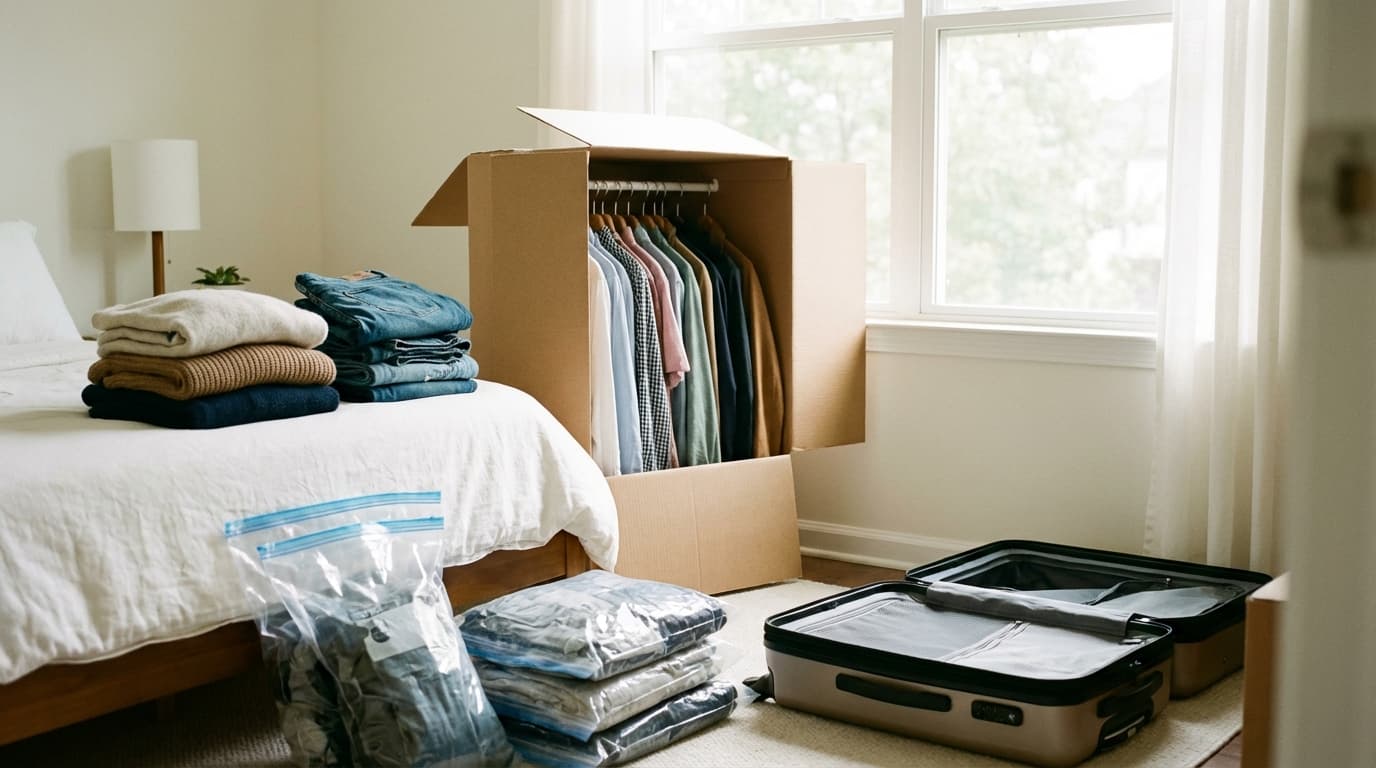


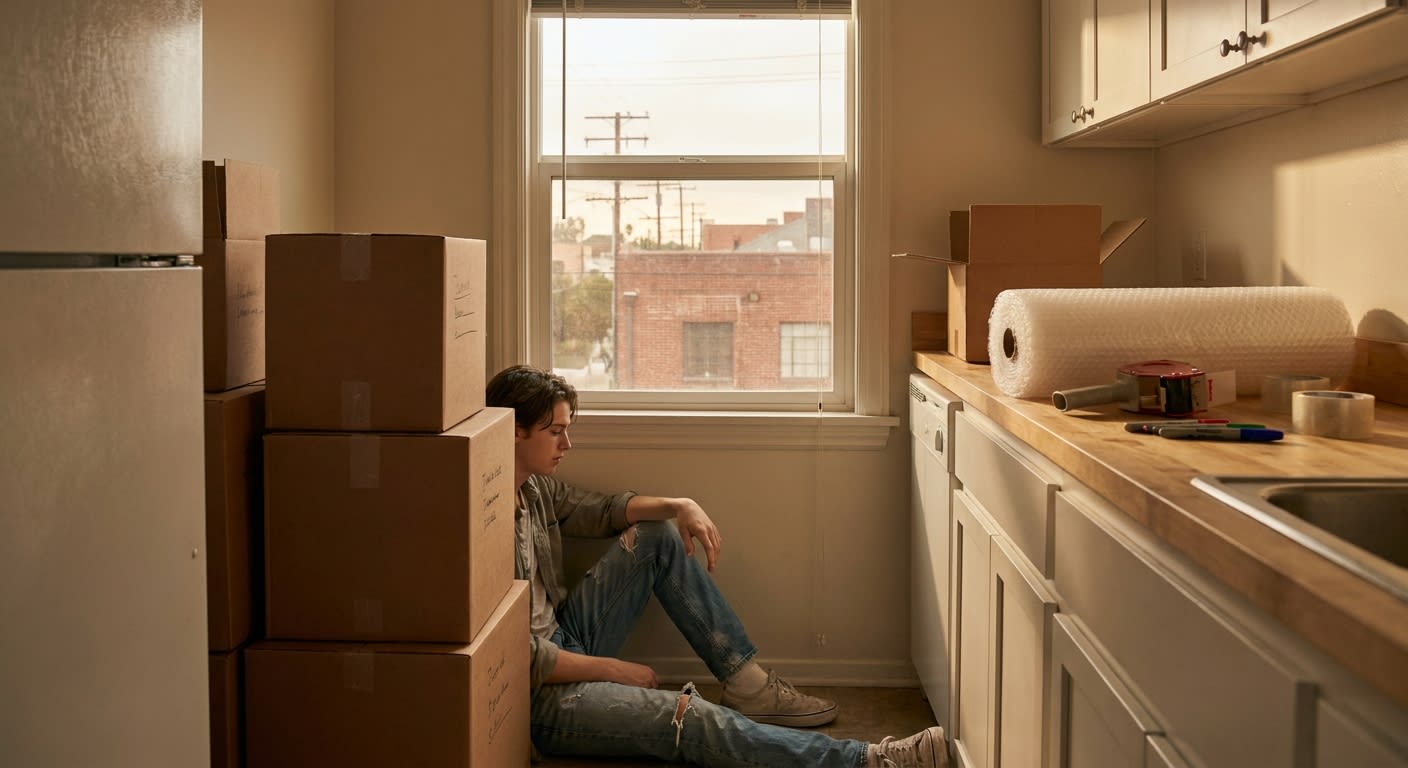
Three weeks ago, I coordinated a move for a graphic designer leaving her 450-square-foot studio in Koreatown for a place in Silver Lake. She'd called in a panic—move date was 21 days out, and she hadn't packed a single box. By the time my crew arrived on moving day, everything was boxed, labeled, and staged by the door. Total move time: 2 hours and 45 minutes. The difference wasn't luck—it was following a week-by-week packing timeline I've refined over hundreds of studio moves across Los Angeles.
I'm William, Operations Manager at SOS Moving, and I've been timing, scheduling, and optimizing moves since before the pandemic. Studio apartments are my specialty because they're deceptively tricky. People assume small space means easy move, but cramped quarters actually make packing harder. You can't spread out, you're tripping over boxes, and there's nowhere to stage completed items. A solid timeline changes everything.
Why Studio Apartments Need a Different Packing Approach
Here's what most packing guides get wrong: they're written for three-bedroom houses with garages and spare rooms. In a studio, you don't have the luxury of packing one room at a time while living in another. Your bedroom is your living room is your office is your dining room. Every square foot matters, and every packed box takes away space you need to function.
From my experience coordinating roughly 200 studio moves in LA each year, the average 400-500 square foot studio contains 25-40 boxes worth of belongings. That number surprises people—they think it'll be 15 boxes max. But when you factor in kitchen items, clothes, books, bathroom supplies, and those random drawers of stuff everyone has, it adds up fast. A studio in a building like those along Wilshire near MacArthur Park might pack down to 30 boxes. A studio in a converted Victorian in Echo Park where someone's lived for five years? I've seen 50 boxes come out of 380 square feet.
The timeline I'm sharing works for a three to four week runway, which is what most of my clients have. If you've got less time, you can compress weeks one and two into a single week, but you'll need to dedicate more hours per day. If you've got more time, spread it out—your sanity will thank you.
Week One: The Purge and Supply Run
Don't touch a single box during week one. I know that sounds counterintuitive, but I've watched too many clients start packing on day one, run out of boxes by day three, and end up with a half-packed mess that paralyzes them for a week. Week one is about two things: ruthless decluttering and gathering supplies.
Start with the purge. In a studio, every item you don't move saves real space and real money. My crews charge by the hour—from $119/hour—so fewer items means a faster move. Go through your closet first because clothing is the biggest hidden volume in most studios. That dress you haven't worn since 2023? Donate it. Those jeans you're keeping for "when they fit again"? Be honest with yourself.
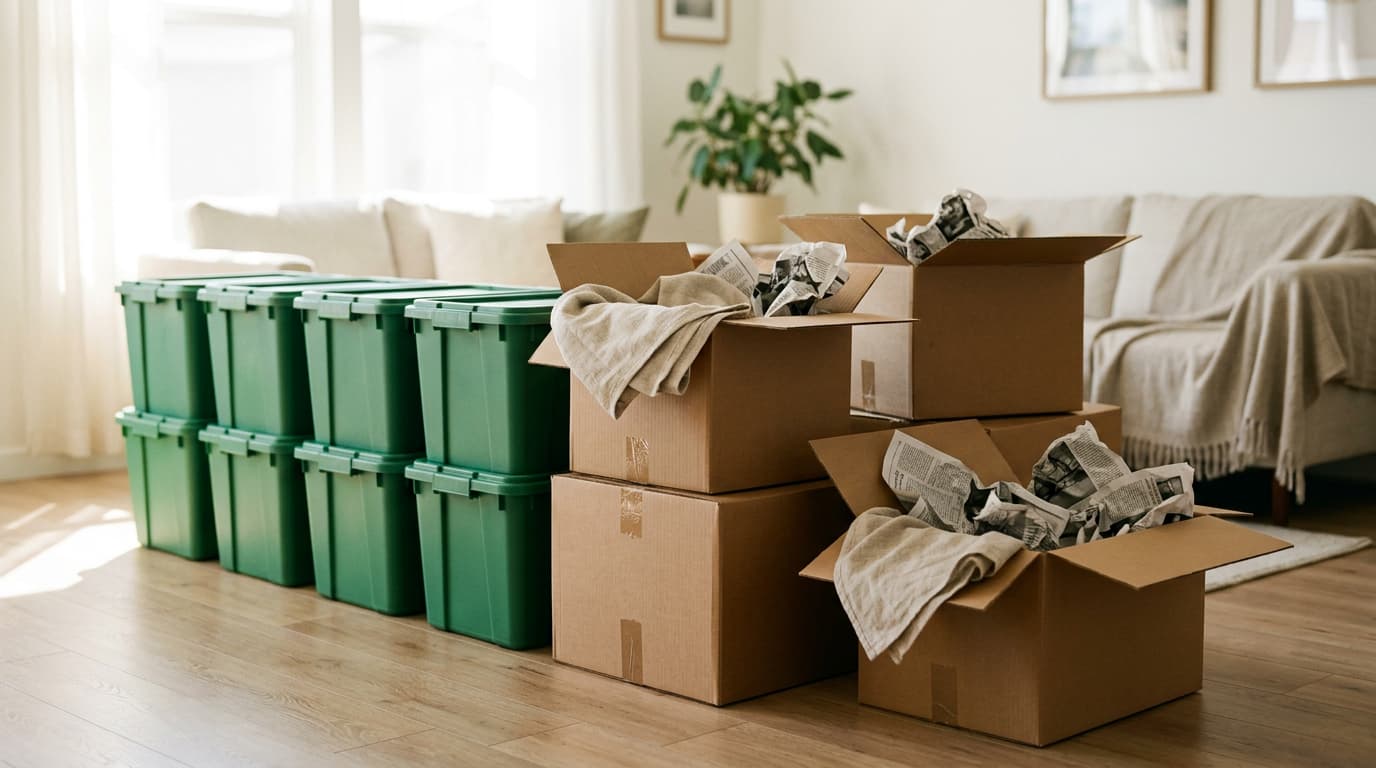
For supplies, here's my standard studio apartment kit based on what I see work best: 15-20 small boxes (books, kitchen items, heavy stuff), 15-20 medium boxes (general items, bathroom, linens), 5-8 large boxes (pillows, lampshades, light bulky items), 2-3 wardrobe boxes if you have suits or dresses, one roll of packing paper (about 25 pounds), two rolls of bubble wrap, and four rolls of packing tape. You can find free boxes at liquor stores along Vermont Avenue or check out my colleague's guide on where to get free moving boxes in Los Angeles.
Week Two: Non-Essential Items and Off-Season Gear
Now we pack—but only things you won't need for the next two weeks. This is where the studio apartment packing timeline really pays off. You're not disrupting your daily life; you're just getting ahead.
Start with off-season clothes. Moving in summer? Pack your sweaters and jackets. Moving in winter (not that LA has much of one)? Box up your shorts and tank tops. This alone usually fills 3-5 boxes in a typical studio. Next, hit the decorations: wall art, picture frames, that collection of succulents you've been nurturing on your windowsill. Wrap frames in packing paper, not bubble wrap—bubble wrap can leave impressions on glass in warm weather, and LA gets hot.
Books go in small boxes only. I can't stress this enough. A medium box full of books weighs 50-60 pounds, which is miserable to carry and tends to blow out the bottom. Small boxes keep book weight manageable at 30-35 pounds. If you've got a lot of books, check out my tips on packing books without destroying boxes.
By the end of week two, you should have 10-15 boxes packed and stacked somewhere out of the way. In most studios, this means a corner of your living/sleeping area or a cleared-out closet. Label every box on the top AND side so you can read them when they're stacked.
Week Three: Kitchen, Bathroom, and the Stuff You Actually Use
This is the high-intensity week. You're packing things you use regularly, which means some inconvenience is unavoidable. My advice: embrace paper plates and takeout for the next seven days. Your future self will thank you.
The kitchen takes most people by surprise. Even a tiny studio kitchen—those galley setups in buildings throughout Mid-Wilshire—holds more than you think. Start with specialty appliances: the blender you use twice a year, the waffle maker your mom gave you, that instant pot still in its box. Then move to plates, bowls, and glasses. Wrap each piece individually in packing paper. Yes, it takes longer. No, you won't regret it when your grandmother's serving bowl arrives intact.
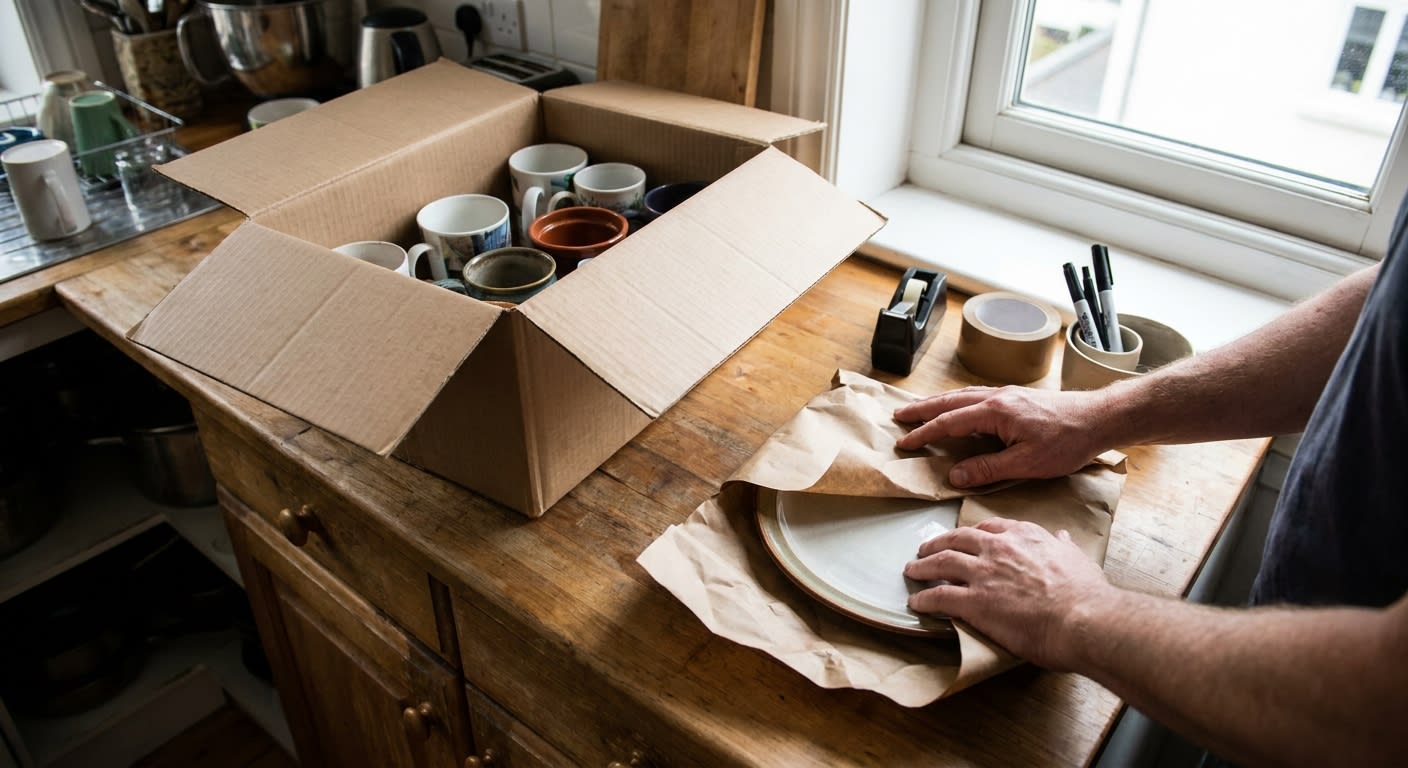
🚛 Need professional packing help for your studio move? Our packing services team can pack your entire studio in 2-3 hours. Call (909) 443-0004 or get your free estimate.
For glasses and stemware, the cell boxes (the ones with cardboard dividers) are worth every penny. A broken wine glass costs more than the $4 cell box would have. Pack glasses rim-down in the cells with paper cushioning at the bottom—this distributes weight better if the box gets jostled.
Bathroom packing is straightforward but has one gotcha: liquids. Shampoo bottles, lotions, and cleaning supplies can leak during a move, especially in a warm truck. Put everything with a cap in a gallon ziplock bag before boxing it. I learned this the hard way on a move from a studio in Los Feliz where an entire box of toiletries got destroyed by one leaky bottle of face wash.
Week Four: Final Stretch and Moving Day Prep
You're in the home stretch. By now, you should have 75% of your belongings boxed. Week four is about finishing up, preparing for the crew, and handling the items that need special attention.
Pack your "open first" box. This is the box you'll need immediately at your new place: toilet paper, phone charger, basic toiletries, a change of clothes, any medications, coffee maker and coffee (trust me on this one), paper towels, and a few basic tools. Mark this box clearly and keep it separate from everything else. I tell my clients to put it in their car, not the truck.
The day before the move, do a final walkthrough. Check inside every cabinet, every closet, every drawer. You'd be amazed what people leave behind—I've gone back to retrieve everything from passports to family heirlooms from empty studios. The areas most often missed: the medicine cabinet, the top shelf of closets, and that weird little storage space above the refrigerator that every LA studio seems to have.
If you're doing a DIY move, stage your boxes near the door in reverse order of how you'll want them in the truck. Heavy boxes first (they go on the bottom and toward the front), then medium, then light and fragile on top. If you've hired my crew, don't worry about this—we'll arrange everything efficiently. A typical studio move with 30-35 boxes takes my two-person crew about 2.5 to 3 hours from door to door within LA.
The Daily Time Investment: What to Actually Expect
Let me break down the real hours involved because I think most timelines are unrealistic. They'll say "pack for one hour a day" like that's some magic formula. Here's what I've observed from clients who successfully follow this timeline:
Week one requires about 4-6 hours total, spread however you want. Most of that is decluttering and one supply run. Week two needs 6-8 hours of actual packing time. That's about an hour a day if you spread it out, or one solid weekend afternoon if you batch it. Week three is the heavy lift at 8-10 hours total. This is when you're wrapping dishes, dealing with kitchen gadgets, and boxing up bathroom cabinets. Plan for 1.5-2 hours per day. Week four drops back down to 4-5 hours since you're mostly doing final items and prep work.
Total time investment: roughly 22-29 hours spread over 3-4 weeks. That's manageable for most working professionals in LA, which is exactly the point. This isn't a timeline that requires you to take vacation days—it's designed to fit around a normal life.
Special Considerations for LA Studio Buildings
Los Angeles has some unique studio apartment situations that affect packing and moving. Let me address the most common ones I encounter.
If you're in a building without an elevator—common in the dingbats throughout West LA and the older buildings in Silver Lake—your box weights matter even more. I keep everything under 40 pounds for walk-ups. It takes more boxes, but it saves your back and keeps my crew moving efficiently. A 50-pound box carried up three flights slows everything down.
Murphy beds and built-in furniture are common in older studios around Hancock Park and the Miracle Mile. These stay with the apartment, so don't pack around them—use them. Keep your mattress on the Murphy bed until the last night, and use any built-in shelving as staging areas for packed boxes.
Parking and loading zones vary wildly by building and neighborhood. Start figuring this out in week one. Some buildings in Downtown LA require 48-hour advance notice for freight elevator reservations. Street parking in neighborhoods like Westwood near UCLA can be a nightmare without proper planning. Check whether you need a moving truck permit—I've written about moving permits in Los Angeles that covers the current 2026 requirements.
The Box-a-Day Method: An Alternative Approach
If the week-by-week structure feels too rigid, some of my clients prefer what I call the box-a-day method. Starting three weeks out, you pack exactly two boxes per day, no more, no less. It takes 15-20 minutes and becomes part of your routine like brushing your teeth.
At two boxes per day for 21 days, you'll have 42 boxes packed by moving day—more than enough for most studios. The beauty of this method is consistency. You're never overwhelmed, never facing a marathon packing session the night before the move. I've seen clients use their morning coffee time to pack two boxes before work, then forget about moving for the rest of the day.
The downside? It requires discipline. Miss three days and suddenly you're six boxes behind with moving day approaching. The weekly method has more flexibility built in—if you skip Tuesday, you can make it up on Saturday. Choose whichever approach matches your personality.
What to Leave for Moving Day
Some items genuinely can't be packed until moving day. Here's the list I give every studio client:
Bedding you slept on the night before goes in a vacuum bag or garbage bag—no need to waste a box on it. Your shower curtain and bathroom rug can be rolled together. Cleaning supplies for the final wipe-down of the apartment stay out until the last minute. Any refrigerated items you're bringing (most people just donate or toss these) need to go in a cooler.
Electronics deserve special mention. Your TV, computer, and gaming systems should be the last things packed and first things unloaded. I prefer they go in the car rather than the truck when possible—climate-controlled and zero chance of shifting during transport. If you kept the original boxes for electronics, this is their moment to shine. If not, wrap them in moving blankets rather than boxes. More on that decision in the moving blankets guide.
Common Studio Packing Mistakes I See Every Week
After years of coordinating studio moves, I've catalogued the most common mistakes. Learn from other people's errors:
Overpacking boxes is number one. Small boxes should be heavy items, large boxes should be light items. When someone puts books in a large box, they end up with a 70-pound nightmare that's dangerous to lift and prone to breaking. I've seen boxes literally fall apart mid-carry because they're too heavy.
Not labeling boxes specifically is another frequent issue. "Kitchen" doesn't help when you're trying to find the coffee maker. "Kitchen - coffee maker, mugs, filters" does. The extra 10 seconds labeling saves 10 minutes searching.
Forgetting about wall damage is surprisingly common. Those command hooks and picture nails need to come down, and holes need patching if you want your security deposit back. Budget an hour for wall repair in your final week.
Leaving the junk drawer for last always backfires. That drawer of random stuff—batteries, pens, takeout menus, keys to unknown locks—takes longer to sort than you'd think. Deal with it in week two when you still have time and patience.
FAQ
How many boxes do I actually need for a studio apartment?
Based on the hundreds of studio moves I've coordinated, plan for 25-40 boxes total. A minimalist might get away with 20, while someone who's lived in their studio for years and has accumulated belongings could need 50. Better to have extra boxes and return them than to run out at 10pm the night before your move.
Can I pack my studio apartment in one weekend?
Technically yes, but I don't recommend it. Weekend-only packing usually means 12-14 hour days with rushed decisions. Things get thrown in boxes without wrapping, items break, and you're exhausted before the actual move. If you absolutely must do a weekend pack, start Friday evening and give yourself the full three days.
What's the best time of month to schedule a studio move in LA?
Mid-month moves (10th through 20th) are generally easier to schedule and sometimes cheaper. End-of-month dates—particularly the last three days—are the busiest in the industry because that's when most leases turn over. If you have flexibility, a Tuesday or Wednesday move will almost always be smoother than a Saturday.
Should I hire professional packers for a studio apartment?
If time is your constraint, absolutely. My packing team can professionally pack a standard studio in 2-3 hours. That's every dish wrapped, every book boxed, every item inventoried. For people with demanding jobs or physical limitations, professional packing transforms a three-week project into a morning task.
How do I pack my studio if I don't have space to store boxes?
This is the most common studio challenge. My solution: pack in waves and stack strategically. Pack boxes and immediately stack them floor-to-ceiling against one wall, building out from a corner. You'll temporarily lose some living space, but you'll maintain a functional apartment until moving day. Alternatively, consider a short-term storage unit to stage boxes as you pack them.
What shouldn't I pack myself?
Large mirrors and artwork should ideally be handled by professionals who have proper picture boxes and crating materials. Same goes for anything extremely fragile or irreplaceable. I'd also leave any furniture disassembly to the moving crew unless you're confident in your abilities—I've seen too many IKEA beds become unsolvable puzzles because someone lost the hardware.
Ready to tackle your studio move? SOS Moving serves Los Angeles, Orange County, and San Francisco Bay Area with licensed and insured full-service moving and storage, from $119/hour. Call (909) 443-0004, email info@sosmovingla.net, or get your free estimate online.