

Clothes are the easiest items to pack badly. Most people throw everything into garbage bags, toss the bags into the truck, and discover on the other end that three weeks of wrinkles, crushed fabrics, and mystery stains have turned half their wardrobe into a dry cleaning emergency. The irony is that clothes are also one of the easiest things to pack well — the right method takes the same amount of time as the wrong one, but the results at the other end are dramatically different.
At SOS Moving, I see every packing approach imaginable. The client who showed up at the truck with forty garbage bags. The one who individually wrapped each shirt in tissue paper. The couple who didn't pack clothes at all and expected the crew to transport a fully loaded dresser with open drawers. Each approach creates its own set of problems. Here are the methods that actually work, ranked by effort, cost, and how your clothes arrive at the other end.
Method 1: Wardrobe Boxes
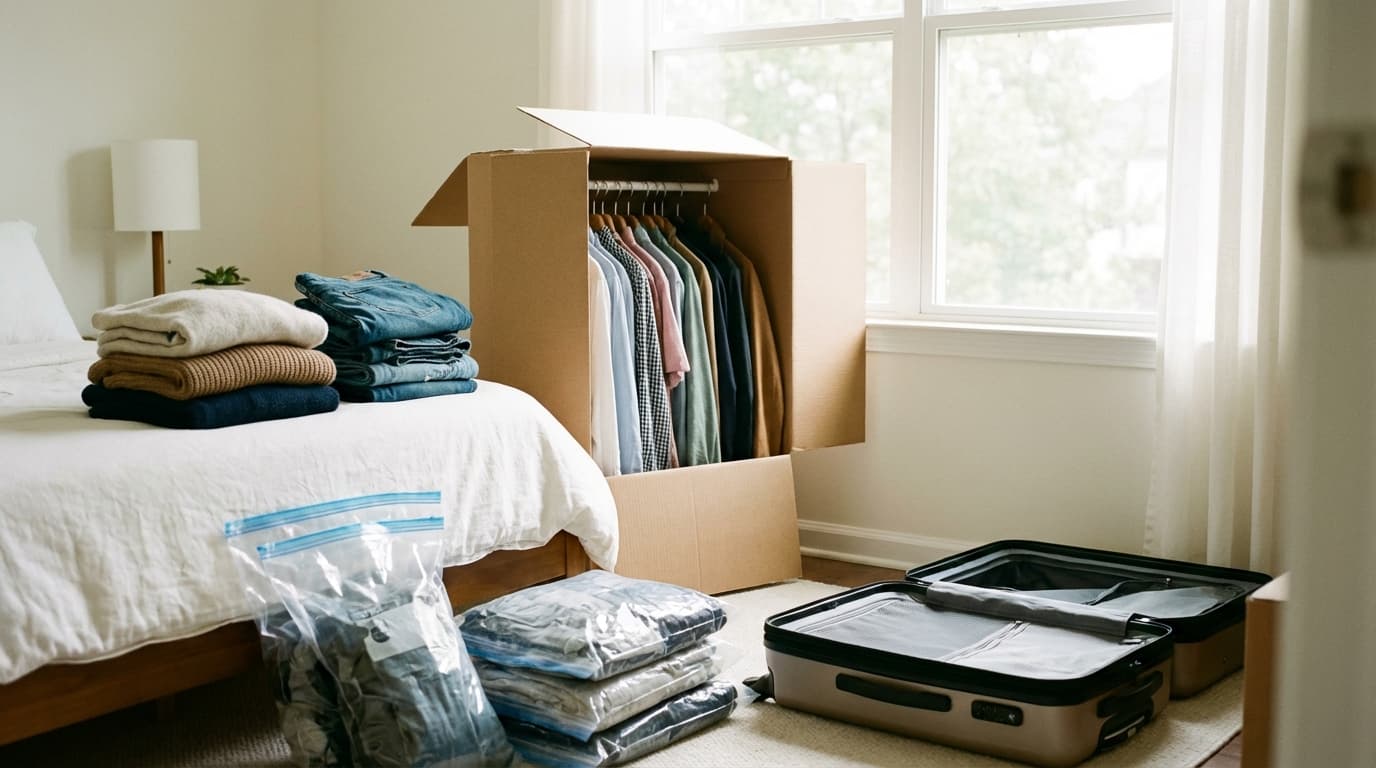
Wardrobe boxes are the gold standard for moving hanging clothes and the method every professional mover recommends first. A wardrobe box is a tall cardboard box — roughly 24 inches wide, 24 inches deep, and 48 inches tall — with a built-in metal hanging bar across the top. Your clothes transfer directly from the closet rod to the wardrobe box rod, still on their hangers, with zero folding, zero wrinkles, and zero re-hanging at the other end.
At SOS Moving, wardrobe boxes are included on every job at no extra cost. Each box holds roughly one to two feet of closet space — about fifteen to twenty garments depending on the bulk of the items. A typical closet requires two to four wardrobe boxes. Suits, dresses, blazers, and anything you'd normally hang should go in wardrobe boxes without question. The time savings alone justify the method — transferring a closet's worth of clothes takes five minutes versus thirty minutes of folding.
The space at the bottom of a wardrobe box — below the hanging clothes — fits shoes, folded sweaters, or accessories. Don't waste that space. A pair of shoes in the bottom of each wardrobe box is a pair of shoes you didn't need a separate box for.
The limitation of wardrobe boxes is that they're tall and take up significant truck space vertically. For a studio apartment move where truck capacity is tight, using two wardrobe boxes instead of compressing clothes into smaller containers affects how much else fits on the truck. For larger moves where truck space isn't constrained, wardrobe boxes are the obvious choice for every hanging item.
Method 2: The Dresser-as-Container Approach
Your dresser is already a container full of folded clothes. With a simple modification, it can travel that way — no packing, no unpacking, no boxes required.
The method works like this: leave clothes in dresser drawers. Remove the drawers from the dresser frame. Wrap each drawer in shrink wrap to keep contents from falling out during transport. The movers carry the empty dresser frame and the wrapped drawers separately. At the destination, drawers slide back in and your clothes are already put away.
This approach saves both time and boxes. A six-drawer dresser holds the equivalent of two to three medium moving boxes worth of folded clothes. Eliminating those boxes from the packing process saves twenty to thirty minutes of folding, taping, and labeling.
The important caveat: the dresser itself must travel empty. A loaded dresser weighing 200 pounds with clothes inside is dangerous to carry, puts stress on drawer joints and the frame, and risks the drawer faces cracking if the piece is tilted. Remove the drawers, transport them separately, and let the movers handle the empty frame safely.
This method works best for casual clothes — t-shirts, jeans, workout gear, pajamas, socks, underwear. Anything that's already folded in a drawer stays folded in a drawer. For delicate items that need more protection, use one of the other methods.
Method 3: Rolling Instead of Folding
Rolling clothes instead of folding them is a technique borrowed from travel packing, and it works just as well for moving. Rolled clothes occupy less space, wrinkle less, and pack more efficiently into boxes and suitcases than flat-folded items.
The physics are simple. A folded shirt creates sharp creases at every fold line. A rolled shirt distributes tension evenly across the fabric and arrives wrinkle-free or close to it. For casual clothing — cotton t-shirts, jeans, leggings, sweaters, activewear — rolling is the optimal method.
Pack rolled clothes into medium moving boxes. A medium box (18 x 18 x 16 inches) holds roughly thirty to forty rolled casual garments. Place heavier items like jeans and sweaters on the bottom and lighter items like t-shirts on top. Fill any gaps with socks or underwear — both the box and the socks arrive where they belong.
Rolling doesn't work well for structured garments. Blazers, dress shirts with stiff collars, and pleated skirts lose their shape when rolled. These items belong in wardrobe boxes or laid flat. For a mixed wardrobe, the efficient approach is wardrobe boxes for structured hanging items and rolled packing for everything casual — which covers roughly 70 percent of most people's clothing.
Method 4: Vacuum Bags for Bulk Reduction
Vacuum bags compress soft clothing items to a fraction of their normal volume by removing air. A winter coat that takes up half a suitcase compresses to the thickness of a folded towel. For bulky items — puffy jackets, heavy sweaters, comforters, pillows — vacuum bags dramatically reduce the space your clothes occupy in the truck.
The savings are most significant for people moving from a larger space to a smaller one, where truck capacity matters, or for moves with large quantities of seasonal clothing. A bag of winter coats that normally fills an entire large box compresses to fit inside a medium box alongside other items.
The trade-off is wrinkles. Vacuum-compressed clothing arrives heavily creased and requires either washing, steaming, or a few days of hanging to recover its shape. For casual items like sweaters and jackets, this is a minor inconvenience. For dress clothes, the creasing can be severe enough to require professional pressing. Use vacuum bags for bulk items you won't need immediately and hang-dry or steam them during your first week in the new place.
Vacuum bags also provide moisture and dust protection during transport and short-term storage. If your clothes are spending any time in a storage unit between moves, vacuum bags keep them clean and dry without additional containers.
Don't vacuum-pack leather, suede, or fur. These materials need airflow and can develop permanent creasing or surface damage under sustained compression. Delicate natural fabrics like silk should also be kept out of vacuum bags.

Packing clothes shouldn't take longer than packing your kitchen. SOS Moving includes wardrobe boxes on every job at no extra charge — your closet transfers directly to the truck in minutes. Call 909-443-0004 or get your free estimate.
Method 5: Suitcases You Already Own
The suitcases sitting in your closet are purpose-built clothing containers that most people forget to use during a move. A large rolling suitcase holds the equivalent of a medium moving box worth of clothes, it's already in your home, and it costs nothing to use.
Pack suitcases with heavier items — jeans, shoes, books — because they roll easily regardless of weight. A suitcase packed with thirty pounds of clothes is effortless to move through doorways, down hallways, and into a truck. A thirty-pound cardboard box requires carrying.
Every suitcase you fill is one fewer box you need to buy, pack, tape, label, and later flatten and recycle. For a household with three or four suitcases, that's three or four fewer boxes in the truck and three or four items that essentially pack themselves.
The only consideration is truck loading. Suitcases don't stack as cleanly as uniform boxes, and a hard-shell suitcase placed in the wrong position becomes a shape that wastes space around it. Let your moving crew decide where suitcases go in the truck — they know how to integrate irregular shapes into an efficient load.
What Not to Do
A few common clothing-packing approaches create problems that range from annoying to expensive.
Garbage bags are the worst option despite being the most popular. Clothes in garbage bags get crushed under other items because the bags have no structural rigidity. Plastic traps moisture, creating a humid micro-environment that promotes mildew during even short transport and storage periods. Bags tear easily, spilling clothes onto the truck floor where they collect dirt and get stepped on. And on moving day, a pile of identical black bags is impossible to sort — which bag has your interview suit and which one has your gym clothes?
Leaving clothes on hangers in a garbage bag — the so-called "poor man's wardrobe box" — protects slightly better than loose bagging but still creates a tangled mess of wire hangers, stretched necklines, and clothes that slide off hangers inside the bag. If wardrobe boxes are available — and at SOS Moving they're included free — there's no reason to improvise.
Overpacking boxes with clothes makes them dangerously heavy. Clothes are denser than they appear, especially jeans, sweaters, and outerwear. A large box packed solid with folded jeans can weigh 60 to 70 pounds — well beyond what a single person should carry safely and heavy enough to collapse the bottom of a standard box. Use medium boxes for heavy items and save large boxes for lightweight bulky clothes like puffy jackets.
Not decluttering before packing is the most expensive mistake. Moving costs are driven by volume and weight. Every piece of clothing you haven't worn in a year adds weight to the truck, time to the loading process, and cost to your move. A pre-move closet purge that donates or sells unworn items reduces moving costs by reducing what you're moving. The wardrobe box test is simple: if you wouldn't buy it again today, don't pay to move it.
Packing Order and Priority
Pack clothes in a specific order that aligns with when you'll need them at the new place.
Off-season clothing packs first — it's the least likely to be needed during the transition. Winter coats in a summer move, swimsuits in a winter move, formal wear you wear twice a year. These go into vacuum bags or deep into boxes that don't need Priority 1 labels.
Everyday clothing packs last and unpacks first. The outfits you'll wear during the first three days at your new apartment — work clothes, casual clothes, pajamas, workout gear — should be in one clearly labeled box or suitcase that loads onto the truck last and comes off first. Some people pack a separate overnight bag with two days of clothes and toiletries that travels in their car rather than the truck. This eliminates the pressure to find and unpack clothing boxes on night one.
Professional and formal clothing gets wardrobe box treatment regardless of when you need it. Suits, dress shirts, blazers, and formal dresses maintain their shape in wardrobe boxes and lose it in every other method. The cost of dry cleaning a wrinkled suit after a garbage-bag move exceeds the cost of the wardrobe box that would have prevented the wrinkles.
Frequently Asked Questions
How many boxes do I need for clothes? An average person's wardrobe fits in two to three wardrobe boxes for hanging items and three to five medium boxes for folded items. Couples sharing a closet typically need four to six wardrobe boxes and six to ten medium boxes total.
Should I fold or roll clothes for moving? Roll casual items like t-shirts, jeans, and activewear — they wrinkle less and pack more efficiently. Fold structured items like dress pants with creases you want to maintain. Hang suits, dresses, and blazers in wardrobe boxes.
Can I leave clothes in the dresser during a move? Remove drawers from the dresser, wrap each drawer in shrink wrap, and transport them separately. The empty dresser frame travels safely, and your clothes stay folded in the drawers. Never transport a dresser with drawers inside — it's unsafe to carry and damages the furniture.
Are vacuum bags safe for all clothing? Vacuum bags work well for cotton, polyester, and synthetic blends. Avoid vacuum-packing leather, suede, fur, silk, or anything with beading or delicate embellishments. These materials need airflow and can sustain permanent damage under compression.
How do I prevent clothes from smelling musty after a move? Avoid plastic garbage bags, which trap moisture. Use breathable containers like cardboard boxes or wardrobe boxes. Add a dryer sheet or cedar block to each box for odor prevention. Unpack clothes within two to three days and hang or wash immediately to prevent mustiness from setting in.
Get Started with a Wrinkle-Free Move
SOS Moving includes wardrobe boxes on every job at no extra cost — your hanging clothes transfer from closet to truck in minutes and arrive ready to wear. Combined with our unlimited shrink wrap for drawer protection and blankets for everything else, your entire wardrobe arrives at your new home in the same condition it left. Call 909-443-0004 or request your free estimate to book a move that treats your clothes like you do.