


Books are the most deceptive items in any household move. They sit quietly on shelves looking harmless and lightweight, but a single shelf of hardcovers weighs forty to sixty pounds — and most book lovers don't own a single shelf. They own six, or ten, or an entire wall of shelves that collectively weigh more than the couch, the bed, and the dining table combined. The result is predictable: someone packs a large moving box full of books, the bottom gives out when the mover lifts it, and a hundred dollars' worth of novels scatter across the floor while the mover questions their career choices.
At SOS Moving, books are the item we warn every client about during the booking call. Not because they're fragile — most books survive rough handling without damage — but because their density creates weight that destroys boxes, strains backs, and adds hours to a move when handled incorrectly. The right approach takes the same amount of time as the wrong one, but every box arrives intact and every mover finishes the day without a back injury.
The Number One Rule: Small Boxes Only
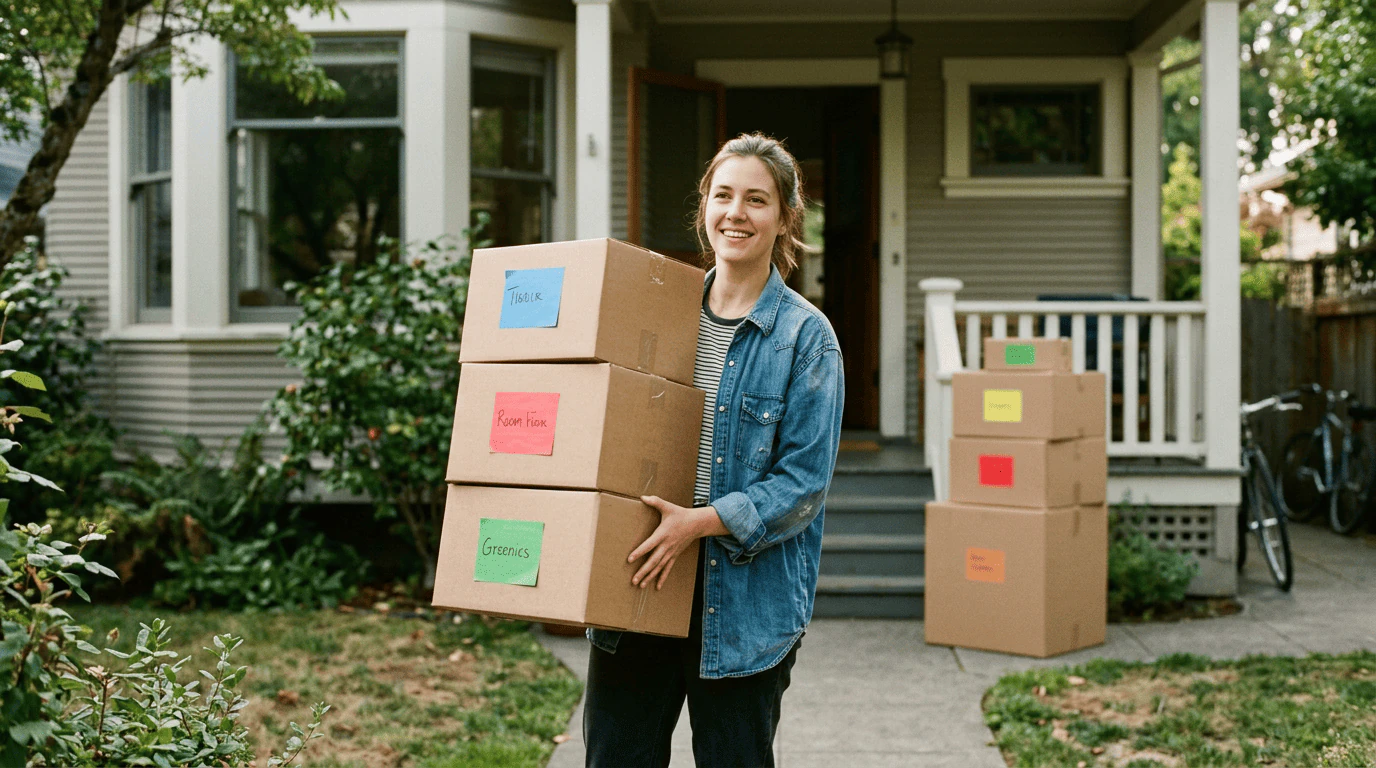
This is the single most important instruction for packing books, and it overrides every other consideration: use small boxes exclusively. Never pack books in medium boxes. Never pack books in large boxes. The physics don't allow it.
A small moving box — typically 16 x 12 x 12 inches — holds roughly twenty to twenty-five average paperbacks or twelve to fifteen hardcovers. Fully packed with books, it weighs thirty to forty pounds. That's manageable for a single person to lift, carry down stairs, and load onto a truck. A medium box packed with the same density of books weighs fifty to sixty-five pounds. A large box hits seventy to ninety pounds — a weight that risks both the box's structural integrity and the mover's spine.
At SOS Moving, we sell small boxes at $4 each. A client with a serious book collection might need ten to fifteen small boxes dedicated exclusively to books, costing $40 to $60 in materials. That's the cheapest insurance against collapsed boxes, damaged floors, and injured crew members that exists in the entire moving process.
The temptation to use larger boxes and fill them partially — half books, half lighter items — sounds logical but creates its own problems. Books are dense and rigid. Lighter items packed on top of a book layer get crushed by the books' weight when the box is tilted during carrying. And a half-filled large box shifts during transport as the books slide to one side, creating an unbalanced load that's awkward to carry and prone to dropping.
Small boxes, filled completely, packed properly. That's the formula. Everything else is a compromise that costs more than it saves.
How to Arrange Books Inside the Box
The arrangement inside the box determines whether your books arrive in the same condition they left your shelf or with bent covers, cracked spines, and damaged pages.
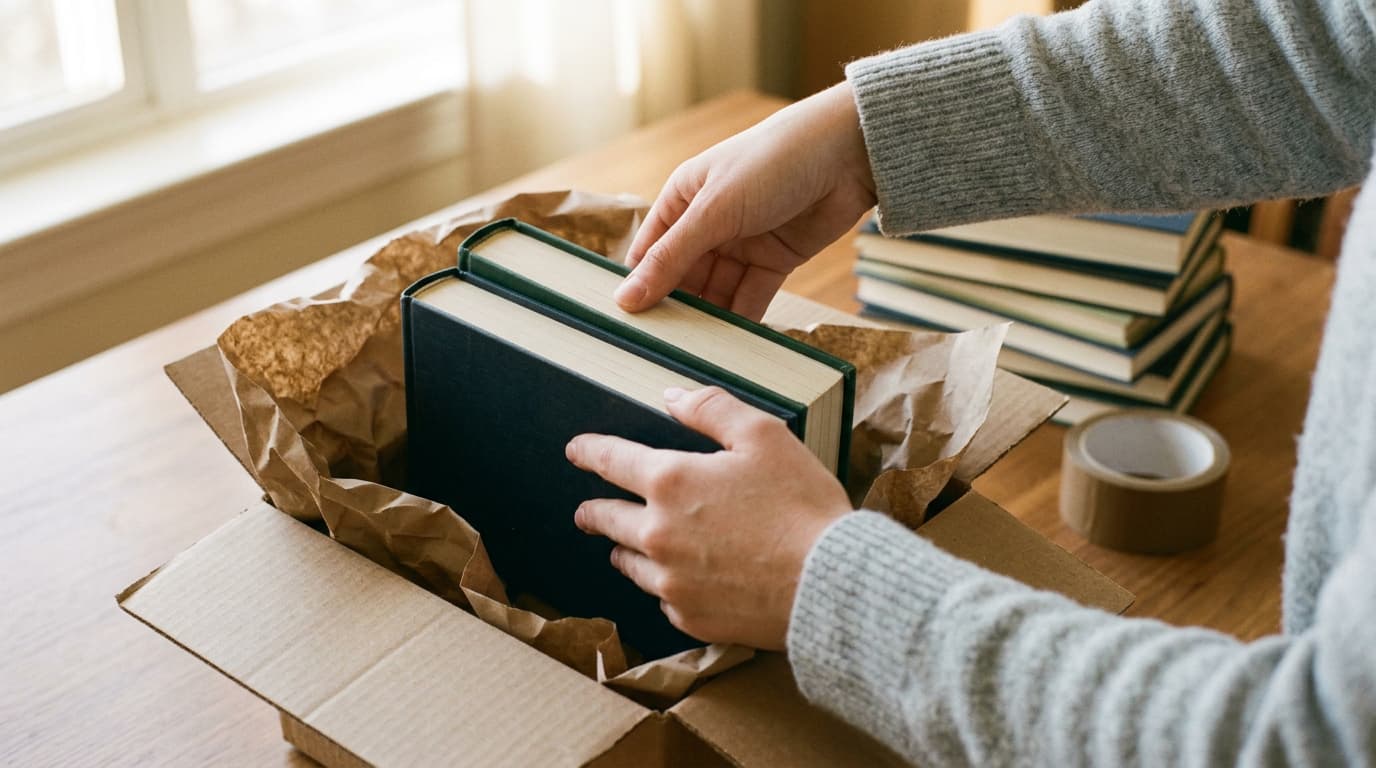
Hardcover books pack best standing upright with spines facing down, mimicking how they sit on a shelf. This position distributes the book's weight through its strongest structural element — the spine — and prevents the covers from bending under pressure. Pack hardcovers snugly so they support each other without gaps that allow shifting during transit.
Paperbacks can be packed flat in horizontal stacks or standing upright. Flat stacking is more space-efficient for paperbacks because their flexible spines don't need the vertical support that hardcovers do. Stack in alternating spine directions — one layer with spines facing left, the next layer with spines facing right — to create an even, stable surface across the box.
Coffee table books and oversized art books need individual attention. These heavy, large-format books don't fit standard small boxes well and their weight per unit is significantly higher than standard books. Pack oversized books flat, no more than three to four per box, with a sheet of packing paper between each one to prevent cover-to-cover friction. If the box has remaining space, fill it with packing paper — not with regular books, which would create a dangerously heavy box.
Rare, antique, or valuable books deserve wrapping. Standard reading copies handle direct box contact without damage, but first editions, leather-bound volumes, books with gilt edges, and anything with collectible value should be individually wrapped in acid-free tissue paper or clean packing paper. The wrapping prevents scuffing, moisture transfer between covers, and the kind of minor cosmetic damage that significantly reduces a collectible book's value.
Reinforcing the Box
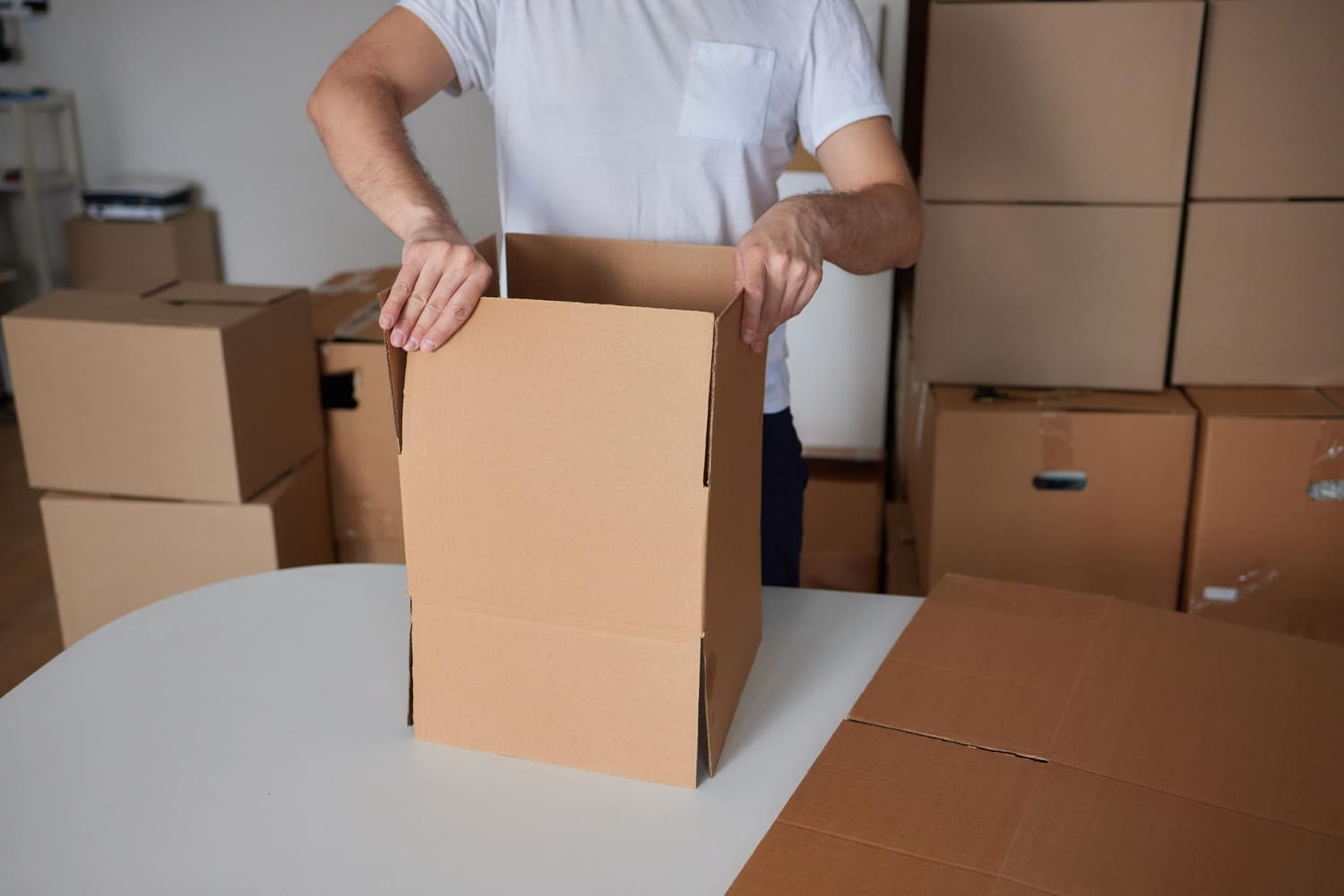
Standard moving box tape — one strip across the center seam — is adequate for boxes containing clothing, linens, or lightweight kitchen items. For book boxes, standard taping is the reason bottoms fail.
Reinforce the bottom of every book box with the H-tape method: one strip across the center seam, then one strip across each of the short seams perpendicular to the center, forming an H shape on the bottom of the box. This distributes the weight of the books across three strips of tape rather than one, and the perpendicular strips prevent the flaps from bowing outward under load.
For maximum security, add a second layer of tape over the entire H pattern. Six strips of heavy-duty packing tape — three on the first pass, three on the reinforcement — turns a standard box bottom into a surface that holds fifty pounds without flex. The extra thirty seconds of taping per box eliminates the risk of a catastrophic bottom failure during the carry from your apartment to the truck.
New boxes only. This applies to all moving boxes but is critical for book boxes. Used boxes that have been flattened, stored, or previously loaded have compromised structural integrity at the fold lines and seams. A used box that held twenty pounds of kitchen items without issue can fail under thirty-five pounds of books because the cardboard fibers are already weakened. At SOS Moving, we recommend new boxes for every book collection — the cost of new boxes is trivial compared to the cost of a box failure that dumps your book collection onto concrete.
Filling Gaps and Preventing Shifting
Books packed with air gaps shift during transport. Shifting books create momentum inside the box, and that momentum concentrates force on the box wall when the truck brakes or turns. The result is a bulging box wall that can split a seam, or a box that topples from a stack because the internal weight distribution changed during the drive.
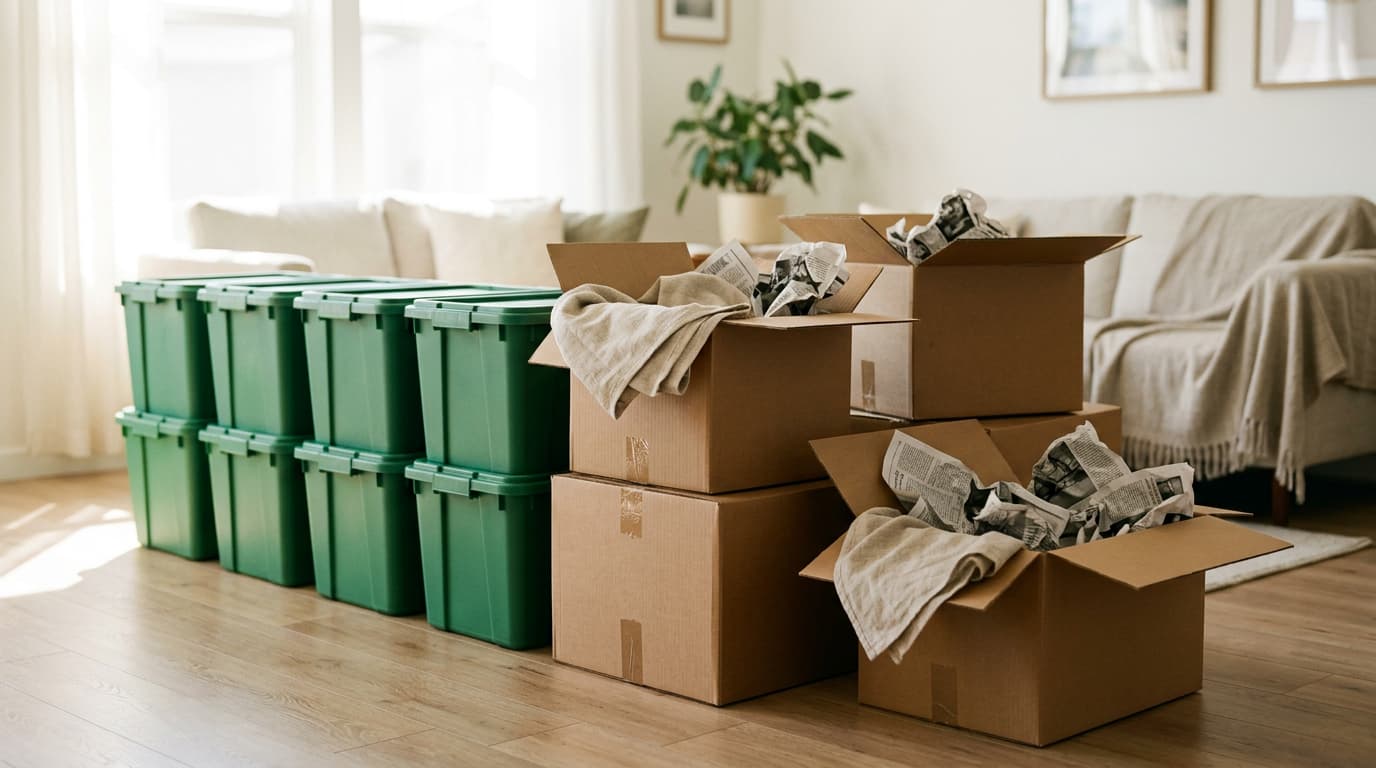
Fill every gap with crumpled packing paper. The space between the tops of upright books and the box lid. The gaps at the end of a row where books don't fill the full length. Any void between book layers. Crumpled paper compresses under pressure to hold books firmly in place, absorbing the vibration and momentum changes that occur during transit.
Don't use other heavy items as gap fillers in book boxes. Filling the top gap with kitchen utensils, picture frames, or tools adds weight to an already heavy box and creates a mixed-contents box that's harder to unpack and organize at the destination. Use paper only — it's light, effective, and easy to recycle after unpacking.
The goal when you seal a book box is zero movement. Shake the sealed box gently. If you hear or feel shifting, open it and add more paper. A properly packed book box feels solid and immovable from the outside — the contents are locked in place by compression and paper fill. This is the standard our crews at SOS Moving check for during loading: a box that rattles or shifts gets opened and repacked before it goes on the truck.
Got a serious book collection? SOS Moving crews know how to handle heavy book boxes safely — proper lifting technique, reinforced loading positions, and the experience to keep your library intact. Call 909-443-0004 or get your free estimate.
How Many Book Boxes to Expect
Estimating the number of boxes your book collection requires prevents the mid-packing run to the store for more supplies.
A standard bookshelf — roughly 36 inches wide with five shelves — holds approximately sixty to eighty books depending on the mix of hardcovers and paperbacks. That single bookshelf fills three to four small moving boxes. A wall unit with six shelves across a wider span might hold 150 to 200 books, requiring seven to ten small boxes.
The quick estimating formula: count your shelf-feet of books. One linear foot of bookshelf holds roughly eight to twelve books depending on thickness. Each small box holds approximately 1.5 linear feet of books. Divide your total shelf-feet by 1.5 to get your approximate box count.
For a household with a moderate book collection — two to three full bookshelves totaling roughly fifteen to twenty shelf-feet — you'll need ten to fifteen small boxes dedicated to books. A serious collector with floor-to-ceiling shelving across multiple rooms can easily require thirty to forty small boxes. At $4 per box, the total investment ranges from $40 for a moderate collection to $160 for a large one.
Buy two to three extra boxes beyond your estimate. You'll discover books in nightstand drawers, bathroom shelves, kitchen counters, and the stack next to the couch that you forgot to count. Extra boxes also serve as replacements if any box gets damaged during packing and needs to be swapped out.
Decluttering Before Packing
Books accumulate quietly over decades, and a move is the most natural time to evaluate which ones deserve the effort and cost of being transported to your new home.
The pragmatic test: will you read this book again? Will you reference it? Does it have sentimental value that justifies carrying its weight? A paperback novel you read once five years ago and will never reopen costs $4 in box materials plus $2 to $3 in proportional moving weight charges to transport. Donating it costs nothing and puts it in the hands of someone who'll actually read it.
Los Angeles has excellent book donation options. The Last Bookstore downtown accepts used books in good condition. The Los Angeles Public Library accepts donations for their book sale programs. Little Free Libraries scattered across every neighborhood accept casual drop-offs. For large collections, organizations like Better World Books accept bulk donations and arrange pickup.
Selling valuable books recovers cost. First editions, signed copies, and academic texts with continuing relevance have resale value through used bookstores, eBay, or specialty dealers. A pre-move evaluation of your collection by a used book buyer can identify items worth selling rather than moving — funding part of your relocation with books you no longer need.
The emotional component of book decluttering is real. Books carry memories, aspirations, and identity in ways that other possessions don't. The copy of the novel you read on vacation in 2017 isn't just paper — it's a memory object. Acknowledging this while still making practical decisions is the balance. Keep the books that matter. Donate the ones that served their purpose. Your shelves at the new apartment will thank you for the curation.
Loading Book Boxes on the Truck
Where book boxes go in the moving truck matters for both the safety of the box and the stability of the entire load.
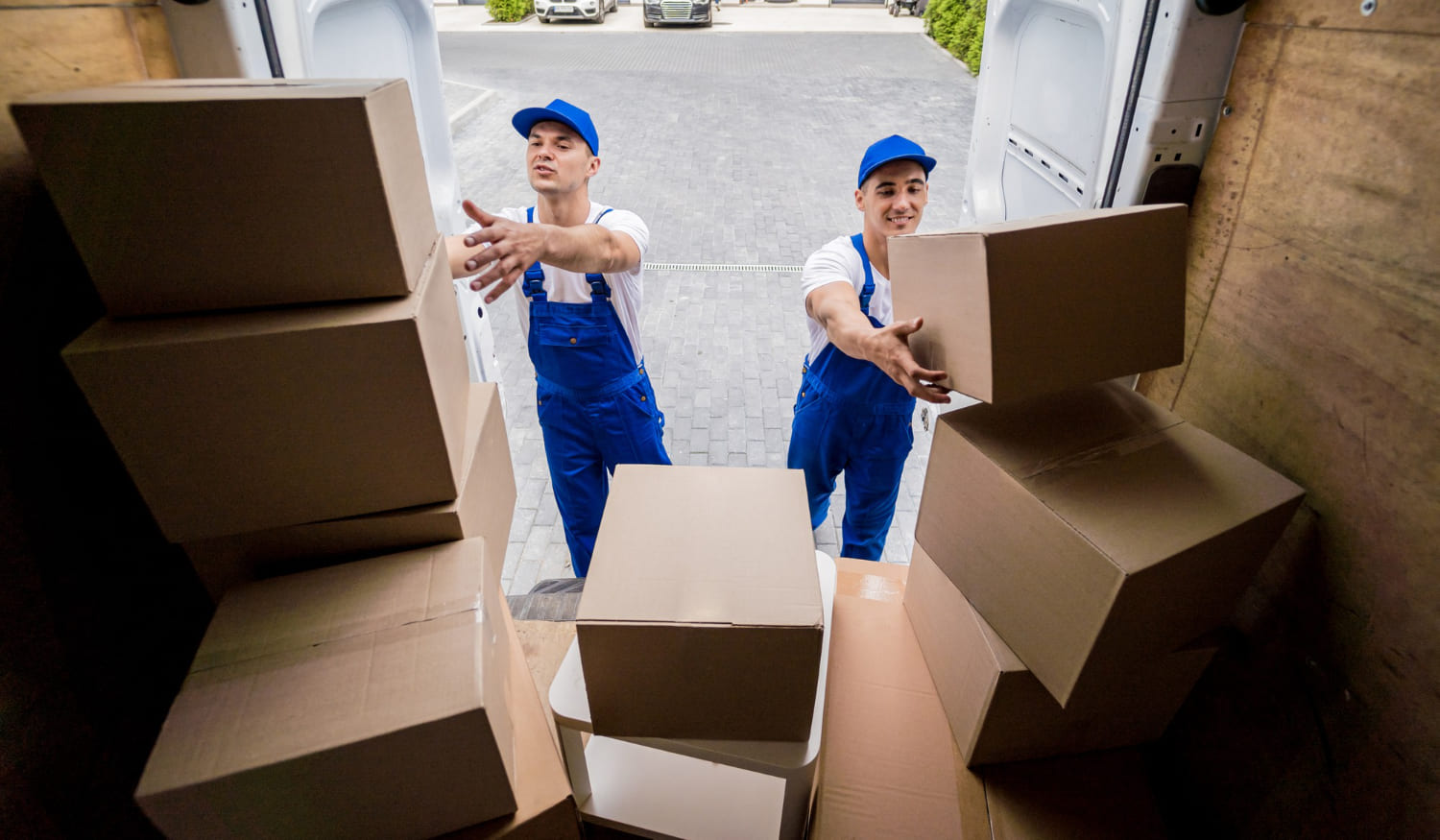
Book boxes go on the truck floor, against the walls, at the bottom of every stack. Their weight and density make them ideal anchors for lighter boxes stacked above. A wall of small book boxes across the truck floor creates a stable base that prevents the entire load from shifting during transit. Light boxes — bedding, clothes, plastic kitchenware — go on top.
Never stack book boxes more than three high unless the boxes are identical in size and reinforced. The weight of three full book boxes is roughly 100 to 120 pounds pressing down on the bottom box. Four high pushes 130 to 160 pounds — enough to crush a standard box bottom even with reinforced taping. Three high is the safe maximum.
At SOS Moving, our crews position book boxes strategically during loading. They go in early — among the first items on the truck — and they're placed in positions where their weight serves the load rather than threatening it. A crew experienced with book-heavy moves knows exactly where density serves as an advantage rather than a liability.
Frequently Asked Questions
What size box should I use for books? Small boxes only — typically 16 x 12 x 12 inches. A fully packed small box of books weighs thirty to forty pounds, which is manageable. Medium and large boxes packed with books weigh too much for safe handling and will collapse.
How heavy is a box of books? A small box fully packed with books weighs thirty to forty pounds. Hardcovers are heavier per book than paperbacks, so a box of all hardcovers lands at the higher end. Never exceed forty-five pounds in a single box — it's unsafe for the carrier and the box.
Should I pack books flat or standing up? Hardcovers: standing upright with spines down. Paperbacks: either flat in horizontal stacks or standing upright. Oversized art and coffee table books: flat, no more than three to four per box, with packing paper between each.
How do I protect valuable or antique books during a move? Wrap individually in acid-free tissue paper or clean packing paper. Pack in a small box with packing paper fill so the books can't shift. Mark the box clearly as fragile. Transport the most valuable items in your personal vehicle rather than the moving truck for maximum protection.
Is it worth moving a large book collection or should I donate and rebuy? For standard reading copies, calculate the cost of moving versus replacing. If a book costs $4 in moving expenses and $8 to rebuy, moving is cheaper. If the book is widely available at the library or as an ebook and you won't reread it, donating saves money and weight. Irreplaceable books — signed copies, first editions, sentimental items — are always worth moving.
Get Started with a Book-Safe Move
SOS Moving's crews handle book-heavy moves with reinforced loading, proper truck positioning, and safe lifting technique that protects both your collection and their backs. We sell small boxes at $4 each and include all wrapping materials at no extra cost. Call 909-443-0004 or request your free estimate to book a crew that knows the difference between a box of paperbacks and a box of pillows.