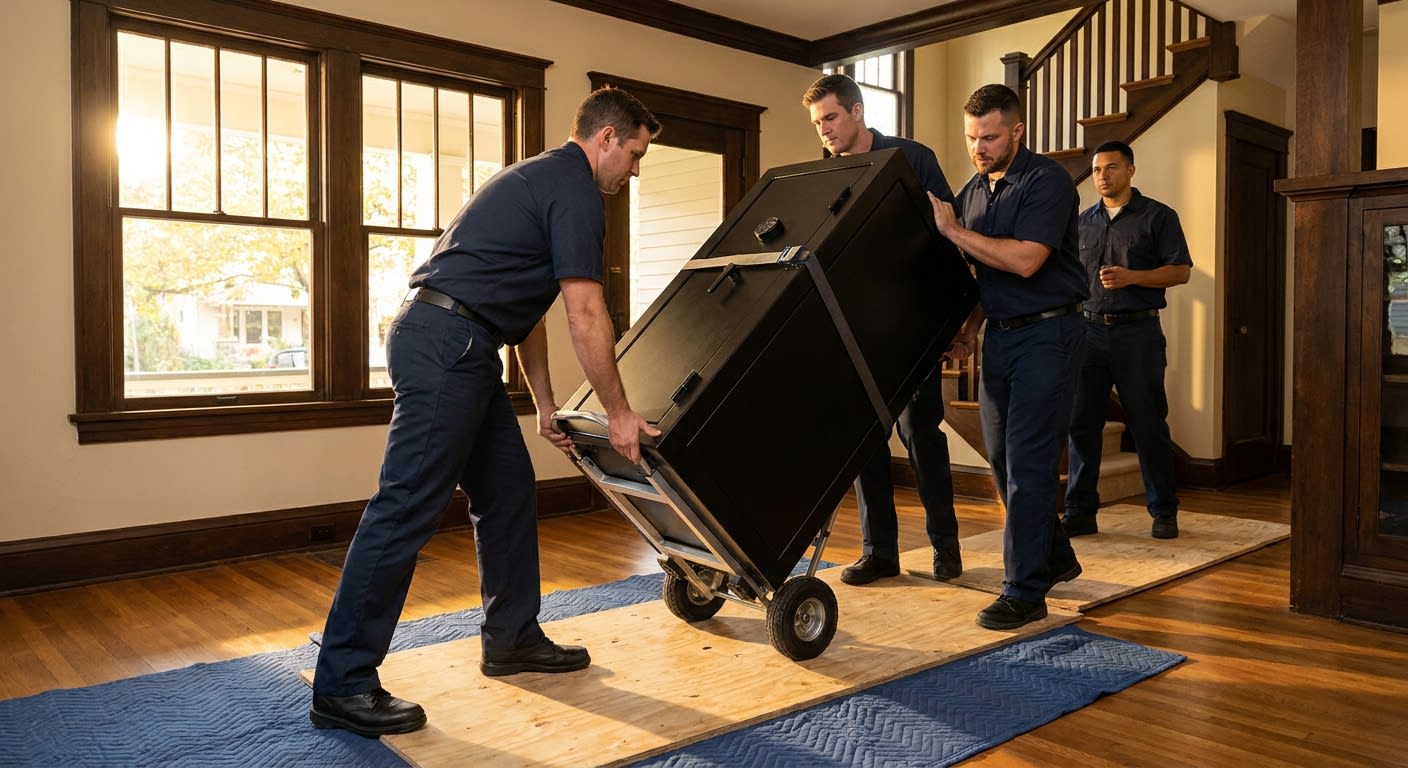


Three weeks ago I led a move out of a 1920s Spanish Colonial in Hancock Park — the client had inherited her grandmother's collection: a French marble-top commode, two Tiffany-style lamps, a Qing dynasty porcelain garden stool, and a 7-foot mahogany breakfront with original wavy glass. The destination was a hillside home in Pasadena, only 12 miles away, but those 12 miles included the 110, a steep driveway, and a hairpin turn into the garage. We spent more time planning that move than driving it — and that's exactly the point I want to make today.
I'm Amir, a Senior Move Foreman at SOS Moving, and I've personally handled hundreds of antique relocations across LA County since 2020. Moving antiques safely in Los Angeles isn't about strong backs — it's about preparation, materials, and reading the object before you touch it. Here's how my crew approaches it.
Why LA Is Uniquely Tough on Antiques
People think because we don't have snow or hurricanes, antiques travel easy here. The opposite is true. In a single 20-mile move from Santa Monica to Glendale, an 18th-century walnut armoire can pass through coastal humidity at 78%, drop to 22% in the Valley heat, and bake at 110°F inside a truck on the 405. That swing splits veneer, loosens dovetails, and crazes old finishes faster than you'd believe.
Then there's LA traffic. A sudden brake on the 101 throws unsecured drawer contents like projectiles. Speed bumps in Beverly Hills neighborhoods can crack marble tops if the piece isn't suspended properly inside the truck. And our streets — La Brea pavement seams, the patched asphalt on Sunset — vibrate constantly. For a Tiffany lamp with 80-year-old solder joints, that vibration is the real killer, not the move itself.
I tell every client: the antique survived 100, 200 years before you got it. The 4-hour move is statistically the most dangerous day of its life. Plan accordingly.
The Inspection Walk Before We Touch Anything
Before a single blanket comes off the truck, I do a documented walk-through with the client. Phone out, video on, narrating condition. Existing cracks in the veneer on that Hancock Park breakfront? I filmed all four sides. The hairline in the marble commode top? Recorded with a ruler for scale. This protects everyone — the client knows what was already there, and my crew knows what to watch.
I also test every piece for structural integrity. Drawers come out and travel separately. Glass doors get masking tape "X" patterns and then bubble wrap — but never directly on old finishes; the adhesive lifts shellac. Marble tops always travel vertically on edge, never flat, because flat orientation means the entire weight of the slab rests on a single stress point if the truck hits a bump.
For high-value items — anything over $5,000 replacement value — I recommend clients schedule a separate appraisal before the move. Insurance claims without documented appraisals turn into nightmares, and my colleague Sarah covers exactly how that works in our guide on moving insurance vs homeowners coverage.
Materials That Actually Protect Antiques
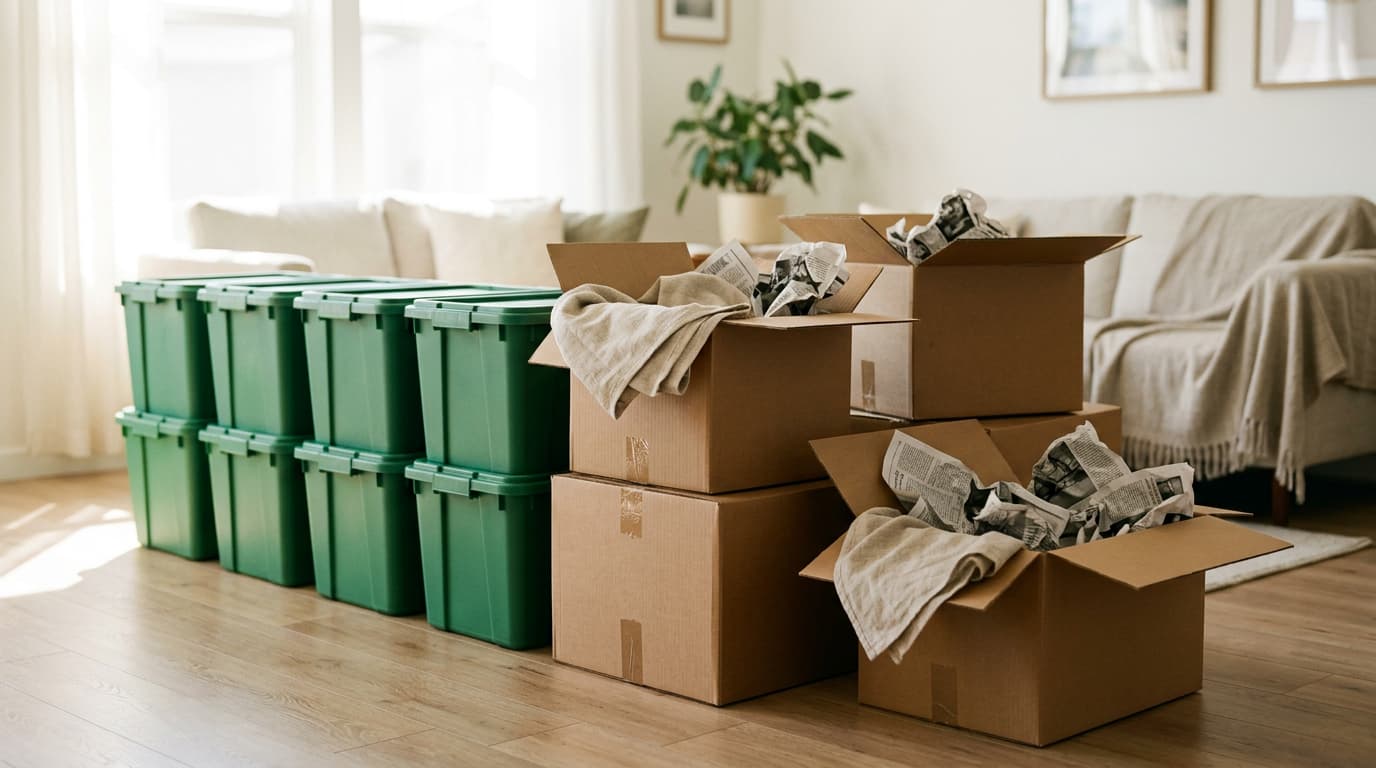
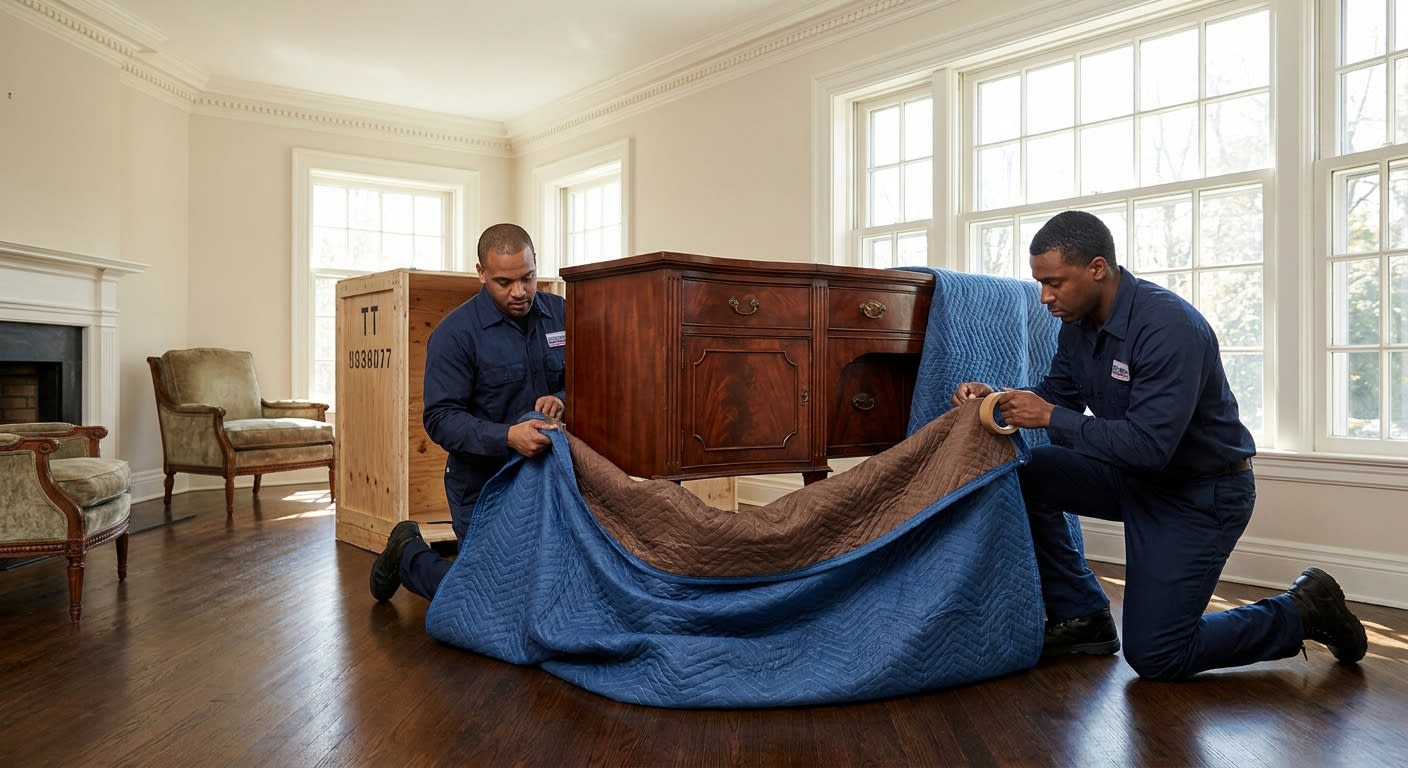
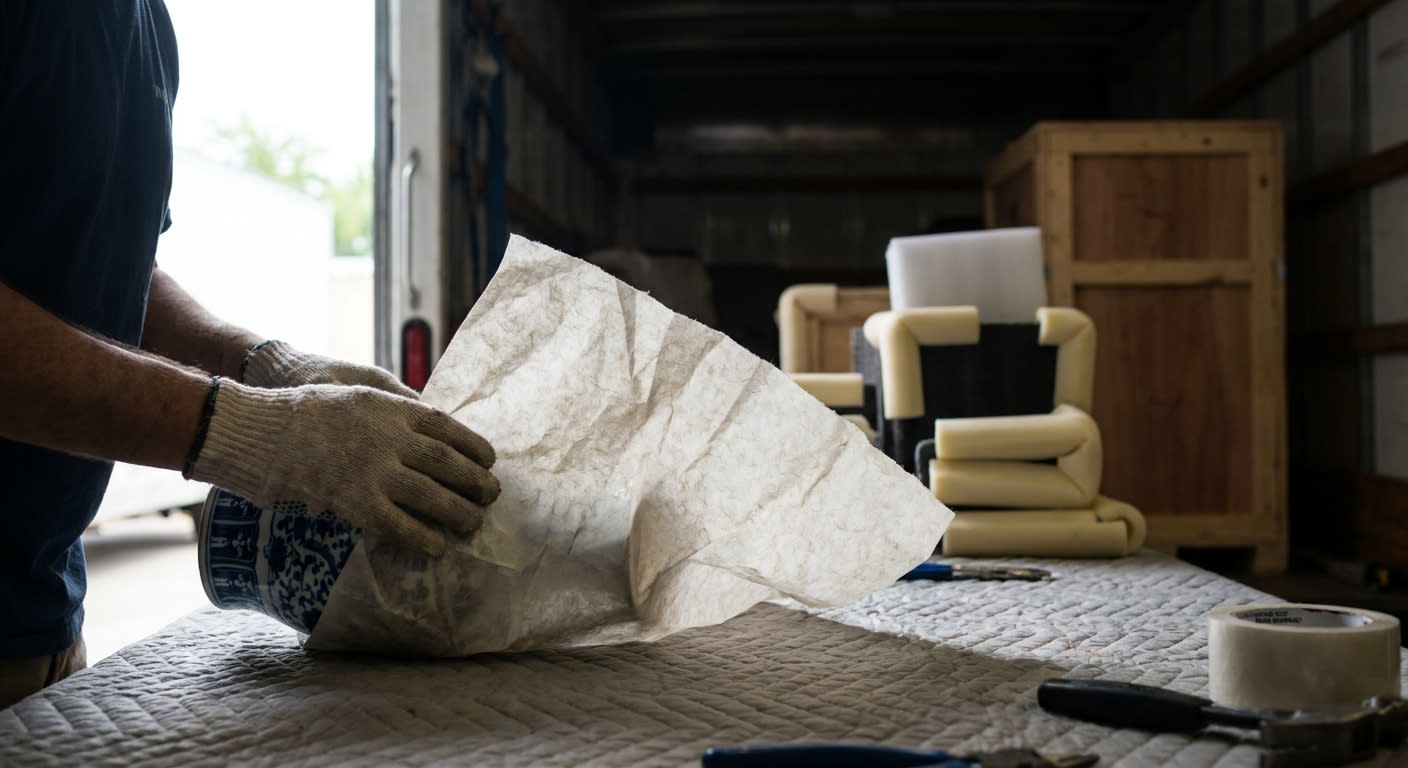
Here's what's in my truck specifically for antique jobs — not the standard pad-and-shrink-wrap kit. Acid-free tissue paper for direct contact with finished wood and gilt surfaces; regular newsprint transfers ink onto 100-year-old gilding and you can't get it off. Cotton sheeting under blankets for any piece with bone, ivory, or mother-of-pearl inlay, because moving blanket fibers snag and lift the inlay.
Custom wooden crates for fragile items — and yes, I build them on-site when needed. A Tiffany-style lamp gets a plywood crate with foam-lined internal blocking that holds the shade independent from the base. The crate costs $180-$250 in materials as of 2026, but it's the only thing that survives the 405. Foam corners on every framed piece. Glassine paper between stacked paintings or prints. Plastic stretch wrap NEVER goes directly on wood — it traps moisture and the chemicals interact with shellac and lacquer finishes.
Climate-controlled trucks matter for long moves or summer days. If your antique is going into storage between homes, climate-controlled storage isn't optional — it's mandatory.
🛡️ Got heirlooms that need expert hands? My white glove moving team specializes in antiques, fine art, and irreplaceable pieces. Call (909) 443-0004 for a free in-home assessment.
Crew Size and Move Choreography
For a standard 3-bedroom move I'll run a 3-man crew. For an antique-heavy move I bump that to 4, sometimes 5. The extra person isn't carrying — they're spotting. Watching corners, calling stairs, holding doors, photographing condition as pieces come off the truck. That role is the difference between a $30,000 claim and a clean delivery.
Sequence matters too. Antiques load LAST and unload FIRST. They go on the truck at the front, against the bulkhead, strapped to the wall with movers' straps — never to the floor. Floor straps allow the piece to shift vertically when the truck hits a dip. Wall straps lock it in place. The 7-foot breakfront from Hancock Park traveled with three straps and two padded shims wedged at the base. Zero movement on a 22-mile route.
Stairs are where careers end. For that Pasadena hillside delivery I sent a scout 48 hours ahead to measure the driveway grade, the garage door clearance, and the turn radius at the top of the stairs. We disassembled the breakfront into three sections — top crown, glass-door cabinet, base — because the assembled piece couldn't make the 90-degree turn off the landing. That kind of advance work is what separates real specialty movers from a general crew with extra blankets.
Pianos, Marble, and the Truly Heavy Stuff
Marble-top pieces deserve their own paragraph. The marble ALWAYS comes off the base before transport. Always. I've seen DIY movers try to move a marble-top dresser intact, and the marble inevitably shifts, cracks the wooden top rail, or worst case slides off the dolly mid-stairs. We remove the top, wrap it in moving blankets, strap it to a piano dolly upright on edge, and transport it as a separate item. Reassembly happens at destination.
Antique pianos — uprights from the 1900s, French parlor grands — need a 4-person crew minimum and specialized equipment. I went into detail on staircase technique in my guide on moving pianos up stairs safely in Los Angeles, but the short version is: piano board, four lifting straps, two spotters, and never improvise. A 600-pound upright that tips on a staircase becomes a fatality, not just a damaged antique.
Grandfather clocks need pendulum and weights removed and packed separately, with the pendulum cushioned against its own movement. The cable that holds the weights gets taped to the case interior so it doesn't whip during transport. I've seen too many ruined movements because a crew "just laid the clock down" for the drive.
Insurance, Valuation, and Real Coverage
Here's where most LA moves go sideways. Standard California moving coverage is 60 cents per pound per article. For a 200-pound antique sideboard, that's $120 of coverage on a piece that might be worth $25,000. That's not protection — that's a joke.
For antiques you need Full Value Protection at declared value, or you need to keep the items on your homeowner's policy with a scheduled rider during transit. As a licensed and insured full-service moving and storage company offering services from $119/hour, we handle thousands of local and long-distance relocations stress-free, but I always tell antique clients to declare items individually and get the rider in writing before move day. The conversation needs to happen during the estimate, not when something arrives broken.
Get appraisals dated within 2 years. Photograph everything in current condition. Keep receipts for the move and any custom crating — those costs are recoverable in claims when documented properly.
Climate and Storage Considerations
If there's any gap between move-out and move-in, antiques don't go into a regular storage unit. Period. Wood breathes — it expands and contracts with humidity, and uncontrolled LA storage swings from 30% relative humidity in October to 70% in February. That's how you get split tabletops and warped veneers six months after a move that went perfectly.
Climate-controlled storage runs roughly $180-$320 per month for a 10x10 unit in LA as of 2026, depending on neighborhood. That's cheap insurance compared to losing a single piece. My colleague's piece on climate-controlled vs standard storage units walks through the math in detail.
FAQ
How much does professionally moving antiques in Los Angeles cost?
For a local LA antique move with a 4-person specialty crew, custom crating, and full-value coverage, expect $1,200-$3,500 depending on inventory. White-glove pricing typically runs $150-$220 per hour for the crew alone, plus materials. Custom crates add $150-$400 per piece.
Should I move my antiques myself to save money?
For anything over $2,000 in replacement value, no. The math doesn't work — one broken Tiffany lamp or split veneer destroys any savings. Hire specialists who carry adequate insurance and know how to declare valuation properly.
Do I need climate-controlled transport for a short LA move?
For moves under 2 hours in cooler months, standard trucks are fine. For summer moves over 90°F, or any move with marquetry, ivory, mother-of-pearl, or original shellac finishes, climate-controlled transport is worth the extra $200-$400.
How far in advance should I book a specialty antique move?
Three to four weeks minimum. We need time for an in-home assessment, custom crate fabrication, valuation paperwork, and crew scheduling. Last-minute antique moves are the ones where corners get cut.
What's the single biggest mistake people make moving antiques?
Wrapping plastic stretch wrap directly against finished wood. It traps moisture, reacts with old shellac and lacquer, and can cloud or strip finishes within 48 hours. Always blanket-wrap first, then stretch wrap over the blanket.
Ready to move your antiques the right way? SOS Moving serves Los Angeles, Orange County, and the San Francisco Bay Area with specialty crews trained for fine art, antiques, and heirloom pieces. Call (909) 443-0004, email info@sosmovingla.net, or get a free quote. Licensed & insured — thousands of moves completed and a 4.9/5 Google rating from 2,500+ reviews.