



%201.svg)







Why Residents Choose SOS Moving:

Our Packing Standards:
Our Local Advantage:

Our Long-Distance Advantage:

Our Commercial Standards:




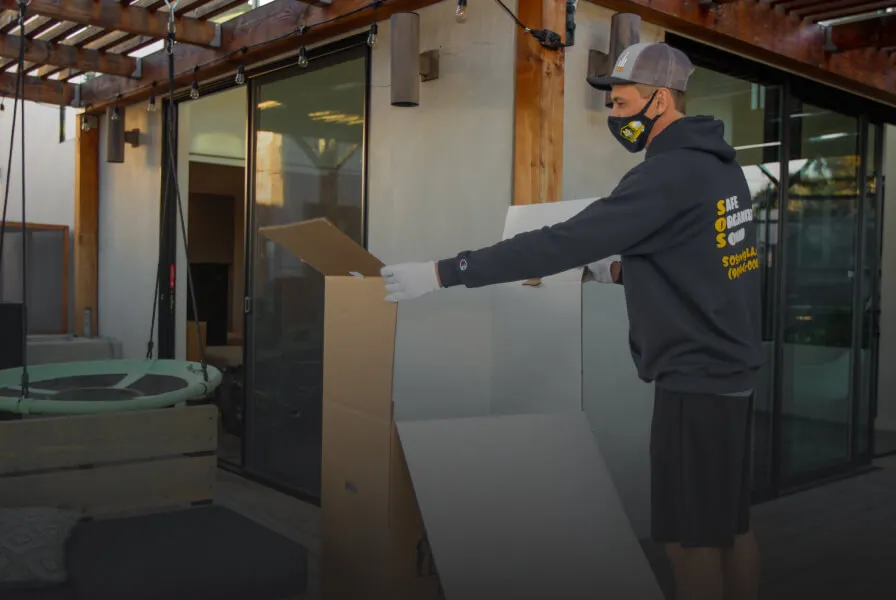




















Sure, our movers can bring packing materials and boxes if you need them. Make sure you mention that you need them to our operators in advance.
No, tips are not included, and it’s up to you how much to tip your movers. Tips are always appreciated but not required.
Your apartment moving cost depends on factors, such as the type and size of your property, the complexity of your move, the number of bedrooms, the volume of your items, zip code, etc. At SOS Moving, we offer flat and hourly rates. The hourly rate depends on the number of movers to be involved and the size of the moving truck. Flat rate is based on the volume of belongings you need to move, and it’s the best option for long-distance moves. To know your moving cost, please contact us or submit a form on our website to request your free quote.
You should schedule your move date as early as you can. If you’re moving locally, at least 1-2 weeks in advance, for long-distance moves, we recommend getting a quote at least 2-4 weeks before your move date.
You can choose any convenient day for your relocation, and yes, we can help you move on weekends and holidays.
A safe relocation is our goal, so we’ll provide you with a detailed list of items that are prohibited to transport. It includes perishables, hazardous materials, firearms, batteries, etc. We also don’t recommend packing your personal and irreplaceable items, including family heirlooms, family photos, jewelry, documents, etc. Carry them with you during the move.
We accept cash, all major debit and credit cards, and certified checks. We don’t accept personal checks. There will not apply any transaction fee on card transactions.
Yes, we’ll contact you prior to delivery. We’ll deliver your belongings within the given moving arrival window. In case the window is no longer possible, we’ll also contact you in advance and set another delivery time.
Beverly Hills, California, is its own city inside Los Angeles County, and its parking code splits the town in two. On single-family streets and in commercial zones, no one may park at the curb between 2:30 and 5 a.m., under a ban dating to 1927. Only residents of apartments, condos and duplexes without enough off-street parking can buy overnight permits. That split is a fair forecast of how much curb will be left in front of your door when the truck pulls up.
At a single-family house, the long part of the job is the carry: from the driveway or the curb, up the front walk, through the entry and down every hallway. The crew lays floor runners, pads door frames and banisters, and wraps each piece in the room where it stands. There is a local reason for that last habit: the city does not allow furniture, equipment or containers to be staged on the sidewalk or in the street, so nothing waits outside for its turn.
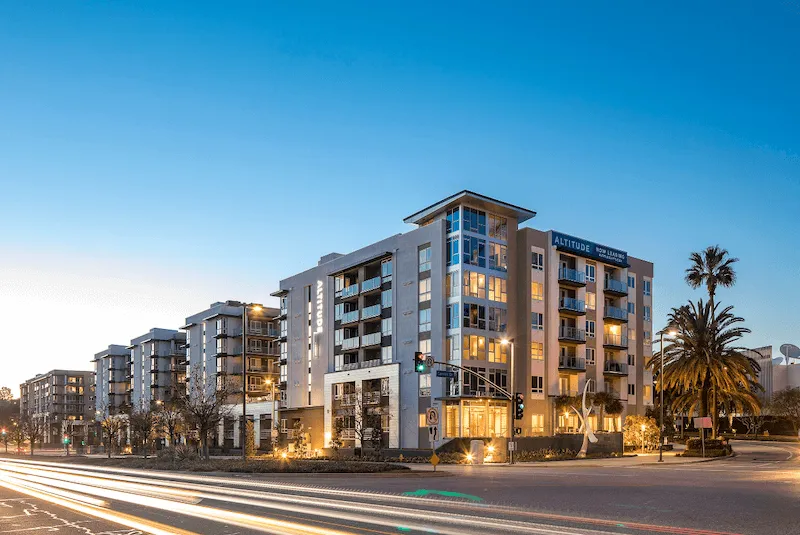
Apartment and condo buildings bring a different checklist. The city’s own permit rules concede that its multifamily blocks are short on off-street parking, so unless the building has a loading area, the truck needs the curb out front while the elevator needs a reservation inside. If the management sets move hours or wants a certificate of insurance, send us its requirements early; SOS issues a COI for $50.
Big rigs get special treatment here. Anywhere in the city, an 18-wheeler parked on the street needs a traffic plan approved by the City Traffic Engineer and submitted 96 hours ahead, and north of Sunset Boulevard it also needs a police escort arranged at least 72 hours in advance. Household moves rarely involve a tractor-trailer, but for a hillside job we still ask for photos of the driveway and the street, so the crew knows where the truck can stop and how long the carry will be.
To hold curb space for a moving truck, Beverly Hills sells temporary “No Parking” signs at the cashier’s desk in City Hall, 455 N. Rexford Drive, Monday through Friday from 8 a.m. to 5 p.m. The receipt number serves as the permit number and goes into the “Permit Number” field on each sign, legible from the first traffic lane. Two signs is the minimum, the city suggests two or three for anything smaller than an 18-wheeler, and every sign is good for a single day.
Timing is where moves slip. Signs must be up on trees, parking meters or light poles in front of the address no less than 72 hours before the move, and the police department asks for a call once they are posted. Count back from your start: a Monday 8 a.m. move needs signs up by Friday at 8 a.m., which in practice means a trip to City Hall on Thursday. Nails, tacks and staples in city trees are off-limits, and breaking any posting condition voids the signs.
One exception saves the trip entirely: residential moves on the north side of Santa Monica Boulevard don’t need signs. Where signs are used, they don’t cancel red zones, disabled parking, loading zones or posted street-sweeping hours, so check your block’s sweeping day before you settle on a date.
The city sets the clock as well. Residential moves are limited to 8 a.m. to 6 p.m., every day, the same window SOS works Monday through Sunday, so a large house calls for a crew big enough to finish inside it. The sidewalk must stay open the whole time, with no closure and no pedestrians pushed into the street.
For a Beverly Hills moving company, the first hour of moving day is decided by paperwork done days earlier. Before the truck leaves our base, we ask for four things:
North of Santa Monica Boulevard, a residential move needs no signs at all. South of the boulevard, and above all on the apartment and condo blocks where the city sells overnight permits, the signs are what hold a spot for the truck.
Wilshire Boulevard is its own case for offices and shops. The D Line subway opened its Wilshire/La Cienega station in 2026, and the Beverly Drive station farther west is still under construction, scheduled for completion in Spring 2027. Before an office move near the station site, we check the latest construction notices and pick a curb that is actually open that week.
Above the city line, the 90210 ZIP code keeps going but Beverly Hills doesn’t. The upper reaches of Benedict, Coldwater and Franklin canyons belong to Beverly Crest, a City of Los Angeles neighborhood that also takes in an unincorporated county pocket, even though mail there is addressed “Beverly Hills, CA 90210.” Beverly Hills sign rules and Beverly Hills police don’t reach those streets, so we confirm which side of the line an address sits on before planning the curb.
Trousdale Estates has an ordinance of its own, adopted in 2015, covering construction parking and heavy trucks traveling to job sites; haulers there must be certified and get approval before they roll in. It applies to permitted construction projects, not to household moves, so a moving crew in Trousdale works under the same sign and 8-to-6 rules as the rest of the city.
| Area or home type in Beverly Hills | What to plan for on moving day |
|---|---|
| Houses north of Santa Monica Boulevard | No city signs for a residential move; plan the carry from the curb or driveway and wrap everything indoors, since nothing may be staged on the sidewalk |
| Apartments and condos south of Santa Monica Boulevard | Signs posted 72 hours ahead, an elevator reservation, the building’s move hours and a COI |
| Hillside homes north of Sunset Boulevard | Photos of the driveway and street; a tractor-trailer would need a traffic plan and a police escort |
| Offices and shops along Wilshire Boulevard | Ask whether the Sunday-only rule for commercial moves applies; check the Beverly Drive subway work before choosing the curb |
| Canyon homes with a 90210 address in Beverly Crest | Los Angeles city or county rules instead of Beverly Hills signs; confirm the jurisdiction first |
Every SOS crew starts from our one base, 5530 Jillson Street, Los Angeles, CA 90040. The run to Beverly Hills is I-5 to I-10, about 17.4 miles and around 28 minutes without traffic, finishing on surface streets north of the freeway.
Inside the city, a loaded moving truck counts as a heavy vehicle. Anything over 6,000 lbs gross vehicle weight has to stay on the streets Beverly Hills designates for heavy traffic and may leave them only by the shortest path to the address. The driver plans that final leg before the truck leaves the base, which keeps it off residential blocks it has no business on.
The Santa Monica Freeway is the part nobody controls: both commute peaks slow it in both directions. An 8 a.m. start means the crew drives in with the morning rush, and a loaded truck heading east late in the day meets the evening one. If your new address is east of the city, getting on the road before the afternoon rush keeps the hourly clock from running in traffic.
Beverly Hills sits well inside the 30-mile line from our base, so the minimum here is 3 hours, not 4. The rates page adds one more rule worth reading before you book: double drive time applies to moves over 10 miles.
Of all the moving services in Beverly Hills, commercial work runs on the tightest calendar. The city notes that, depending on location, commercial moves may be restricted to Sundays only, and “No Parking” signs never override a loading zone or a red curb. If you are hiring office movers in Beverly Hills, ask the building and the city which days are open to you before anything else; SOS works Sundays, so a Sunday-only address doesn’t push the date back a week. Our commercial and office moving page has the rest.
On a long-distance job, loading day in Beverly Hills runs like a local one: signs south of Santa Monica Boulevard, the 8-to-6 window, an open sidewalk. The city lets out-of-state customers get their signs through a representative, which helps when you are flying in from the other end of the move. Anyone comparing Beverly Hills long-distance movers should also ask what vehicle will stand at the curb, because an 18-wheeler brings the traffic-plan requirement with it. SOS runs interstate moves under USDOT 3398018 and MC 1153871; details are on the long-distance moving page.
Packing is where the sidewalk rule matters most. Since the city forbids staging boxes or furniture on the sidewalk or in the street, packing has to be finished indoors before loading starts, and each carton goes from its room straight to the truck. Our movers and packers in Beverly Hills work room by room, sealing and labeling as they go, so the entry hall never turns into a holding pen; the packing services page has the details.
Beverly Hills moving and storage becomes a question when the move-out and move-in dates don’t line up. A storage crate or shipping container can’t be kept overnight in the public right-of-way here, and single-family and commercial streets allow no overnight parking at all, so a loaded truck can’t wait at the curb either. SOS takes the load off the street: things go into storage, and when delivery is the next day, overnight storage is $200.
Leave Beverly Hills in any direction and you are under someone else’s parking rules. Santa Monica Boulevard runs straight into West Hollywood, a separate city with its own curb rules, so a move between the two means planning the parking twice; our page on moving in West Hollywood covers that side.
Wilshire ties the other two neighbors together. To the east, the D Line now connects Wilshire/La Cienega with Fairfax and La Brea, the corridor described on our Mid-Wilshire moving page. To the west, Wilshire carries on into Westwood, where the next section of the subway is headed; see moving in Westwood for that end of the boulevard.