







Why choose SOS Moving?

What we deliver:

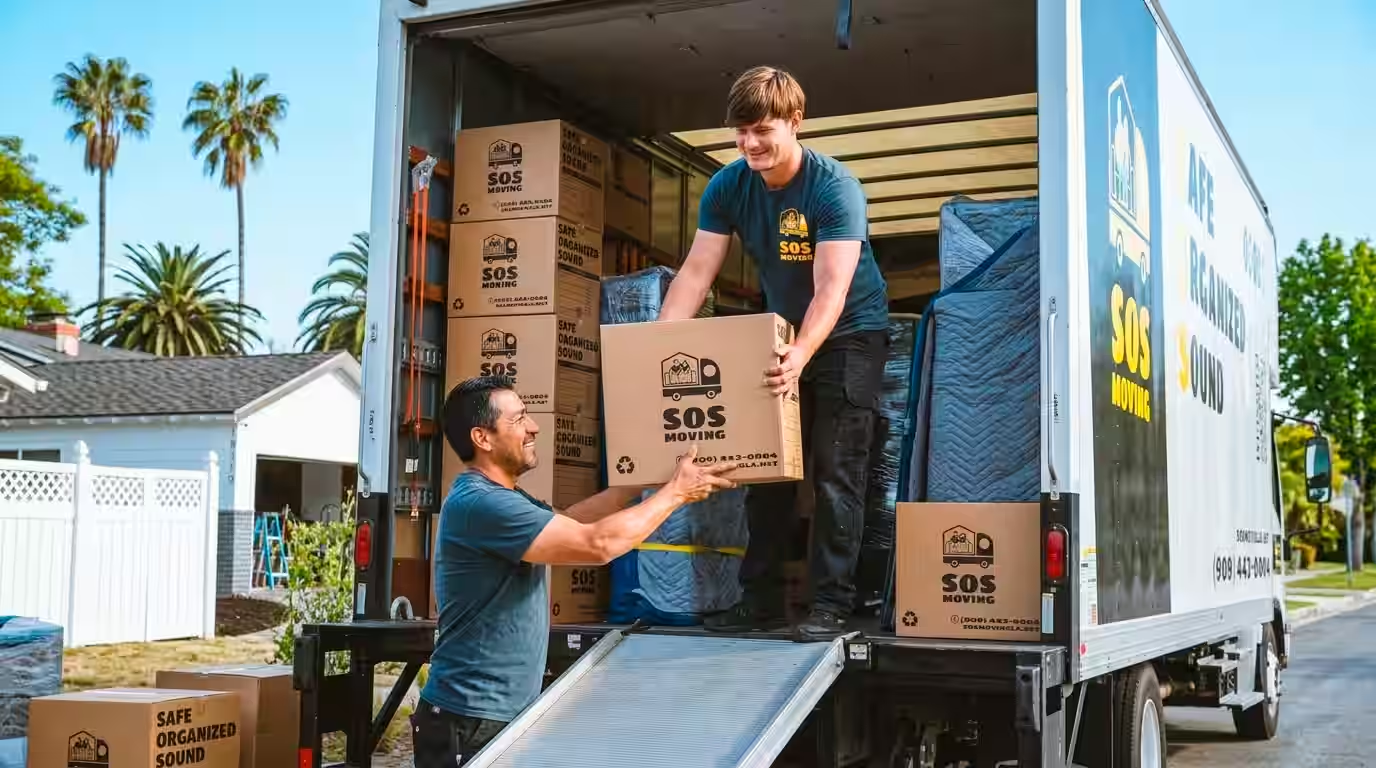
From safely hoisting heavy furniture into upper-floor apartments to custom-packing valuable art collections, our licensed professionals handle every detail. Skip the heavy lifting and let us deliver a seamless, hands-off relocation.

No more wondering 'Where are my things?' We provide real-time updates and precise delivery windows throughout your move. Our full-service team handles packing, moving, unpacking, furniture assembly, and storage. Experience worry-free long-distance moving—get your free quote today.
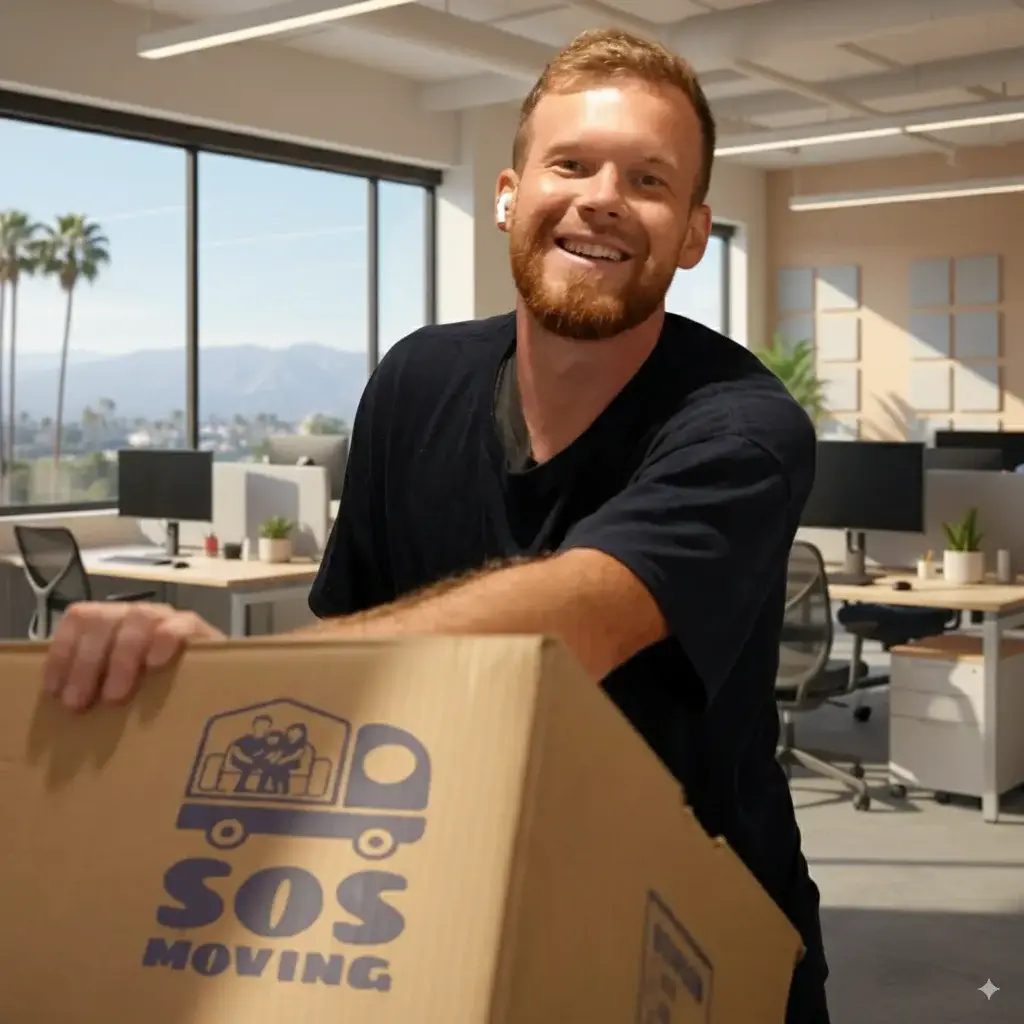
Our office movers in San Pedro deliver top-level commercial moving services. We’ll cope with any office furniture, professional equipment, and even medical practice. Due to a professional approach to all stages of your office move, we help you not to lose excitement and inspiration from your new office in the overwhelming packing, lifting, and unpacking process.























Sure, our movers can bring packing materials and boxes if you need them. Make sure you mention that you need them to our operators in advance.
No, tips are not included, and it’s up to you how much to tip your movers. Tips are always appreciated but not required.
Your apartment moving cost depends on factors, such as the type and size of your property, the complexity of your move, the number of bedrooms, the volume of your items, zip code, etc. At SOS Moving, we offer flat and hourly rates. The hourly rate depends on the number of movers to be involved and the size of the moving truck. Flat rate is based on the volume of belongings you need to move, and it’s the best option for long-distance moves. To know your moving cost, please contact us or submit a form on our website to request your free quote.
You should schedule your move date as early as you can. If you’re moving locally, at least 1-2 weeks in advance, for long-distance moves, we recommend getting a quote at least 2-4 weeks before your move date.
You can choose any convenient day for your relocation, and yes, we can help you move on weekends and holidays.
A safe relocation is our goal, so we’ll provide you with a detailed list of items that are prohibited to transport. It includes perishables, hazardous materials, firearms, batteries, etc. We also don’t recommend packing your personal and irreplaceable items, including family heirlooms, family photos, jewelry, documents, etc. Carry them with you during the move.
We accept cash, all major debit and credit cards, and certified checks. We don’t accept personal checks. There will not apply any transaction fee on card transactions.
Yes, we’ll contact you prior to delivery. We’ll deliver your belongings within the given moving arrival window. In case the window is no longer possible, we’ll also contact you in advance and set another delivery time.
San Pedro is the City of Los Angeles neighborhood at the Port of Los Angeles, on the harbor side of the Palos Verdes Peninsula. City Planning's historic resources survey describes the ground the way a crew experiences it: flat, straight streets in the northeastern corner, a slope that begins at Sixth Street, then a climb west across plateaus to hillside streets with views of the port and the ocean. That split between grid and hill is what local movers in San Pedro plan around first.
Mapping L.A. puts San Pedro among the lowest population densities in the city of Los Angeles. Fewer towers means more front steps, driveways and courtyard walks, so most of the planning happens between the curb and the door, not at a loading dock.
Near the harbor, the survey found the largest concentrations of apartment houses, duplexes and courtyard apartments, some dating to the late 1910s, set among older cottages, Craftsman homes and newer infill. Pre-war apartment houses cluster on the main streets, especially the old streetcar routes along Pacific Avenue and Sixth and Fourteenth Streets. In a courtyard building the unit door can be a long walk from the curb, so the crew pads each piece inside the unit and keeps the shared path open while it carries.
The Vinegar Hill Historic Preservation Overlay Zone, adopted in 2001, sits on the plateau south and southwest of the original business district. Its houses went up between 1886 and 1927, in Queen Anne, American Foursquare and Craftsman styles alongside later American Colonial and Spanish Colonial Revival designs. In a house that old the crew treats original floors and trim as part of the job: runners go down first, door frames get covered, and beds and big tables come apart before they move.
West of the old grid the street pattern changes. Much of San Pedro's post-war building went into the hillside areas west of Weymouth Street, reaching south to Paseo Del Mar on curving streets and culs-de-sac, and the survey records public staircases in the hillside neighborhoods. There the crew settles the truck spot before the first box moves: a cul-de-sac can leave little room to turn, and a stairway that is a shortcut on foot is no route for a dresser.
| San Pedro area or housing type | What to plan for on moving day |
|---|---|
| Blocks near the harbor, east side | The largest share of apartment houses, duplexes and courtyard units; settle the curb spot in advance and expect a walk through a shared courtyard. |
| Vinegar Hill historic district | Houses built 1886–1927; floor runners, covered door frames, large furniture taken apart before the carry. |
| Pacific Avenue and Gaffey Street | Dense commercial frontage; the curb is shared with businesses, so the loading spot is picked before the day. |
| Hillside streets west of Weymouth Street | Curving streets, culs-de-sac and public staircases; check turning room for the truck and the walking path to the door. |
| Point Fermin and Paseo Del Mar | The road traces a coastline shaped by landslides, including the 1930s slide behind the "Sunken City" name near Point Fermin Park; confirm the access street when booking. |
San Pedro is part of the City of Los Angeles, so street parking follows LADOT rules, not a separate local code. Temporary no-parking signs are requested through LADOT's Special Traffic Control Division, and the posting fee is paid only after the request is opened with that office. Filing it is the client's step; the crew then works from the curb the signs hold.
Two kinds of street create most of the parking work. Pacific Avenue and Gaffey Street, the main north-south corridors, are lined with dense commercial development, so the curb in front of an apartment there is shared with shops and their deliveries. On the curving hillside streets, turning room matters as much as curb length, and a steep driveway can keep the truck at the street while the crew carries up the slope.
Condo buildings and HOAs write their own move rules, and management is the only reliable source for them. Reserve the elevator or loading area if the building has one, confirm the hours it allows moves, and ask whether it wants a certificate of insurance; SOS issues a COI for $50.
From the base at 5530 Jillson Street the route is I-710 south, then SR-91 west, then I-110 south: about 24.6 miles, around 34 minutes without traffic. The Harbor Freeway ends inside San Pedro by joining Gaffey Street near Summerland Avenue, so the truck enters the neighborhood on Gaffey.
Traffic is the variable. I-710 is the principal goods-movement link between the ports of Los Angeles and Long Beach and the rail yards in Commerce and Vernon, and the federal project summary for the corridor lists congestion and high truck volumes among its problems. Weekday rush hours slow I-710 and I-110 alike, so a morning start inside the 8AM – 6PM window, Monday – Sunday, leaves more of the day for loading.
Pricing for moving services in San Pedro follows the standard terms. San Pedro is under 30 miles from the base, so the 3-hour minimum applies, overtime starts after 8 hours, and double drive time applies to moves over 10 miles. If the move can't wait, a same-day job in San Pedro works when a crew is free.
Offices and storefronts raise the same curb questions as apartments. Early commercial blocks survive along Sixth Street and Pacific Avenue near the harbor, and an office move there is planned around the loading spot as much as the furniture; commercial moving covers the business side.
Long Beach sits across the harbor. The Seaside Freeway (SR-47) leaves San Pedro over the Vincent Thomas Bridge and connects with the Long Beach Freeway, so a move between the two crosses the water instead of circling inland; the Long Beach moving page covers the other end.
To the west, San Pedro's boundary runs along Western Avenue and Miraleste Drive, with Rancho Palos Verdes on the far side. Both sit on the Palos Verdes Peninsula, so a move between them keeps the same questions about slopes and turning room, under another city's parking rules; see movers for Rancho Palos Verdes.
Carson is on the way in. The Artesia (91) and Harbor (110) freeways, the same pair the crew takes to San Pedro, both pass through the city, and the City of Carson places the Los Angeles harbor a few miles south; moving in Carson has the local details.