



%201.svg)









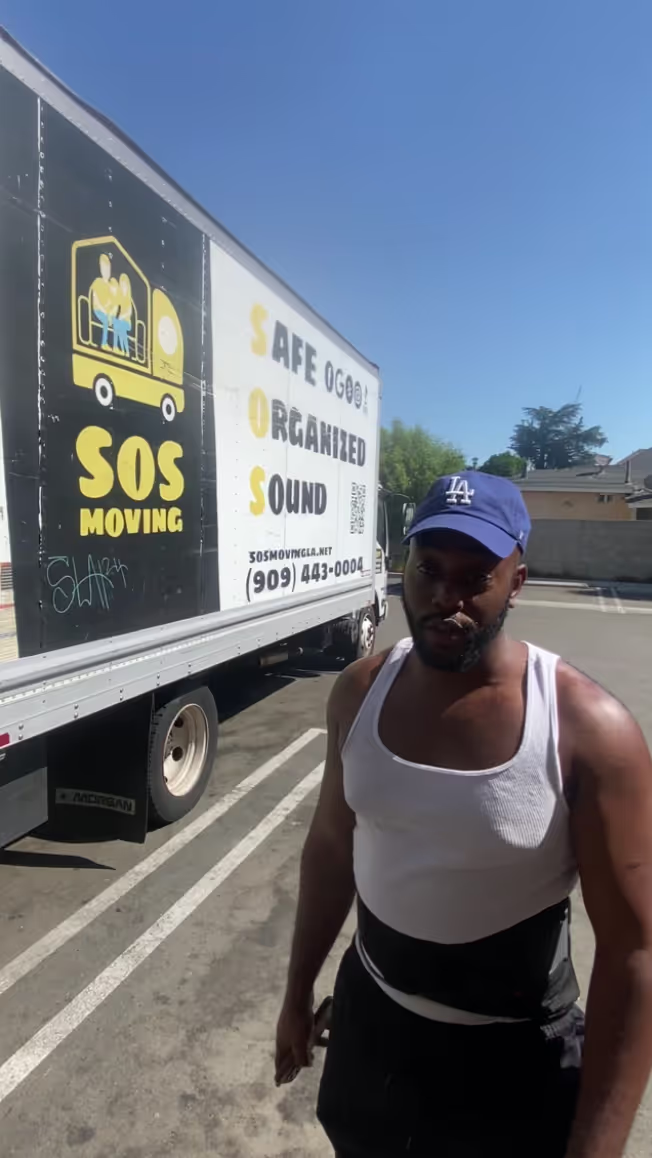

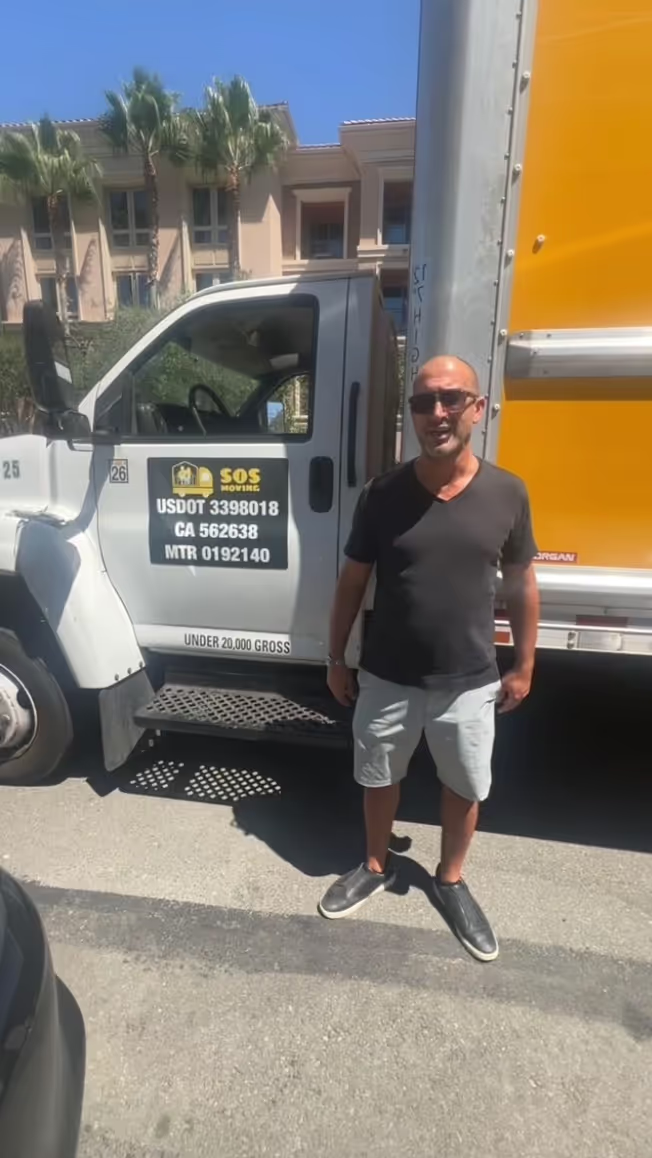
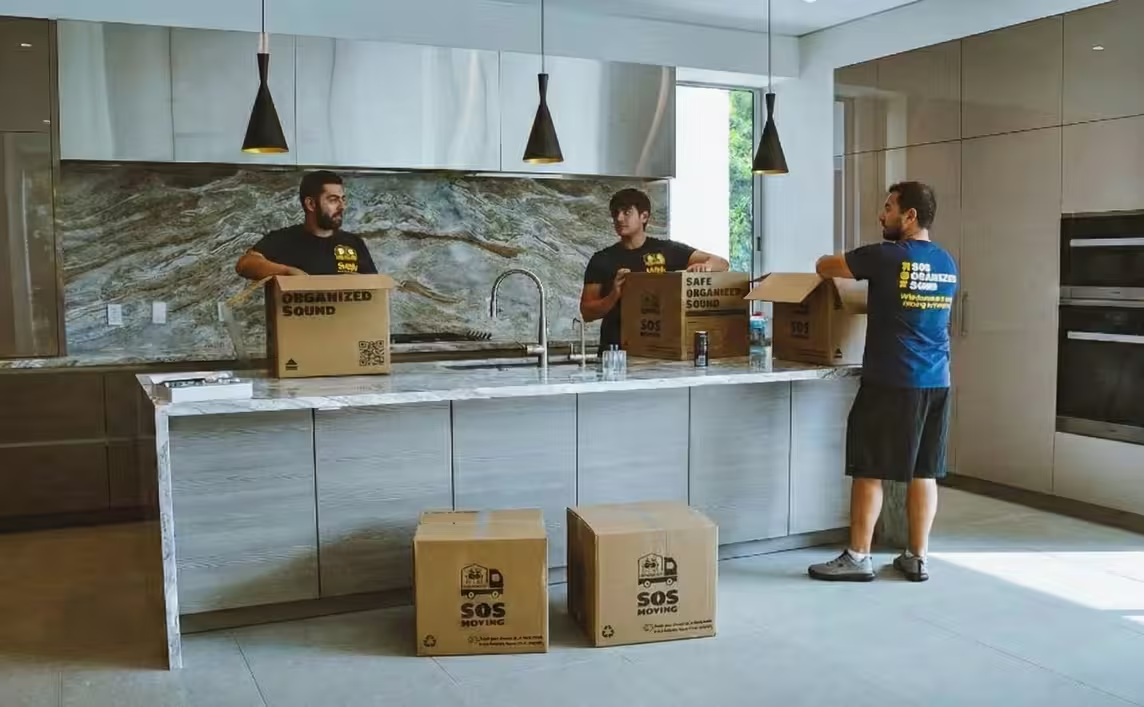
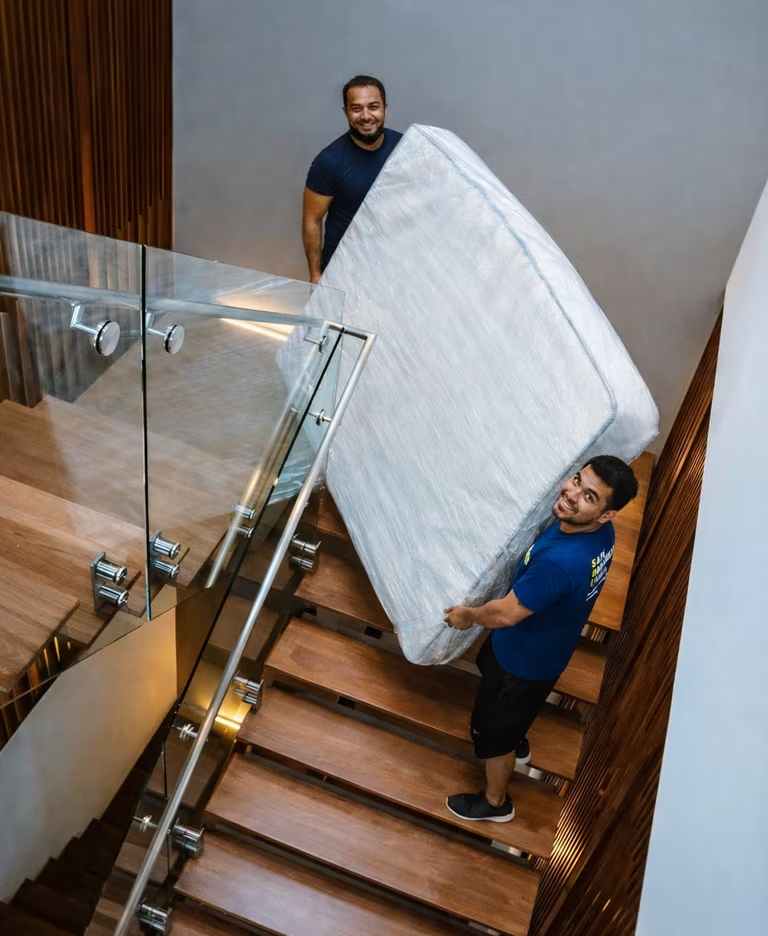
Here is what the hourly rate buys: two to four movers, a truck stocked with furniture pads, dollies, straps and hand tools, and wardrobe boxes for hanging clothes. The crew unbolts bed frames, dining tables and desks, wraps each piece, and rebuilds it in whichever room you point to at the new address. Tape and stretch wrap are included at no charge, in whatever quantity the job needs; boxes cost from $4 apiece in three sizes, and only the ones actually used appear on the bill.
On the day, the foreman walks the unit with you first, then pads the door frames and lays runners along the hallway, the stair and the path out to the curb. Wall-mounted TVs come down with everything else, though for insurance reasons our crew does not hang them again. We ask you to empty dressers beforehand; whether a light piece can travel with its contents is the foreman's call on site.
Before any of that, your coordinator asks the questions a Burbank building raises: which floor, stairs or elevator, where the truck can stand, and whether the management office expects insurance paperwork from the movers. Those answers set the crew size and the start time, so nobody discovers a third-floor walk-up at nine in the morning.








Two things set the hourly figure, the number of movers and the day: Monday to Thursday is cheaper than the stretch from Friday to Sunday, and cash comes in below card.
No job is billed for less than 3 hours, gas adds $30, and the $50 you pay as a deposit is credited against the total. Extras show up only when you need them: a certificate of insurance for the building ($50), a second truck ($200), or an item heavier than 300 lbs, which adds $150 and calls for a crew of three. Hours beyond eight are billed as overtime.
Distance from our base enters the bill as well. Past the 10-mile mark, drive time is charged at double, and once an address sits 30 miles or farther away the minimum rises from three hours to four; your coordinator tells you which of these applies to your street when you book. Leaving the state is priced another way entirely, with a flat rate instead of an hourly clock.
Burbank does not issue temporary parking permits to contractors, so a moving company cannot reserve a residential curb ahead of time. What the code allows instead, under BMC 6-1-1008.1, is for a commercial vehicle to stand in a residential zone while it is actively loading or unloading, provided it shows the company name and logo. Our marked truck uses that allowance and pulls away once the last item is strapped in.
Since January 1, 2025, state law has also made parking within 20 feet of a crosswalk approach ticketable even without red paint, or within 15 feet where the curb is extended. The foreman paces that gap off before the ramp comes down, and we ask you to move your own car so the space by the entrance is free.
Move rules here live with each building manager or condo association rather than with the city, so we ask you for the building's own packet: permitted move hours, any elevator or loading reservation, a deposit, and the certificate of insurance. That certificate costs $50 from us and lists the owner or HOA as holder; forward the manager's email and we handle it directly.
Older buildings deserve one more question. The city's housing analysis counts 600 to 800 multi-family buildings with soft-story elements, and at least 2,500 apartment units plus about 270 condo units that need seismic retrofitting. If your building is fenced off for that work, we confirm which entrance and which parking stalls stay usable on move day.
Once residential blocks were rezoned for multi-family use, Burbank built more than 1,200 apartment buildings in 1962-63 alone, against just 24 single-family houses, and units from 1960 through 1979 still make up about 22.5% of occupied homes. Two shapes dominate that stock.
Dingbats are boxy buildings with parking built into the structure, common here from the late 1950s to the mid-1960s; their carport is often the shortest route to the street, but it holds the neighbors' cars, so we roll dollies through it only with the manager's permission. Two-story courtyard complexes wrap an L, U or O around a central yard, which means your door may face the garden rather than the street. There we lay runners along the walkway and pad the stair rail before the first box moves.
Crews leave our only base, 5530 Jillson Street in Los Angeles, and head north on the I-5. They exit at Burbank Boulevard, where the old loop ramps near the former 5-Points intersection were replaced by a diamond interchange.
Every job fits inside the 8AM to 6PM window, seven days a week, so a two-bedroom with a long unload is best booked for the morning; if an elevator reservation slips, an early start leaves room to absorb it. A call in the morning for a move that same afternoon works whenever a crew is free, and the hourly clock, the 3-hour minimum and the drive-time rule stay exactly as they are for any other booking.






Not a parking permit: Burbank does not issue temporary parking permits to contractors. The code lets a marked commercial truck stop in a residential zone while it is loading or unloading, and that is how our crew works at the curb. We keep clear of crosswalk approaches and agree on the spot with you before move day.
Yes. The certificate costs $50 and names the owner, management company or HOA your manager asks us to list. Send the manager's contact and requirements when you book, and we deliver the document to the office before move day.
Hourly, so the clock decides the total. For a pair of movers with a truck, the weekday rates (Monday to Thursday) are $119 in cash and $129 on a card, and from Friday to Sunday they are $135 and $145. The floor is 3 hours and gas is a flat $30; stairs, the carry to the truck and shelves left unpacked are what stretch the time.
Often, yes: same-day moves are possible whenever a crew is free. The working day runs 8AM to 6PM on every day of the week, so the earlier in the day you phone 909-443-0004, the better the odds. Rates and the 3-hour minimum match those of a booking made weeks ahead.
Since January 1, 2025, Burbank ties residential permits to license plates and checks them with plate-reading enforcement. If no bill at the new address is in your name yet, the city can give you a temporary permit valid for up to 30 days. It cannot be renewed, so apply for the regular permit while it is still running.
No. Moves out of California get a flat rate built on volume, route and services, and they run under USDOT 3398018 and MC 1153871. Our Burbank long-distance team explains how that quote is put together.
Every apartment job we run in this city follows the same order, and knowing it helps you decide where you need to be and when. The steps below assume a local move, inside town or to another part of Los Angeles County; leaving the state works differently and is covered further down.
Most of the gap between a short job and a long one is decided before step two. A unit with sealed boxes, empty dressers and an elevator slot already approved by the manager lets the crew start carrying almost as soon as it walks in.
To compare this with how we run rentals elsewhere in the region, the page on SOS apartment moving across Los Angeles describes the same core service without the local detail.
About 54% of Burbank's housing units are renter-occupied, according to 2022 American Community Survey figures cited in the city's fair housing analysis. In practice that means most moves here begin with a property manager rather than a homeowner, and the rules come from that office. They differ from one building to the next, so a neighbor's experience in the complex down the street tells you little about yours.
Expect the questions to fall into three groups:
We can take the third item off your list. A certificate of insurance costs $50; forward the manager's request and we prepare it with the right names and send it straight to the office. For the first item, tell us the approved window as soon as you have it. Our crews work from 8AM to 6PM every day, so a window inside those hours is easy to meet, and one that closes early simply means an early start.
Condo owners leaving a homeowners association should also ask whether the board needs notice of the date. We cannot vouch for what any particular complex requires, which is exactly why the checklist above asks you to get the rules on paper.
Once the last load is out, walk the route with the manager if the building runs a move-out inspection. The runners and door pads we lay are there so that walk turns up nothing new in the corridor or on the stair.
A big part of the local rental stock comes from the building wave of the late 1950s and the 1960s, long before sectional sofas and king beds became standard. In many of those buildings the route from your door to the curb includes a stair, a landing and at least one turn, and in a dingbat it may run through the carport beneath the upper units.
The crew plans the carry before lifting anything. Pieces that will not clear a turn are taken apart: bed frames, table legs, desk returns, sometimes the feet and back cushions of a sofa. Long items travel on end with a mover at each side, and railings are padded so a slip leaves its mark on a blanket instead of the paint.
Stairs add time, and that is why the number of flights matters when we size the crew. On a second-floor walk-up, a team of three can keep one person wrapping inside while two carry, so the truck fills at a steady pace instead of in bursts. A single item heavier than 300 lbs, such as a large safe or a solid-wood armoire, carries a $150 charge and needs at least three movers.
Whatever the flooring, runners go down before the first dolly rolls in, and door jambs are wrapped along the whole route, at the old address and the new one. If a courtyard walkway is the only way out, it gets the same treatment as an indoor hallway.
Elevator buildings bring their own rhythm. The crew stages each load at the unit door, rides down with it and keeps one mover at the truck, so the cab is held only as long as it takes to fill and empty it. If the building has not hung protective blankets in the cab, we pad the walls ourselves before the first trip.
Where the truck stands decides how far every box travels, so we settle it on the booking call. Since no one can reserve a residential curb for a mover, the best spot tends to be the one you free up yourself. If you have a car, park it in front of the entrance the evening before and move it once the truck pulls up.
Two details cost people time. The first is the crosswalk gap, 20 feet from the approach or 15 where the curb bumps out, painted or not. The second is a neighbor's driveway, which the truck may not block even briefly. When neither the front curb nor a side street works, the crew carries farther, and on an hourly bill every extra yard of carry shows up.
For a large unit, a second truck at $200 can cut the number of trips between addresses. We suggest it only when the volume calls for it, typically for a three-bedroom apartment or a household that has been accumulating furniture for years.
The same allowance covers the far end of a move within the city: the truck may stand at the new building's curb while it is being unloaded, not as a parking spot while the crew takes a break. If the new street is a preferential-permit block, your own car needs its plate registered as well, a step that is easy to overlook in the first busy week.
The hourly rates listed above do not change on the day, so the real variable is time. Four things drive it:
Packing is the factor people most often underestimate. If you would rather not do it yourself, the crew packs at the same hourly rate. A box costs from $4 in any of three sizes and is billed only if it gets used; tape and stretch wrap carry no charge, and premium paper plus bubble wrap are on hand for glass and framed art. For a separate packing day before the move, look at packing help in Burbank.
Overtime starts after eight hours. Few apartment jobs get there, but a big unit with awkward access at both addresses can, and your coordinator will flag it when the estimate points that way.
The calendar is the other lever. Choosing a weekday from Monday to Thursday lowers the hourly figure for every crew size, and settling in cash lowers it again, so a flexible date is worth mentioning on the first call.
Picture two one-bedroom moves of the same size. In the first, the unit is on the ground floor of a courtyard building, the truck stands at the curb out front and every box is sealed. In the second, the unit is up two flights above a tuck-under carport, the truck parks around the corner and the kitchen is still unpacked. Same furniture, same crew, yet the second job can run noticeably longer on the clock.
Short hops within city limits are the simplest case: the drive is brief and most of the bill is carrying. Heading from a Burbank rental to another corner of the county adds drive time, and the distance rules above decide how it is counted.
Crossing a state line changes the pricing model. Interstate jobs get one flat price instead of an hourly clock, worked out from volume, route and services, and SOS carries them out as a federally registered carrier (USDOT 3398018, MC 1153871). The full picture, including how a truck is loaded for a long haul, is on the page of our long-distance crew for Burbank.
Lease dates do not always line up. If the keys to the next apartment arrive a day after you return the old ones, we can store the loaded belongings until the next day for $200 and deliver them then.
Arriving from somewhere else? Our guide to getting to know Burbank after relocating covers the first weeks, and the permit steps in the checklist above apply to newcomers from day one.
A little preparation the day before takes real time off the hourly bill. Start with what the crew should never carry: wallet, credit cards, IDs, documents, keys, chargers and valuables travel with you in a bag you keep in sight.
If a few boxes are still open when the crew arrives, the movers will finish them, but that time is billed like any other hour, so seal whatever you can the evening before.
The quickest and most accurate quotes come from complete information. Whether you ring 909-443-0004 or send the online quote form, include:
A piano in the unit changes the plan: it rides along as part of the hourly move but needs four movers on the job and adds $200 to the bill, so mention it on the first call.
Our hours are 8AM to 6PM seven days a week; we hold California license CAL-T0192140 and are rated 4.9 across 1,007 Google reviews and 4.8 across 1,585 on Yelp. For house moves and everything else we do in town, visit SOS movers for all of Burbank.
















.jpg)