



%201.svg)


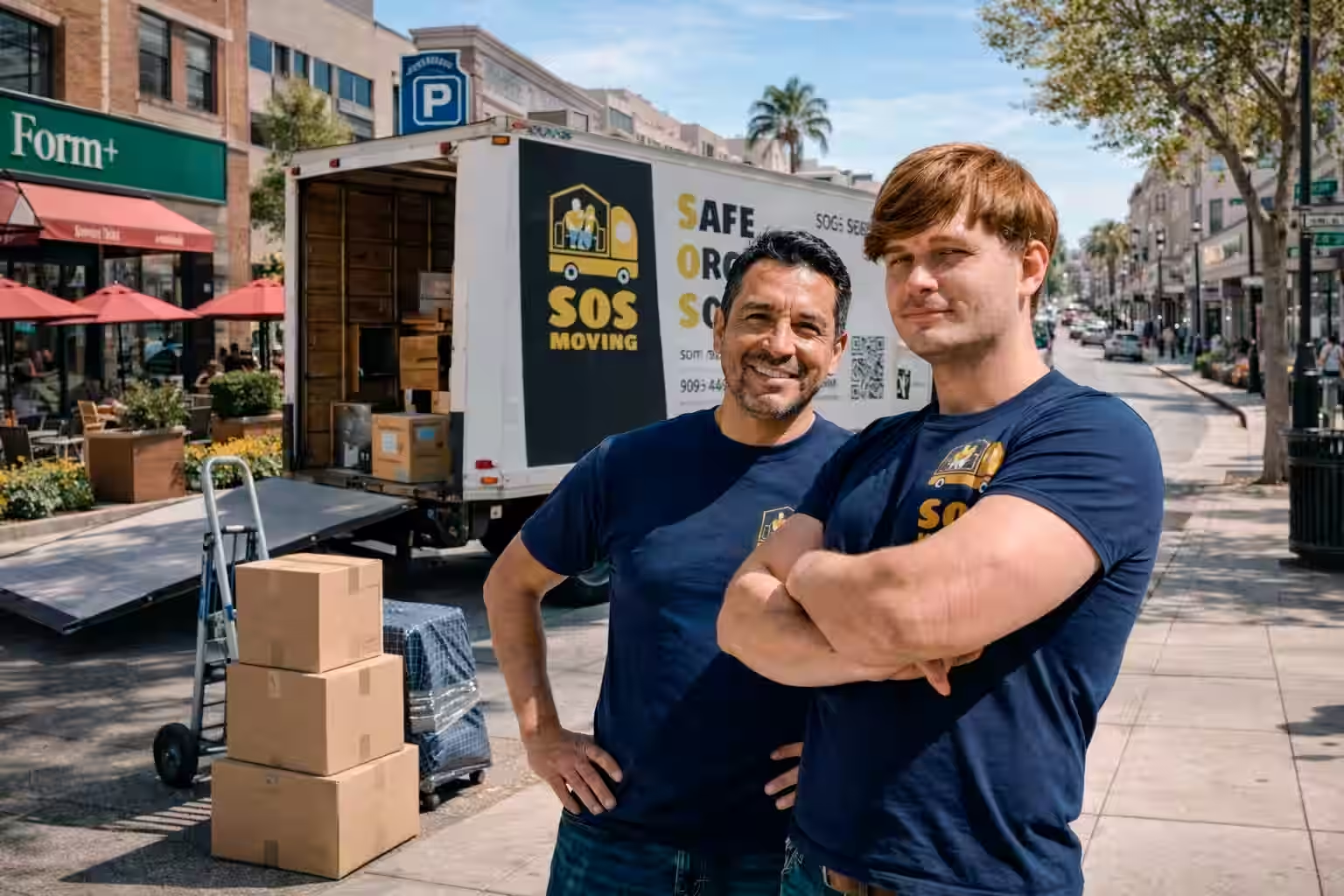





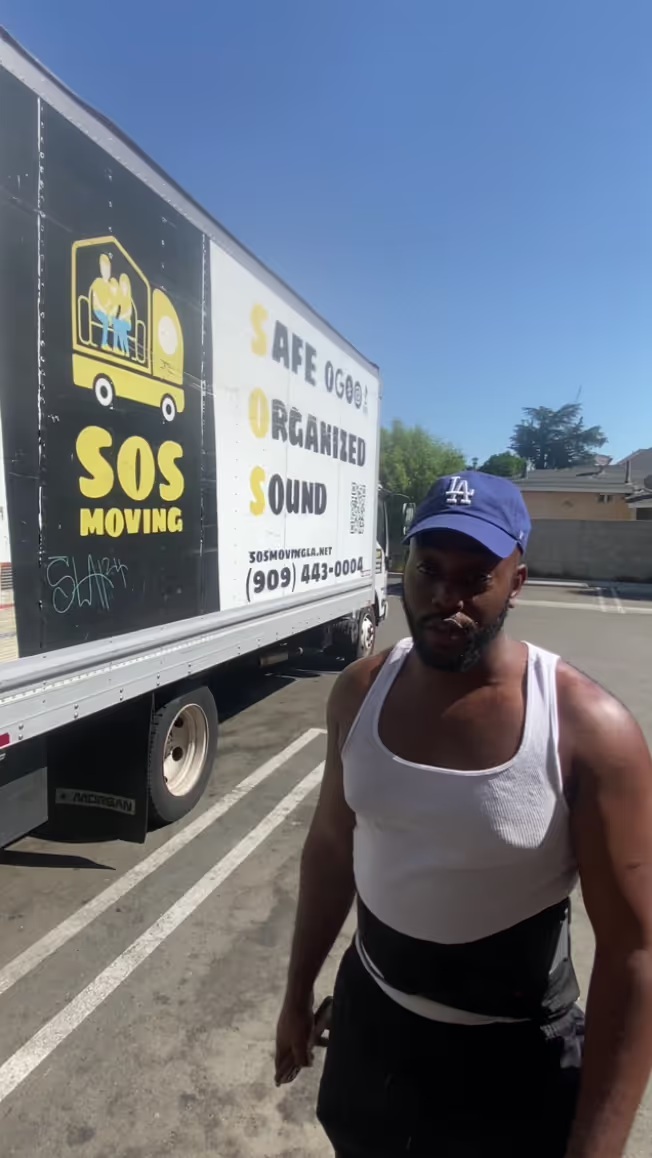

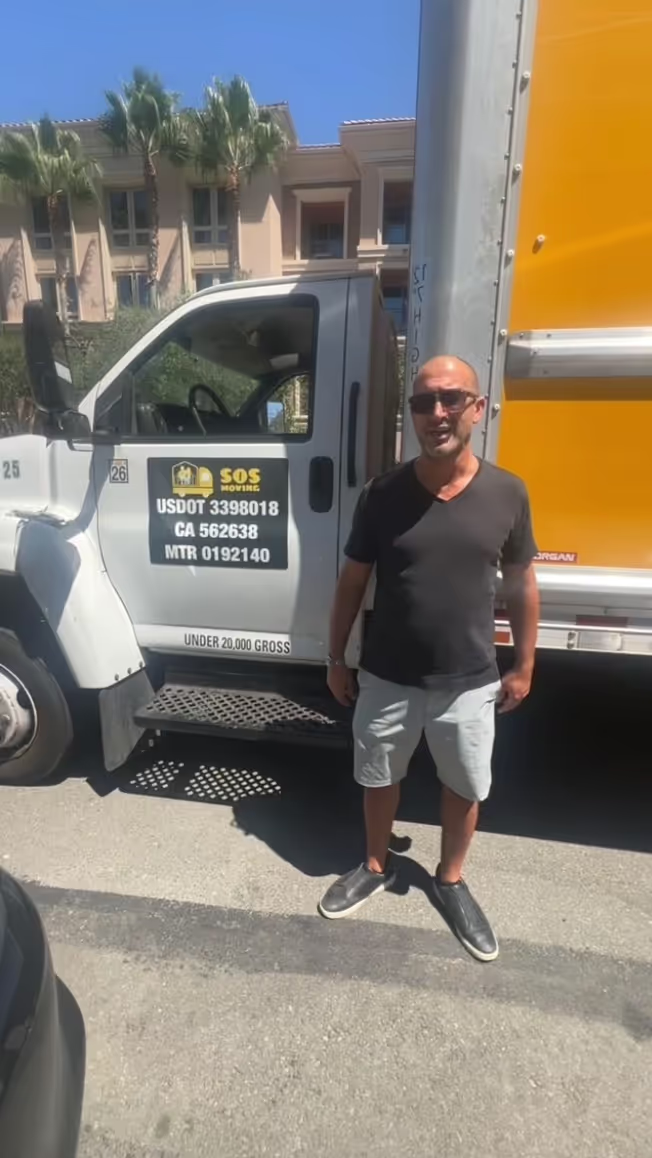

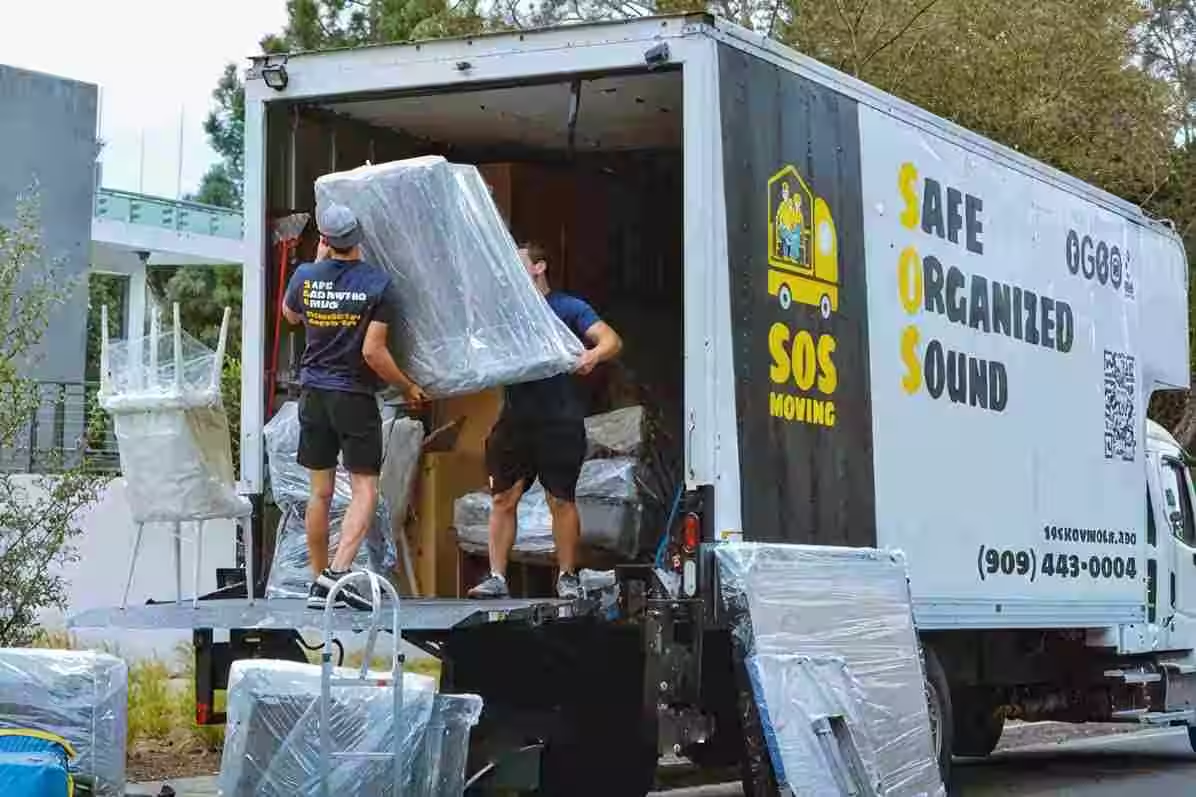
What the crew takes on in a Burbank home:
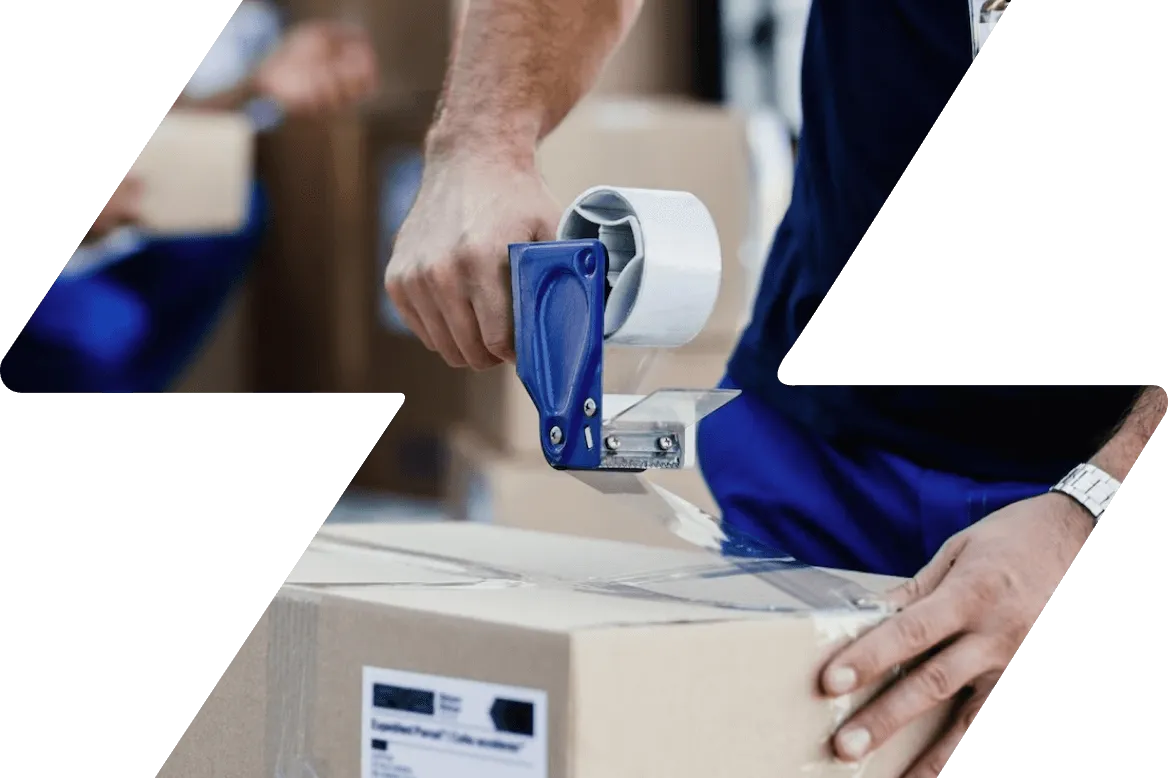







Packing is crew work, so it is billed at the same hourly rates as our local moves, with a 3-hour minimum. The weekday and weekend columns below are the full rate sheet; the first figure in each cell is the cash rate, the second the card rate.
Hourly crew rates (cash / card)
| Crew | Mon – Thu | Fri – Sun |
|---|---|---|
| Two movers with truck | $119 / $129 | $135 / $145 |
| Three movers with truck | $159 / $169 | $175 / $185 |
| Four movers with truck | $199 / $209 | $215 / $225 |
Other lines from the same sheet: gas at $30, a $50 deposit later deducted from what you owe, and a $50 certificate of insurance if the building requires one. Overtime starts after 8 hours.
Every job begins at our single base, 5530 Jillson Street, Los Angeles. When an address lies more than 10 miles from that base, drive time is billed double, and at 30 miles or more from base the minimum grows from 3 hours to 4. Your quote says which of these rules applies to your street.
Burbank Public Works handles the Street Use Permit, the city’s paperwork for private use of the public right-of-way, and it names moving vehicles and moving containers among the things it covers. Whether you need one depends on where the truck can stand: a long driveway may be enough, a busy block may not.
When you book, tell us whether packing and loading happen on the same day or on separate days, and we will say which day the truck needs the curb and for roughly how many hours, so the dates on your application match the job. The city’s published terms for permit length and fees have not stayed the same over the years, so confirm both with Public Works when you apply instead of relying on an old copy of the form.
Burbank’s current fair housing analysis lists two projects moving forward on Riverside Drive: a mixed-use building with condominium units at 3700 Riverside Drive, in the Media District, and 92 townhomes at 921 W. Riverside Drive. We have not seen move rules for either, and managed buildings rarely match each other, so we do not guess.
Before a packing visit, ask management three things: whether packers must be booked like any other vendor, which hours contractors may work, and whether the elevator or loading area needs a reservation for the carton run. Our certificate of insurance costs $50 when an association wants one; send the exact names it has to list. Sealed cartons stay inside your unit, not in a corridor, until the truck is ready.
Burbank’s homes are older than most visitors assume. In the housing table the city cites, about 39% of occupied units were built between 1940 and 1959, another 13% in 1939 or earlier, and less than 1% in 2010 or later; nearly three quarters predate 1980. Magnolia Park shows what that looks like. Developer Earl L.
White started it in 1923, roughly between Buena Vista Street, Clybourn Avenue, Chandler Boulevard and Clark Avenue, and its modest houses went up in a scattered pattern, mostly built by individual landowners and investors on lots averaging about 50 by 135 feet. With houses put up by so many different hands, we never assume a standard layout; we ask for a walk-through or a phone video of closets, built-ins and the garage before quoting, and whatever is stored deep in the lot gets packed first.
The Golden State Freeway (I-5) crosses Burbank from north to south, and the Ventura Freeway (SR-134) runs through the southern end of the city. Those are the roads a crew from our Los Angeles base uses to reach most Burbank streets, and freeway traffic is the one part of the day nobody can book, so our start times leave slack inside the 8AM – 6PM working day.
A smaller home is often packed in the morning and loaded the same afternoon; a full house usually gets its packing day ahead of the move. Crew time is billed by the hour under the rules in the price block above. If you call early and a crew is free, same-day packing is possible, which helps when a closing date suddenly moves up.
Type of home in Burbank → what we pack first, what you prepare:
| Type of home | What we pack first | What you prepare |
|---|---|---|
| A Magnolia Park house on one of the neighborhood’s long, narrow lots | Whatever sits at the back of the lot, then closets and built-ins that have not been emptied in years | A walk-through or phone video of every closet and the garage before the quote |
| A house from 1940 to 1959, the largest group in the city’s housing | The least-used rooms: guest room, garage shelves, seasonal storage; the kitchen goes last | A decision on what is not moving, so it stays out of the boxes, and a staging spot near the door |
| A pre-war one- or two-story multi-family building with its own front door per unit and a detached rear garage | The detached garage, packed and labeled as a room of its own | The garage key, and a word with neighbors if the path to the street is shared |
| A unit in one of the new Riverside Drive projects: condos at 3700, townhomes at 921 W. | Moving out: whatever must be out before the reserved elevator or loading time. Moving in: we unpack kitchen and bedding first | Move rules from management and the exact names for the $50 certificate of insurance |






Often, yes: if one of our crews has an open slot, it can come out the same day. Call early; our hours are 8AM to 6PM on all seven days. A same-day job starts with the rooms you need emptied first, and the crew brings the boxes.
You do not have to guess. The crew brings a mix of small, medium and large boxes, from $4 each, and you pay only for the ones that get filled. No tape or stretch wrap charges appear on the bill, whatever the job uses.
Pass us the names and address your association wants printed on it; the certificate costs $50. Ask management at the same time whether packing day needs its own booking, since rules differ from building to building.
Yes. We treat it as a separate room with its own labels and pack it early, so its cartons are sealed before loading starts. Please set aside anything hazardous, such as paint thinner or propane, because it cannot go on the truck.
Yes. Unpacking is part of what we offer, and you can ask for all of it or only the kitchen and bedrooms. The crew opens the cartons in the rooms written on them, so the kitchen can be working the same evening.
Most of our packing days start in the rooms you will miss least. The crew opens with the guest room, the garage and the hall closet full of holiday decorations, then works inward toward the rooms you use every day. The kitchen and the main bathroom close the day, because you still need a kettle and a toothbrush while the rest of the house disappears into cartons.
Before the tape goes on, each carton gets two marks: the room it belongs to at the new address plus a short note on the contents. We write the destination room rather than the owner’s name, since the unloading crew needs to know where to walk. Fragile cartons are marked on two sides, so the warning shows however the box ends up stacked.
Sealed boxes go to one staging spot that you choose with the crew lead at the start. In a compact house that is often the living-room wall closest to the front door; in a unit with its own entrance it can be right inside that door. One clear path from the back of the house to the exit stays open all day, and it is the same path the loaders will use.
You do not have to stand in the room while we work, but someone should be in the house to answer questions. The usual ones are whether an item is moving at all, whether a dresser travels with its drawers full or empty, and which closet belongs to which bedroom at the new place.
When packing and loading fall on different days, the crew leaves a short list of what stays out of the boxes until loading day: coffee things, one pan, a towel per person, phone chargers and daily medicines. Put those in a single open box. It rides on the truck last and comes off first, so the first evening at the new place does not start with a search.
Materials follow one simple rule. Boxes come in small, medium and large, starting at $4, and the bill counts only boxes the crew actually filled. The crew brings more than the estimate calls for, so running short never slows the job, and the spares are not charged.
Tape and stretch wrap come with every estimate, without a cap. That matters more than it sounds. A sofa wrapped properly uses a surprising length of film, a full kitchen can empty several rolls of tape, and nobody on the crew should be rationing either one to keep your bill down.
The kitchen eats more material than any other room. Plates travel upright in paper, glasses get paper inside and out, and cast iron and small appliances go into small cartons, so that no single box ends up too heavy for one person to lift safely.
For glassware, framed photos, lacquered furniture and anything else that scratches or chips, we carry premium packing paper and bubble wrap. We do not publish a separate price for them; ask during the quote call and the estimate will list them before the crew arrives.
Crew time is the other half of the bill, charged by the hour at the rates shown above, with a 3-hour minimum. A tidy one-bedroom packs much faster than a house where the garage has not been opened in years, so the single most useful thing you can do before the quote is describe the storage spaces honestly.
A full pack means the crew boxes everything that is moving, from the top shelf of the linen closet to the medicine cabinet, while you decide what goes and what stays. It suits people who work all week, parents of small children and anyone whose move date suddenly came closer.
Partial packing is more common than people expect. Plenty of clients box their own books and clothes over a few evenings and book our crew for the kitchen, the garage and anything breakable. That split keeps the hours down while the rooms that are hardest to pack still get professional wrapping.
When you weigh a packing service in Burbank against doing the whole job yourself, count everything: your evenings, the boxes you buy and never fill, and the chance that a self-packed carton of plates arrives as gravel. Boxes you seal yourself fall outside our moving insurance, unlike the ones our crew packs, so hand over the rooms with the most breakables.
Whichever way you go, tell us before the quote which rooms are ours. The estimate is built from that list; a room added on the day simply adds hours, and a room you decide to do yourself takes hours off. More detail on scope and materials is on the page for our packing crews across LA.
Packing for a move across town and packing for a truck headed to another state are different jobs. On a local run, cartons are on the truck for a short ride and come off the same day, so standard packing protects most things well.
A move inside the city or to a neighboring one often lets us pack in the morning and load in the afternoon. A large house is better packed a day or two ahead, and that schedule is the same whether the truck then drives ten minutes or ten states.
On an interstate trip the load stays stacked for days, and every bump on the highway travels down to the bottom row. For that, the crew packs heavy boxes tighter, fills every gap so contents cannot shift, gives glass and lamps an extra layer, and wraps furniture completely instead of padding the corners.
If you are leaving California, our long-distance moves out of Burbank are priced as one flat rate rather than by the hour. Ask for packing when you request that quote, so a single plan covers the packing day and the loading day.
Booking movers and packers in Burbank as one team has a practical upside. The people who packed the cartons know which ones are heavy, which hold glass and which must stay upright, and loading goes faster when nobody has to open a box to find out.
An office packs differently from a kitchen. Each workstation gets its own numbered cartons, cables travel in a bag taped to the device they came from, and labels follow the order in which people need to be back at work. A larger office can be packed and moved in stages inside our 8AM – 6PM day, so some desks stay in use while others are being emptied.
Apartment buildings add their own rules: a shared hallway, an elevator that may need booking, a manager who wants a name and a time for every crew. Our apartment moving crews in Burbank plan around those rules, and one call can cover their visit and our packers.
Some of the city’s older multi-family buildings avoid the hallway question entirely. Burbank’s citywide historic context report describes pre-war multi-family buildings as one or two stories, wood-framed, in Craftsman, Spanish Colonial or Tudor Revival style, with a separate front entrance for every unit and a detached garage at the back of the lot. It also notes that few were built, so a home in one is a rare find.
For packing, that layout helps. Cartons are staged inside your own front door instead of in a common corridor, and the garage at the rear gets its own labels and its own trip to the truck. The only thing to sort out ahead of time is access: the garage key, and a quick word with the neighbors if the walk to the street is shared.
Glassware, framed art and lamps take the most minutes per item, and they are where premium paper and bubble wrap earn their place. Mirrors and framed pictures are wrapped one by one and stood on edge in the truck, never laid flat under other boxes.
Pieces that need a custom wooden crate, such as valuable art, antiques or designer furniture, belong with our white glove service, which covers individual packing, crating and reassembly of furniture. Mention such pieces during the quote, and we will say which ones the packing crew can handle and which need the white glove team.
Some things never go into our cartons. The truck does not carry perishable food, firearms, batteries or hazardous materials like paint, fuel and cleaning chemicals. Keep jewelry, cash, passports, property papers and the laptop with your work on it in your own car.
Plants are the last item to plan for. They travel better with you than in a closed truck, so move them to one corner before the crew arrives and they will not end up in a box by mistake.
Unpacking is the part people forget to book. The crew can open every carton, put the contents in the rooms written on the labels and leave the kitchen working, or unpack only the rooms you name and leave the rest for later.
When we unpack, the order mirrors packing day in reverse: kitchen and bathroom first, then beds, then everything else. Empty cartons are flattened and stacked in one spot as we go, so they do not crowd the new rooms.
Now and then the old home must be handed back before the new one can take you. Packed cartons can then go into our secure, climate-controlled storage, where temperature and humidity stay steady all year. Short-term covers anything from several days to several weeks; long-term starts at one month; either one can be stretched with no penalty if a closing slips. We collect the cartons, keep them and bring them to your new address when you say so; storage between move dates explains the options.
If your dates are still uncertain, book the packing first and decide about storage once the closing or the lease is signed. Cartons packed properly for a move are already packed properly for storage, so nothing has to be redone.
Call 909-443-0004 or use the online form with your address, the rooms to pack and the date you need to be out. We will ask about the garage, the closets and anything fragile or oversized, then come back with a crew size and an estimate of hours.
To lock in your date we take $50 up front, and that sum is deducted when the job is settled. Crews keep to 8AM – 6PM on all seven days, and one with an open slot can start the day you call, which helps when a closing or a lease end moves up without warning.
Short on time and planning to handle part of it yourself? Our tips for packing fast before a Burbank move cover what to box first. For loading, driving and delivery on top of the packing, our main Burbank moving page lays out the full service.