


%201.svg)
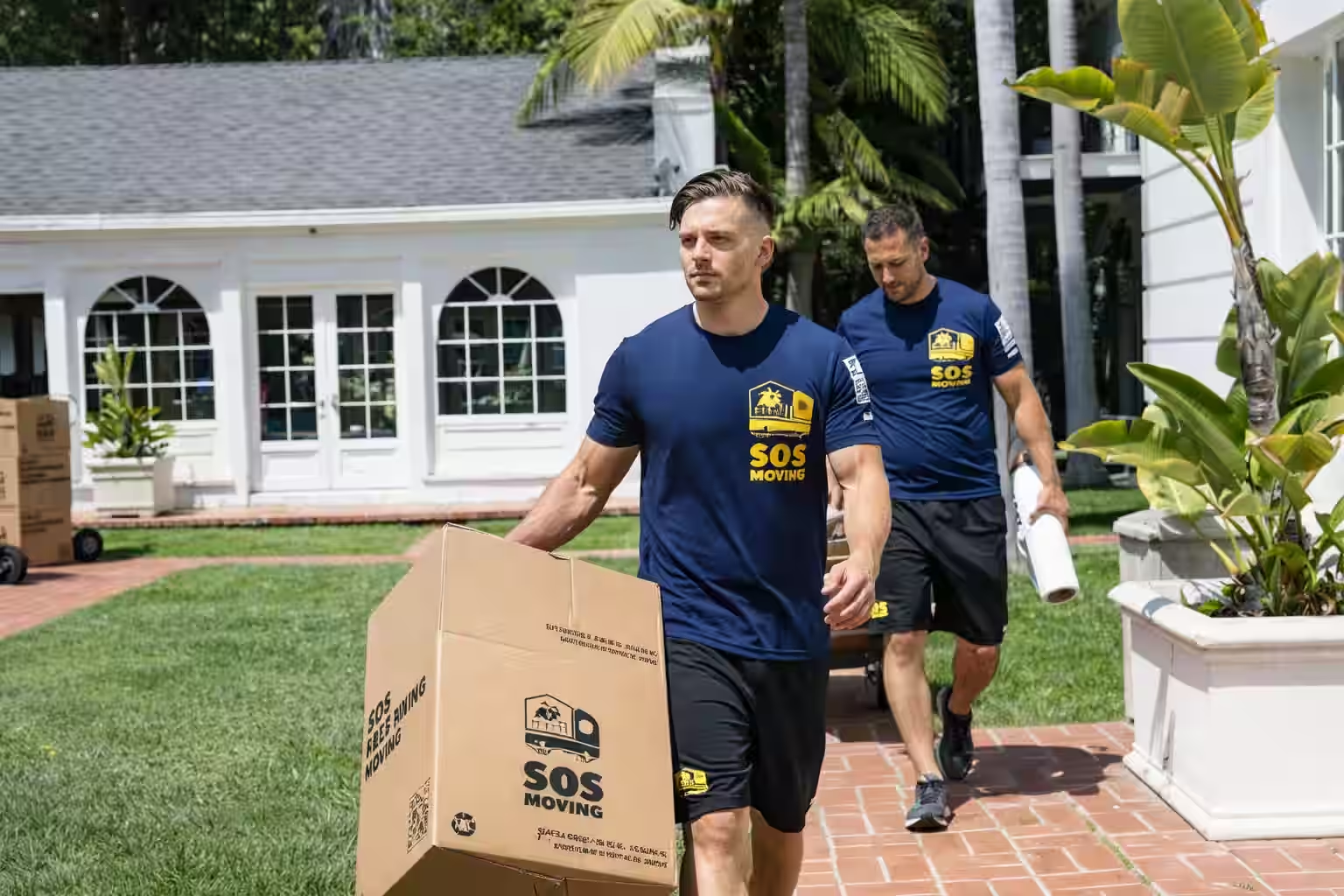


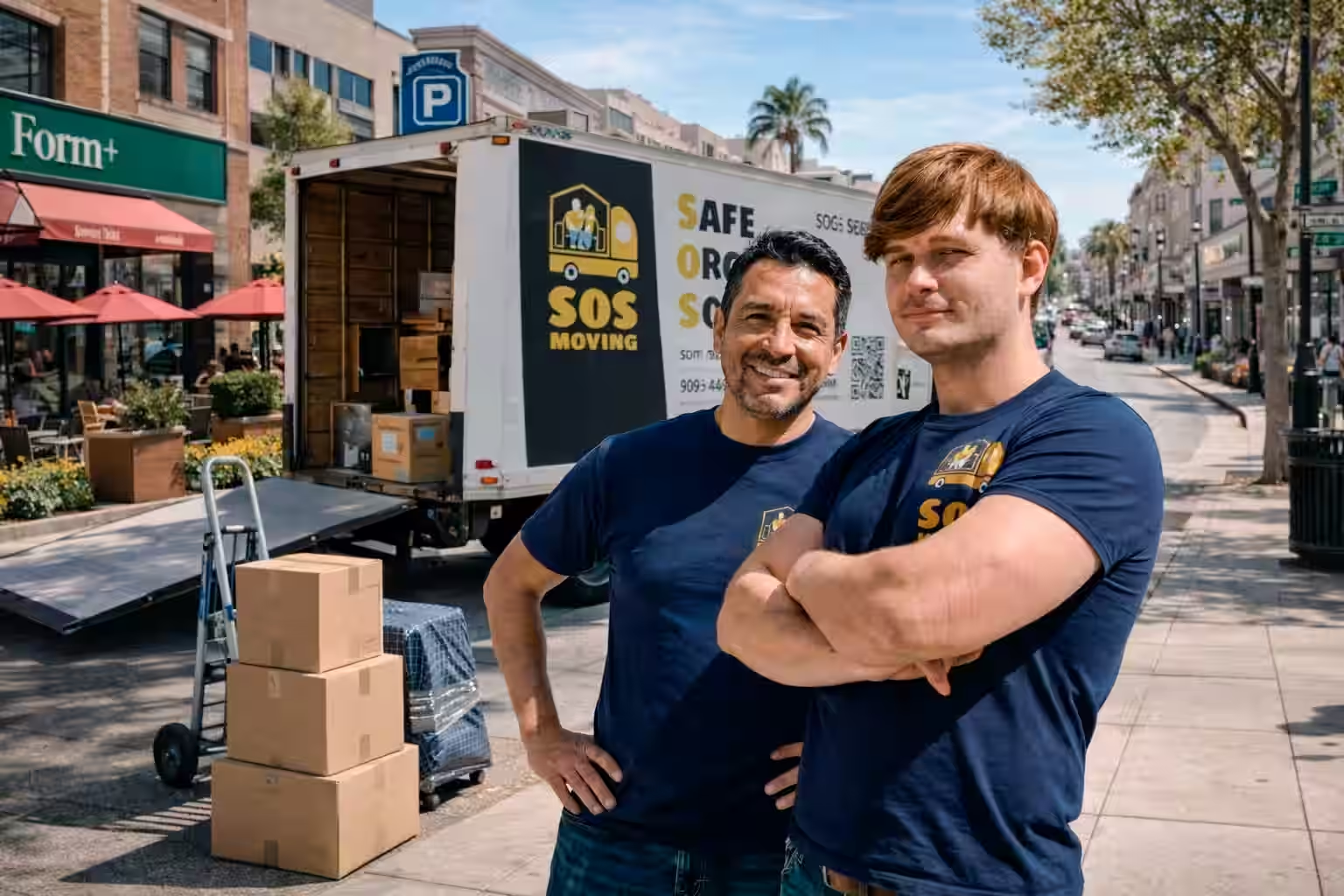




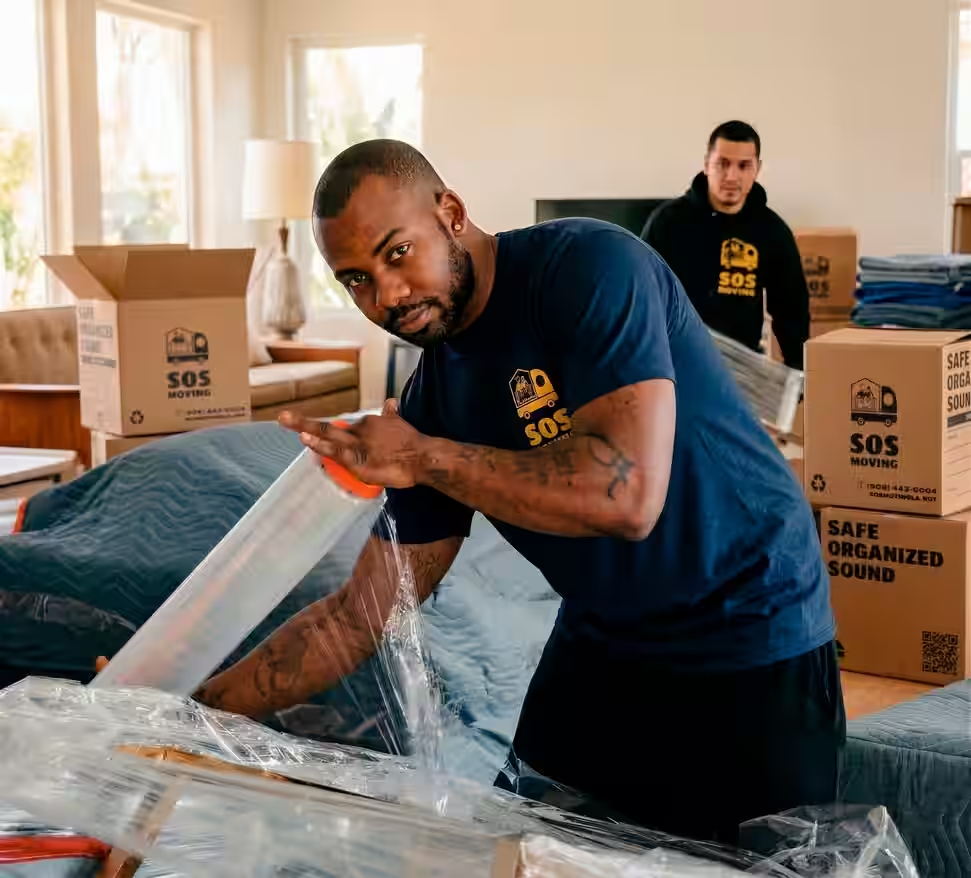
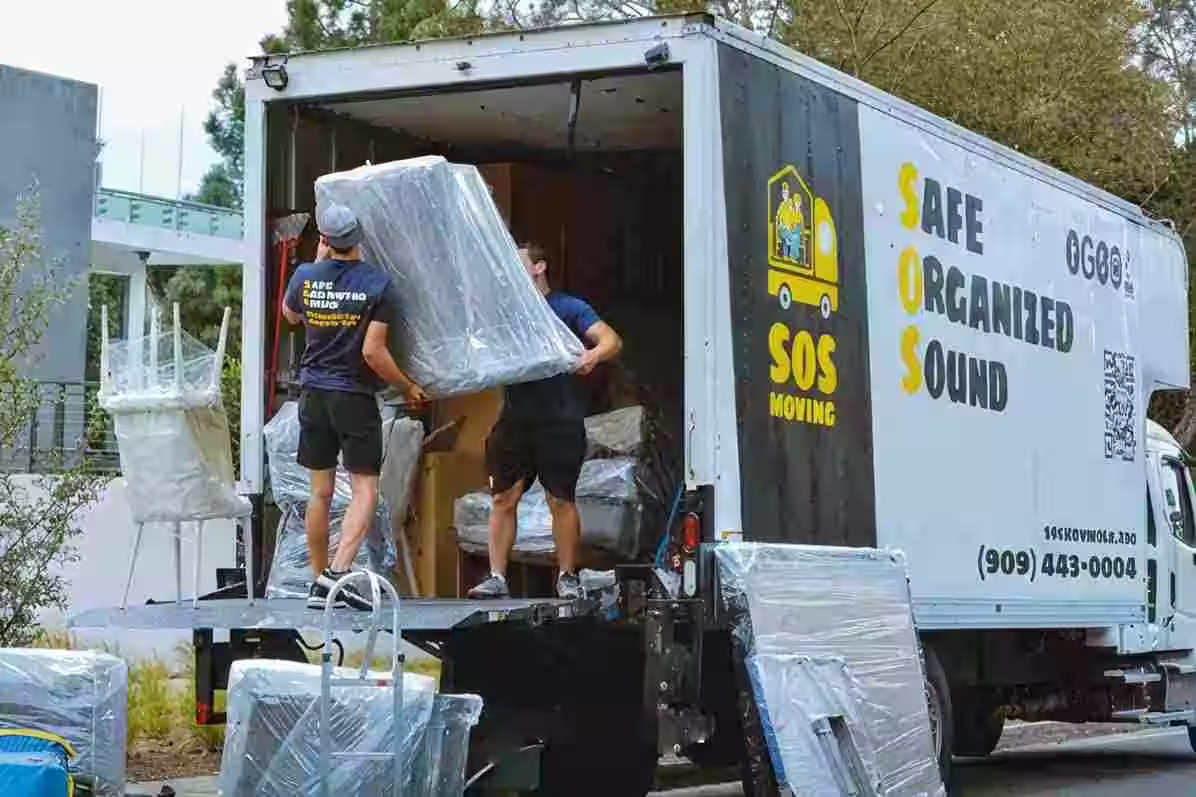
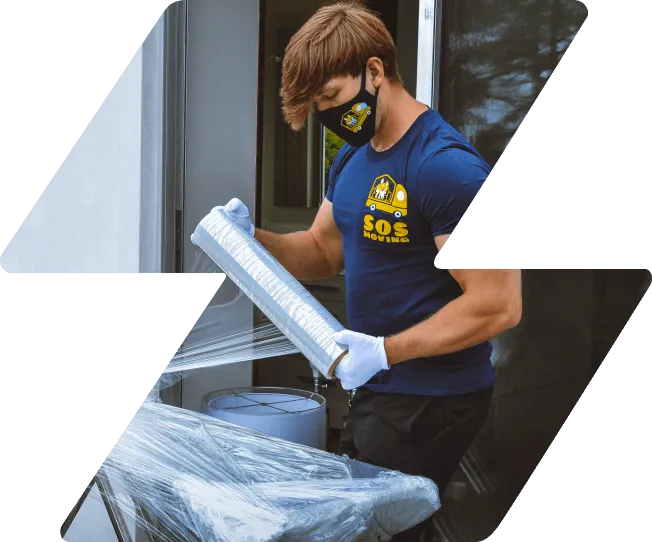
SOS Moving provides packing services in Santa Clarita, CA as hourly crew work: packers drive up from our Los Angeles base with boxes, tape, stretch wrap and moving blankets, then box the house in the order it will be loaded. The job runs on the same terms as our packing and unpacking service, and when the whole household is relocating, the packing day can be booked together with our movers in Santa Clarita for loading and the drive.





On the rate table, a two-person packing crew with a truck is $119 per hour paid in cash ($129 on a card) from Monday to Thursday and $135 ($145) from Friday to Sunday; three people are $159 ($169) early in the week and $175 ($185) later.
For a far address such as one in Santa Clarita, two rules from the same table can change the total: the minimum rises from 3 to 4 hours when the house sits at least 30 miles from our base, and time on the road beyond the first 10 miles is billed twice. The estimator checks both against your street, so we do not quote mileage here. A $50 deposit holds the date and counts toward the bill, and a $30 fuel charge is added.
Before a single carton is taped, it pays to thin out whatever will not make the trip, and the city gives residents a free way to do it: Burrtec collects bulky items up to four times a year, three items per pickup, if you book at least 48 hours before your regular collection day. Items may go out to the curb no earlier than 7 p.m. the evening before.
Construction debris, household hazardous waste and anything that needs more than two people to lift are not taken. We suggest booking that pickup for a collection day ahead of packing day, so the old sofa is gone and our truck can pull into the driveway or stop at the curb in front of the house. Moving a second car away the night before spares the crew a long walk with every box.
An association's rules decide when a packing crew may be loud. Valencia Lakeshore's HOA, for example, urges residents to keep noisy tools and appliances off before 8 a.m. on weekdays, before 9 a.m. on weekends and after 8 p.m., asks for noise at an absolute minimum after 10 p.m., and prohibits placing objects on walkways or common areas. Our 8AM – 6PM working day already sits inside those limits.
On a Saturday or Sunday in a community with rules like these, the crew opens with quiet work, wrapping dishes and books by hand, and leaves box building and tape guns until after nine. Finished cartons are stacked inside the home or garage, never on a shared path. If the association or its manager wants proof of coverage, our COI costs $50; send us their requirements when you book.
The city calls Old Town Newhall its oldest historic neighborhood, a filming location since 1910, with tree-lined Main Street and nearby Railroad Avenue, Lyons Avenue, Walnut Street and Pine Street. In an older house there, our packers box collections and décor room by room first, then pad the entry before any furniture moves. Canyon Country asks for something else: North Oaks, Skyblue and Pinetree are neighborhoods of 1960s–1980s homes, and a large share of the area's houses went up between the 1970s and the 1990s.
Where a family has stayed for decades, the garage and hall closets get their own box run and labels. At the newest end, FivePoint Valencia, formerly Newhall Ranch, is planned for 21,000+ homes built over 20–30 years; a recently built house there may need only a partial pack of the kitchen, glassware and art.
Our crews drive up from the Los Angeles base, which is why the distance rules in the price block matter here; the estimator checks them against your address. An early start inside the 8AM – 6PM window gives a large house the best chance of being finished in one visit, and a call in the morning can still get a same-day crew when one is free.
Plan for the materials, too. Under Burrtec's rules for city homes, cardboard boxes go into the recycling barrel flattened and loose, and tape and shipping labels may stay on them. Bubble wrap, shrink wrap and packing peanuts are not accepted curbside and belong in the garbage. When you order unpacking, the crew flattens each emptied carton as it works, so the stack is ready for the barrel.
Santa Clarita home types: the first boxes we fill and what you get ready:
| Home type | What we pack first | What you prepare |
|---|---|---|
| Older house near Main Street in Old Town Newhall | Collections, framed photos and décor, room by room, before the entry is padded for furniture | Tell us which fixtures, shelves and curtains stay with the house |
| Long-held home in North Oaks, Skyblue or Pinetree | The garage and hall closets, since years of storage there set the box count | Book the Burrtec bulky-item pickup at least 48 hours ahead and sort keep from give-away |
| Home under HOA rules like Valencia Lakeshore's | Hand-wrapping dishes and books in the morning; box assembly after the 9 a.m. weekend guideline | Forward the HOA rules and any COI request; keep walkways and common areas free |
| Newer house in FivePoint Valencia | Kitchen, glassware and art for a partial pack | Box clothes, linens and books yourself in our boxes, billed only as used |






Our standard minimum is 3 hours, but an address 30 or more miles from the Los Angeles base carries a 4-hour minimum. Drive time beyond 10 miles is also billed at double. The estimator checks your exact address, so the quote shows which rule applies.
Yes. We work Monday – Sunday, 8AM – 6PM, and on weekend mornings we can hold box assembly and taping until the association's guideline allows it, such as the 9 a.m. weekend mark at Valencia Lakeshore. Packed cartons stay inside your home or garage, not on shared walkways.
Under Burrtec's rules for city homes, flattened cardboard goes loose in the recycling barrel, and tape and labels may stay on. Bubble wrap, shrink wrap and packing peanuts are not accepted curbside and go in the garbage. Boxes in good shape are worth keeping for the next move.
It saves crew hours, because we never pack what you plan to throw away. Residents can book a free Burrtec bulky-item pickup at least 48 hours before their regular collection day, up to four times a year and three items each time. Pick a collection day before packing day so the driveway is clear for the truck.
Yes, partial packing is a standard option. The crew takes the kitchen, glassware, mirrors and art, and you box books, clothes and linens. Jewelry, documents and other valuables should travel with you either way.
When you book moving and packing services in Santa Clarita as a single job, the people who seal the cartons are the same people who load them, so every box goes on the truck with someone who knows its weight and contents. A separate packing visit a couple of days before the truck is the other option, and it suits a large house or a move-out date that leaves no slack.
The kitchen eats the most crew time in almost any home. Every plate, glass and pan is wrapped by hand, and cabinets hold more than people expect, so one packer usually settles into the kitchen while another works through closets, bookcases and bathroom shelves. The lead builds boxes ahead of both of them and watches the clock against the estimate.
Garages come next in line for hours, especially in a home that has been lived in for decades. Tools, holiday bins and sports gear do not stack like books, so the crew sorts them into small heavy boxes and larger light ones before any tape goes on. If a room is headed to storage rather than to the new address, its cartons get a separate label and are loaded so they come off first at the storage stop.
On a separate packing day, a few things stay out of the boxes on purpose until moving morning:
Materials are the smaller part of a packing bill and the easiest part to check. Each box costs from $4, in small, medium or large, and the invoice lists only cartons that ended up holding something; flat boxes that were never opened go back on the truck. Tape and stretch wrap are free, with no cap, and are part of every estimate we write.
Premium paper and bubble wrap are available for china, stemware and framed pieces, and the coordinator confirms that cost with you at booking instead of on a public list. What moves the total most is crew time. Packing is billed at the hourly rates of our local moving table, set by the number of packers, the day of the week and whether you pay in cash or by card.
Two more lines are fixed: a $50 deposit that holds the date and is credited to the final bill, and a $30 fuel charge. For homes in this valley the distance rules also come into play, with a 4-hour minimum once the address is 30 or more miles from our base and double billing of drive time past 10 miles. The full rate breakdown sits on our main packing services page.
Cartons bound for another state ride for several days or more and shift with every stop, so they are packed differently. The crew puts the heaviest items low in each box, fills gaps with paper so nothing slides, and wraps furniture edges in stretch wrap before the blankets go on. If you are moving out of state from Santa Clarita, the move itself is priced flat-rate, and packing can be added to the same booking.
Interstate cartons also get a number next to the room name, so you can tick them off as they come off the truck, and the boxes you will open first at the destination are marked on two sides.
Office packing follows desks, not rooms. Each workstation gets its own boxes marked with the desk or room number, cords are bagged and taped to the device they belong to, and filing cabinets are emptied drawer by drawer in order, so folders land where they left.
For an office relocation in Santa Clarita, the packing can be split into stages across several days inside the 8AM – 6PM window, one department at a time, so one group can stay at its desks while another group has its files in cartons already. A building that requires a certificate of insurance gets one for $50.
Plates are wrapped one by one and stood upright in the box, since they handle a jolt better standing than lying flat in a pile. Stemware gets bubble wrap first and paper over it. Framed art, mirrors and glass tabletops are wrapped in blankets and stretch wrap and travel standing, never flat under other cartons.
Televisions go back into their original boxes if you kept them. If not, the crew covers the screen with a blanket, wraps the set in stretch wrap and keeps it upright in the truck, away from anything that could lean on the glass.
A few categories never go into a moving box. The truck does not carry perishable food, hazardous materials, firearms or batteries. Jewelry, cash, passports, family photos and closing papers ride in your car, and so do house plants, which rarely come through a closed truck in good shape.
If you pack some rooms yourself, use sturdy boxes of the same sizes the crew brings, keep each one light enough for a single person to carry, and tape the bottom seams twice. Tell the crew lead which rooms are yours, so nobody reopens your work, and remember that our moving insurance applies to cartons the crew packed, not to the ones you sealed yourself.
Unpacking is the packing day run backwards. At the new home the crew opens boxes room by room, sets dishes and pans into kitchen cabinets and books onto shelves, and flattens each emptied carton so the floor stays clear. You decide where things go, and the paper and cardboard end up in one corner instead of across every room.
If you want only part of the house unpacked, spend the crew hours on the kitchen. It holds the most wrapped pieces, takes the longest to do by yourself, and is the room you need working on the first evening.
Sometimes the new place is not ready on the day the old one must be empty. The packed boxes can then go into SOS climate-controlled storage: pick short-term storage when the gap is days or weeks, long-term when it stretches past a month, or in-transit when a long-distance move is waiting on the new home. The crew collects, stores and brings everything back, and the term can be extended without penalty.
Once the last box is open, sort what is left: sound cartons can be kept for the next move or passed to a neighbor, and the rest follows the Burrtec curbside rules described above. For more ideas, see our guide to recycling packing materials after a move.
A few evenings of sorting save more crew time than anything else on this page. Walk each room with three piles in mind, keep, give away and curb, and book the bulky-item pickup early, because it needs lead time before your collection day.
Eat down the fridge and pantry, drain the fuel from mowers and other gas equipment, and set aside anything that cannot ride in the truck. If you live under an HOA, find its rules on move days and noise and forward them with any COI request, so the certificate is ready before the crew parks.
The day before, clear a path from the front door to the driveway and free up a table or a stretch of counter the crew can use as a wrapping station. Tell us about anything unusually heavy or delicate ahead of time, so the estimate carries the right number of packers.
Then call 909-443-0004 or send the estimate form with your address, the number of bedrooms and the rooms you want packed. The coordinator confirms the crew size, the start time and which distance rules apply, and if the truck is part of the plan, the SOS moving crew for Santa Clarita is booked on the same call.