


%201.svg)





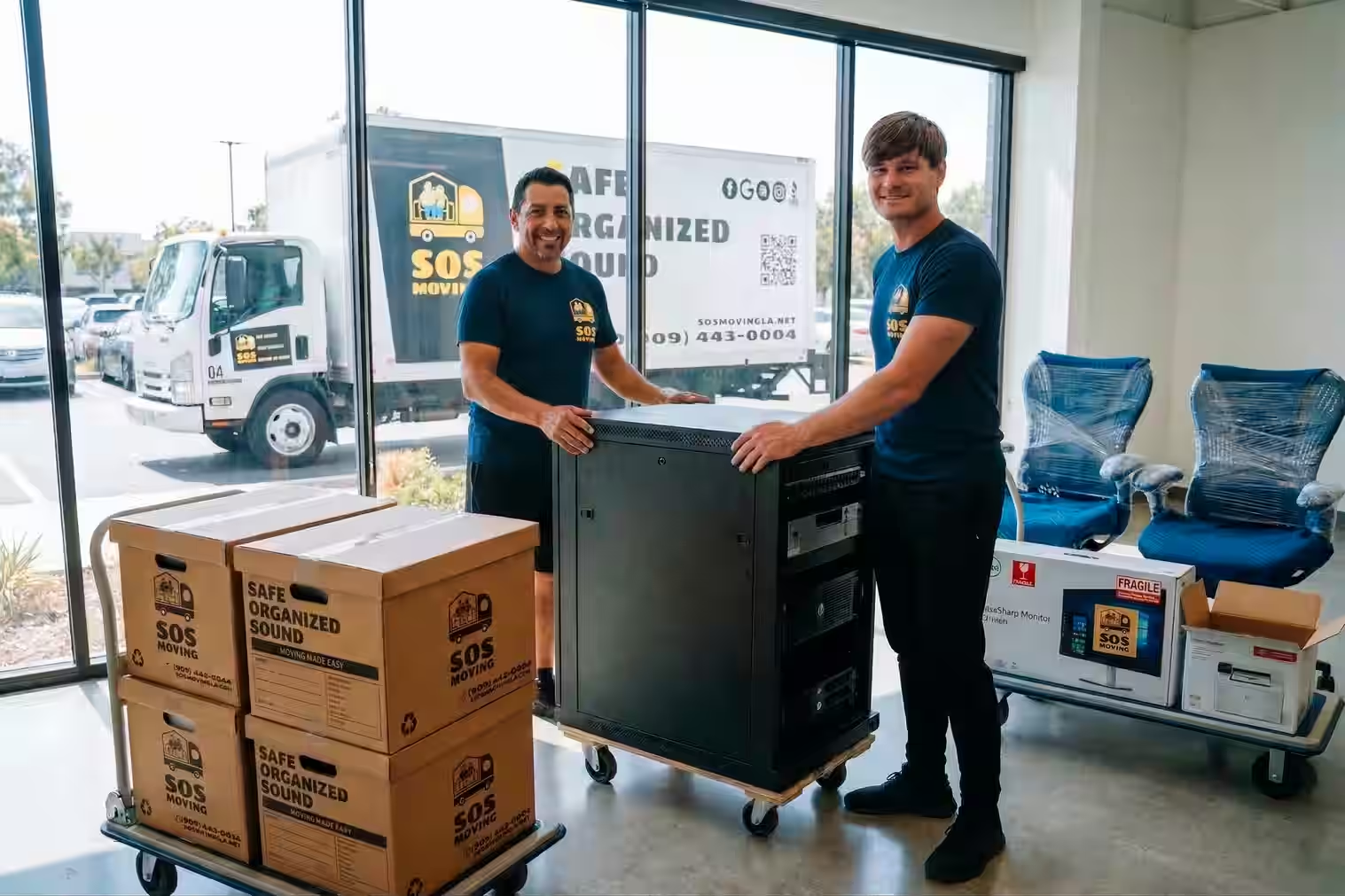

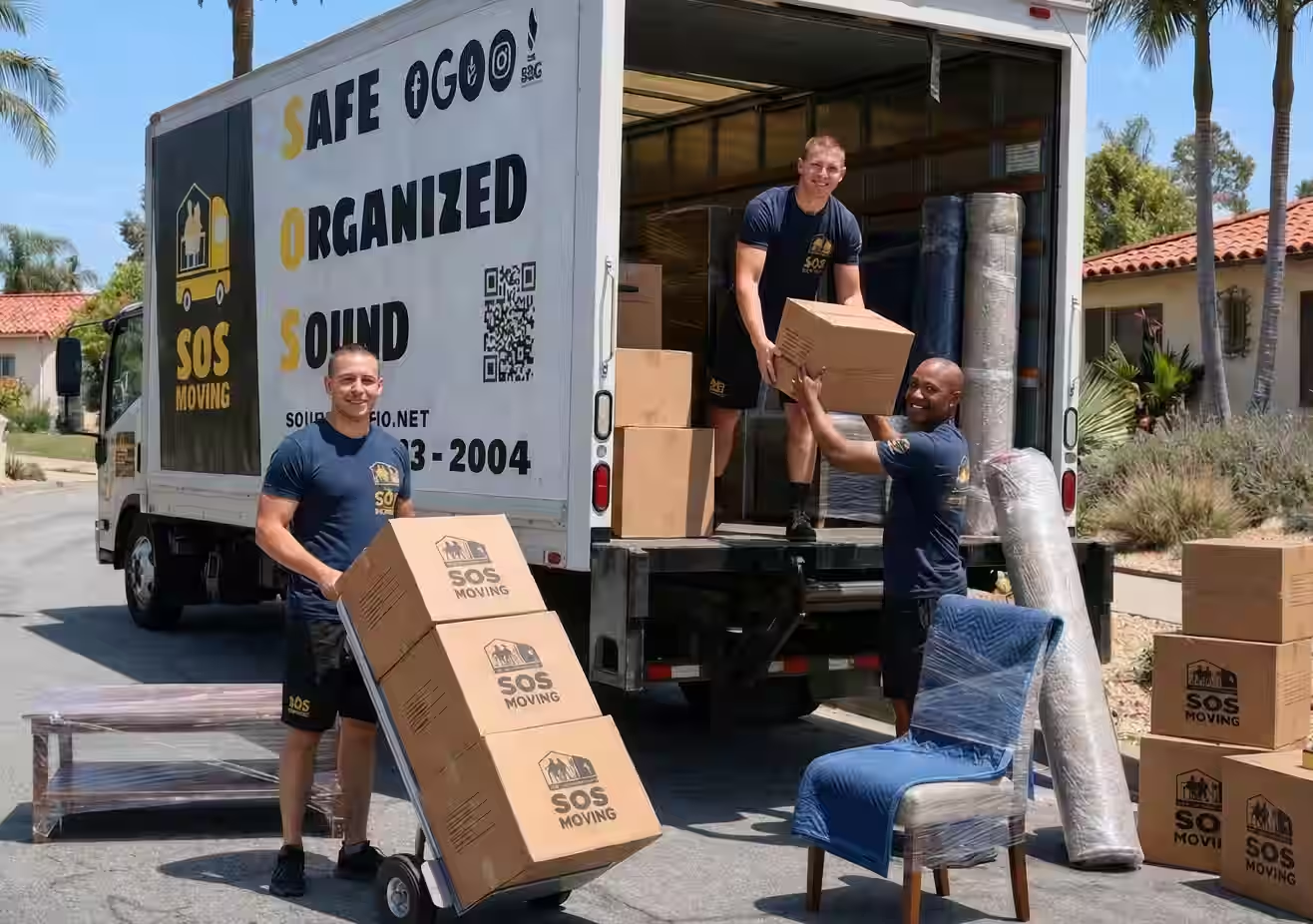
SOS Moving works as office movers in Santa Clarita, CA for companies changing suites inside the valley and for firms arriving from elsewhere in Los Angeles County. The job follows the playbook of our commercial moving service (certificate of insurance, workstation labels, furniture take-down, equipment reconnection) and is then fitted to the two buildings involved, whether that means a unit with a roll-up door, a two-story office or a suite facing a shared parking lot. Moving a home rather than a business? That is covered on our main Santa Clarita movers page.
What the crew takes care of in a suite move:

A relocation with several departments, a stockroom as well as offices, or a move-in tied to the start date of a new lease gets a named project manager and a written schedule. The walkthrough covers both addresses, counts workstations and equipment, and turns that count into phases your staff can work around.
How a phased relocation runs:
The valley's business parks put offices next to industrial and retail buildings, so a single relocation can include a warehouse bay and the back office that runs it. We quote those pieces together and load them in the order the new site needs them.
Beyond the desks, the crew handles:
Commercial moves are billed by the hour for the crew and truck, at the same rates we charge across Los Angeles County. Crew size and the day of the week set the rate, and paying cash costs a little less than paying by card.
| Crew and truck | Mon – Thu, cash / card | Fri – Sun, cash / card |
|---|---|---|
| 2 movers | $119 / $129 | $135 / $145 |
| 3 movers | $159 / $169 | $175 / $185 |
| 4 movers | $199 / $209 | $215 / $225 |
Also on the estimate:
Inside city limits, placing anything in the public right-of-way (the street, the curb lane or the sidewalk) takes an encroachment permit from the city's Engineering Services Division, and doing it without one is a misdemeanor under SCMC 13.06.010. Applications go through the City Permit Center, Suite 140, 23920 Valencia Blvd, with a certificate of insurance endorsed to name the City as additional insured.
For a business move the answer is simple: stage on private ground. We load from your building's own lot, truck court or dock, and furniture never waits on a public sidewalk while the truck fills. If a dumpster or container for clearing the old suite must stand in the street, that permit belongs to you or your contractor, and we set the loading times around it.
Requirements change from landlord to landlord, so the project manager asks property management at both addresses to put them in writing: the certificate of insurance and its additional-insured wording, which door or dock the crew uses, whether an elevator must be reserved, and the hours moving is allowed. Our COI costs $50 and goes out before move day. New suites often come with a contractor still on site.
Where the space is within 300 feet of residentially zoned property, the city's noise chapter (SCMC 11.44) limits permitted construction to 7 a.m. – 7 p.m. Monday through Friday and 8 a.m. – 6 p.m. on Saturday, with no work on New Year's Day, Memorial Day, Independence Day, Labor Day, Thanksgiving or Christmas. We book the move-in after the contractor's last permitted day, so movers and installers never compete for one hallway.
The valley's large business parks line its freeways instead of a downtown grid. Valencia Commerce Center fills about 1,200 acres in the northwest corner of I-5 and SR-126, Centre Pointe Business Park covers about 185 acres between I-5 and SR-14, and Valencia Corporate Center lies just east of I-5.
Moves here are less about curb space and more about distance inside the property: the truck may stand at a dock or roll-up door well away from the suite, and the path crosses lobbies and long corridors. We pad floors, door frames and elevator walls along that path and bring enough dollies and carts that nobody shuttles one desk at a time. The table below lists what we check in each district.
Trucks reach the valley from our Los Angeles base on I-5 or SR-14, and until Metro and Caltrans finish the I-5 North County Enhancements project (completion is estimated for spring 2027), the freeway between SR-14 and Parker Road in Castaic is a work zone. The rebuild touches the Calgrove, McBean Parkway, Valencia Boulevard, Magic Mountain Parkway and Hasley Canyon interchanges, and ramps close during construction, though Metro says it avoids shutting two consecutive ramps at once.
The evening before a move we check the closures nearest your building and pick the approach. Road time is on the clock, so that check pays: anything at least 30 miles out from base carries a 4-hour minimum, and driving between addresses over 10 miles apart is billed double. If a crew is open that day, we can also take a same-day booking.
Santa Clarita business districts: what each one means on moving day
| Business district in Santa Clarita | What it is | What we plan for |
|---|---|---|
| Valencia Commerce Center | About 1,200 acres in the northwest corner of the I-5 and SR-126 junction, with industrial, office and retail buildings side by side. | The building type decides the crew: dock loading and pallet work for an industrial unit, carts and an elevator booking for an office. We ask for the building number and the door before the day. |
| IAC Commerce Center | About 70 acres inside Valencia Commerce Center at the western end of Witherspoon Parkway, roughly 1.3 million sq ft of industrial and commercial space. | Racking, pallets and any machine over 300 lbs go on the inventory, so the lift-gate truck and the heavy-item crew of 3 are booked in advance, not improvised. |
| Rye Canyon Business Park | About 216 acres and some 40 buildings between Valencia Industrial Center and Southern California Innovation Park; office, industrial and mixed use. | With that many buildings, send the exact building and suite number. The crew leader arrives knowing which entrance the landlord approved. |
| Centre Pointe Business Park | About 185 acres between I-5 and SR-14: office, industrial and mixed-use buildings with a retail center alongside. | Lots shared with shops can be busy, so we ask property management where the truck may stand without blocking customer parking. |
| Valencia Corporate Center | About 75 acres of mixed business-park buildings just east of I-5. | I-5 is the natural approach, and its ramps are part of the North County Enhancements rebuild; the route is confirmed the evening before. |
| Saugus Station and Santa Clarita Commerce Center | Saugus Station lies on Railroad Avenue with Metrolink access; Santa Clarita Commerce Center sits right next to it. | Confirm which lot entrance the truck uses off Railroad Avenue; loading stays on the property's own ground. |
| Center at Needham Ranch, Newhall | Roughly 4 million sq ft at the city's southern entrance, by SR-14 and Sierra Highway. | In a development this size the walk between truck and suite can be long. Tell us the building and door; for a big inventory, a second truck ($200) can shorten the day. |














Not when the truck loads on private property. The city's encroachment permit covers anything placed in the public right-of-way, meaning the street, the curb lane or the sidewalk, so we plan loading from the building's own lot, truck court or dock whenever the property allows it. If a container or dumpster for the old suite has to sit on a city street, that permit is applied for at the City Permit Center, 23920 Valencia Blvd, Suite 140.
Yes. Crews work Monday – Sunday, 8AM – 6PM, so departments can move on Saturday and Sunday in planned phases, each one finished within the day. If contractors are still fitting out a suite near homes, the city limits their work to weekday and Saturday windows, which leaves Sunday clear for the move-in.
By the hour for the crew and truck, with the rate set by the number of movers and the day of the week, starting at $119 cash for two movers Monday through Thursday. There is a 3-hour minimum, which grows to four hours once the address sits at least 30 miles out from our base, and drive time between addresses more than 10 miles apart is doubled. The crew size and number of trucks come out of the walkthrough, and the COI adds $50.
It can change the route, not the plan. Metro and Caltrans are rebuilding the stretch of I-5 from SR-14 up to Parker Road, with ramp closures at interchanges such as McBean Parkway and Valencia Boulevard while the work lasts. We check the closure notices the evening before and choose an open approach, because drive time is part of the hourly bill.
Yes. Parks such as Valencia Commerce Center mix industrial, office and retail buildings, and the crew handles racking, pallets and heavy shop equipment with lift gates and machine dollies. Any single piece above 300 lbs brings a $150 surcharge and a three-person crew, so list those pieces before the walkthrough.
A business relocation usually goes wrong in the planning weeks, not on moving day. The first job for Santa Clarita office movers is to find out what is really in the suite: how many workstations, which of them are cubicles and which are freestanding desks, how many filing cabinets, what sits in the server closet and what lives in the break room. That count sets how many movers and trucks you need and how long the day runs, and the estimate you approve is built on it.
We build the count during a walkthrough with whoever knows the space best, which is often an office manager rather than the owner. Expect questions about the things people forget: the storage room nobody has opened since the last move, the upstairs supply closet, the equipment on loan from a vendor that should not leave the building at all.
From the count comes a labeling plan. Each workstation at the new address gets a number on the floor plan, and everything that belongs to it (chair, monitor, pedestal, boxes) carries that number. On the day, the crew never has to ask where a box goes, because the label answers. On a job billed by the hour, that is the cheapest way to shorten the day.
A few decisions are worth making early:
If department heads want a fuller planning list, the office moving checklist on our blog covers the weeks leading up to the move.
Property managers care about two things on moving day: that any damage is insured, and that the move does not disrupt the other tenants. The certificate of insurance answers the first concern. Landlords commonly want their company named as additional insured, sometimes with set coverage limits or exact wording, so forward the request as soon as it arrives. We issue the certificate for $50 before the first truck is dispatched.
The second concern is shared space. In a multi-tenant building the crew may need a reserved elevator, a particular entrance, or a loading area kept clear for other deliveries, and some managers want a schedule with arrival times and truck counts. We collect all of it before the date and give the crew leader a one-page sheet, so nobody has to negotiate with building staff on the morning of the move. The full scope of what we take on is in the overview of our office and commercial moving service.
The city adds its own paperwork, but only once something leaves private ground. Santa Clarita requires an encroachment permit for anything placed in the street, the curb lane or the sidewalk, and the applicant files an insurance certificate naming the City as additional insured along with a contractor's license. That is why we plan loading from your property's own lot or dock first. When a site truly offers no private loading space, you hear about it at the walkthrough, not on the day.
Move-out matters as much as move-in. Leases often require the old suite to be handed back empty and undamaged, so during the last phase the crew leader walks the vacated space with you, checks closets and server rooms for anything left behind, and takes down the floor and wall protection only after the final load is out.
Few companies can stop working for a week. The usual answer is a phased move: the project manager groups departments into waves, and each wave packs personal items on its last working afternoon, moves the next day and starts again at the new address with its desks already connected. Our crews work Monday – Sunday, 8AM – 6PM, so a wave can land on a Saturday or a Sunday and staff lose no weekday.
Each wave has to fit inside the working day. A single department with its files and printers can often move in one day; a warehouse bay with racking may need a day of its own or a second truck. When the whole office is small, it can even move on the day you call, provided a crew is open; you get the answer during that call.
Order matters too. We usually suggest moving shared equipment and the file room early, so departments arriving later find printers and archives already working, and leaving reception for the final wave so visitors always find someone at the front desk.
Build-outs add a second calendar. If your new suite is being fitted out and sits within 300 feet of residentially zoned property, the contractor works under the city's construction hours: 7 a.m. to 7 p.m. on weekdays, 8 a.m. to 6 p.m. on Saturday, nothing on the six holidays named in the noise chapter, and a separate city permit for any work outside those windows. Plan the move-in for after the contractor's last permitted day rather than squeezing furniture past a crew that is still hanging doors.
Holiday weekends deserve a second look. A long weekend looks ideal for an office move, but if the build-out slips, the contractor cannot catch up on Memorial Day or Labor Day, so leave a margin before you commit to a holiday move-in date.
Most office furniture will not pass through a door fully assembled. Conference tables lose their legs, desks come apart at the frame, and cubicle systems are broken down into panels, connectors and work surfaces. The crew bags and tags the hardware for each piece, so every item is rebuilt with the same parts it came apart with.
Cubicles are where labeling pays off most. A panel system rebuilt to a new floor plan needs each run marked before it comes down; otherwise the crew spends the afternoon sorting identical panels. We photograph complicated runs and match them to the numbered plan before the first panel is lifted.
Computers, printers and network equipment are unplugged, packed with their cables tagged and reconnected at the new desks, and that reconnection is part of the move rather than a separate service. Server racks travel upright and padded. On the rebuild side, furniture goes up before equipment: desks and cubicles are assembled before any monitor comes off the truck, so machines never sit on the floor waiting for a surface, and each station is checked against the numbered plan as the phase closes. What we do not do is configure networks or phone systems: your IT contact or provider takes over once the hardware is back in place.
Filing cabinets ride loaded when the building and the cabinet can take it, which saves hours of boxing; the ones too heavy or too fragile to move full are emptied into cartons in drawer order. Archives, glassware and electronics are the slowest things to pack, and if your team would rather not box them, packing help in Santa Clarita can do it before the move day so the crew arrives to sealed, labeled cartons.
For our commercial movers in Santa Clarita, every job begins with the drive up from Los Angeles, and on an hourly bill the route is part of the price. The valley is reached on I-5 or SR-14, and SR-126 meets I-5 right at Valencia Commerce Center, which fills the northwest quadrant of that junction. Which road the truck takes depends on where your building sits relative to those freeways, and the project manager fixes it when the schedule is written.
While the North County Enhancements work lasts, I-5 through the valley is a construction corridor. A closed ramp is rarely a disaster, since Metro tries not to close two neighboring ramps together and the next exit is usually open, but the detour still adds billed minutes. Checking the closure list the evening before costs nothing and keeps those minutes off your invoice.
If the relocation includes a second pickup elsewhere in the county, such as a storage unit or a satellite office, mention it early. Each extra stop adds road time, and the project manager sequences the stops so the longest drive does not split a phase in half.
Three rules decide what the drive costs. Past 30 miles from our base, the minimum stretches from 3 hours to 4. When the two addresses are more than 10 miles apart, the drive between them is counted double. And a day that runs past 8 hours moves into overtime. We do not quote mileage on the website, because it depends on the exact addresses; the written estimate shows which minimum applies and how the drive is counted.
The practical lesson is to size each day correctly. Splitting a large relocation into waves keeps every day inside 8 hours, and adding a truck or two movers to a heavy phase is often cheaper than letting it run into overtime.
Some relocations do not end inside Los Angeles County. When a company moves to another state, the job is handled as a flat-rate long-distance move covered by our interstate authority (USDOT 3398018, MC 1153871), and hourly rates stop applying. The details of pricing and scheduling are on the page for long-distance moves from Santa Clarita.
Other moves need a gap. When the keys to the old suite are due back before the new one is finished, whether because a build-out slipped or a landlord wants the space early, furniture and archives can wait in climate-controlled storage between the two leases until the new space is ready for them. The crew picks up, stores and returns the inventory with the same labels, so the rebuild still follows the floor plan, and if the contractor runs late, you can extend the storage period without paying a penalty for it.
A corporate moving service is also about choosing what not to do yourself. Offices that pack on their own save crew hours but often lose them again on the day to half-taped boxes and unlabeled cartons. A middle path works well: staff pack their own desks, and the crew packs the shared areas such as the file room, the kitchen and the supply closet.
The more of this we have before the site visit, the tighter the estimate and the shorter the moving day:
Reach us at 909-443-0004 between 8AM and 6PM, Saturdays and Sundays too, or request an estimate online; a project manager then books the walkthrough. Trucks roll out each morning from our one office, at 5530 Jillson Street in Los Angeles, which makes the drive up to the valley part of every job.