



%201.svg)





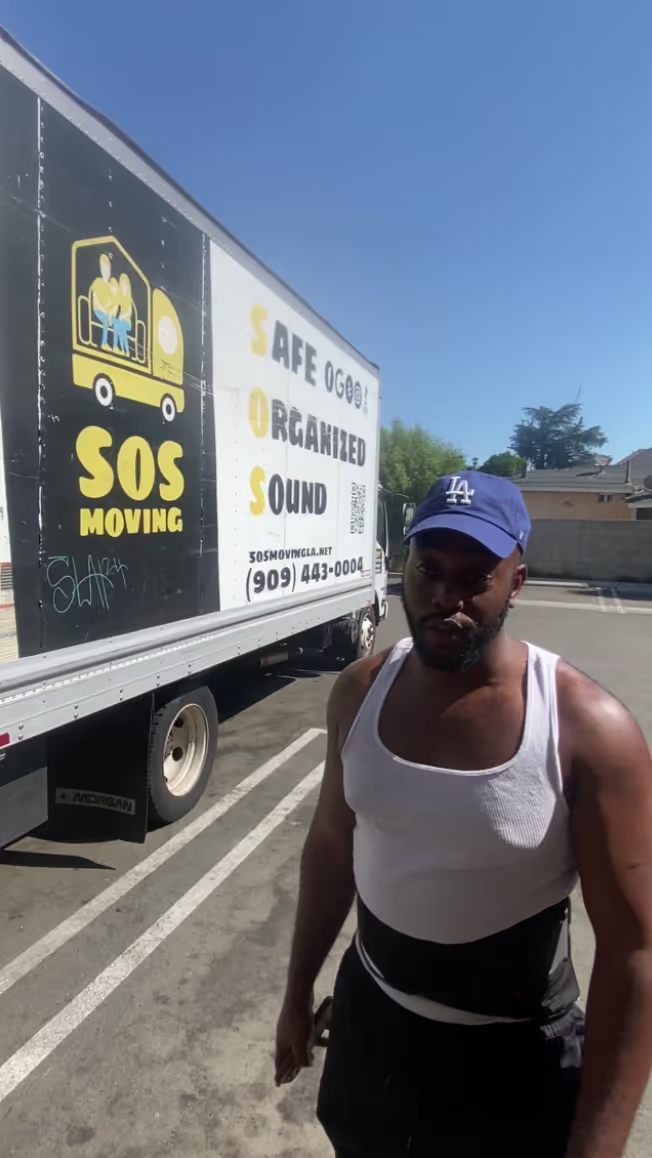

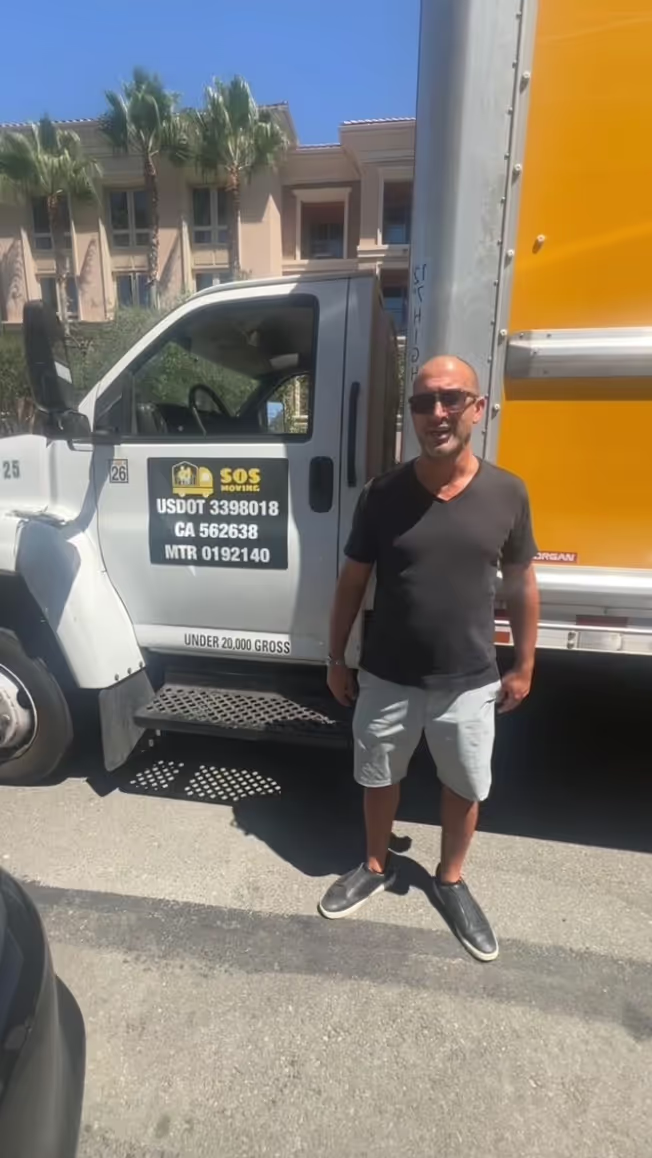
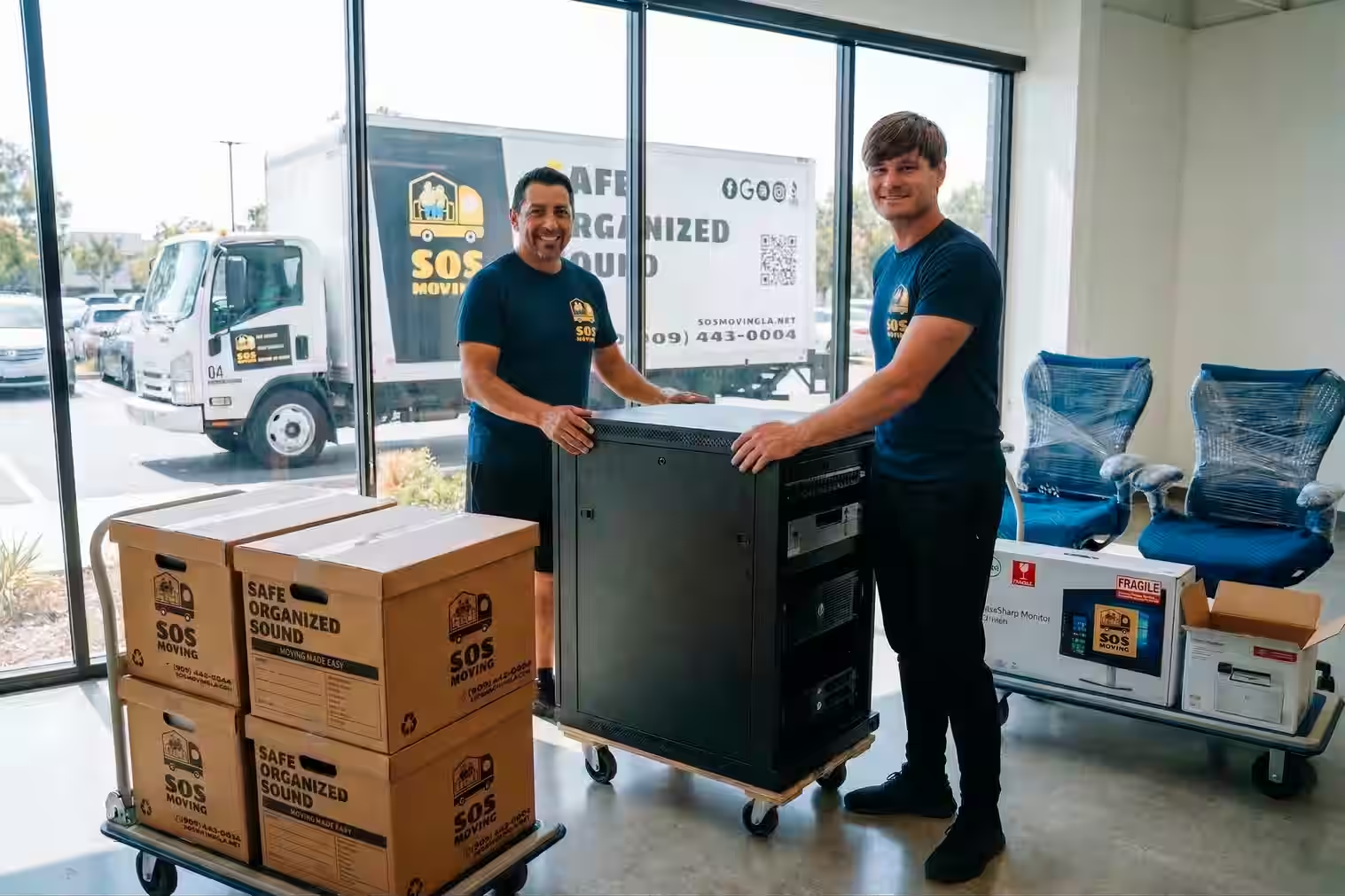

SOS Moving sends commercial movers across Long Beach for a single suite downtown, a store in a shopping center or the office and stockroom of a company near the airport. Rates, licenses and crew rules come from our commercial and office moving service, which covers every business address we serve; this page adds what the city itself changes about the day. If the move is a house or an apartment rather than a workplace, our movers in Long Beach handle it.
What a Long Beach business move with SOS includes:

The clock runs for at least 3 hours and overtime pricing starts after 8 hours. Two travel rules can apply to a Long Beach job: drive time counts double once the work is more than 10 miles from our Los Angeles base, and a 4-hour minimum replaces the usual one at 30 miles or more. Your written quote states which of them touches your addresses. Fixed extras are $30 for gas, $50 per COI and $200 for a second truck, and the $50 deposit is credited against the total.
Long Beach paints its curbs with a code our driver reads before the truck stops. Red means no stopping at any hour, so a red stretch outside your suite is out entirely. Yellow allows a stop only to load or unload passengers or freight, and that restriction holds from 7 a.m. to 6 p.m. every day except Sundays and holidays; on a Sunday phase the same curb may already have a car on it.
Downtown Core meters run from 9 a.m. to 9 p.m. daily, holidays included, with a two-hour cap, while the rest of Downtown is metered 9 to 6 from Monday to Saturday. Second Street in Belmont Shore and Fourth Street on Retro Row allow three hours. So the survey fixes the truck's spot in advance: a dock, lot space or service drive agreed with the landlord.
Retail landlords here can be stricter than office towers. The tenant handbook at Long Beach Towne Center, on Carson Street by the 605, sends all loading through the docks and service corridors, and only before 11 a.m. on weekdays; a store without a back door may use its front entrance, but only until 10 a.m. Service and vendor trucks parked in a fire lane or blocking traffic get towed.
The center also keeps a certificate of insurance on file for each tenant, naming the owner entity, Vestar as property manager and the City of Long Beach as additional insureds. We issue that COI for $50, start the crew at 8AM so the morning dock hours are used in full, and ask management beforehand how any remaining work should be scheduled. Office buildings get the same treatment: we request their written move rules before a date is set.
Business moves in the city cluster in three kinds of places. Downtown's office towers include One World Trade Center on Ocean Boulevard, 27 stories, completed in 1989; a job there is really a freight elevator job, so the elevator booking sets our start time. By the airport, Aero Long Beach sits between the airport and the 405: seven office buildings put up in three phases from 1988 to 2000 and joined by outdoor walkways, which means long carries between suite and truck, so we protect the route and bring extra dollies.
Next door, Douglas Park occupies the land of the Boeing plant whose C-17 line shut down in 2015, now a business park of offices, industrial space and retail. There we confirm whether a unit has a dock or a ground-level door before choosing the truck and the crew size.
Our crews drive in from 5530 Jillson Street, and on the freeway they share the road with port freight: the I-710 is the heavy trucking corridor that carries containers from the ports of Long Beach and Los Angeles north toward the area east of Downtown LA. Arrival times carry a margin for that traffic, and the load order is fixed the day before. Downtown also has a calendar risk.
For the 2026 Grand Prix the side streets off Shoreline Drive and Seaside Way closed from April 15 along with the northbound Queensway Bridge off-ramp, southbound Pine Avenue shut during the daytime from April 17 to 19, and normal traffic came back on April 20 at 5 p.m. Before booking a spring phase downtown, we check that year's city traffic notice. Crews work 8AM – 6PM every day, and same-day jobs are possible when a crew is free.
Where your Long Beach business sits, and what that changes on move day:
| District or building | What we plan for |
|---|---|
| Office tower on Ocean Boulevard, such as One World Trade Center | Freight elevator slot and certificate wording come from the property manager; the truck is not parked at a Downtown Core meter, where stays end after two hours. |
| Aero Long Beach, between the airport and the 405 | Seven buildings linked by outdoor walkways: we pace the walk from suite to truck at the survey and cover the route on move day. |
| Douglas Park, beside Long Beach Airport | Offices, industrial units and retail side by side: dock or ground-level door confirmed per unit, stock and shelving planned as a separate load. |
| Store at Long Beach Towne Center, Carson Street at the 605 | Docks and service corridors before 11 a.m. on weekdays, the front door before 10 a.m. only without a back door, nothing in fire lanes; COI with three additional insureds. |
| Street-front shop on Second Street or Fourth Street | Metered curb with a three-hour limit, and yellow curbs kept for loading passengers or freight from 7 a.m. to 6 p.m., Sundays and holidays excepted; the load order is kept tight. |
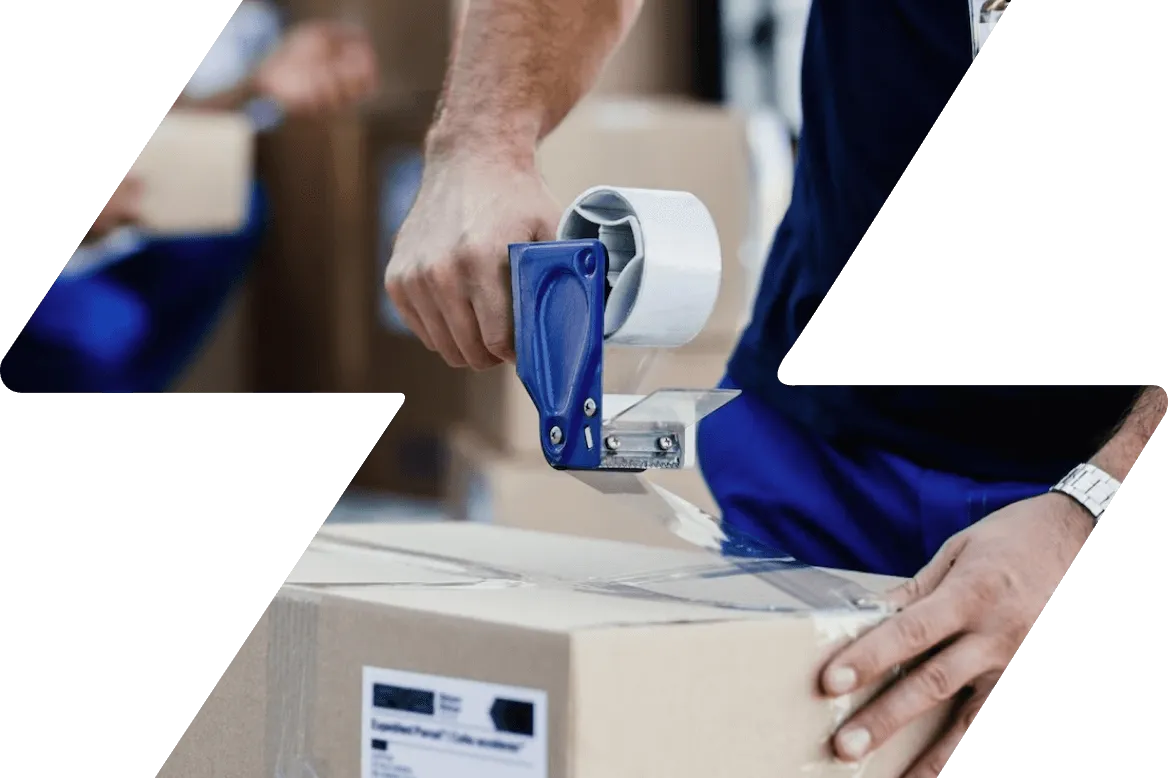













Yellow curbs in Long Beach allow a stop only to load or unload passengers or freight, from 7 a.m. to 6 p.m. every day except Sundays and holidays, so a truck may use one for loading in those hours. A store's full contents take far longer than a quick stop, though, and on Sundays the curb is not held for loading at all. We agree a lot space, rear access or another legal spot with your landlord during the survey.
The center's tenant handbook allows loading through the docks and service corridors only before 11 a.m. on weekdays, and through the front door only before 10 a.m. for stores with no back entrance. Our crew starts at 8AM to use that morning window in full, and we ask management ahead of time how any remaining work should be scheduled. The COI we issue for $50 names the owner entity, Vestar and the City of Long Beach, as the handbook requires.
Yes. In a tower such as One World Trade Center, the freight elevator reservation decides when we can start, so we get the building's move rules and certificate wording from the property manager before confirming a date. The truck stands at the loading point the building assigns, not at a Downtown Core meter, where parking is capped at two hours.
Yes. Our crews work Monday to Sunday from 8AM to 6PM, so one phase can run on Saturday and another on Sunday, billed at the Friday-to-Sunday rate. We do not work overnight, so a larger office is split into phases that each finish by 6PM.
We move the office side, shelving, boxed stock, files and break-room equipment of industrial and flex units, including those in Douglas Park. Single items over 300 lbs cost $150 extra and need a crew of three. Forklift work, pallet racking and industrial machinery are outside our service, so flag them at the survey and we will schedule around the specialist who handles them.
Business moves are hourly with a 3-hour minimum. Drive time counts double for jobs more than 10 miles from our base, and jobs 30 or more miles away carry a 4-hour minimum; your written quote shows which rule applies to your two addresses. A $30 gas charge is added to each job.
A business relocation is priced and scheduled from what is actually in the suite, so the first visit is spent counting. The project manager walks each room with whoever knows the office best and writes down desks, chairs, file cabinets, shelving, copiers and anything that needs two people or a dolly. The same walk records the route out: which elevator, which door and how far it is to the truck.
That count turns into three documents you see before move day: a crew size with an hour estimate, a floor plan with a code for every destination room, and a short list of things your staff will carry themselves, such as keys, cash and personal valuables. If the estimate changes after the survey, it changes because the inventory did, and you will know which line moved.
Companies with more than one address in the city get a count for each. A downtown office and a stockroom near the airport rarely share a truck, and keeping them apart keeps each estimate honest and each crew the right size.
It helps to have a few things ready when the project manager arrives: the date the current lease ends, the name of the property manager at both buildings, a drawing of the new suite even if it is rough, and a list of furniture that stays behind or is being thrown out. Anything left off that list tends to get packed, carried and paid for.
Every item leaving the old space carries a code made of a room and a person or a function, for example Finance-3 or Reception. The same codes are drawn onto a copy of the new floor plan, which is taped up at the entrance of the new suite so the crew can place furniture without stopping to ask where it goes.
Employees pack their own drawers and personal items and mark the cartons with their own code. Our cartons start at $4 apiece, in three sizes, and only the cartons your people actually fill end up on the invoice; tape and stretch wrap cost nothing and come with every estimate. The crew packs the shared areas: the break room, the supply closet, reception and the archive.
The goal for the first morning is plain. A person sits down at a desk that is already assembled, finds their monitor on it and their cartons beside it. Anything the crew could not place with certainty waits in one marked corner rather than being guessed into the wrong office.
Before the first truck pulls up at the new building, the crew tapes a room name on each door of the new suite, matching the codes, so nobody has to read a floor plan with a desk in their arms.
Shared equipment needs a word of its own. The refrigerator in the kitchen should be emptied and switched off the day before, the coffee station cleaned and the conference room screens taken off the wall by whoever installed them, unless the survey agreed otherwise. Those small jobs, left for the morning, are what makes a crew stand idle while the meter runs.
Office technology travels as a separate load. Before the crew arrives, your IT person or provider backs up data and shuts the machines down; our movers then tag the cables, pad the screens and carry towers, printers and racks upright to the truck.
At the new suite each machine goes onto the desk marked for it and is plugged back in the way it was tagged. Network settings and software stay with your IT team, and we make sure the hardware is where they expect it. A practical order of tasks for that side of the relocation is laid out in our IT equipment checklist for office relocations.
Server racks and large printers deserve their own line in the survey notes. They are heavy, top-heavy and easy to knock, so the elevator trip and the truck position are planned around them, and your IT team decides in advance what comes out of a rack before it travels.
Smaller hardware is easy to lose in a move, so it gets bagged with the desk it belongs to: docking stations, keyboards, headsets, desk phones and the brackets of monitor arms. Sit-stand frames travel with their controllers taped to them, and each bag carries the same code as the desk.
Most commercial buildings will not let a crew through the door without paperwork. The usual request is a certificate of insurance that names the owner and the management company as additional insureds, and some landlords add further names, the city among them. We issue each certificate for $50 and send it to the property manager before your date is confirmed.
Beyond the certificate, buildings set rules on when and where the work happens: loading dock hours, a reserved freight elevator, floor and wall protection, sometimes a member of building staff on site. We ask for those rules in writing at the start, because a missed detail usually shows up as a crew waiting outside a locked dock.
Retail tenants often get the tightest windows. Shopping-center handbooks can restrict loading to weekday mornings, so the loading part of a store move may need to begin the moment our day starts at 8AM and continue on a second visit, with the stock sorted so the first truck carries what the new store needs first.
Remember that there are two buildings. The suite you are moving into has its own manager, its own insurance wording and often its own elevator calendar, and a new landlord is usually stricter on day one than the old one is on the way out. We collect both sets of rules and plan the day so the truck does not arrive at the new address before the elevator is free.
Few companies can close for a week, so we break a move into phases that each fit one crew day. A common order is storage rooms and archives first, then departments that can work remotely for a day, and the front desk and managers last, so customers and visitors barely notice the change.
Weekends help. Our crews work Saturdays and Sundays inside the same 8AM – 6PM window as the rest of the week, and when a phase will not fit before 6PM it is split rather than stretched into the evening.
Between phases the project manager updates the floor plan and the label list, so the team moving on Tuesday is not working from Saturday's version. If one date slips, the remaining phases shift with it instead of being squeezed together.
Communication inside the company is part of the plan. You receive the phase list in a form you can forward to staff, so everyone knows which day their desk is packed, when to take a laptop home and which morning to report to the new address.
Urgent cases happen too: a lease that ends sooner than planned, a suite that becomes unusable overnight. We can take a same-day job when a crew is free, and in that case the survey happens on the spot.
Our Long Beach commercial movers bill by the hour, so what matters is what stretches or shortens those hours. Five things decide most of it:
Overtime pricing begins after 8 hours on the clock, which is one more reason large offices are moved in phases rather than in one long day. Your quote lists the crew size, the rate and the extras, so the final bill can be checked line by line against it.
Access matters more than size. A small office with packed cartons and a dock at both ends can finish well inside the minimum, while the same furniture on an upper floor of a tower with one shared freight elevator can take a full day. That is why we price after seeing the building, not from a desk count over the phone.
An hourly rate means little on its own. Ask every company for its USDOT number and state license, a sample certificate of insurance and a written list of what the rate includes. Our numbers are USDOT 3398018 and MC 1153871 at the federal level plus CAL-T0192140 in California, and our rate covers the truck, the crew, blankets, shrink wrap and tape; how our office moving service is set up is described on the main service page.
Read reviews that mention offices or stores, not only homes. Our own record is an average of 4.9 over 1,007 Google reviews and 4.8 over 1,585 on Yelp; still, the written comments tell you more about punctuality and care than any average.
Finally, ask who your contact will be on the day. A named project manager who has seen both buildings is worth more than a promise of speed, because most delays on business moves start with information that never reached the crew.
Get every quote in writing and compare them on the same inventory. If one company counted twenty desks and another counted twelve, the cheaper number is not a better price, only a different guess. Ours is written after the walkthrough and lists the crew, the hourly rate, the minimum and each extra.
Some relocations need more than trucks and movers. If your staff have no time to pack, our crew can box the whole office at the hourly rate; packing help in Long Beach explains how that works in the city.
Sometimes the old lease runs out before the build-out of the new suite is done. In that gap desks, cabinets and archive boxes can wait in our climate-controlled storage until the contractor hands over the keys. The options are described on storage between move dates in Long Beach, and the crew that loads your office can also make the delivery later.
A branch leaving California is a different kind of job, priced at a flat rate rather than by the hour and handled by our long-distance team under the same licenses. Tell us at the survey if part of the company is heading out of state, and we will plan both moves together.
To get started, call 909-443-0004 or send the free estimate form with both addresses, the date your lease ends and a contact at each building. The project manager then books the walkthrough, and the plan, the COIs and the phase list follow from that one visit.