



%201.svg)



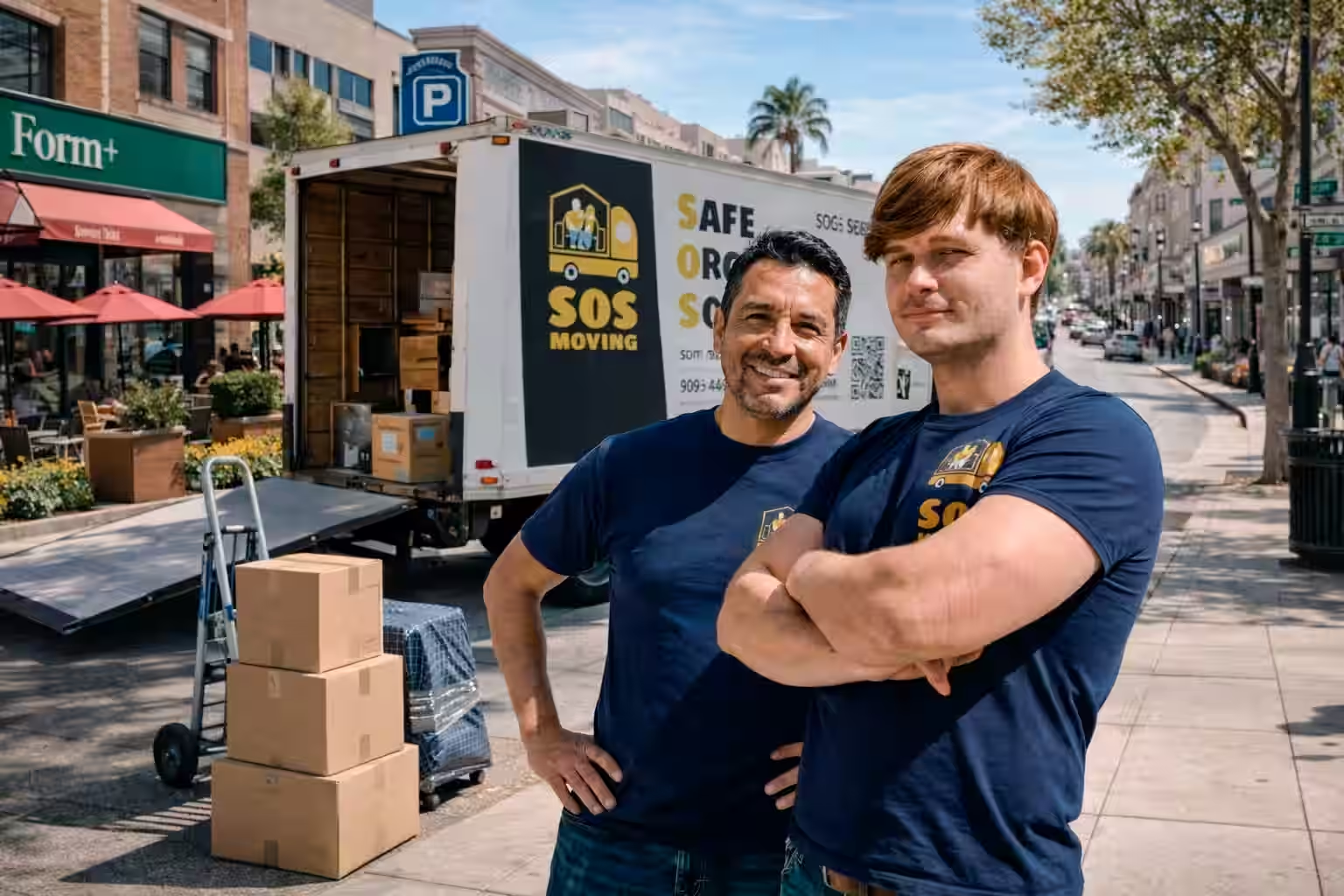





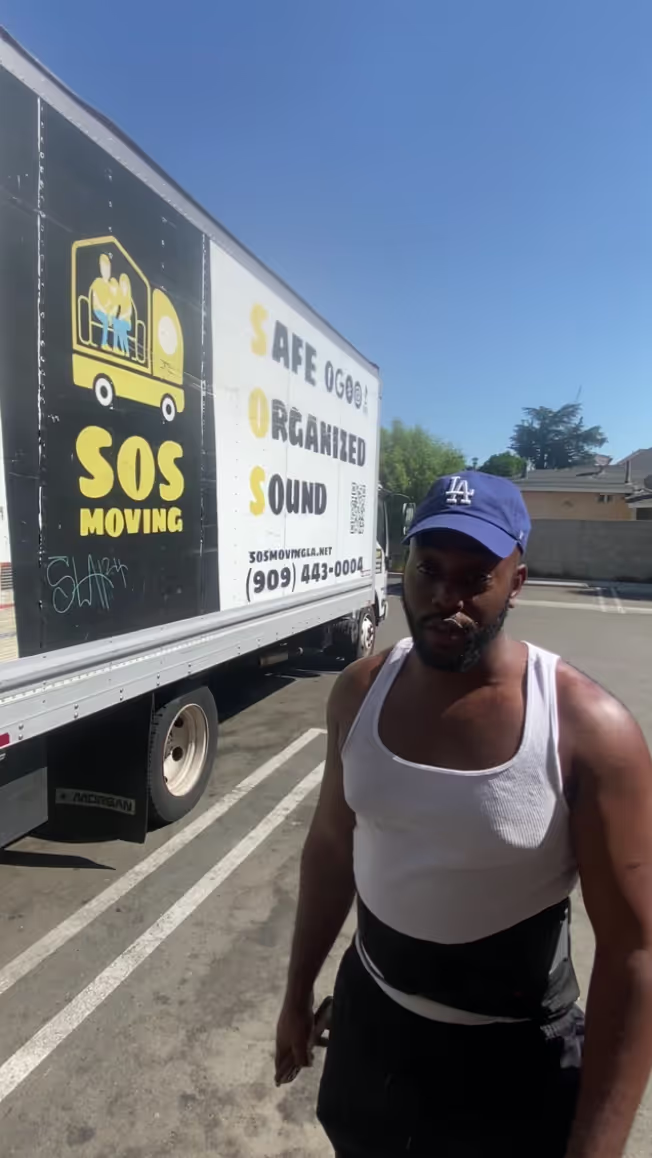
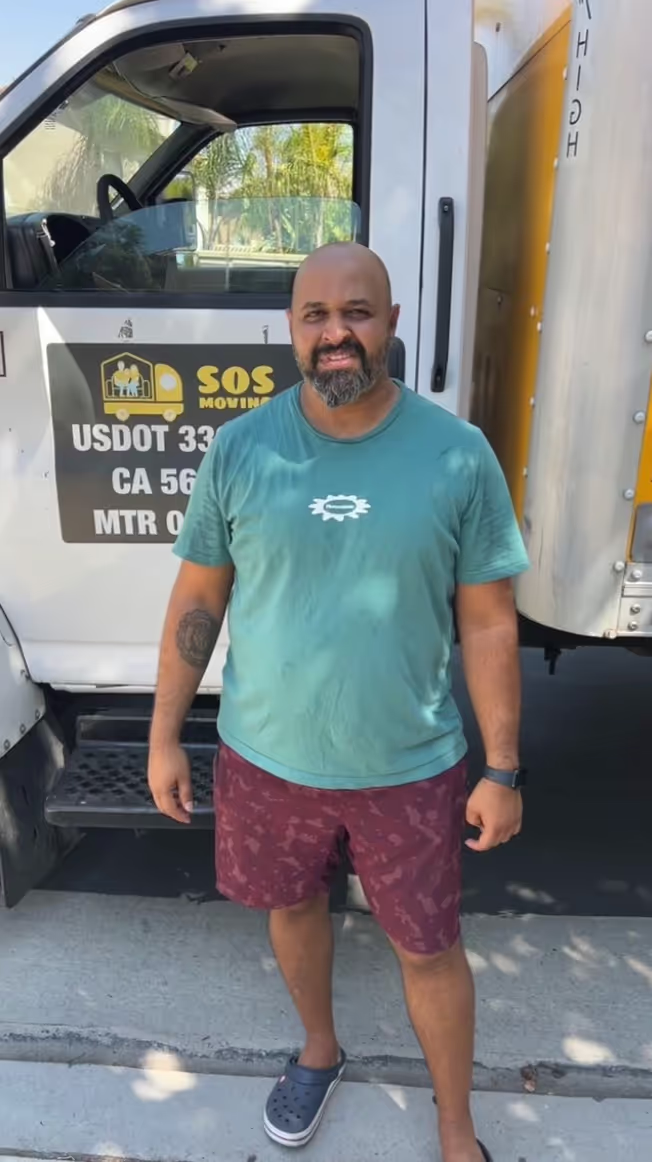

What one packing booking can cover:







Packers are paid for by the hour, at the rates that apply to every SOS local job, and each visit has a 3-hour minimum. The rate depends on how many people come and on the day of the week: Monday through Thursday is cheaper than Friday through Sunday, and cash comes out cheaper than a card.
Rate per hour, cash / card:
| Crew size | Monday – Thursday | Friday – Sunday |
|---|---|---|
| 2 movers with truck | $119 / $129 | $135 / $145 |
| 3 movers with truck | $159 / $169 | $175 / $185 |
| 4 movers with truck | $199 / $209 | $215 / $225 |
Added to the hourly total where they apply: a $30 gas charge, a $50 deposit that counts toward the final bill, and $50 whenever an HOA or building office requires an insurance certificate. After eight hours on the clock, overtime applies.
Long Beach jobs also fall under our travel rules, which are measured from the one office we have, on Jillson Street in Los Angeles. Beyond 10 miles from that base the drive time is charged double, and an address at least 30 miles away is held to a 4-hour minimum, not 3. We do not guess distances in advance; your estimate names the rule that fits your street.
The curb question on a Long Beach packing day is usually street sweeping. The city enforces sweeping Monday to Friday, apart from some city holidays, during windows posted block by block somewhere between 5 a.m. and 4 p.m. In parking-impacted neighborhoods most sweeping was moved to 8 a.m. or later and the restriction cut to two hours, so a crew that arrives at 8AM can run into a live window right at your door.
When you book, send us a photo of the sweeping sign on your side of the street and of the one across from it. We set the arrival after the window closes or park on the side that is not swept that day, so no paid crew time goes to moving the vehicle. A Saturday or Sunday packing day avoids the question, because sweeping is not enforced on weekends.
Downtown condo associations write their own move rules, and West Ocean, the two-tower building at 525 E Seaside Way, shows how tight they can get. Moves there happen only Monday to Friday between 8 a.m. and 6 p.m., never on weekends or holidays, and the elevator has to be reserved through building management at least seven days ahead. Movers must be pre-approved or must settle insurance with the management office first.
For a unit like that we send the $50 certificate of insurance as soon as the date is set, well before the seven-day cutoff, and we pack on a weekday ahead of the move so that moving day is only the carry to the truck. What we ask of you: book the elevator, tell us the reserved hours, and check with management whether a packing visit needs a slot of its own.
Long Beach has 18 designated historic districts, and two of them show well what packing an older house involves. In Belmont Heights about two-thirds of the homes are Craftsman bungalows, with building at its peak from 1918 to 1923, so most of them are now past their hundredth year. California Heights is the largest district in the city, nearly 1,500 homes, mostly Spanish Colonial Revival from the late 1920s with other period revival styles in between.
In houses of that age we lay runners on the floor from the first room we pack to the front door, stack finished cartons by the entry rather than along the hallway, and keep wrapped mirrors and framed pieces upright against an inside wall until loading. Point out anything original to the house that stays behind, such as light fixtures or door hardware, so nobody packs it by mistake.
Our crews work Monday through Sunday, 8AM – 6PM, and they drive down to Long Beach from our base in Los Angeles, so the first stretch of every job is the road. That puts a practical limit on a single visit: a one-bedroom unit downtown can often be packed and loaded on the same day, while a full bungalow or revival house usually gets a packing day of its own before moving day.
Splitting the work also helps with building windows like the one at West Ocean, where the move itself must land on a weekday. Each visit follows the hourly rules shown in the price section, and a day longer than eight hours moves into overtime, which is one more reason to split a large house. Same-day requests are possible whenever a crew is free, for example when a lease ends sooner than you expected.
Long Beach homes by type: the first boxes and your part:
| Home | Packed first | Your part before we arrive |
|---|---|---|
| Craftsman bungalow in Belmont Heights, from the 1918–1923 building peak | Dishes, glass and framed pieces from the front rooms, so the path to the door clears early | Mark original fixtures that stay with the house; set aside the box of papers you will carry |
| Spanish Colonial Revival house in California Heights, late 1920s | Wall art, mirrors and lamps, then shelves and closets one room at a time | Decide which rooms get full packing and which you pack yourself; tell us about fragile heirlooms |
| Apartment in Shoreline Gateway, the 35-story tower at Ocean Boulevard and Alamitos Avenue | Everything except a day’s essentials, on the day before the move | Ask management how movers are routed in a tower with a five-level underground garage, and send us the answer |
| Condo at West Ocean, 525 E Seaside Way | The whole unit on a weekday, since the move itself must fall Monday to Friday | Reserve the elevator at least seven days ahead and send us the confirmed time |






Yes. Our crews work Monday through Sunday, 8AM – 6PM, and a weekend visit also takes street sweeping off the table, since Long Beach enforces it only on weekdays. Check your building first, though: some condo associations, West Ocean among them, allow moves on weekdays only.
We work backward from the elevator slot. Once management confirms the date, we send the $50 certificate of insurance and schedule packing for a weekday before the move, so the reserved hours go to loading rather than taping boxes. If your building lets packers use the elevator without a separate booking, packing and loading can happen on the same day.
It depends on the number of rooms and how full the closets, cabinets and garage are, so we ask for a room list before quoting. A smaller home can often be packed in one visit; a large house usually needs a packing day before the move, which also keeps each day under the eight hours after which overtime starts. Every visit is billed hourly with a 3-hour minimum.
Keep documents, passports, jewelry, medicine and family keepsakes with you; they should travel in your car. Perishables, hazardous materials, firearms and batteries are not packed for the truck, and house plants are better moved by you. Everything else in the home can be left for the crew.
Yes. Every estimate includes tape and stretch wrap in whatever quantity the job takes, whether it is a studio downtown or a two-story house. Moving boxes in small, medium and large start at $4, and only the ones filled appear on the bill; premium paper and bubble wrap are available and priced in your estimate.
A packing day starts with a short walk-through. The crew lead goes room by room with you, notes what is being moved, what stays and what you plan to carry yourself, and then picks the spot where the empty cartons get assembled. In a bungalow that is usually the room nearest the front door; in a tower apartment it is often the living room, so the shared corridor stays clear for neighbors.
The kitchen comes next, because it holds the most breakable things per square foot. Each plate gets its own sheet of paper and travels on its edge, every glass is wrapped singly, and knives are bundled and marked before they go into a box. After the kitchen the crew moves to art, mirrors and lamps, then to books, closets and linens, leaving the bedroom you sleep in for last.
Every carton leaves its room with two things written on it: the room it goes to at the new address and a word or two about the contents. Boxes that must ride upright get an arrow, and the ones holding glass get a fragile mark on two sides. That labeling is what lets the unloading crew work without questions.
If packing and loading fall on different days, we leave out what you need until the truck comes: a set of sheets, towels, a kettle or coffee maker, phone chargers and a change of clothes. The crew packs these first thing on moving day in a box marked to open first, so it is the last thing loaded and the first thing unloaded.
A little preparation shortens the crew’s day, and since the time is billed by the hour, it trims the bill as well. Start by walking through each room and deciding what is not coming: donations, things you are selling, furniture that will not fit the new place. Anything still in the house on packing day will be packed.
Then empty what the crew should not handle: the refrigerator and pantry, cleaning chemicals, paint and propane, and any batteries stored loose in drawers. Finish the laundry the day before, so damp clothes do not end up in a closed box, and set aside the car box of documents, medicine and chargers.
Last, share the practical details of the address with us: which rooms are upstairs, where the crew can park, the sweeping days on your street, and the name of the HOA or building manager if there is one. With that, the estimate reflects the real job and the crew arrives with enough boxes for it.
Partial packing is the middle option. You box books, clothes and the garage at your own pace during the week, and the crew comes for the kitchen, the art and the furniture wrap, the parts that take skill rather than time. The estimate then covers only those rooms, and the hourly total shrinks with them.
Materials are the easiest part of the bill to check, because each item is counted on its own line. Moving boxes come in three sizes, small, medium and large, starting at $4. The crew brings a supply sized to your room list, and you pay only for boxes that end up filled; flat ones go back with the crew.
Tape and stretch wrap are not billed at all, and there is no allowance to run out of. A house with a full dining set and a sectional sofa gets as much wrap as those pieces take, and it is part of every estimate we write.
For china, glass, lacquered furniture and framed art we also carry premium packing paper and bubble wrap. They are listed on the estimate when you choose them; if you are unsure which suits your pieces, our note on when paper works better than bubble wrap compares the two.
Moving blankets protect furniture in the truck. If the building wants proof of insurance, the certificate costs $50 and reaches the HOA or management office before we arrive. Crew time is billed by the hour, as the rate table higher up on this page shows.
Most clients book packing together with the move. On a local job the same crew that packs can load the truck, and the day is billed hourly as one total, packing hours and moving hours together. For a move from one neighborhood to another or elsewhere in the county, that is the usual setup, and you can arrange it as a full move with our Long Beach team.
Packing for a long haul is stricter. Boxes spend days on the road rather than an hour, cartons stack higher in the truck and the load has more miles to settle, so we fill every box to the top, add more paper around glass and wrap furniture on every side. Interstate moves are priced at a flat rate, not by the hour, and run under our federal licenses, USDOT 3398018 and MC 1153871; the details are on the page about moving out of state from Long Beach.
Offices pack differently again. Desks are emptied into boxes labeled by workstation, files stay in their original order, and computers and other electronics are wrapped and boxed apart from the furniture. If a business is relocating, ask about packing when you plan the office move itself; the work can also be split by department, so no single team loses its workspace for long.
Fragile items take up most of a packing day, and they are where trained hands matter most. Stemware, china and ceramics are wrapped piece by piece and packed tight, so nothing shifts inside the box. Mirrors and framed art are wrapped and padded, marked as glass and loaded standing up. Lamps travel with their shades removed and packed in a separate carton.
Some of this is better left to you. Irreplaceable things such as photo albums, jewelry and family papers should not be in the truck at all, and we recommend carrying them yourself. You can also decide that certain rooms are yours to pack; keep in mind that boxes you pack yourself are not covered by our moving insurance, which is a good reason to hand the crew at least the kitchen and the art.
Older houses add a detail of their own. In a California Heights or Belmont Heights home, part of what you see may belong to the house rather than to you, so we confirm what stays before anything comes off a wall. Homes in the other historic districts, Bluff Heights, Rose Park and the Wrigley Area among them, get the same walk-through.
Unpacking works in reverse. The crew opens cartons one room after another in the new home and sets things where you want them, starting with the kitchen and the beds, so the first evening in the new home feels ordinary. Add unpacking to the estimate when you book, together with the packing.
When the dates of two homes do not line up, packed boxes can wait in storage. Our storage is climate-controlled, keeping temperature and humidity steady all year, and comes as short-term, long-term, or in-transit for long-distance moves while the new home is not ready. The crew picks the load up, takes it to storage and brings it back on the date you choose, and the storage term can be lengthened without a penalty; see storage between move dates in Long Beach for how it fits a move.
Booking takes a phone call to 909-443-0004 or the online estimate form; include the address, how many rooms there are and any building rule we should plan for, such as an elevator reservation or a sweeping day. We review the details and call you back during business hours with a quote, and if a crew is free, the job can start the same day. For the general overview of what our packers do on any job, see how our packing service works.