


%201.svg)
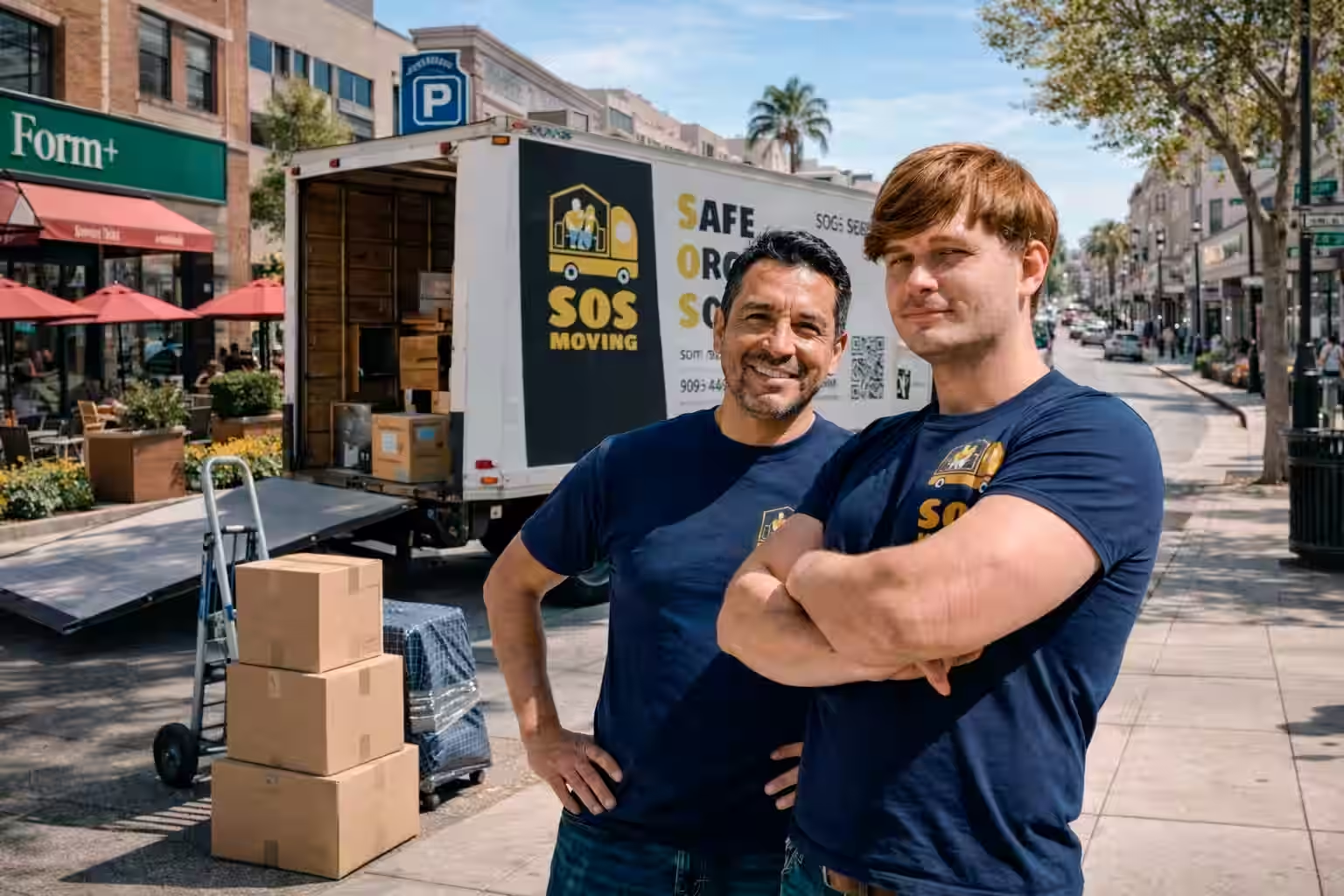

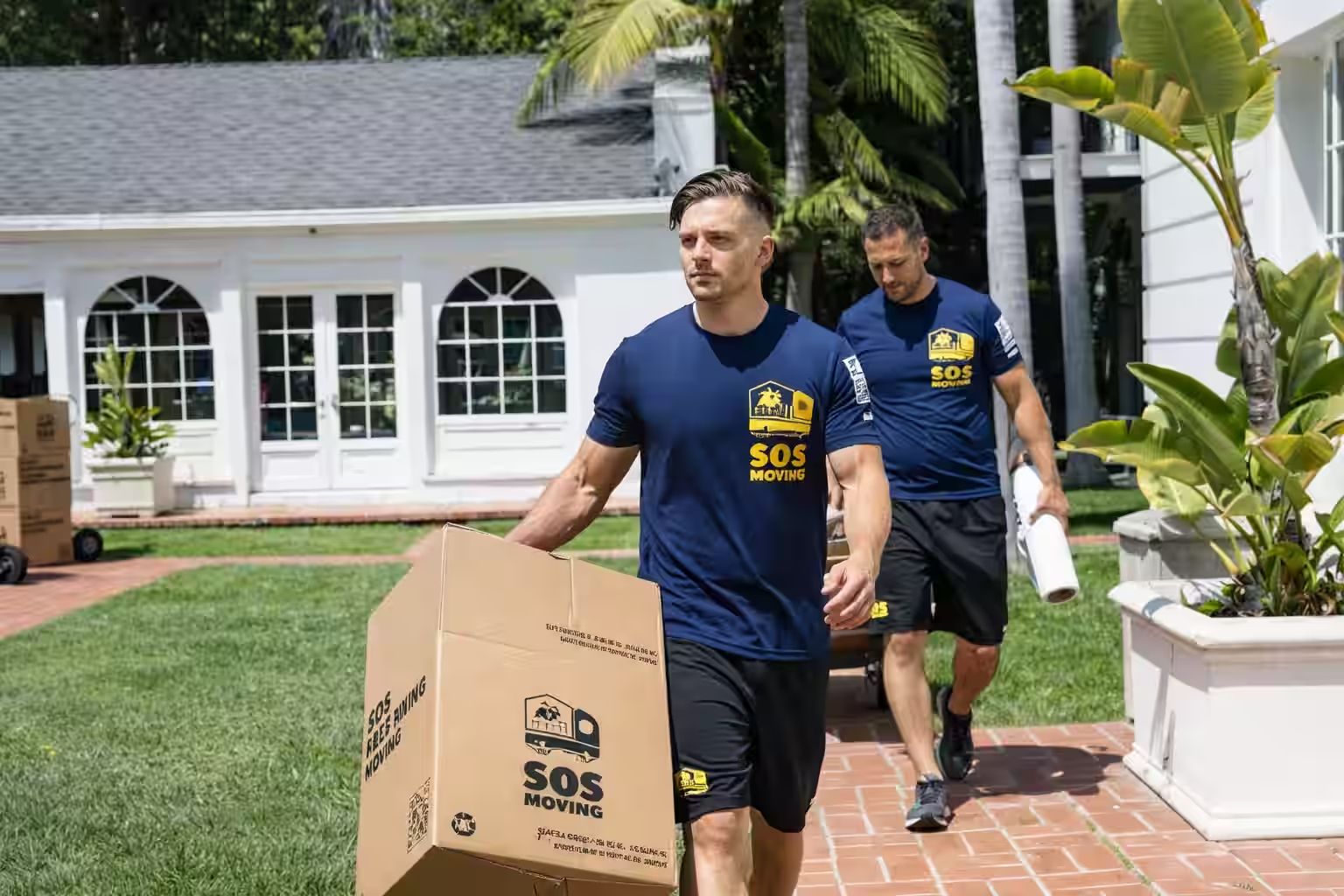





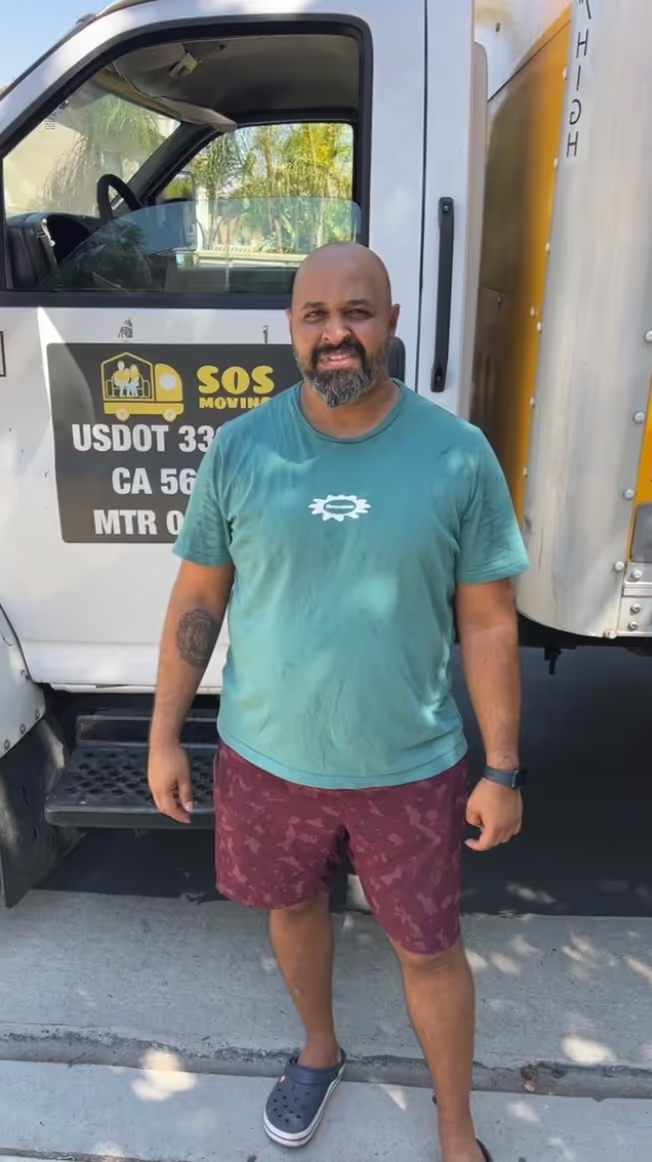
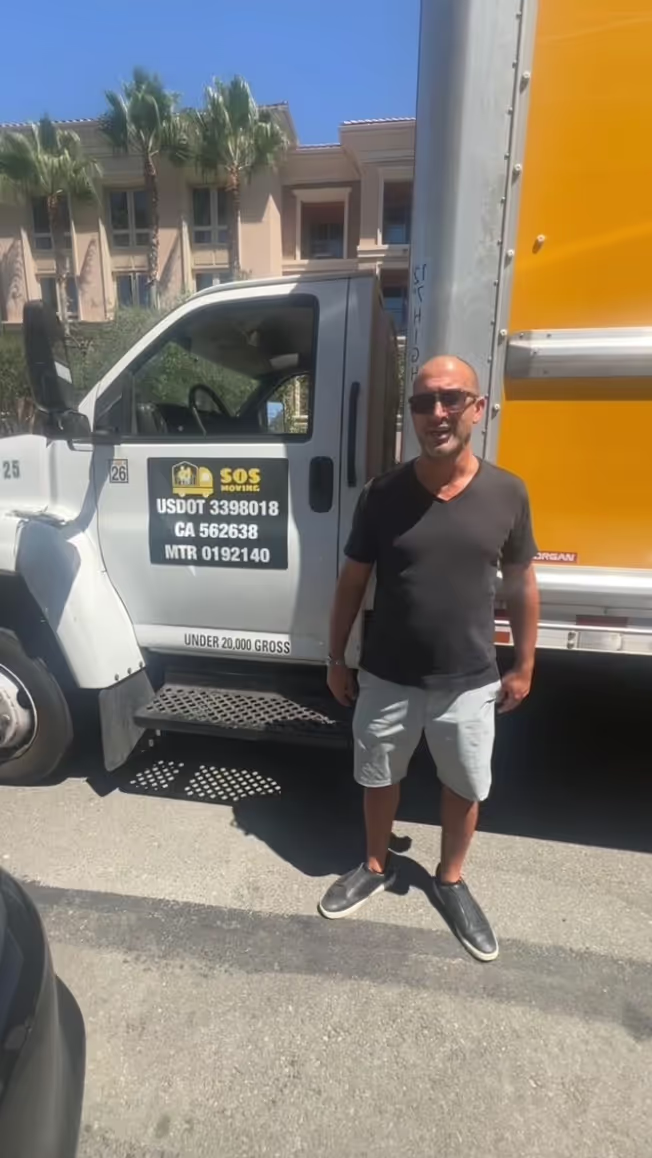


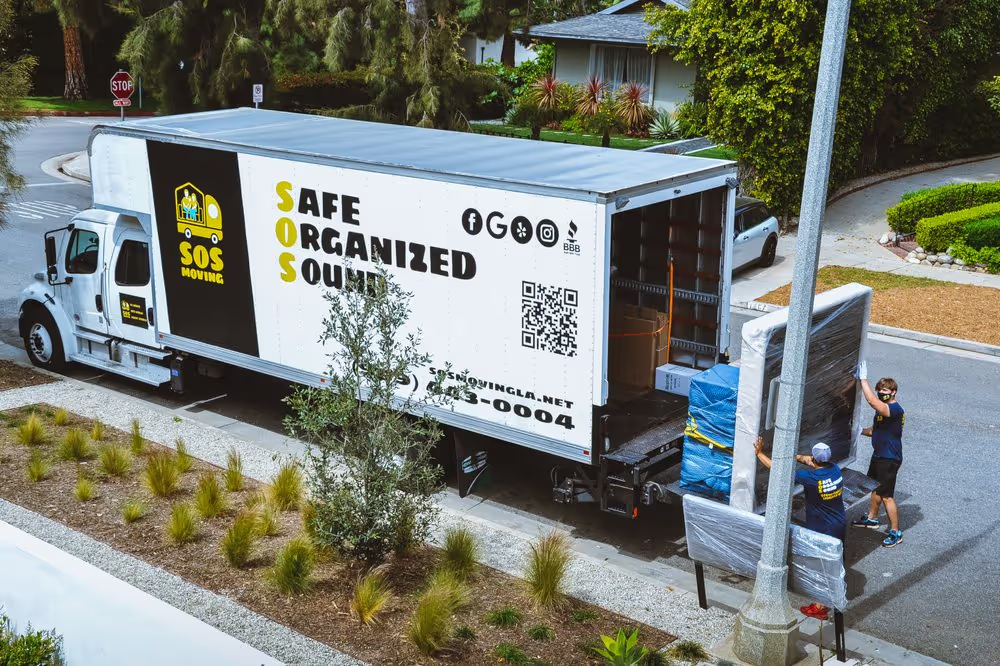
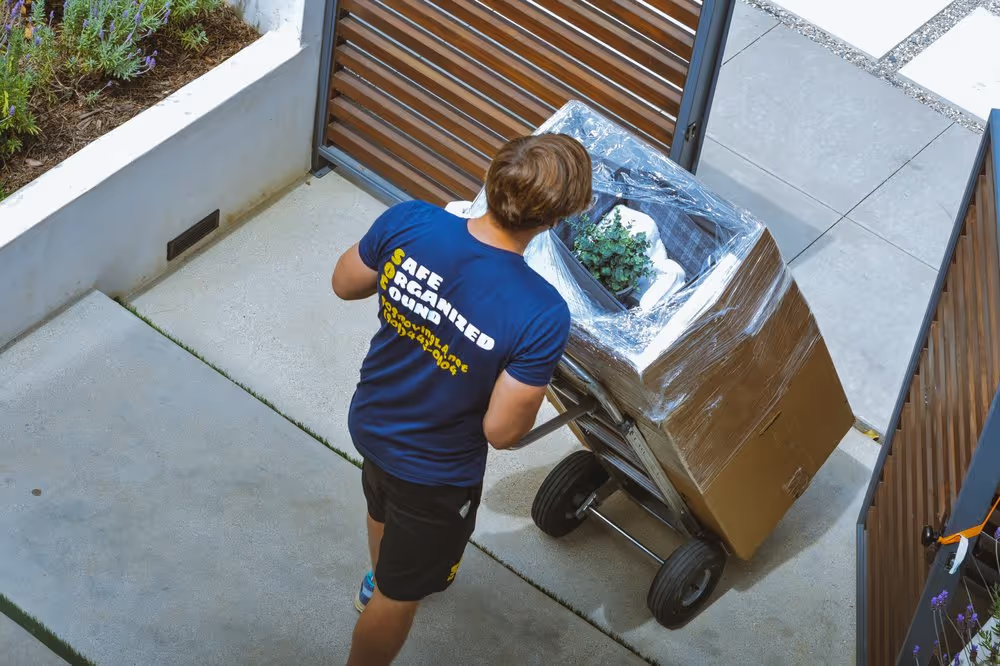
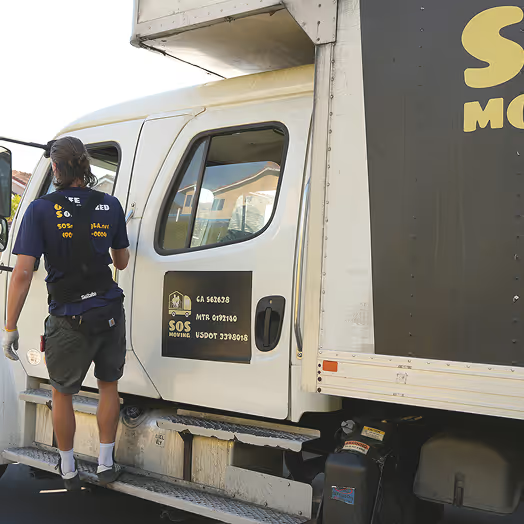
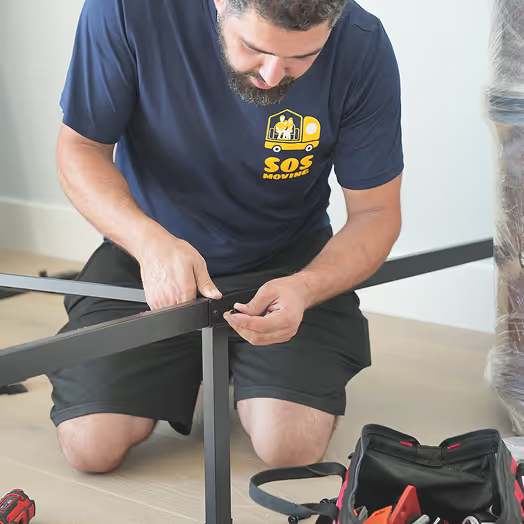
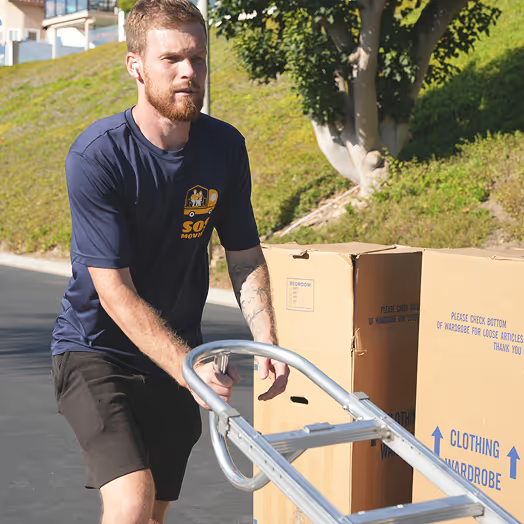
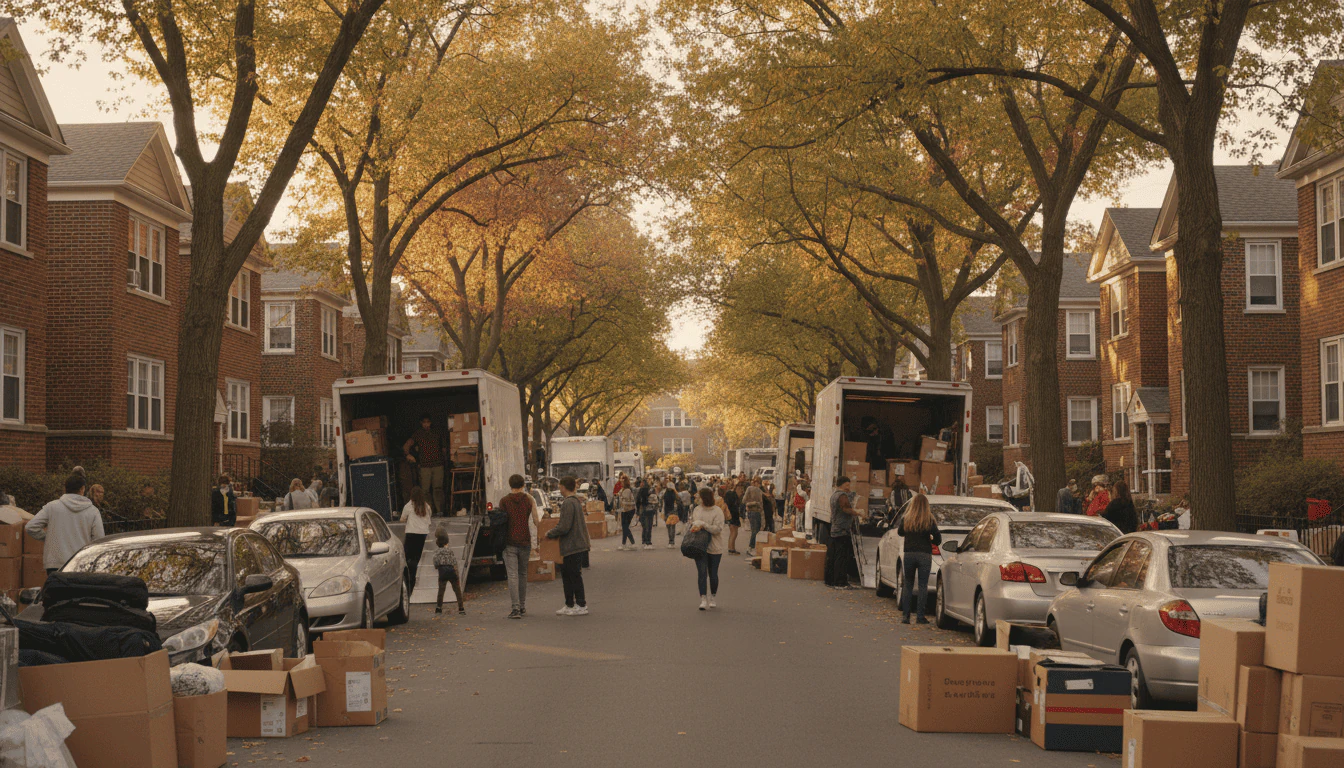
Comparing long distance moving companies in Santa Clarita, CA usually comes down to three questions: how the price is set, who else shares the truck, and whether the company can prove it is licensed for interstate work. Our answers are a flat figure agreed before loading day, a truck that carries only your household, and federal numbers you can look up in minutes. The full service is laid out on our long-distance moving page; if your new address is still inside the valley, our movers in Santa Clarita handle local jobs.
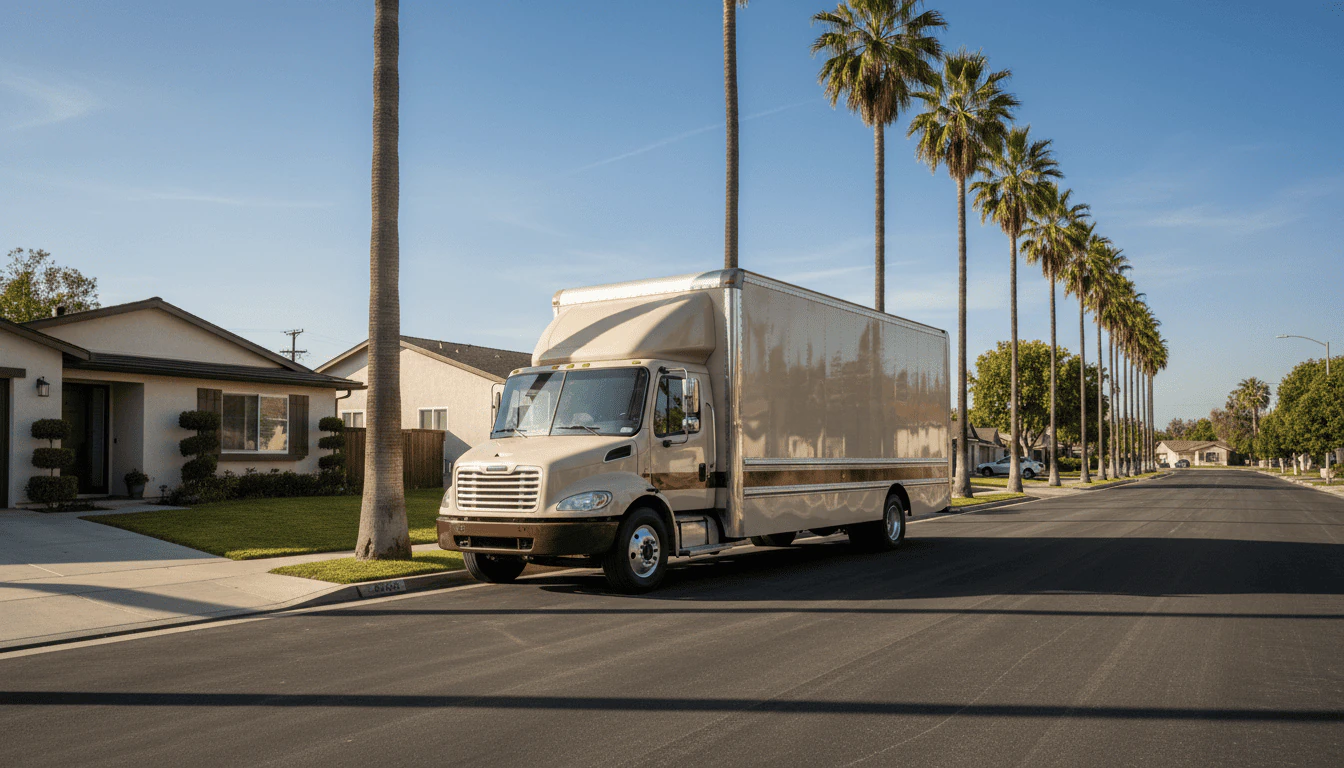
There are two ways to ship a household with us. The dedicated truck described here is a 26-ft box truck reserved for you and aimed at the fastest delivery window. The shared option puts your belongings on a truck alongside other customers' loads: you pay for the space you use and delivery falls within 7–14 days, which usually costs less on the longest routes. See shared load moving if budget matters more than speed.
Crews set out from our Los Angeles headquarters on Jillson Street, the company's only office, and reach the valley on I-5. That drive, along with fuel and mileage, sits inside the flat price rather than on a separate line of the bill.



A long-distance move with us is never billed by the hour. The estimate rests on four inputs: the volume of your belongings, the destination and route, the amount of packing you want from the crew, and how easy each door is to reach. Once those are agreed, the flat figure covers the move you described.
Payments follow the work. A 5% deposit reserves the loading date, 60% of the balance is processed after the truck is loaded, and the remainder is due only when you have confirmed at the destination that everything arrived.
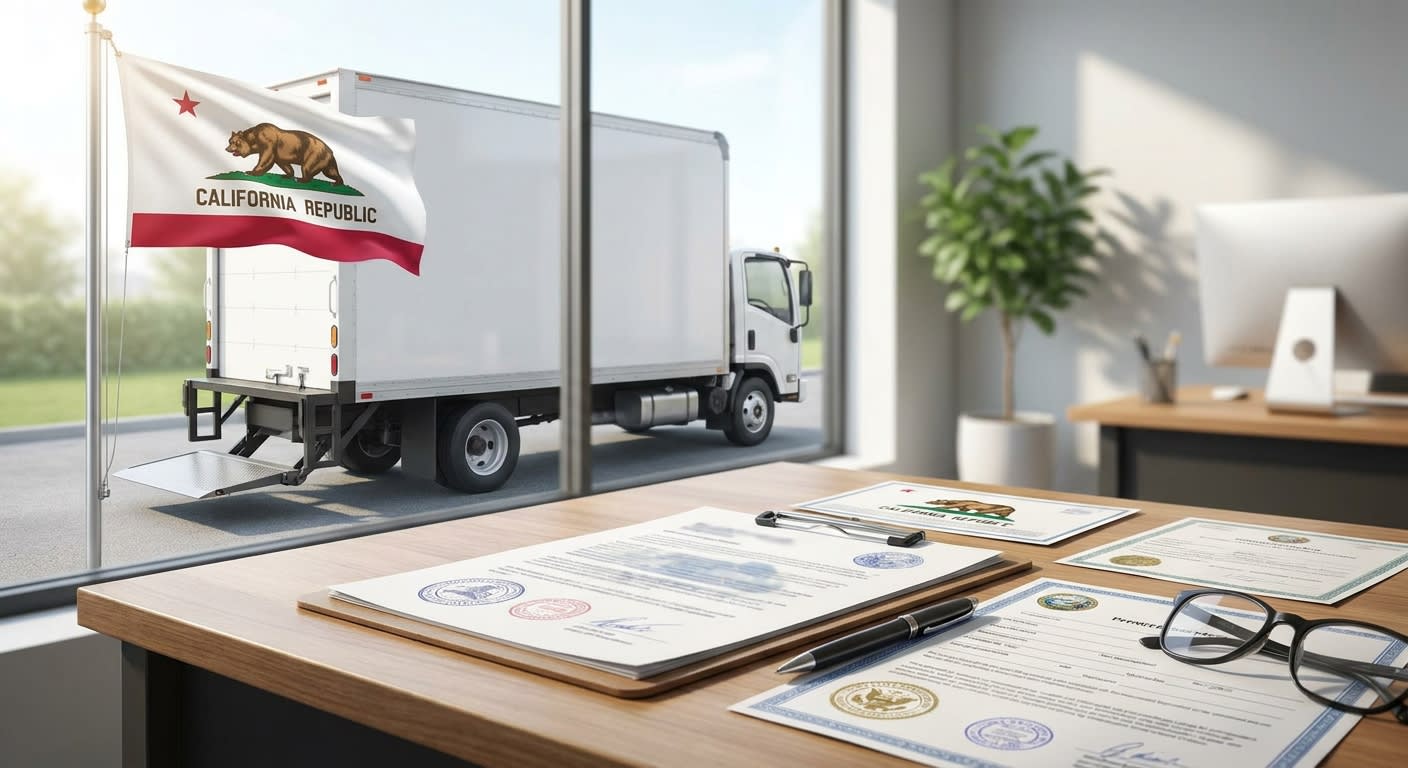
Basic value protection of $0.60 per pound per item is included on every interstate move. Our authority to carry household goods between states is on public record under USDOT 3398018 and MC 1153871, so you can verify it before you pay a deposit.
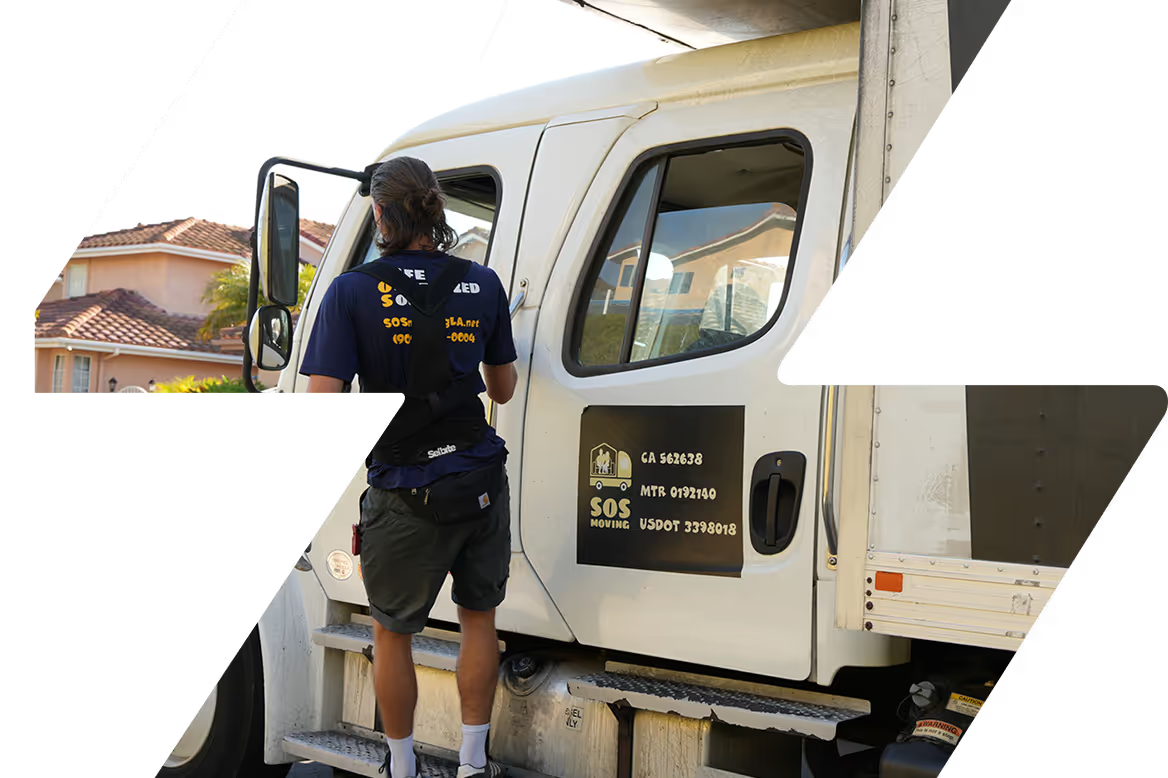





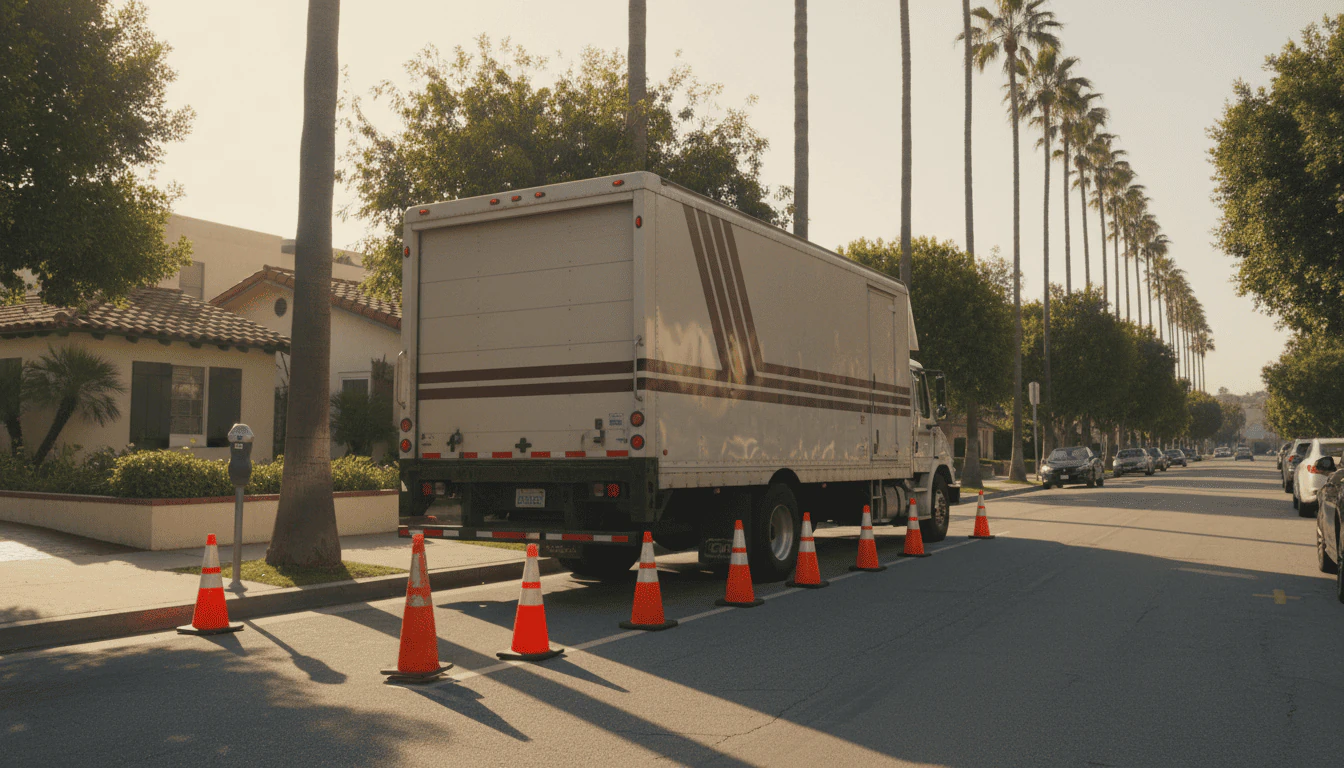
Santa Clarita's parking code, chapter 12.64 of the municipal code, keeps commercial vehicles off streets in residential zones. Two exceptions matter on moving day: vehicles under 12,000 lb gross vehicle weight, and vehicles actively loading or unloading goods. A full-size 26-ft moving truck is generally heavier than that, so it relies on the loading exception.
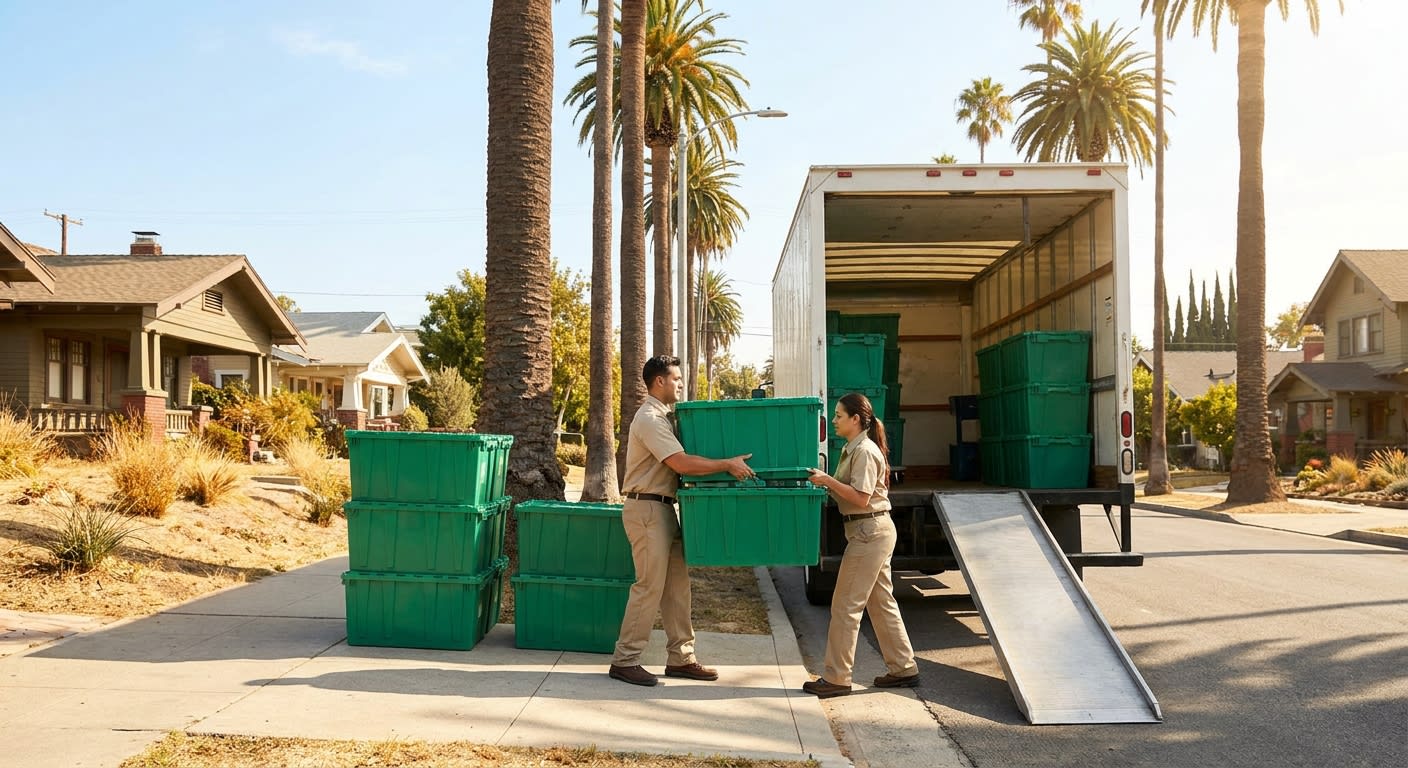
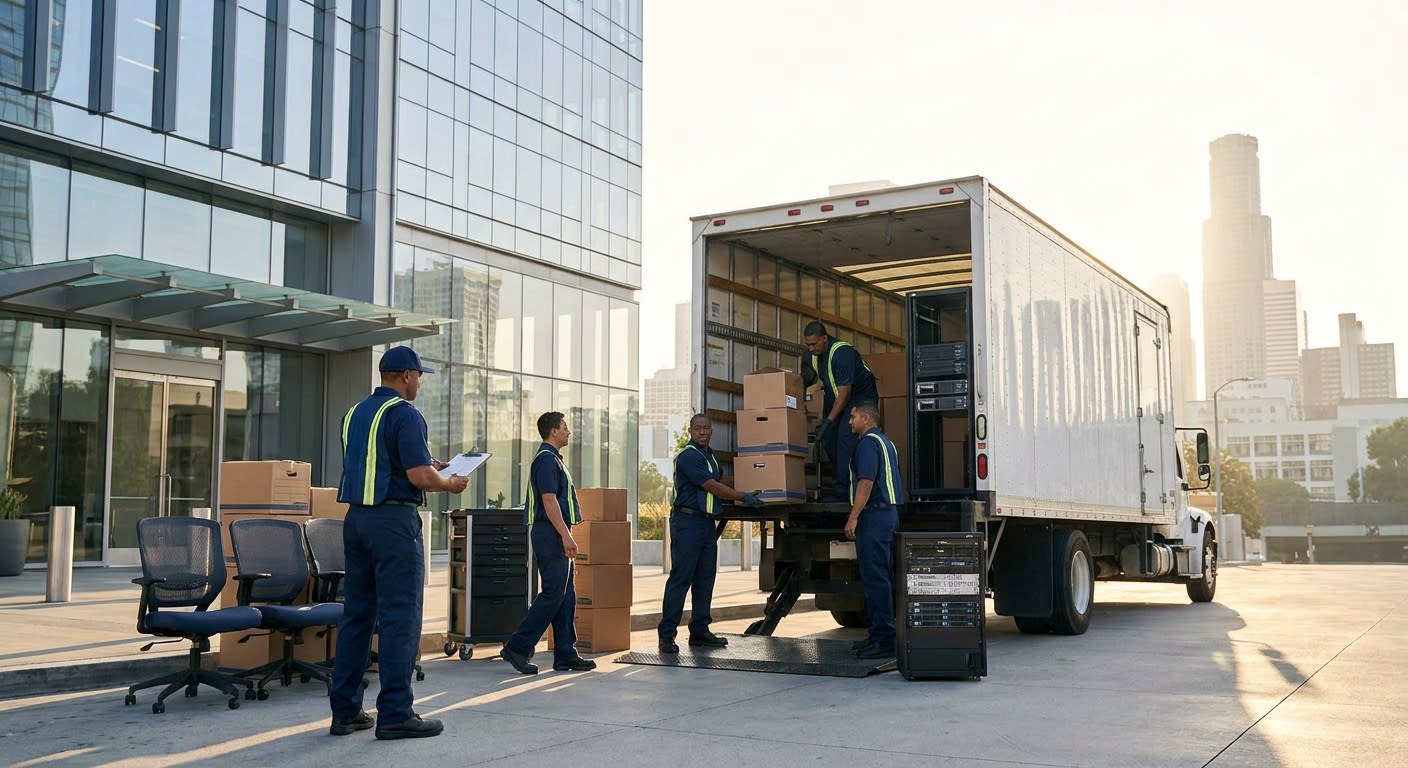
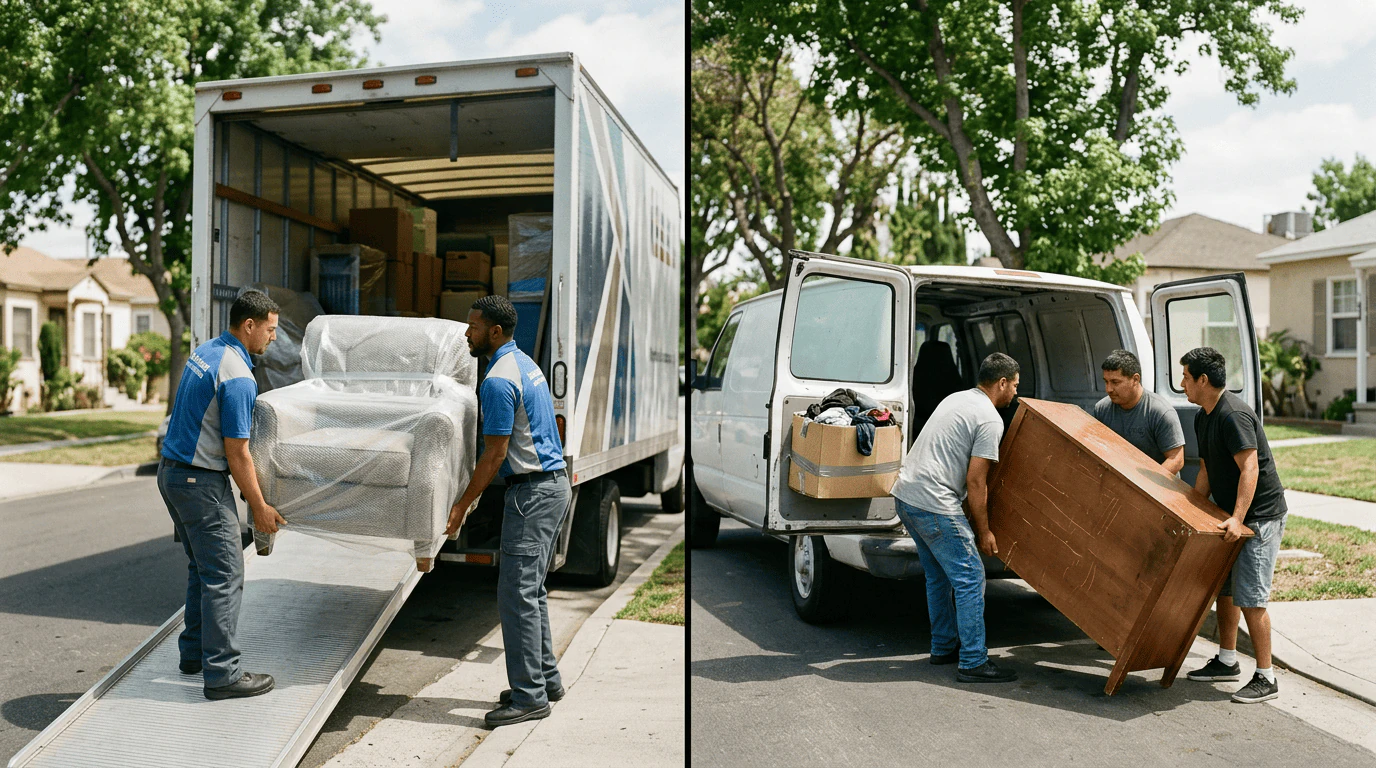
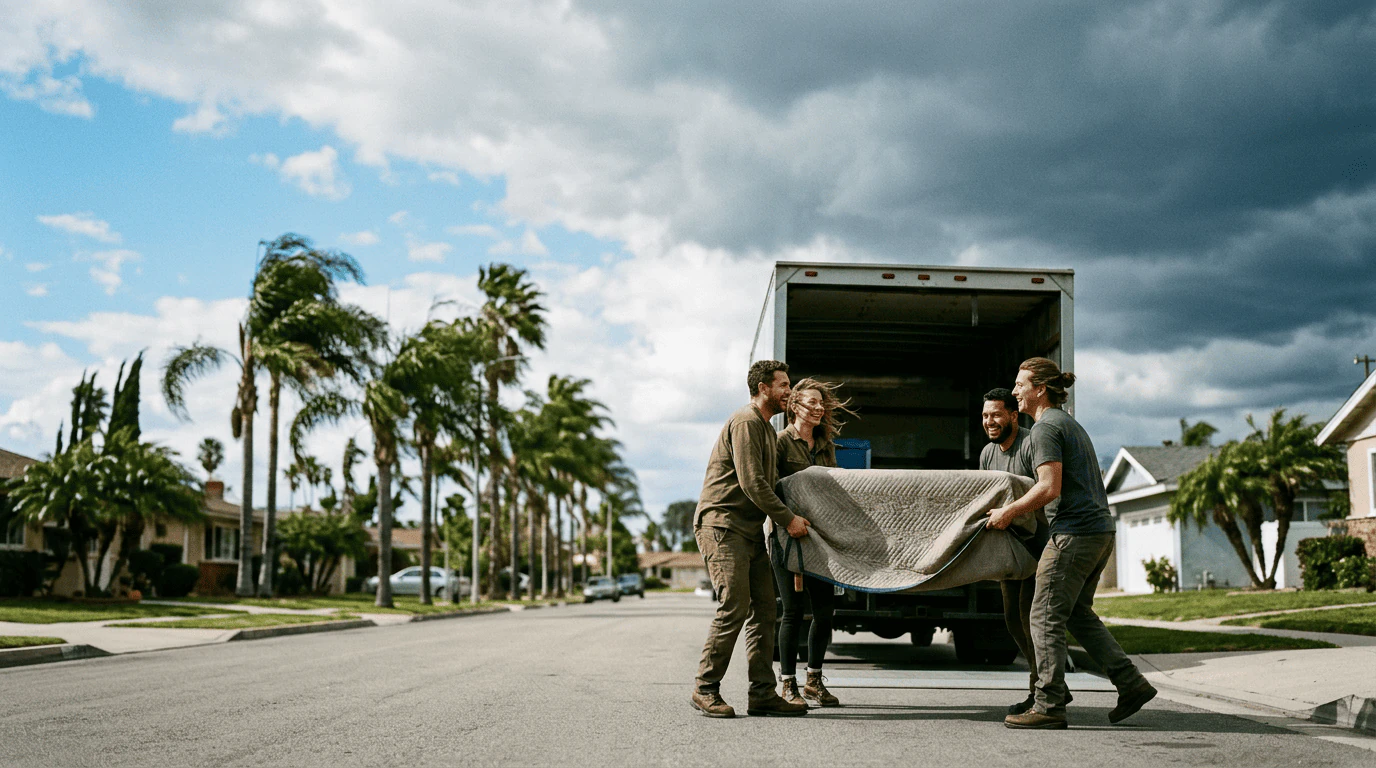
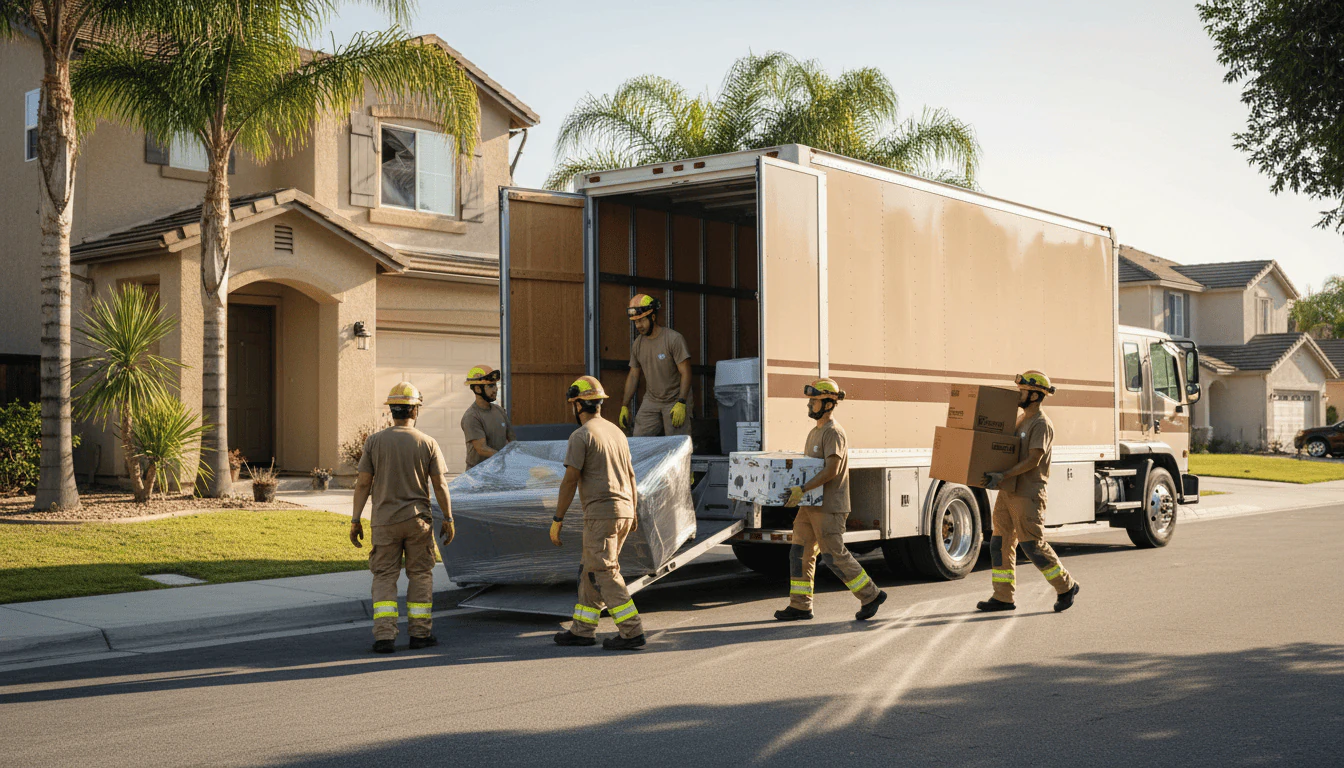
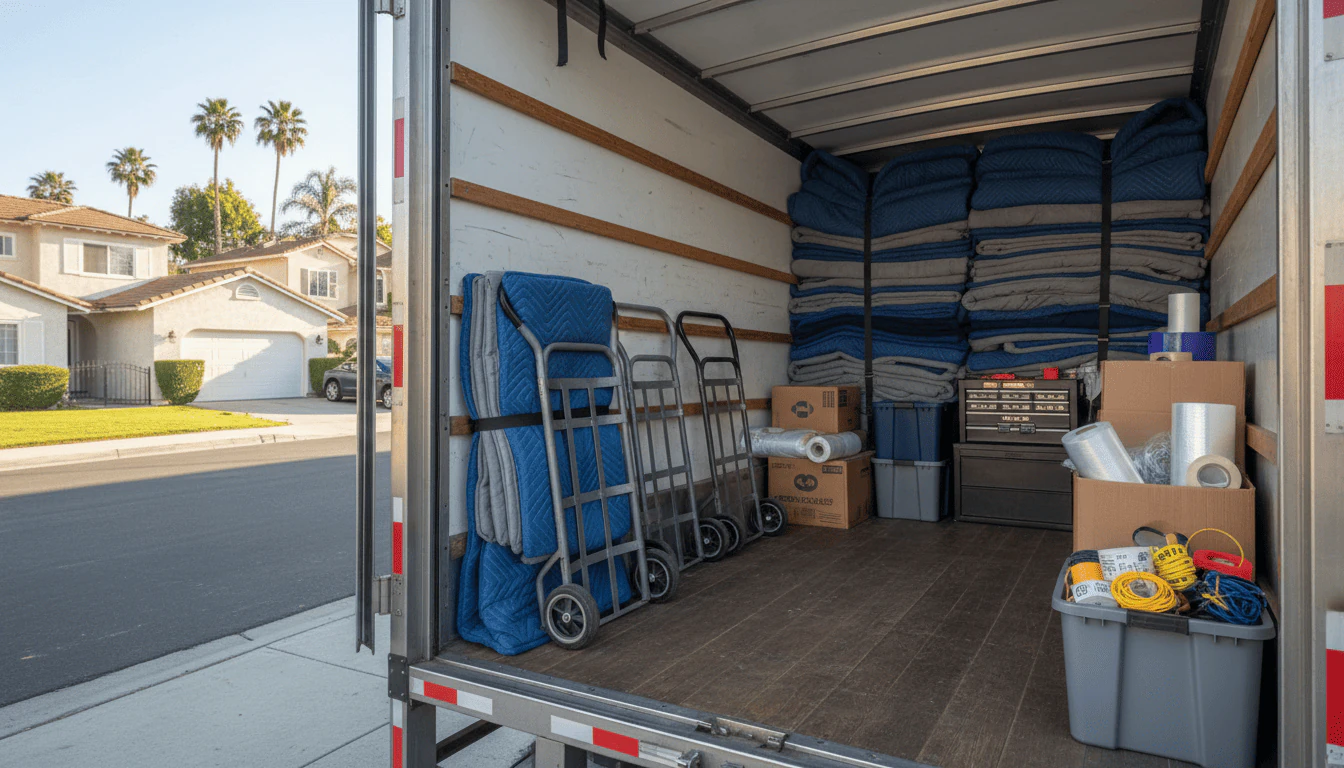
We time the truck to reach your house when the crew is ready to start carrying, keep loading continuous, and drive away once the doors are latched; it never sits on your street waiting for the next day. What we ask from you: keep the driveway and the curb in front of the house clear that morning, and let close neighbors know the date.
Associations often set tighter rules than the city does. Valencia Lakeshore, a 264-unit condominium community on Venturi Drive, lets trucks and other commercial vehicles onto its private streets (Hogan, Nicklaus and Player Drive) only while they are loading or unloading. At other times, a vehicle with business lettering must stay in the association's designated area or on Golf View Drive or Trevino Drive, the two public streets.
For a move out of a community like this, we ask you for the current rules when we quote, choose the loading spot from them, and schedule the crew so the truck stands on the private street only while the load is going on. If management requires proof of insurance, we provide a certificate of insurance (COI) for $50.
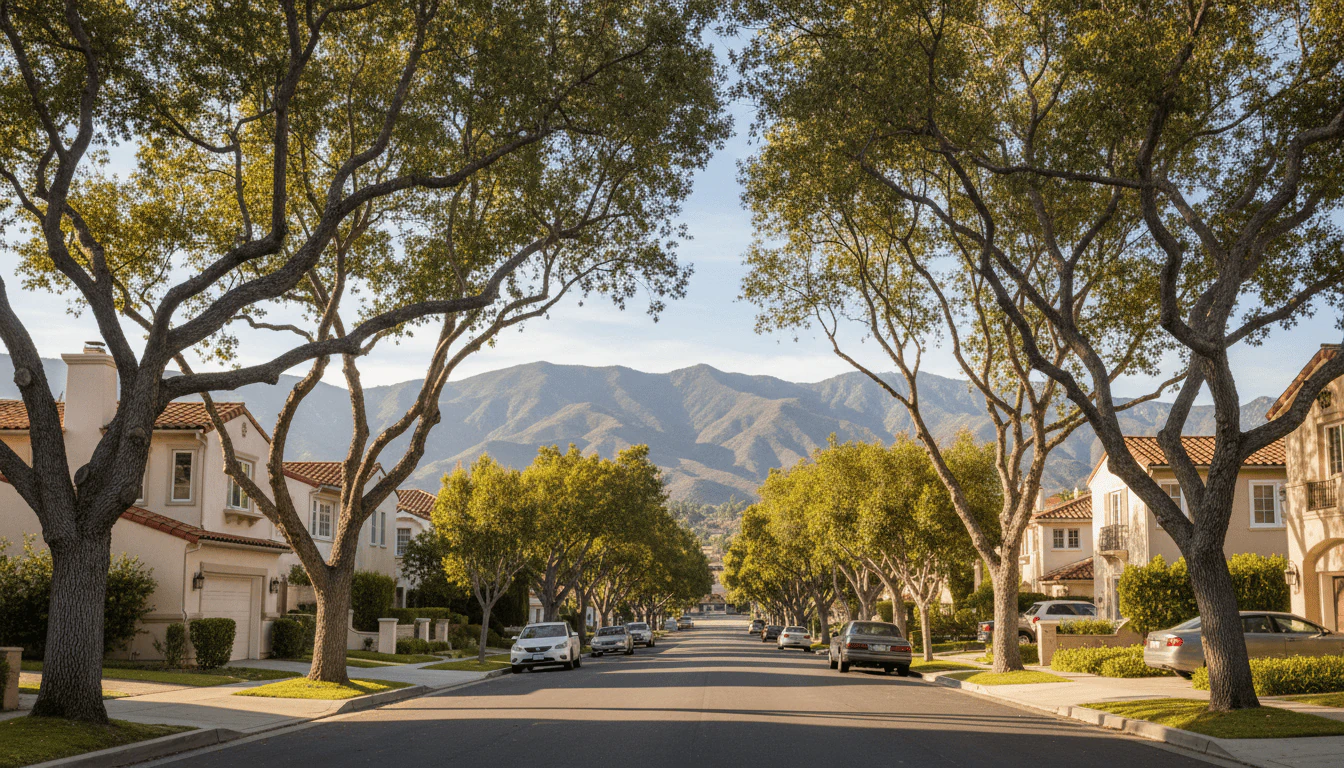
The city was formed in 1987 from Newhall, Valencia, Saugus and Canyon Country, which is why many addresses still carry those names. Stevenson Ranch and Castaic belong to the same valley but are unincorporated Los Angeles County, so county Public Works rules apply there instead of city rules. That split matters if you are weighing a portable container against a truck.
On a county street, a storage container needs a road encroachment permit through EPIC-LA, and processing can take up to two weeks; the box may stay no longer than seven consecutive days and cannot be placed on roads under 15 ft wide, on grades over 6%, on sidewalks, or within 15 ft of a crosswalk, corner, hydrant or curb ramp. A dedicated truck is loaded in one working day and leaves with the crew.
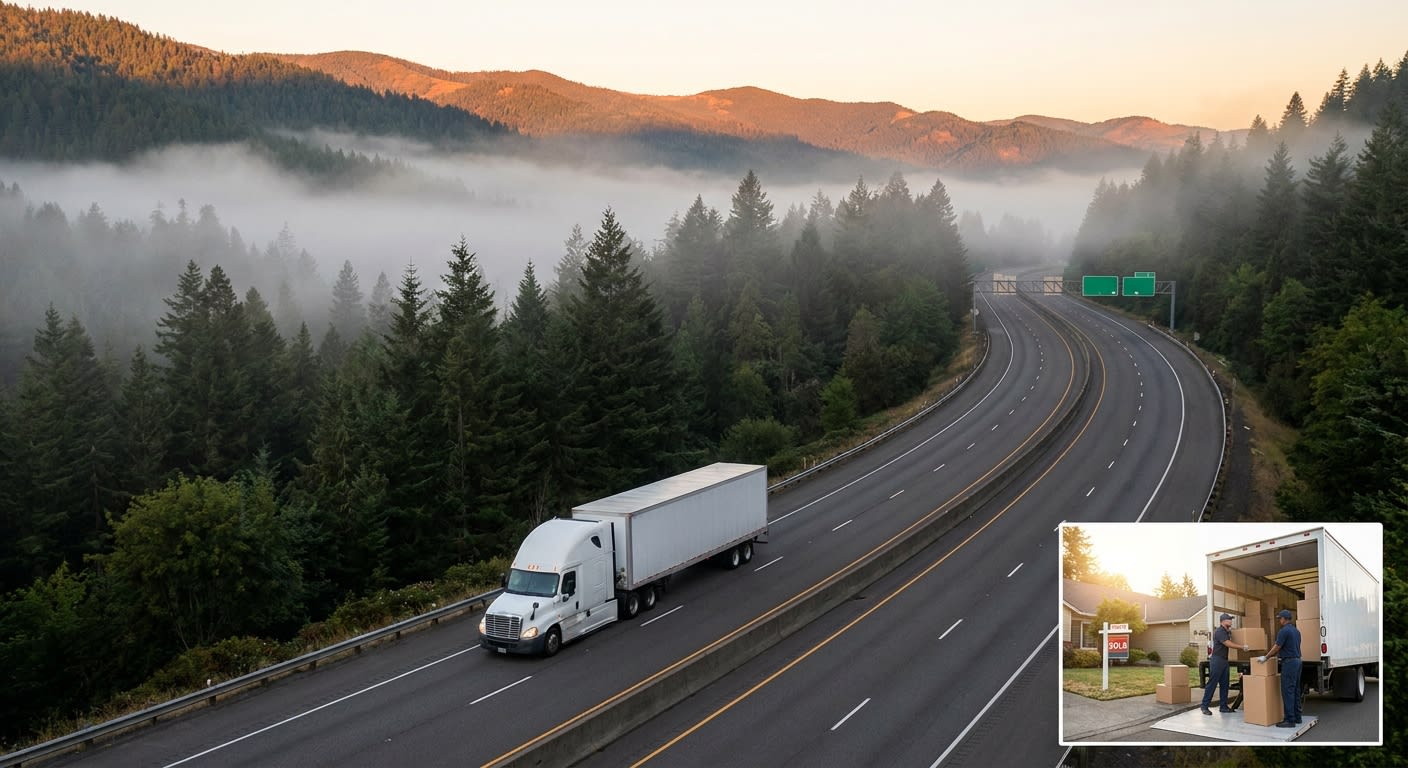
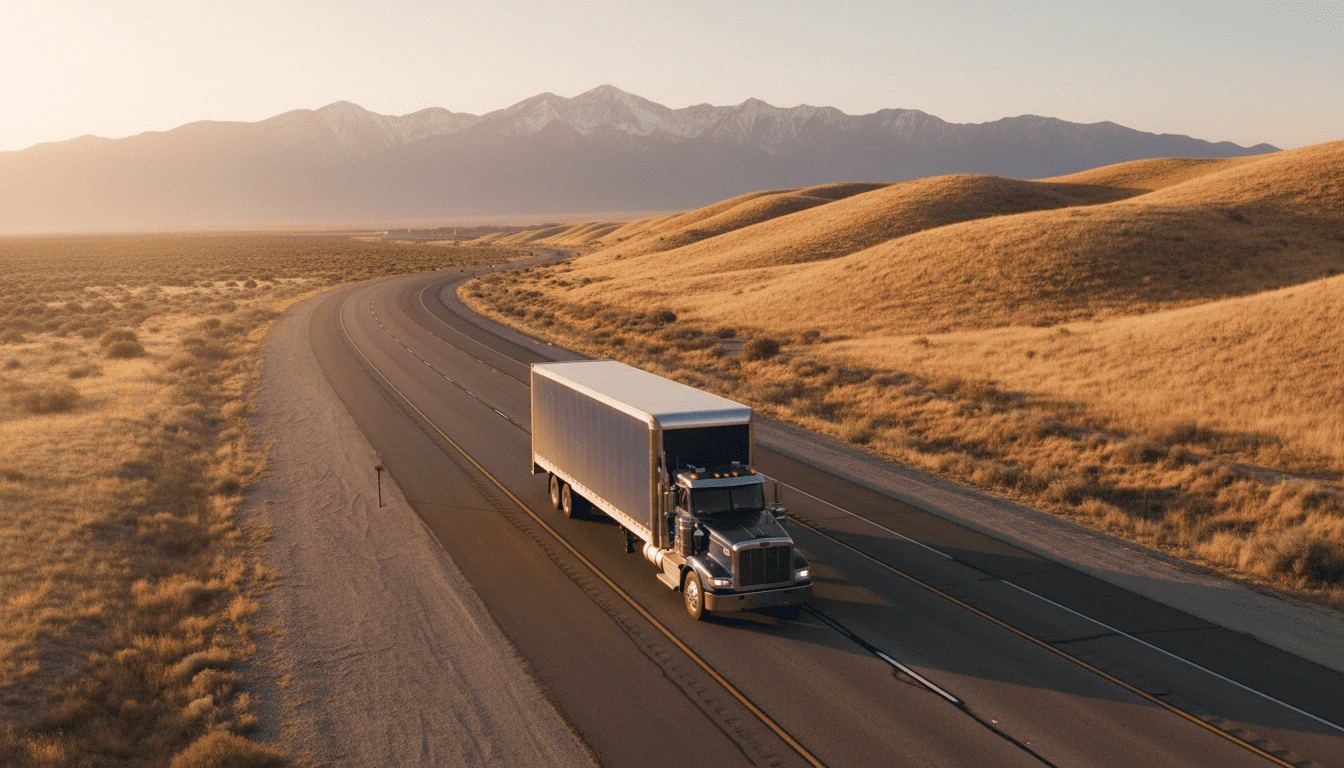
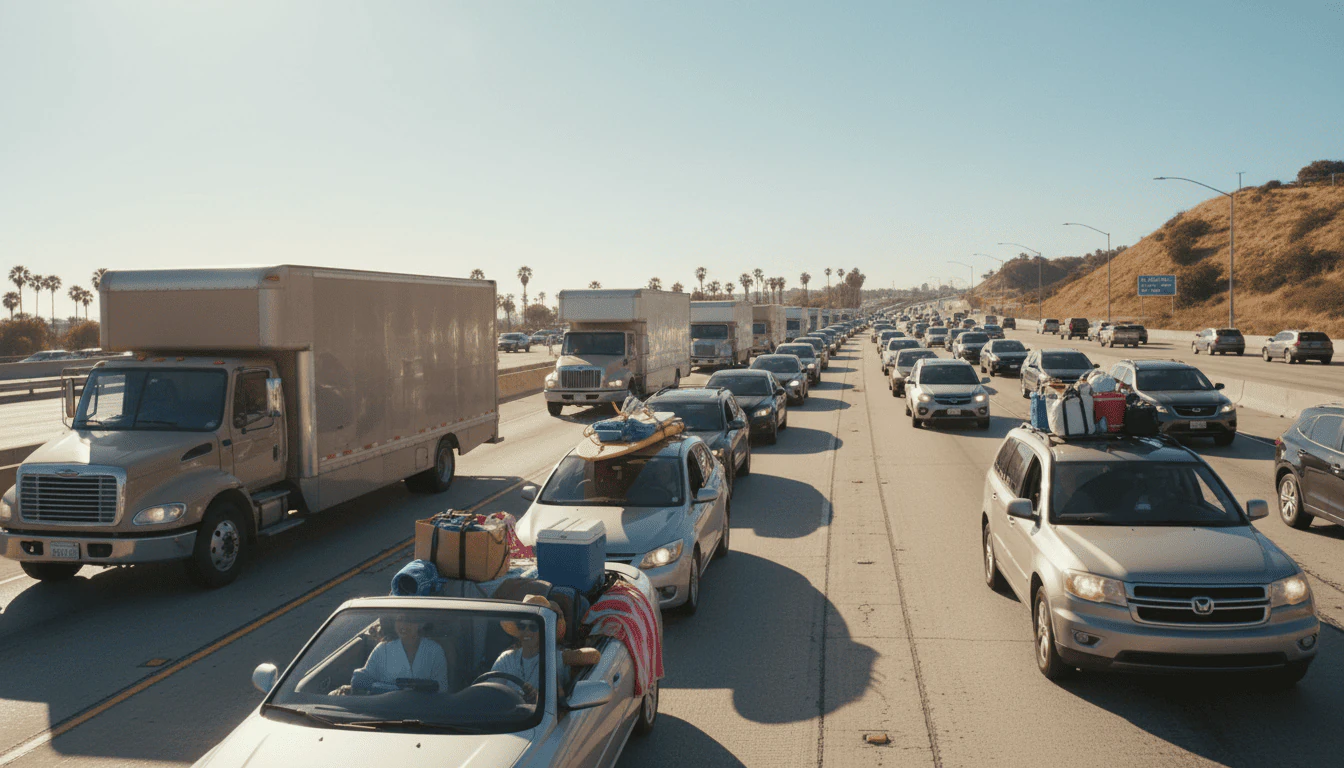
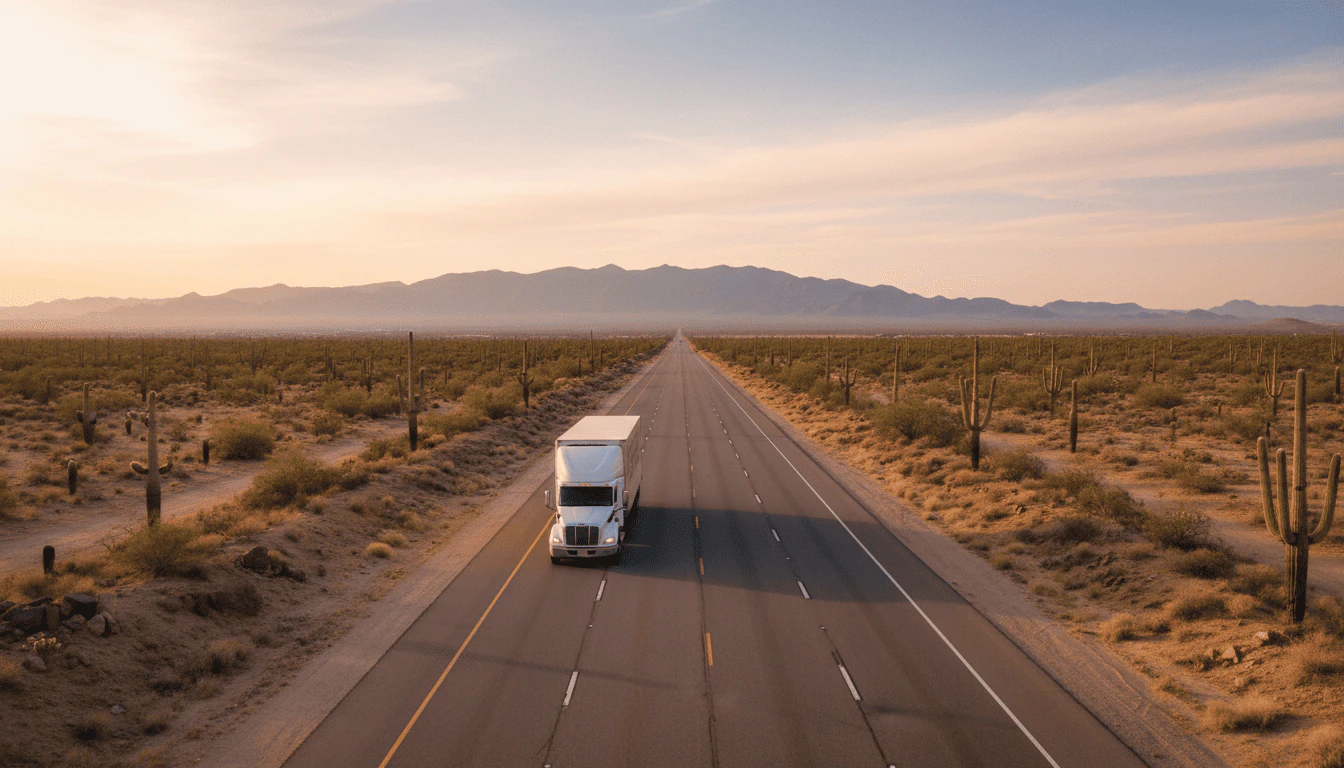
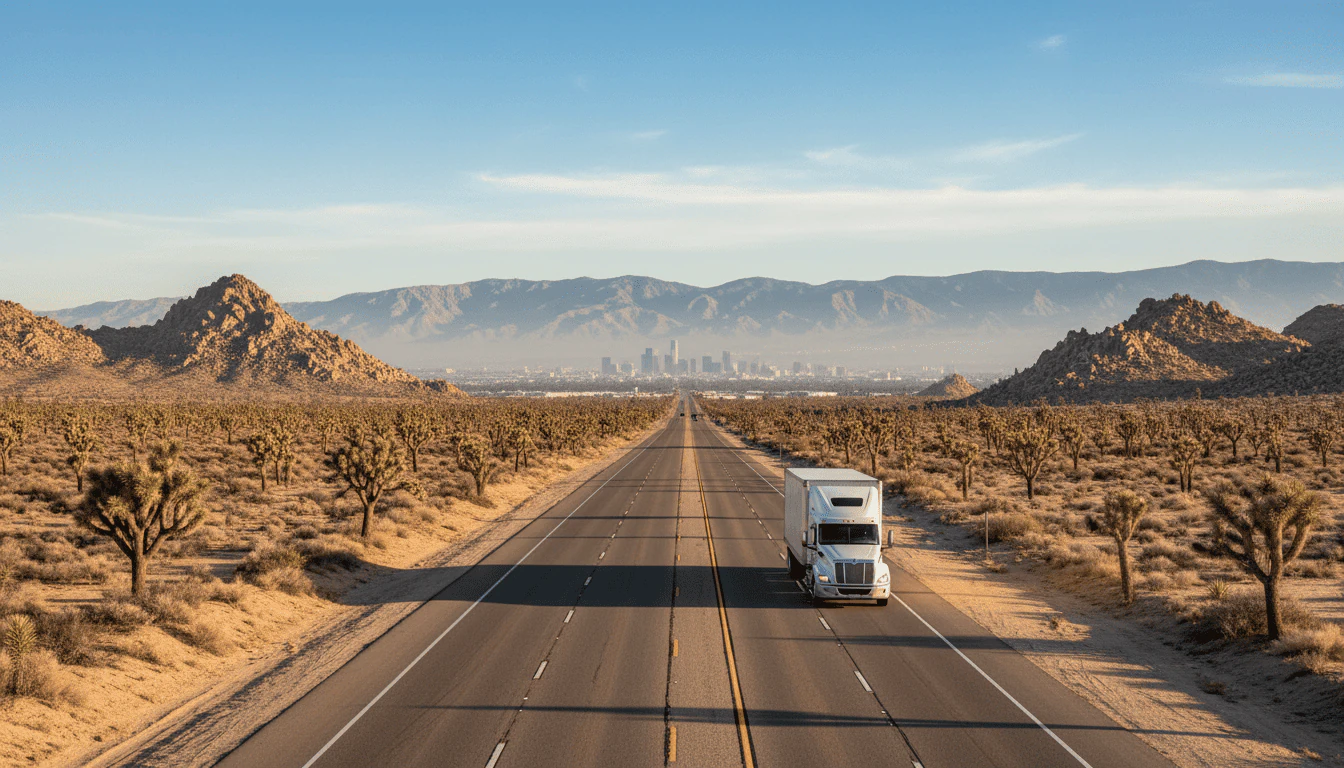
Loading fits the 8AM – 6PM working day, and since the move is priced flat, neither the drive up from Los Angeles nor the hours of loading are billed by the clock. The way out depends on where you are going. Northbound trucks take I-5 over Tejon Pass, known as the Grapevine; during winter storms Caltrans District 7 has fully closed that stretch between Parker Road in Castaic and Grapevine Road in Kern County and sent traffic to US-101.
From the valley, the road to 101 is SR-126, running west through Fillmore and Santa Paula to Ventura. SR-14 is the third exit, heading northeast through Palmdale and Lancaster to Mojave and SR-58. On a winter departure the dispatcher checks live Caltrans QuickMap status before the truck pulls out.
Where you load in Santa Clarita, and what to plan for:
| Loading from | What to plan for on loading day |
|---|---|
| A house on a residential street inside city limits | A commercial truck may stand there only while actively loading. We arrive ready to carry; you keep the driveway and front curb free. |
| A condo at Valencia Lakeshore, off Venturi Drive | The truck uses Hogan, Nicklaus or Player Drive only during loading, otherwise the designated area or Golf View or Trevino Drive. We confirm the spot with the HOA; COI $50 if requested. |
| A home in Stevenson Ranch or Castaic | County rules, not city rules. A container there would need an EPIC-LA permit and could stay seven days at most; our truck loads and leaves the same day. |
| Any valley address, winter trip north | I-5 over Tejon Pass can close between Parker Road and Grapevine Road. The fallback is SR-126 west to US-101 at Ventura; QuickMap is checked before departure. |
| Any valley address, trip east via Mojave | SR-14 carries the truck through Palmdale and Lancaster to Mojave, where it meets SR-58. |






The truck stands on the street or in the driveway only while the crew is loading. City code keeps commercial vehicles off residential streets unless they are actively loading or unloading, so the truck arrives when we are ready to start and leaves as soon as the load is secured. Please keep the curb and driveway clear that morning.
No separate charge applies. A long-distance move is quoted as one flat price that already includes fuel, mileage and taxes, so the drive north from our Los Angeles headquarters is built in and nothing is billed by the hour.
Winter storms have fully closed I-5 between Parker Road in Castaic and Grapevine Road, with Caltrans pointing traffic to US-101. In that case the truck can leave the valley on SR-126 toward Ventura and continue north on 101. We check conditions on departure morning and update your delivery window if the detour changes it.
Yes. Send us the association's rules when you ask for a quote. At communities such as Valencia Lakeshore, trucks may use the private streets only for loading, so we plan the truck position and the walk to your unit around that. If management asks for insurance paperwork, the COI costs $50.
Two to four weeks before your date is a sensible minimum for a long-distance move, and asking earlier gives you more dates to choose from. A 5% deposit holds the loading day once you pick it.
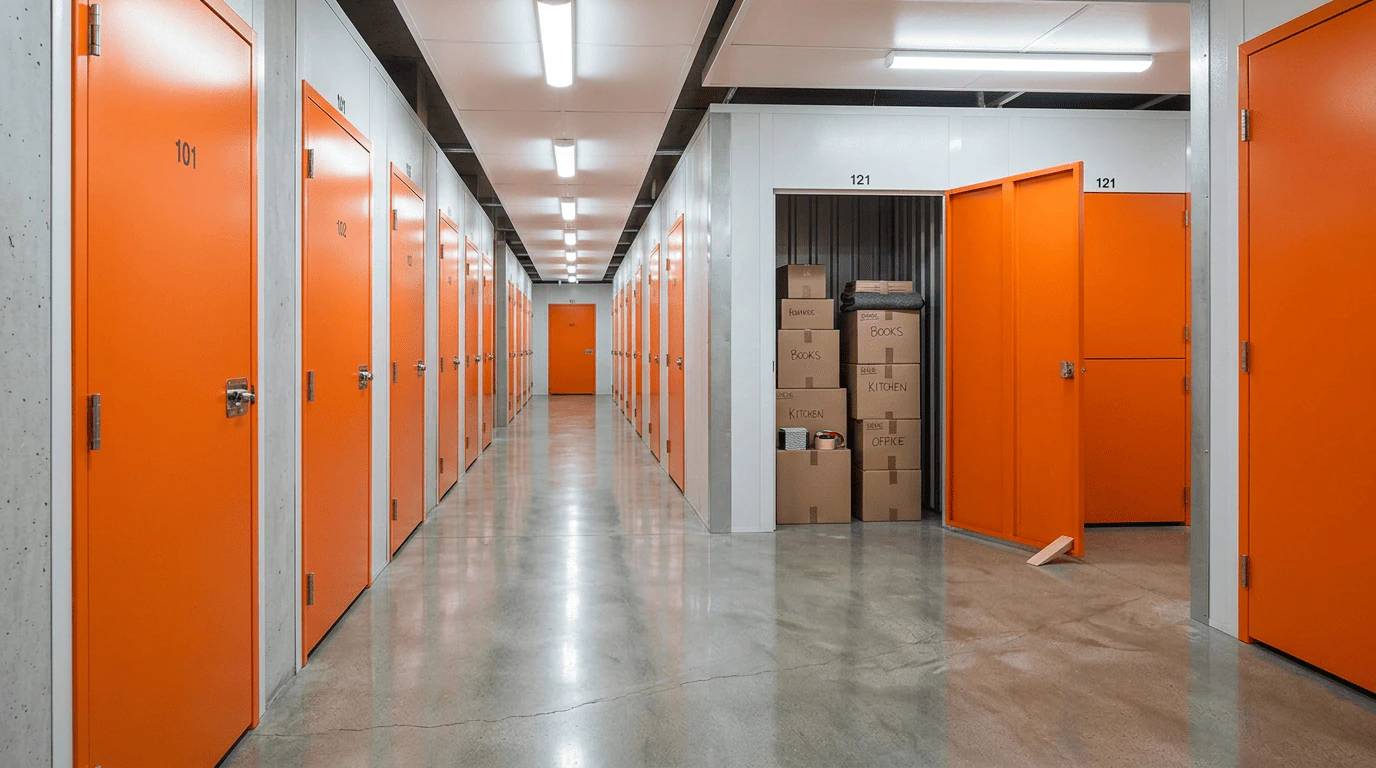
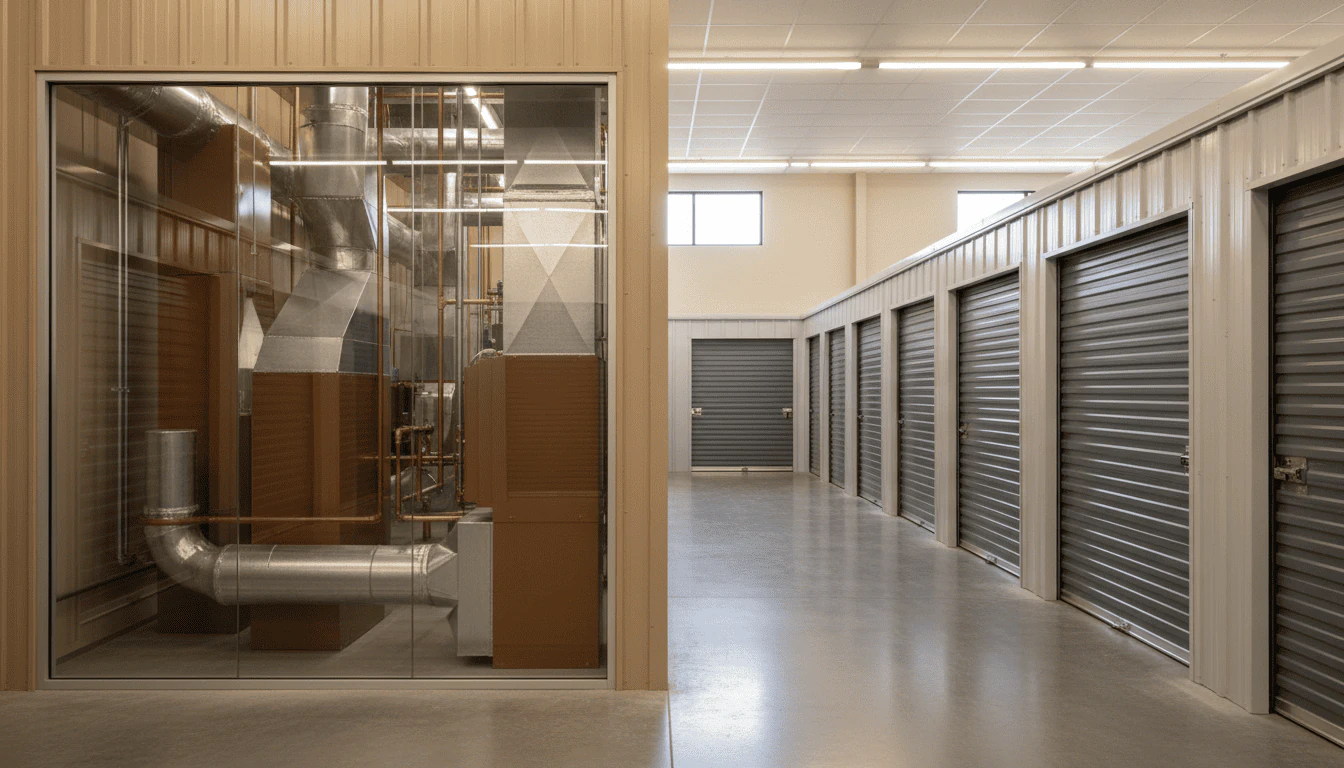
Yes, through in-transit storage. After loading, your belongings go into secure, climate-controlled storage and come out when the new place is ready. The storage period can be extended without penalties, and the crew delivers on the date you give us.
Interstate quotes can look alike until you read how each one is built. Some movers price by weight and settle the final bill after the loaded truck is weighed; others quote one flat figure for a truck reserved for a single household, which is how we work. Ask every company you call which model you are getting and whether your furniture will share space with anyone else's.
Next, check the credentials. A mover that crosses state lines should give you its USDOT and MC numbers without being asked, and both can be verified on the FMCSA website in a few minutes. Ours are USDOT 3398018 and MC 1153871; this article on USDOT rules for long-distance movers explains what that registration involves.
Finally, compare what each price leaves out. In our quote, stair carries, elevators, the walk from a designated truck spot, disassembly and furniture wrapping are already included, and a second pickup is priced before you book. When another offer comes in lower, find out which of those items it bills separately and add them back before you decide.
Every move out of state from Santa Clarita breaks into the same five parts: the estimate, packing, loading, the drive and unloading. Knowing who is responsible at each stage keeps the last day free of surprises.
The estimate. Walk the house with a notepad and list the furniture room by room, then add a rough count of boxes. Do not skip the garage shelving or the backyard shed: bikes, tools and outdoor furniture take real room on a truck. The closer the list is to reality, the better the flat price fits the load.
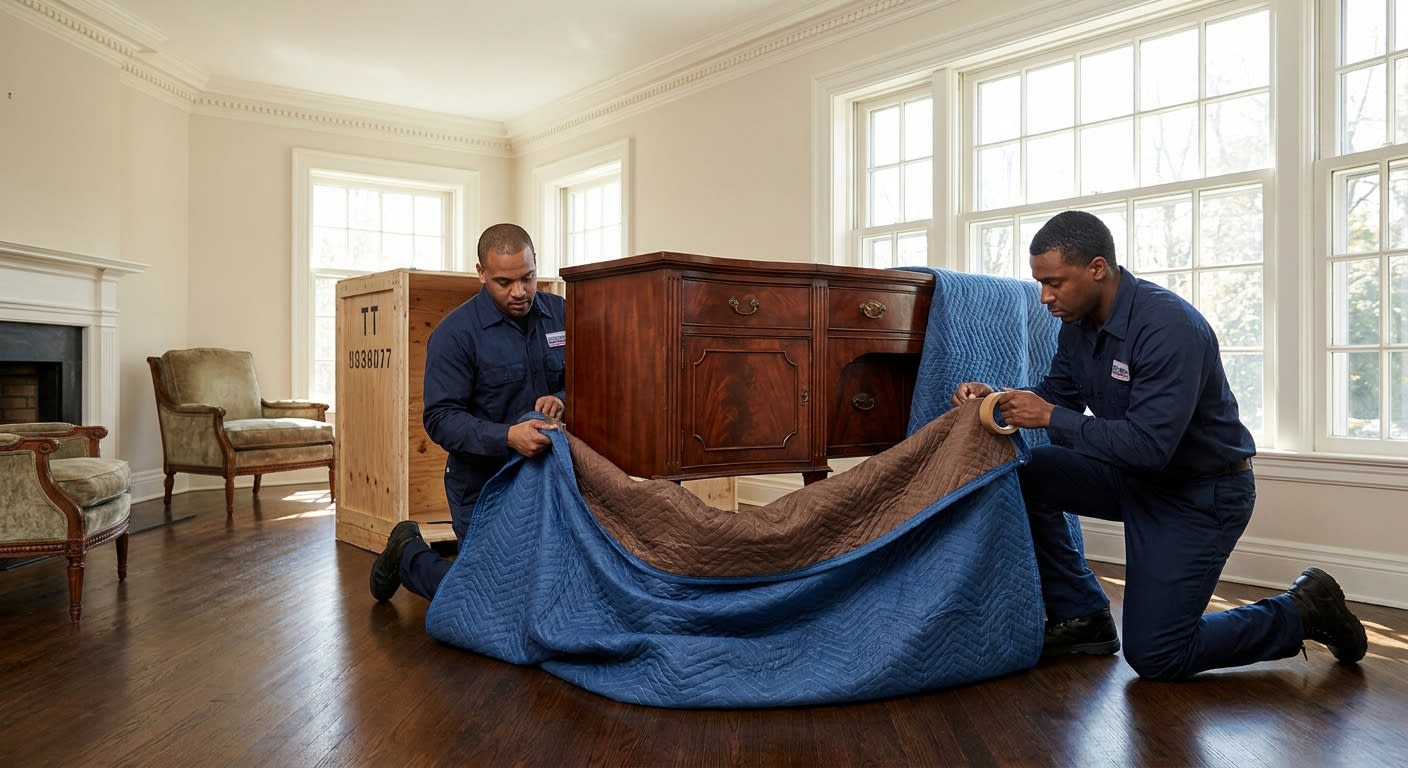
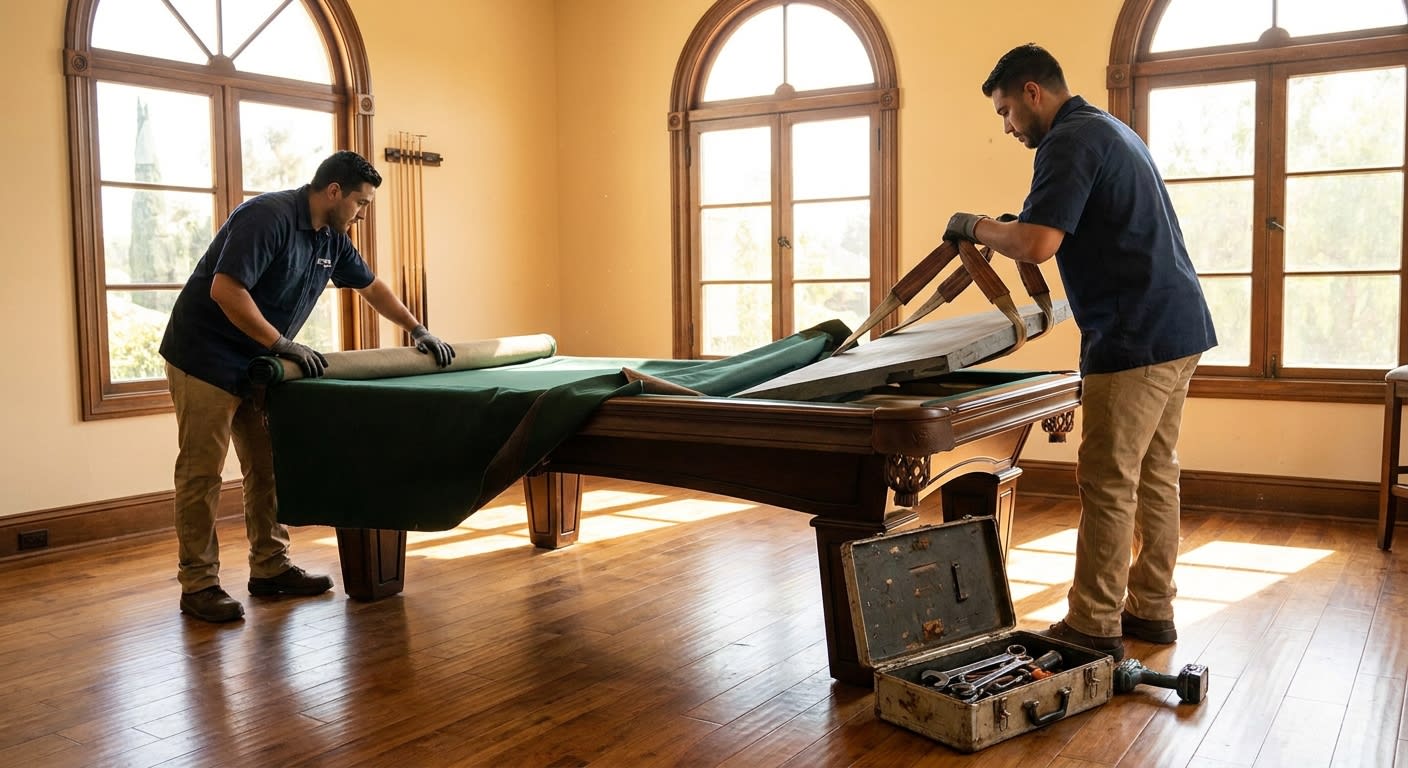
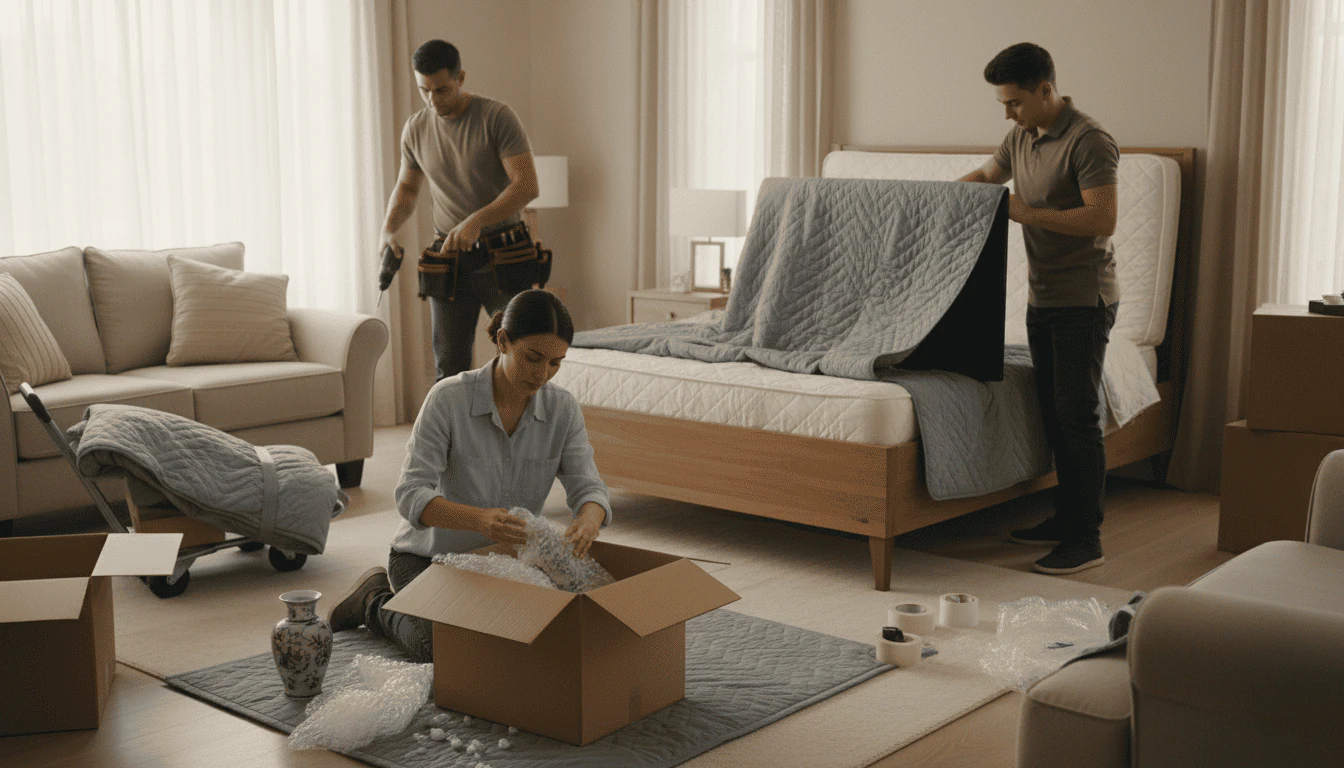
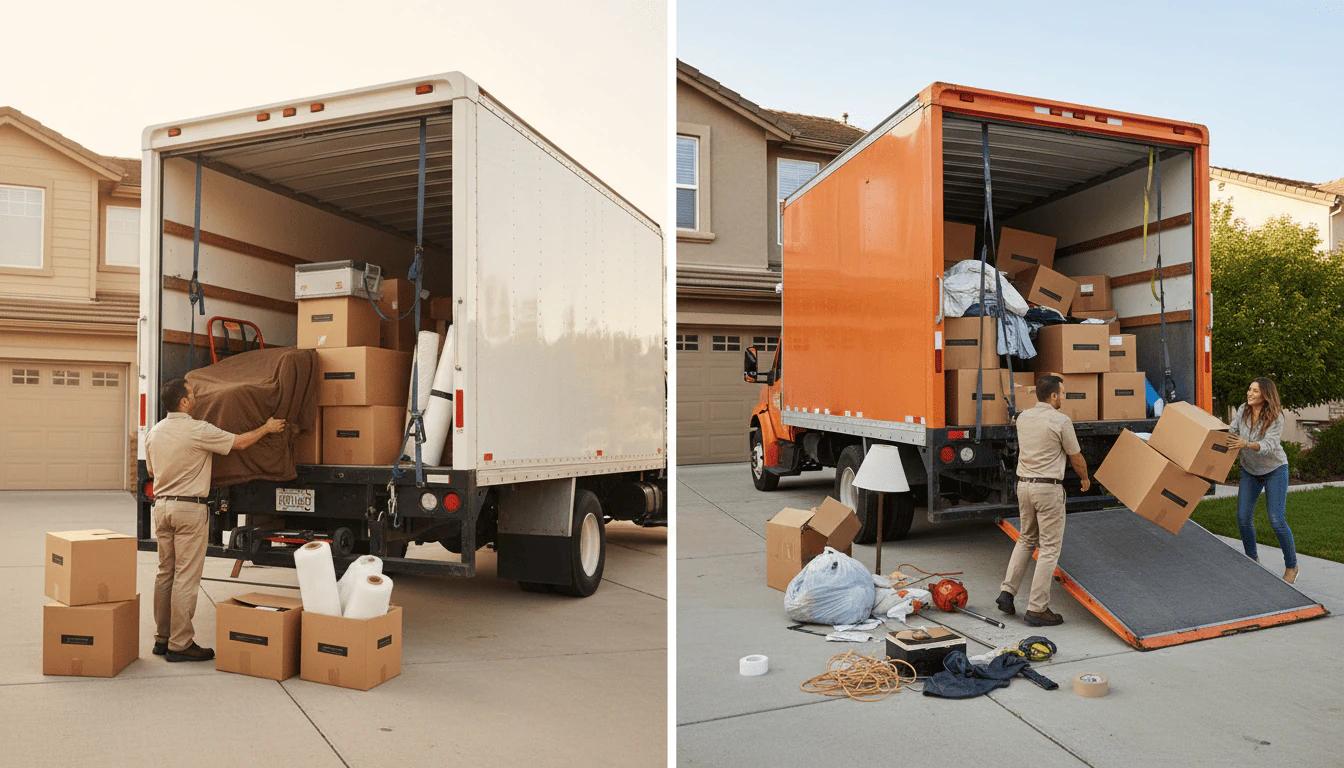
Packing. You can pack everything yourself, give the whole job to our crew, or split it. A common split is to box books, clothes and linens yourself and leave the kitchen and fragile pieces to the professionals. Furniture wrapping is included either way.
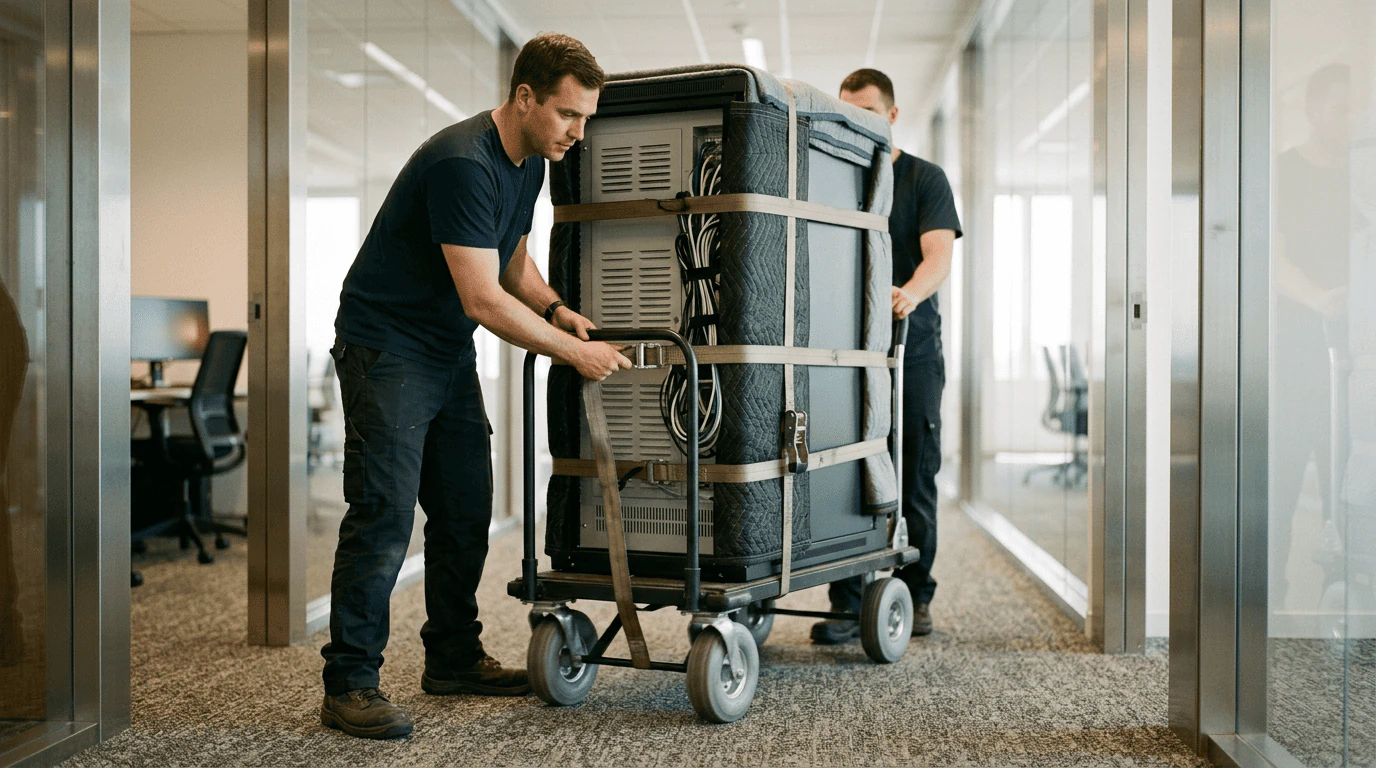
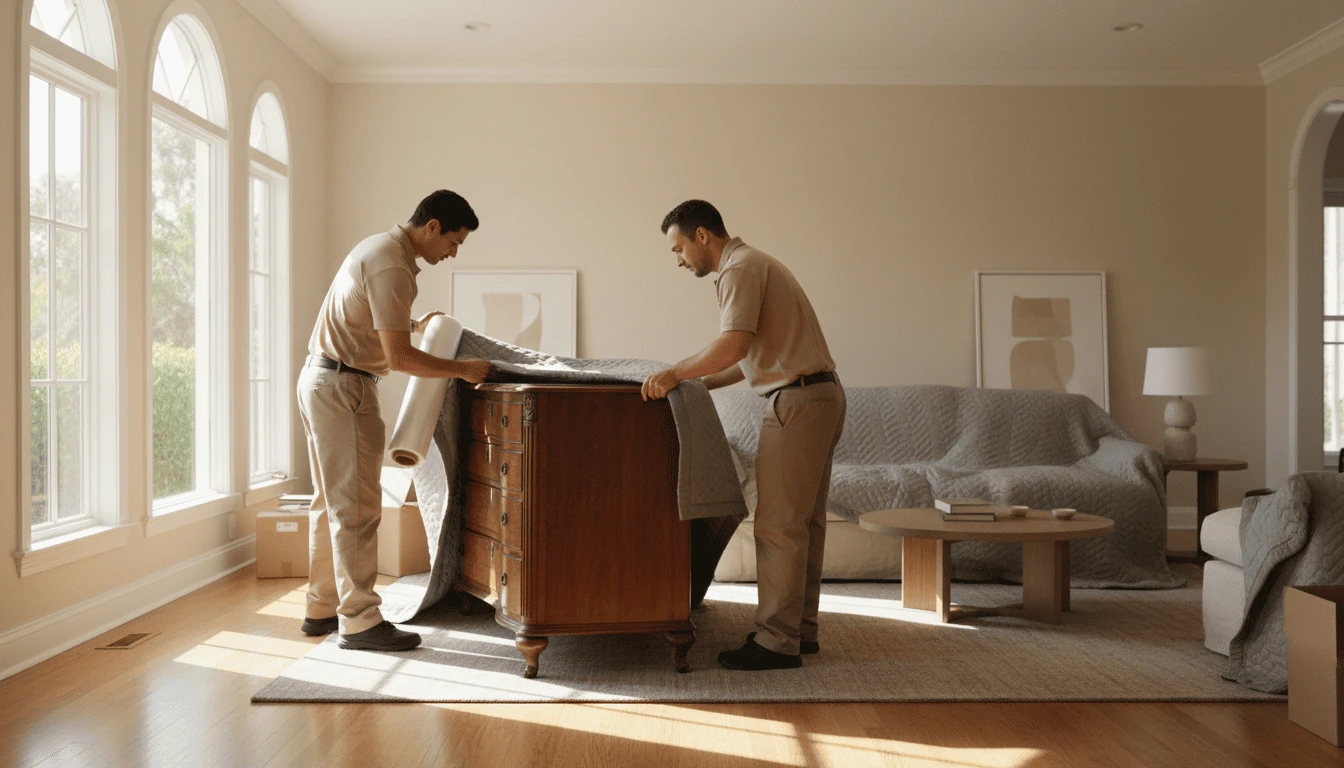
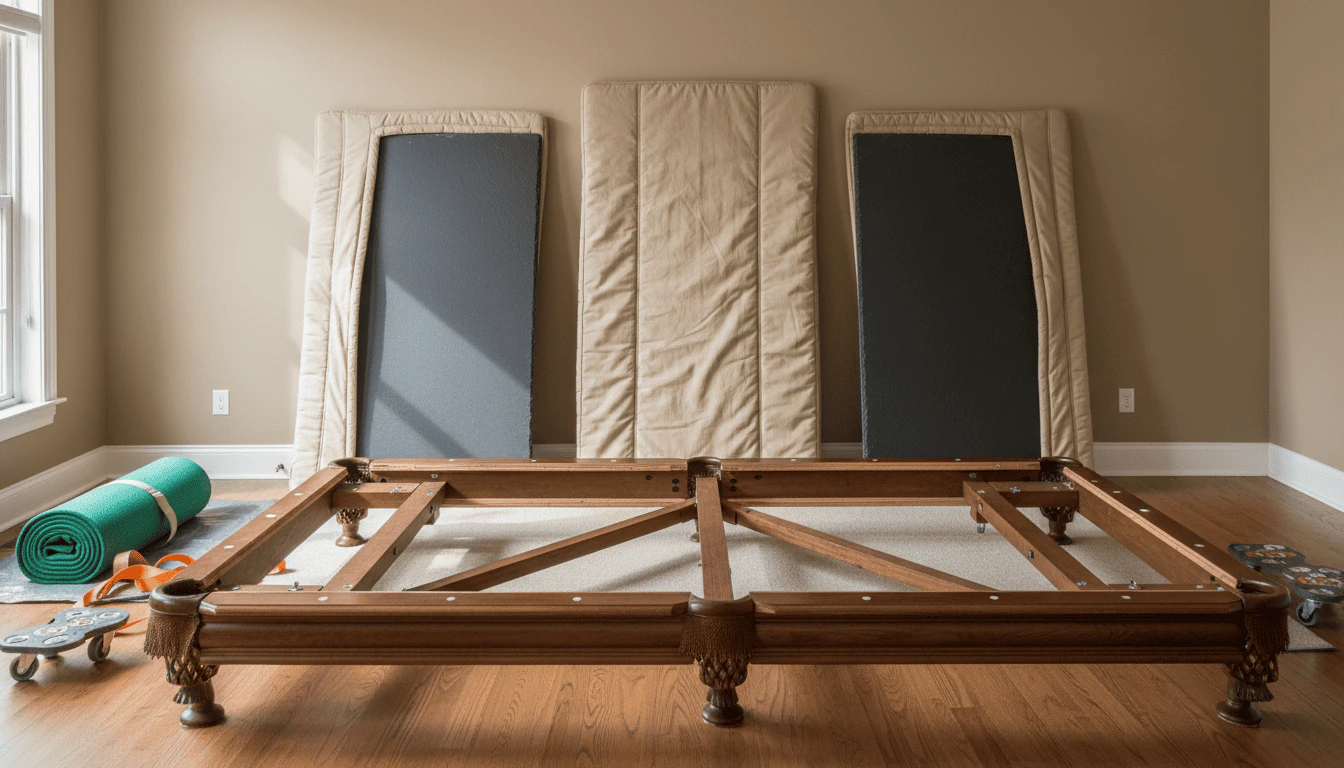
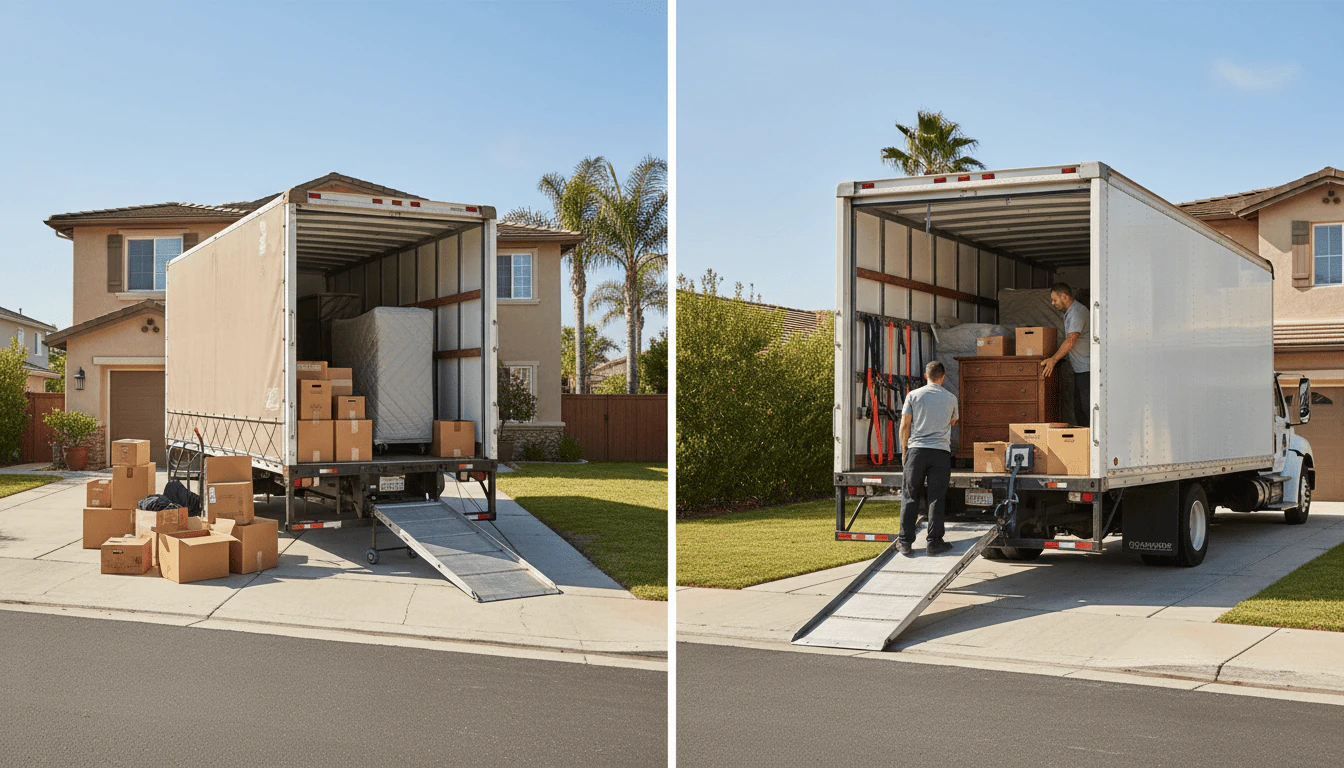
Loading. The crew takes beds and tables apart, wraps each piece and loads in inventory order. That same list becomes the checklist at delivery, so nothing is counted twice or missed.
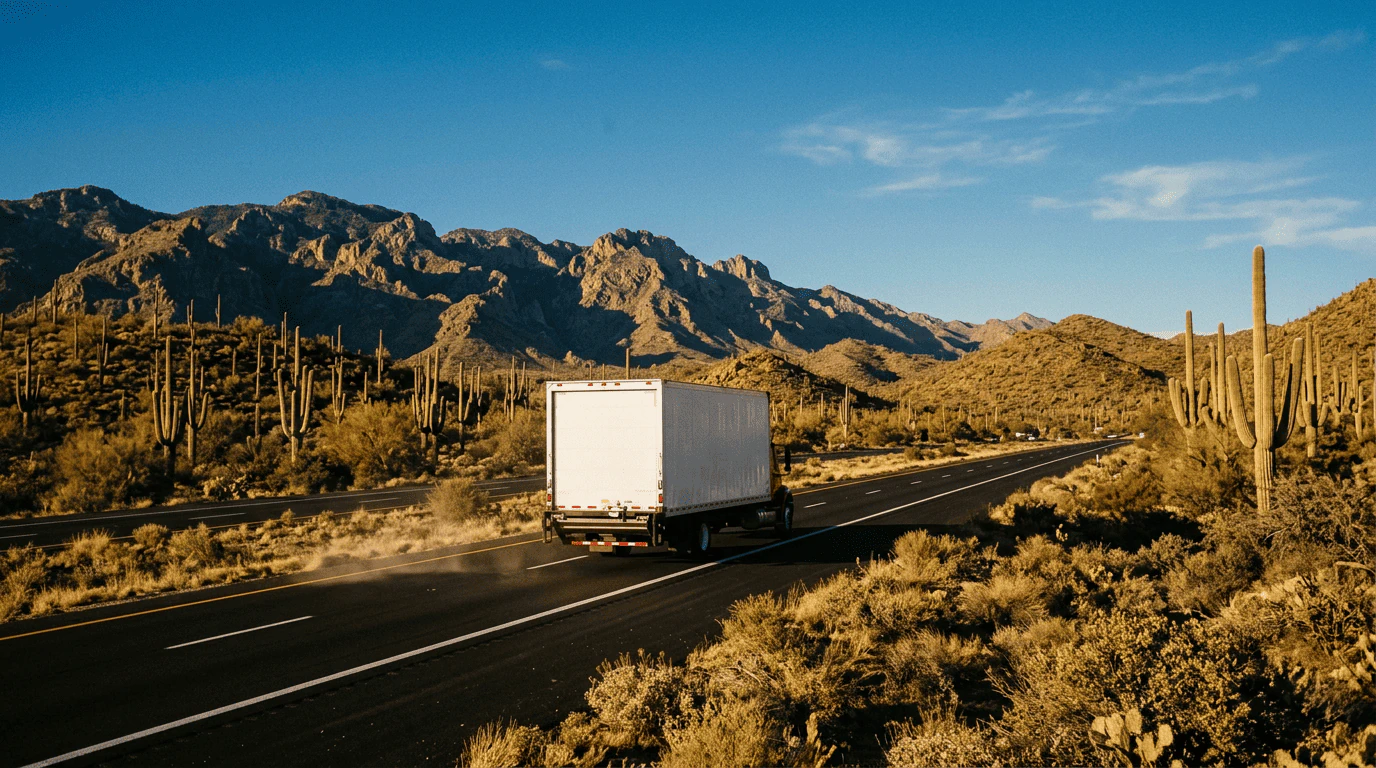
The drive. Because the truck carries only your household, it heads straight for the destination instead of stopping for other customers. You receive updates while it travels and a call before it arrives.
Unloading. At the new home the crew places furniture in the rooms you point to, puts back together what was taken apart and waits while you check the inventory. The final payment is due only after that check. Everything else about the service is described on our interstate moving service page.
A USDOT number identifies a company that runs commercial vehicles in interstate commerce. The MC number is the operating authority that allows a for-hire carrier to move household goods across state lines. A company holding only one of them, or neither, should not be loading your furniture for another state.
Checking takes minutes: type the number into the FMCSA lookup and confirm that the company name matches the one on your quote and that the authority is listed as active. Our numbers are the same ones printed throughout this page, and we also hold California number CAL-T0192140.
Ask every company, too, who will actually handle your load. A broker may sell the job on to a carrier you never spoke with; with us, one crew takes care of your belongings from pickup to delivery.
Licensing also sets the floor for liability. Basic value protection at $0.60 per pound per item comes with every interstate move, which is modest coverage for light, valuable items. List anything of high value when you request the quote, and carry jewelry, documents and family photos with you rather than on the truck.
Volume. A one-bedroom condo and a four-bedroom house need very different amounts of truck space and crew time. The inventory is how we tell them apart, which is why an accurate list matters more than any other step.
Route. Distance counts, but so does the road. A destination reached over the Grapevine, one reached through Mojave and one reached by way of Ventura and the coast each set up the drive differently, and the delivery window reflects that.
Packing. The more packing the crew does, the more labor and material the quote covers. Boxes start at $4 in small, medium and large sizes, you pay only for the ones used, and tape and stretch wrap are included free in every estimate.
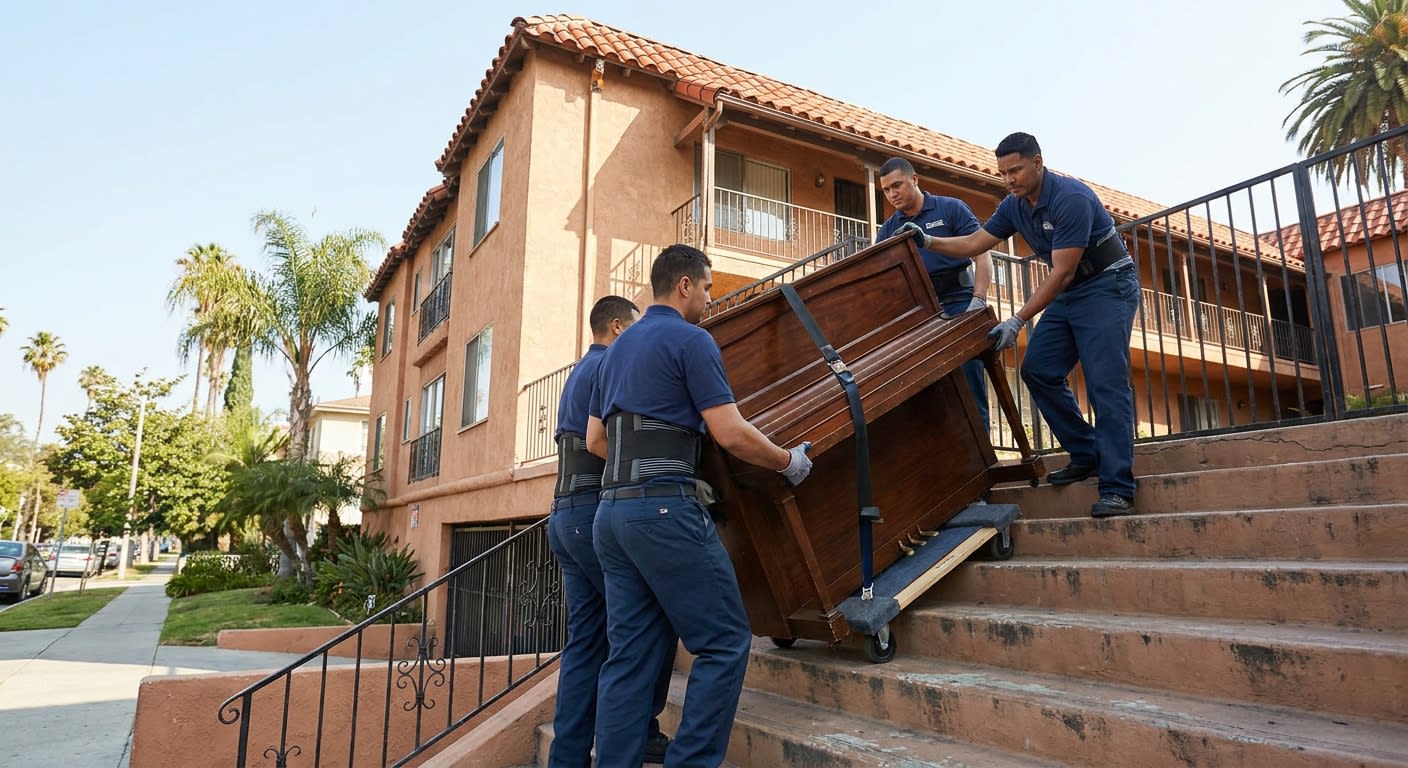
Access. Stairs and a long carry from a designated truck spot do not add charges, but we still need to hear about them to send the right crew and plan the day. A condo where the truck may stand only while loading calls for a tighter schedule than a house with a wide driveway.
When long distance movers in Santa Clarita give you a figure, ask which of these four inputs it assumed. If your plans change after the quote, send an updated inventory so the price keeps matching the move.
If your home belongs to a homeowner or condo association, its rules can decide where a moving truck may stand and for how long. Ask the management office for the move-out rules in writing as soon as you have a date, and forward them to us with your inventory.
Read those rules for four things: where commercial vehicles may park, whether moves must be scheduled with the office, whether a certificate of insurance is required, and whether visitors or contractors need a pass. Our COI costs $50; send us the exact wording the association wants and we prepare it before loading day.
In a gated community, ask for the crew to be added to the gate list for the loading date. If the truck has to stand in a designated area away from your unit, the longer carry is covered by the flat price, although it does add time, so it belongs in the plan.
Think, too, about the walk-through that a landlord or association may do after you leave. The crew wraps furniture before it goes through a doorway, which also helps keep frames and hallway walls free of scuffs.
Most of what makes loading day smooth happens in the last few days before it. Start with the paths: clear the hallways, the garage floor and the route from the front door to the curb, so the crew can carry without moving obstacles first.
Confirm access at both ends. At the valley end that means the HOA office, the gate list and an empty driveway; at the destination it means knowing where a 26-ft truck can stand and whether an elevator has to be reserved. Tell us about both, because the delivery plan depends on the far end as much as on the near one.
Empty and defrost the refrigerator a day ahead, drain the fuel from mowers and other gas-powered tools, and set aside what the crew cannot take, such as hazardous materials and perishables. Leave furniture assembled; taking it apart is part of the crew's job and is already in the price.
Then walk the house one more time with the inventory in hand. Anything added since the quote should reach us before loading day, so the truck space and the flat figure still match what goes on board.
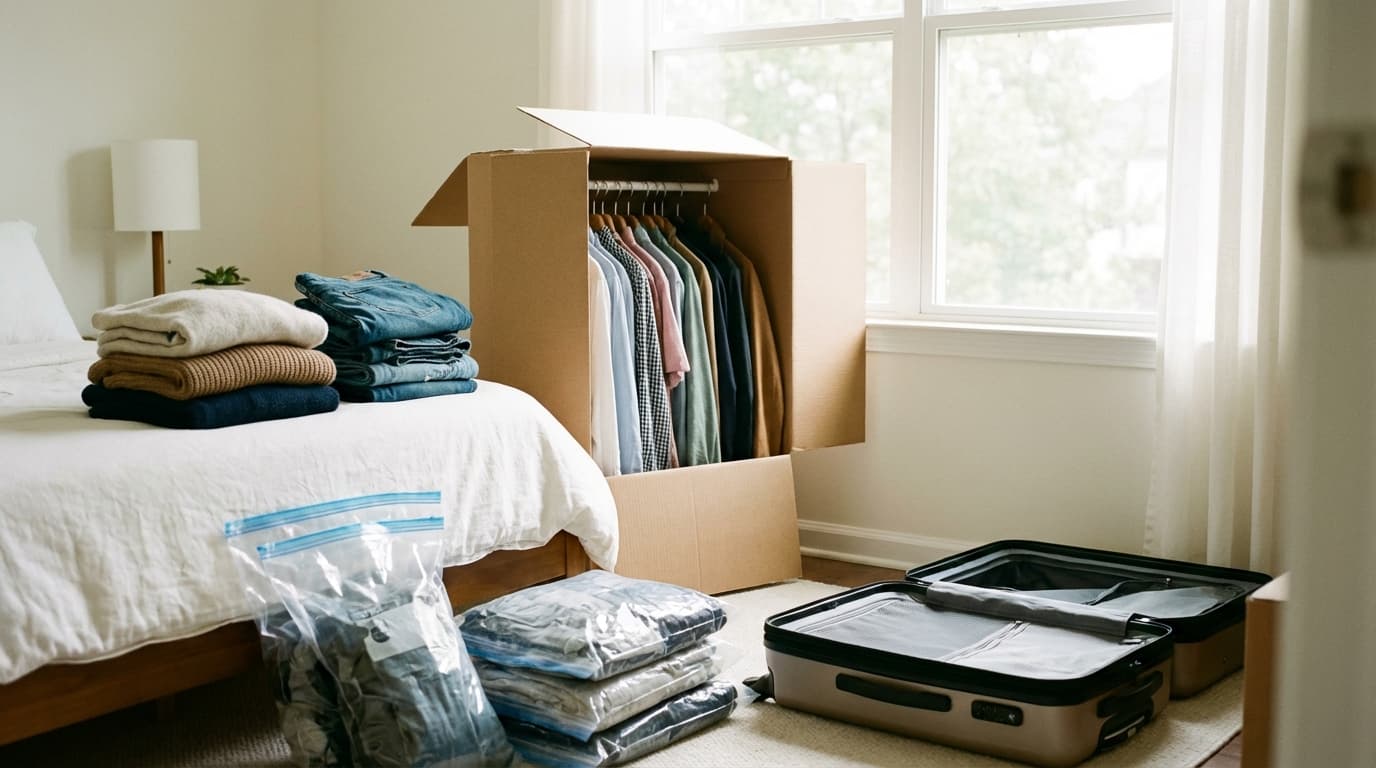
A long haul is harder on boxes than a move across town. Cartons ride for days and sit in taller stacks, so the way they are packed matters. Put books and other heavy items in small boxes, use medium boxes for kitchenware and linens, and keep the large ones for light, bulky things such as pillows and lampshades.
Label each box on two sides with the room it goes to in the new house, not the room it came from. Unloading then moves faster, since the crew can carry straight to the right place.
If you would rather hand the job over, packing help in Santa Clarita can come before the truck does, so loading day is spent carrying rather than taping.
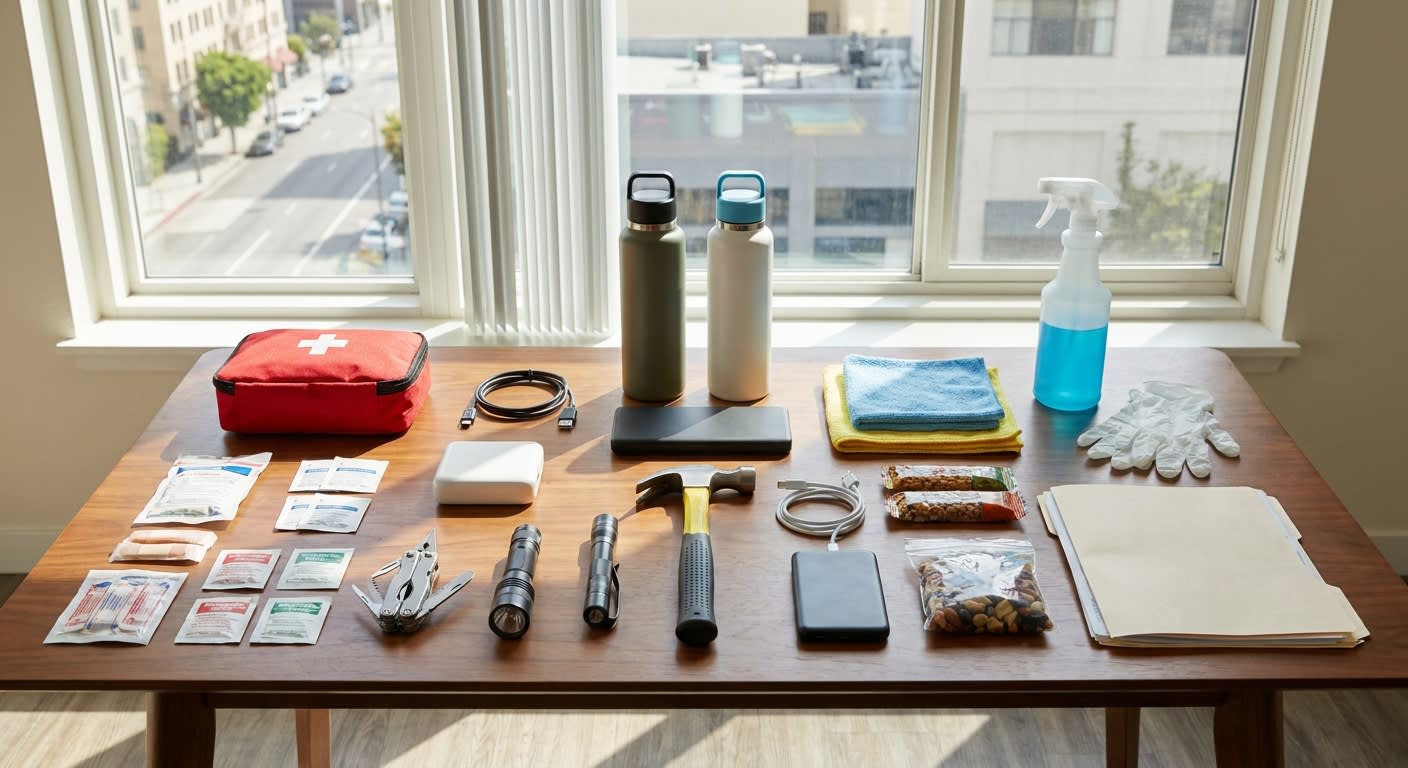
Keep a separate bag in your car with documents, medications, chargers and a few days of clothes. The truck may reach the new address after you do, and those are the things you will need first.
Book at least two to four weeks ahead; a 5% deposit holds the loading day, and earlier requests leave more dates to choose from. We load Monday through Sunday between 8AM and 6PM, so a Saturday or Sunday departure is an ordinary booking for us.
Delivery time follows distance. The ranges shown near the top of this page run from same-day delivery for trips of up to 400 miles to three to seven days for 2,000–3,000 miles, and we aim for the early end of each range.
North of the valley, I-5 climbs over Tejon Pass. Winter storms have fully closed it between Parker Road in Castaic and Grapevine Road in Kern County, and Caltrans has pointed drivers to US-101 as the detour. If your destination lies north and the date falls in winter, keep a little slack in your own plans at the other end; the delivery window will reflect the route the truck actually takes.
At the south end of the valley, a Metro and Caltrans project covers 13.6 miles of I-5 between SR-14 and Parker Road. It adds a carpool lane in each direction and truck climbing lanes between SR-14 and Calgrove Boulevard. The work touches how the crew reaches you from Los Angeles more than how your truck leaves, so allow a little leeway on the crew's arrival time.
Selling in the valley and buying somewhere else rarely produces matching dates. In-transit storage fills the gap: the crew loads on the planned day, your belongings go into secure, climate-controlled storage, and they are delivered once the new place is ready.
Temperature and humidity are controlled all year, which matters for wood furniture, electronics and paper records. If the closing slips again, the storage period can be extended without penalties. Mention a likely gap when you request the quote, and our storage service is planned in from the start instead of arranged in a hurry.
Storage also helps when the new building allows move-ins only on certain days. The truck delivers on the first date that works there, and nobody has to rush the unloading to fit a window that was never going to open on time.
Some families move into a short-term rental nearby while they wait. In that case the first leg is a local job for our local crews in Santa Clarita, and the interstate truck is booked later from the rental.