



%201.svg)








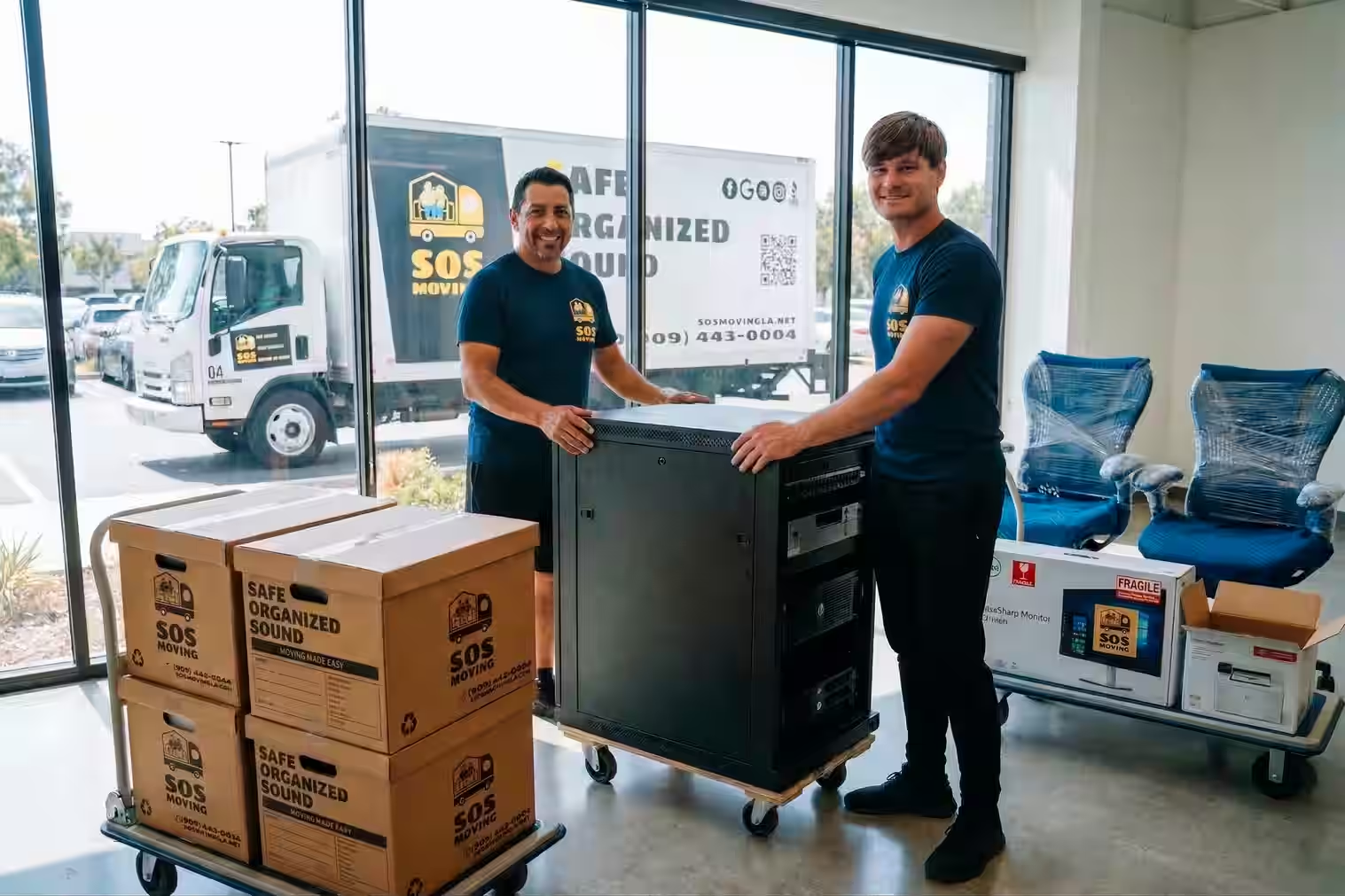

Our office movers in Orange County show up with the truck, the pads and a written plan that was agreed before anyone unplugged a monitor. The work itself follows our commercial moving service for offices and businesses; this page covers what changes once the address sits south of the Los Angeles County line. Household moves in the county have their own page: our Orange County movers.
What each commercial job in the county includes:

Searching for machinery movers in Orange County? Production and industrial machinery is not part of our commercial service, so tell us at the walkthrough what you have and we will say plainly whether it fits. Single office items heavier than 300 lbs move with a crew of three for a $150 charge.
We don't publish a mileage figure for any Orange County address. Travel time is worked out from your real pickup and delivery points and written into the estimate before you confirm the date.
The Irvine Company sorts its office buildings into three groups: campus office with one or two floors, low-rise with two to four, and high-rise with five floors or more. For a moving crew that label says most of what we need to know about loading. At a campus building the truck can usually back up near a ground-floor door, and the crew runs dollies over floor runners straight into the suite.
At a high-rise the plan starts at the dock and depends on the freight elevator. Before quoting, we ask the property manager which spot the truck may use and how many hours it can stay there, and we pass the answer on to you rather than guess. Anything the building expects the tenant to arrange, such as reserving a loading space, goes on your checklist a week ahead.
The tenant portal of 2050 Main Street in Irvine shows the pattern we plan for across managed office properties in the county. Every contractor has to provide a certificate of insurance using the forms in the building handbook, and the tenant must tell management about the work and name the contractor before it starts. We split that job in two.
Our side is a COI for $50, made out to the details management gives us and delivered before the move date. Your side is the notice to management naming SOS Moving, plus any elevator or dock reservation the building accepts only from tenants. If the handbook lists other conditions, send us that page and they go into the schedule.
The Irvine Business Complex, on the northwest side of Irvine, mixes office and industrial buildings with residential and mixed-use projects. Loading there can mean sharing driveways and curbs with residents, so we agree the truck spot with management and keep entrances clear. Irvine Spectrum counts more than 40 office communities, which is why the building name and suite number matter more to us than the district name when we ask for access details.
South Coast Metro spreads out from South Coast Plaza across the Costa Mesa–Santa Ana line, inside a larger edge city that also takes in John Wayne Airport. Wherever the suite is, runners go down on floors and pads go on door frames and elevator walls before the first piece moves.
The usual way down from Los Angeles to these districts is I-405. OCTA's improvement project, opened on December 1, 2023, rebuilt the 16 miles from the I-605 junction at the Los Angeles County line down to SR-73 in Costa Mesa, adding one general-purpose lane in each direction plus the tolled 405 Express Lanes, two each way down the middle.
That drive is part of every job here, so the distance terms of the rate sheet are in play: four billable hours at the least for sites 30+ miles out, and double time for driving past the 10-mile mark. Work runs Monday – Sunday, 8AM – 6PM, which is why larger offices move in daytime phases across several days, weekends included. A small suite can often go the same day you call.
Orange County districts and building types, and what each one means on moving day:
| Where the office is | What the crew plans for |
|---|---|
| Irvine Business Complex, northwest Irvine | Offices share the district with industrial, residential and mixed-use buildings; the truck spot is agreed with management so neighbors keep their access. |
| Irvine Spectrum office communities | More than 40 communities, so access and loading instructions are collected for the exact building and suite, not for the district. |
| South Coast Metro, Costa Mesa and Santa Ana | The district crosses a city line around South Coast Plaza; we confirm the exact address and the delivery entrance before the day. |
| Campus office, 1–2 floors | Ground-level doors: the truck parks close to the entrance, dollies roll on floor runners, and an elevator is rarely part of the plan. |
| Low-rise office, 2–4 floors | An elevator joins the plan; we ask management which car can be padded for movers and during which hours. |
| High-rise office, 5+ floors | Dock and freight elevator time is requested through management inside 8AM – 6PM, with the COI delivered first. |
| Buildings with a contractor handbook, such as 2050 Main Street | The COI follows the handbook forms, and the tenant notifies management with SOS Moving named as the contractor. |














Our crews set out from Los Angeles, so any driving beyond 10 miles is billed at double time, and a site 30+ miles from the base has a 4-hour minimum rather than 3. The estimate shows the travel time for your two addresses before you book.
Yes. The COI costs $50 and goes to your property manager before the move date. Some buildings, such as 2050 Main Street, also expect the tenant to notify management and name the contractor in advance, so plan that notice alongside our paperwork.
Yes. Crews work Monday – Sunday between 8AM and 6PM, so a bigger company usually moves in phases, one floor or department per day, with Saturday and Sunday available. We do not run night moves.
Our commercial service covers office furniture, workstations, IT equipment and servers, files, break-room appliances and medical office equipment. Production machinery is outside that list. A single item over 300 lbs within it moves with a crew of three for a $150 charge.
It does. A one- or two-story campus building usually loads through a ground-level door, while a high-rise of five floors or more needs dock and freight elevator time booked through management. We ask about the building type on the first call.
Often, yes: we take same-day office jobs whenever a crew is open. The working window is still 8AM – 6PM and the county distance rules still apply, so a morning call leaves the most room.
The first call about an office in the county goes faster when five things are ready: both addresses with suite numbers, the floors involved, a rough headcount, the last day on the old lease and a contact in property management at each building. With those, we can tell you on the phone whether the job needs a walkthrough, a single moving day or a run of phases.
Floor plans help more than photos. A plan of the new space with desk numbers lets us write the labeling scheme before packing starts, so nobody on the unloading side has to ask where a chair goes. If the new space is still being built out, send the latest drawing and we update the codes when it changes.
For a larger office, the project manager walks both sites with you: the old space to see what moves, the new one to see how it gets in. A small suite can often be scoped from a list and a few photos, which saves a trip for both sides and still produces a written estimate.
The building handbook is the other document worth sending early. Managed office properties often spell out insurance wording, loading rules and move approvals there, and the sooner we read it, the smaller the chance of a delayed first day.
When office movers in Orange County, CA, come down from a Los Angeles base, the clock covers three things: the drive south, the work at both buildings and the drive between them. Two rules on our rate sheet exist for exactly this situation: time on the road past the first 10 miles is billed twice, and a site 30+ miles from the base cannot be booked for less than 4 hours, where the standard floor is 3. Nobody on our side guesses a mileage for your address; the travel time is calculated from the real pickup and delivery points and printed in the estimate.
Crew size changes the math more than most people expect. Two movers with a truck cost $119 cash from Monday to Thursday, while four cost $199 cash on the same days and clear a floor of workstations far faster. A bigger crew for fewer hours often lands close in total and shortens the time desks sit empty, so we suggest a crew size at the walkthrough and explain the reasoning.
What makes hours grow is rarely the furniture itself. Long carries from the truck to the suite, waits for a shared elevator, desks still full of paper and packing left for the morning of the move all add time at the hourly rate. Emptied drawers, finished cartons, a reserved elevator and a clear corridor are the cheapest savings available.
Friday, Saturday and Sunday use the higher column: $135 cash for two movers, $175 for three and $215 for four, with card payment $10 above cash in every row. Overtime applies after 8 hours, one more reason to split a big office into several days rather than one long one.
A few charges sit outside the hourly total: $30 for gas, $50 for the COI and $200 if a second truck is needed. The $50 deposit is not an extra charge either; it is credited against the final bill.
Labels are the difference between a move that wraps up by 6PM and one that ends with staff hunting for monitors the next morning. Our system puts a person or room code on every carton, chair and machine and the same code on the new floor plan, so the crew unloads by code instead of by guesswork.
IT equipment is handled in practical terms. Computers, screens, printers and network gear are padded and wrapped, cords are bagged and tagged with the machine they came from, and server racks are cable-tagged before they travel. Disconnecting and reconnecting office equipment is part of the service once your Moving Coordinator adds it to the estimate, so mention it early. Company data, backups and software settings stay with your own IT staff.
A short inventory sheet helps both sides: rooms, the number of workstations, file cabinets and anything unusual, such as a safe or an oversized reception counter. Anything over 300 lbs needs a crew of three and adds $150, and we would rather hear about them before the quote than on the loading dock.
Most companies ask each employee to pack their own desk the day before their team moves, while the crew takes shared areas, the server room and the furniture. Desk drawers travel better empty, since loaded pedestals are heavy and their contents shift in transit.
Insurance comes first. The certificate we issue is written to what your property manager specifies, including the additional insured names, the coverage limits and the building's own form if it has one, and it costs $50. Send the request as soon as the date is set, because a missing certificate can keep a crew waiting at the door.
Elevators and docks come next. Your building decides when the freight elevator and the dock can be used; we ask for the longest window inside 8AM – 6PM that management will give and build the phases around it. When the old and the new building both set windows, we line them up so a loaded truck never sits idle while the other side waits.
The building type fills in the rest. A campus office of one or two floors rarely needs anything beyond a clear path to the door, while a tower of five floors or more is only as fast as its freight elevator car. That difference shows up directly in the crew hours on the estimate.
Two sets of rules apply to every job: the building you leave and the building you enter. Each can have its own insurance form, elevator window and loading instructions, and neither property manager knows what the other asked for. We collect both and merge them into one schedule, so the crew, your staff and both managers work from the same page.
We don't move offices at night. Crews work Monday – Sunday, 8AM – 6PM, so the way to keep a company running is to split the move into daytime phases rather than try to squeeze it into one day.
A phase plan we often suggest:
Each day on the calendar is its own job under the rate sheet, minimums and travel included. That is the trade-off of a phased move: a few more hours overall in exchange for no day when the whole company is offline.
Tell employees early which day their team moves, what they pack themselves and when their new desk will be ready. A one-page notice per department saves the crew lead from answering the same questions on the floor.
Small offices don't always need a phase plan. A suite of a few desks can move in a single day, and a crew can often be sent the day you phone, so call in the morning to fit the job into the working window.
Most office furniture does not fit through a door or into a truck in one piece. Conference tables lose their legs, workstations come apart panel by panel, and shelving is reduced to uprights and boards. Hardware from each piece goes into a bag marked with the same code as the piece itself.
Chairs are the easiest item to lose track of in a large move. Each one carries its owner's code on the seat, and task chairs are wrapped in plastic so the fabric arrives clean at the new desk.
Cubicle systems are carried flat and rebuilt to the new layout rather than the old one, which is why the new floor plan matters so much. If the layout changes between the walkthrough and the move, tell us before moving day so the rebuild follows the right drawing.
If some furniture is staying behind for the landlord or being replaced, mark it before the walkthrough. It then stays out of the count, off the truck and off the invoice.
Everything that travels is padded with moving blankets and wrapped where needed, and floors, door frames and walls at both buildings are covered before the first piece moves. Some things stay off the truck entirely: toxic substances, fire extinguishers, explosives and the rest of the prohibited-items list you receive with the estimate.
Quotes from commercial moving companies in Orange County are hard to compare unless each one answers the same questions. These are the ones we would put to ourselves:
Ask, too, who will be on site. A mover that sends one person to the walkthrough and another to lead the crew should explain how the plan passes between them; with us it travels as a written schedule that the crew lead carries on the day.
For a planning template to share with department heads, this step-by-step commercial relocation checklist covers the office side of the work. The main page for our business moving service lists what the crews handle wherever we work.
Some relocations need more than a truck and a crew. If staff cannot box their own desks and files, packing help in Orange County is booked by the hour like the move itself, with boxes from $4 in three sizes and a charge only for the ones used.
When the new space is not ready on the day the old lease ends, furniture and files can wait in climate-controlled storage; moving and storage in Orange County explains how pickup and return work. For employees relocating their homes as part of the same change, residential moves across the county run on the same hourly rate sheet.
Whichever extras you add, they sit on the same estimate and the same calendar as the move itself, so one project manager keeps track of cartons, storage dates and truck days together instead of three separate bookings.