



%201.svg)


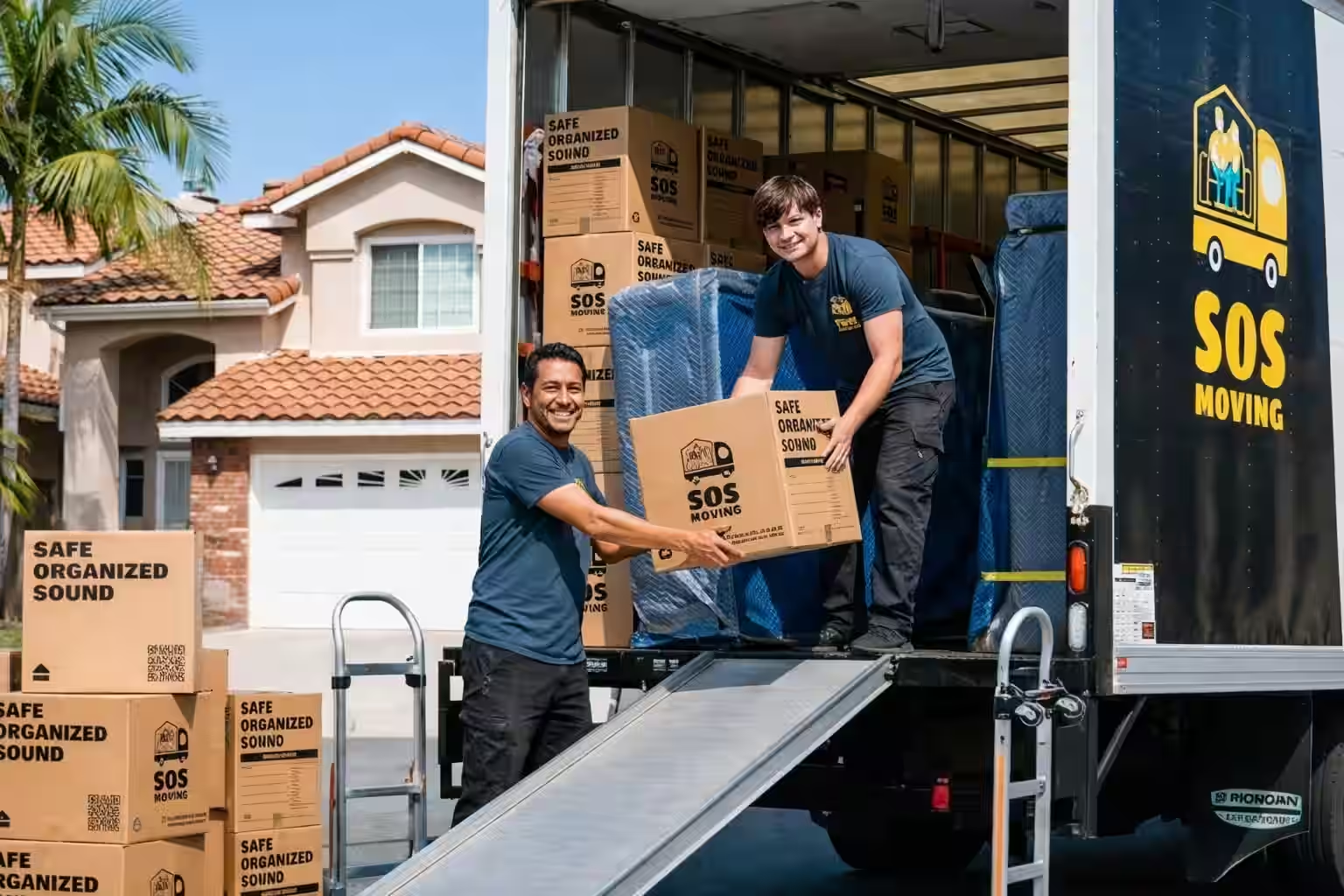




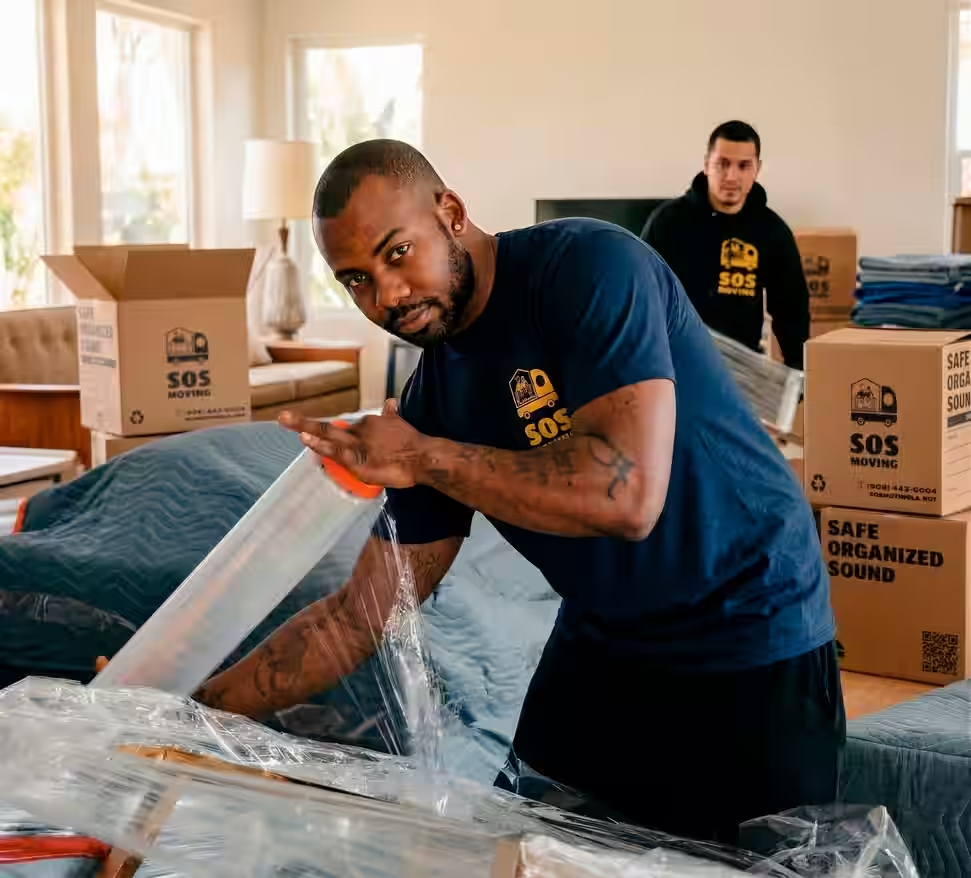
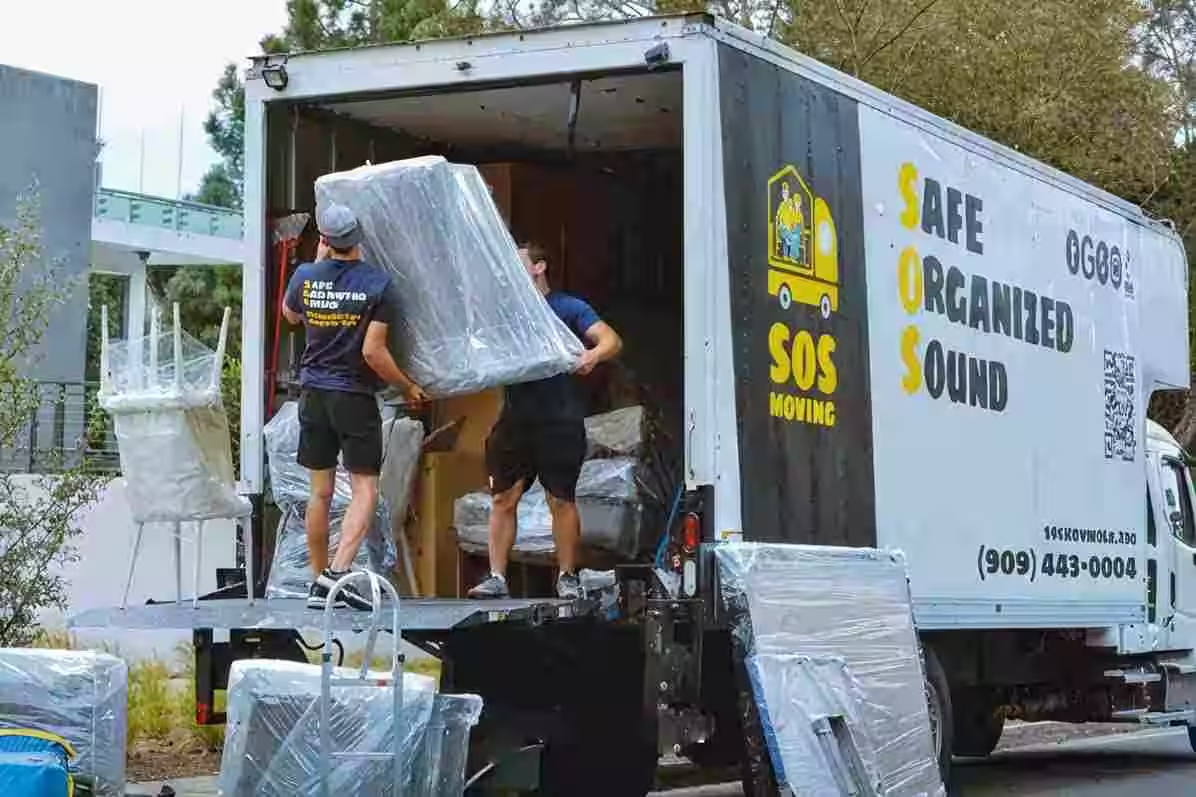
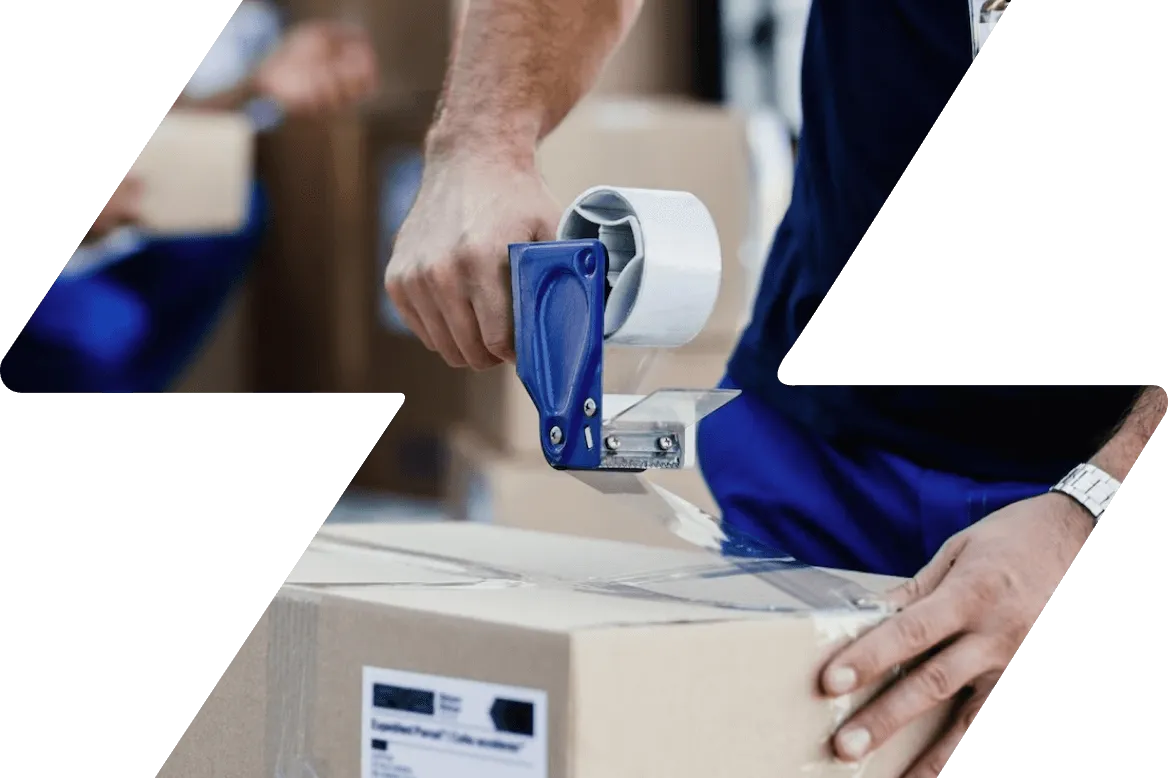
Our movers and packers in Orange County work by the hour: the crew arrives with boxes and wrap, packs each room in a planned order and marks every carton with the room it is going to, so loading runs straight from labeled stacks. Rates, materials and scope follow our packing and unpacking service; when you need the truck and the whole move as well, start with SOS moving services for Orange County.
What the crew takes on:





Packing runs on the same rate sheet as every SOS job. Hourly crew rates, cash / card:
Two distance rules shape the total for an Orange County address. When the job sits 30+ miles from our Jillson Street base, the minimum rises from 3 hours to 4, and drive time beyond 10 miles is billed at double; the estimate applies both to your exact street.
Add $30 for gas. The $50 deposit is credited toward the final bill, and hours beyond eight in one day count as overtime.
A packing visit needs less curb than a loading day, but the truck still carries every box, roll of wrap and blanket we bring, so it has to stand near your door. We ask for the driveway first. If that is not possible, tell us where the nearest legal space is and whether your street needs a temporary permit; that permit is yours to request from the city, and we do not guess at local rules.
In Irvine, the City leaves it to homeowners and tenants to work out which CC&Rs cover their property, and those documents may also say where a service vehicle can stop inside the community. Send us that answer with the booking, together with gate codes or guard instructions, and dispatch plans the arrival around it instead of circling the block with a crew on the clock.
Some Irvine neighborhoods answer to two associations at once: a master HOA that maintains the larger common areas, such as medians and parks, and a sub-association that looks after smaller landscaped areas and the exteriors of attached buildings. Before packing day, read both sets of rules, since one may set hours for work crews while the other asks for proof of insurance.
We issue a certificate of insurance for $50, addressed to whichever association requests it; send us the exact wording they want a few days ahead. In a condo with a shared elevator, the reservation matters most on loading day. On packing day the crew carries materials up once and then works inside the unit, so a short booking is usually enough.
Three kinds of homes shape our packing jobs across the county. Old Towne Orange, the one-square-mile district around Plaza Park that locals call the Circle, was listed on the National Register in 1997 and is the largest such district in California; most of it went up between about 1874 and 1940, in more than 50 styles from Victorian and Craftsman to Spanish Colonial Revival. In houses that old we pad door frames and stair rails on the carry path first.
Irvine’s earliest villages, Turtle Rock, University Park, Culverdale, the Ranch and Walnut, were finished by 1970, and a household that has stayed for decades may need a full shift for the garage alone. Great Park Neighborhoods, where eight builders started the first homes in May 2013 on the former Marine Corps Air Station El Toro, are new construction, so floor protection at the entry goes down first.
Crews leave from 5530 Jillson Street, the Los Angeles HQ that is our only base, which puts the drive to your door on the clock under the distance rules in the price block above. We like to book county packing jobs for the start of the 8AM – 6PM window: a morning arrival leaves room to finish a full house the same day, while a late start can push the last rooms into a second visit.
If you call in the morning with an urgent job, a same-day crew is possible when one is free; our day ends at 6PM, so a request that comes late rolls to the next morning. Give us the move-out deadline from your lease or escrow, and we plan the packing days backward from it.
Home type in Orange County: what we pack first, what you prepare:
| Home type | What we pack first | What you prepare |
|---|---|---|
| Historic house in Old Towne Orange | Wall art, mirrors and shelf contents along the carry path, so door frames and rails can be padded early | Point out built-ins and fixtures that stay with the house |
| Home in an early Irvine village: Turtle Rock, University Park, Culverdale, the Ranch, Walnut | Garage, attic and closet storage, which tends to grow over a long stay | Sort keep, donate and discard piles before the crew comes |
| New build in Great Park Neighborhoods | Floor protection at the entry goes down first, then kitchen and bath items | Share the HOA contact and any rules it sets for work crews |
| Attached home under a master HOA and a sub-association | Rooms farthest from the entry, keeping shared walkways clear for neighbors | Rules from both associations, the COI wording, gate or guard instructions |






The hourly rates are the same, but distance rules change the minimum. For an address 30+ miles out, the minimum becomes 4 hours rather than 3, and time on the road past the 10-mile mark counts twice. Boxes cost from $4 each and only when used; tape and stretch wrap cost nothing.
Yes. Unpacking is part of our packing service, and the crew empties boxes room by room at the new address. Tell us at booking which rooms matter most, usually the kitchen and bedrooms, so the first hours go there.
Send the rules from both associations, any certificate of insurance request with its exact wording, and gate or guard instructions. The COI costs $50 and we issue it before packing day. If either association limits work hours, we build the schedule inside them.
We pad door frames and stair rails along the carry path before boxes start moving, and wrap framed and glass items one by one in premium paper or bubble wrap. Let us know which built-ins and fixtures stay with the house so nobody touches them.
Often, yes: same-day work is possible when a crew is free. Crews run seven days a week between 8AM and 6PM, so a request that comes too late in the day is booked for the next morning.
Perishables, hazardous materials, firearms and batteries stay out of our boxes. Jewelry, documents and other valuables should travel with you, and so should house plants.
A packing day opens with a short walk through the house alongside whoever is home. The crew lead asks which rooms move in full, which pieces stay behind and which boxes you will want first at the new place. Those three answers set the order of work and the wording on the labels.
The truck arrives stocked: boxes in three sizes, tape, stretch wrap, moving blankets, premium paper and bubble wrap. You do not need to buy anything in advance, and if the house turns out to need more boxes than planned, the crew uses what is on board and the bill counts only the ones filled.
We nearly always begin with the rooms you use least: guest bedrooms, the garage, a formal dining room, bookshelves and closets of off-season clothes. The kitchen waits until later, because it eats the most paper and the most hours, and because you still cook in it until the final evening. Bathrooms and the main bedroom go last or are left for the loading morning.
Every carton carries two marks: the room it is headed to and a short note on the contents, written on the top and on one side so it reads in a stack. Fragile boxes get a separate mark, and the crew keeps them high in the load plan instead of under heavier cartons.
Partial packing follows the same method on a smaller scale. You choose the rooms or categories and the crew handles only those; a common split is the kitchen, the china cabinet and the art for us, with clothes and books boxed by the client. The estimate lists the chosen rooms, so the crew arrives knowing where to stop.
What stays unpacked until the loading morning is up to you. Most clients hold back a small kit, with a change of clothes, medicine, chargers, coffee things and a towel per person, and we leave one box open in each bedroom for the morning. Anything that should never ride in our boxes, such as jewelry or documents, goes into your car before we arrive.
The materials part of an SOS estimate is short. Boxes come in small, medium and large, from $4 each, and only the boxes that actually get filled end up on the bill; unused ones go back on the truck. Tape and stretch wrap cost nothing and have no limit, so nobody rations either one halfway through a large house.
For china, stemware, lamps, mirrors and framed art, the crew also carries premium packing paper and bubble wrap. How much of them a job needs depends on what is in the cabinets, so the estimator notes them after the walkthrough instead of quoting a flat figure up front.
There is no per-room packing fee. Orange County packing services from SOS are billed as crew hours at the posted rates plus the boxes used, which means the cheapest job is the one where the house is already sorted: the fewer decisions the crew has to wait on, the faster the hours go.
A few things that shorten the day:
Moving and packing in Orange County can happen in a single visit or across two days, and the choice mostly comes down to volume. A studio or small apartment can often be packed in the morning and loaded in the afternoon. A family house with a full garage is usually better split, with packing on the first day and loading and the drive on the second.
The split has a price side too. Each visit is billed under the distance rules from the price section above, so one long day spreads the drive over more working hours, while two days buy a calmer loading morning and a house that is fully boxed before the first piece goes on the truck.
Both kinds of visit fit inside the 8AM to 6PM day we keep all week. Work past eight hours in a day is billed as overtime, which is one more reason we split big houses instead of stretching a single day to its limit.
A same-day packing crew is possible when one is free. It suits a small apartment or a partial job best, for example a kitchen and a garage that the client simply ran out of time to box up.
Boxes that spend several days in a truck need firmer packing than boxes on a short local run. For a move out of state we fill every carton to the top so it cannot crush, wrap furniture legs and corners in stretch wrap, and give anything glass a second layer. If you are leaving California, the packing and the truck can be booked together through long-distance moves from Orange County, where the price is a flat rate rather than an hourly bill.
That interstate work runs under our federal numbers, USDOT 3398018 and MC 1153871, while moves inside California run under CAL-T0192140. In practice it means the company that packs your boxes is also the carrier on record for them.
Office packing aims at something different: a fast restart on the first morning in the new space. Each desk goes into its own set of boxes marked with a name or desk number, cables stay bagged with the device they belong to, and shared areas such as the break room, the supply closet and reception get their own labels. Send us the building’s rules on move hours and insurance certificates before the date, so the packing schedule fits them.
Whatever the destination, the crew brings the same materials and writes the same labels, so an estimate for a house, an office suite or a cross-country move reads the same way line by line.
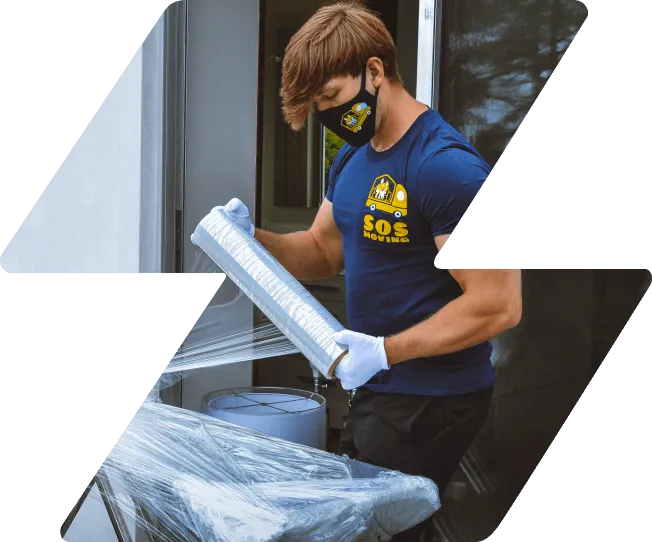
The crew packs everything in the house that is allowed on a moving truck. Plates are wrapped one at a time and stood on edge, glasses are wrapped and nested in extra paper, lamps travel without shades or bulbs, and framed art and mirrors are wrapped and boxed or padded to size.
Some things stay with you. Perishable food, hazardous materials, firearms and batteries cannot go into our boxes at all. Jewelry, passports, financial papers, family photos and heirlooms you could not replace should ride in your own car, as should house plants, which rarely handle a closed truck well.
Electronics go back into their original boxes when you still have them. Otherwise the crew wraps screens in blankets and stretch wrap and keeps them standing upright in the truck.
If you pack part of the house yourself, the crew will still carry those cartons, but items you boxed are not covered by our moving insurance the way crew-packed items are. That is why many clients divide the work: they handle books and linens, and leave the kitchen, the glass and the art to us.
For one especially valuable object, such as a large painting, an antique cabinet or a sculpture, ask about custom packing and crating from our white glove crews. Those pieces get individual treatment rather than a standard box.
Unpacking is the half of the job most people underestimate. After a long moving day, boxes tend to stay shut for weeks; an unpacking visit gets the kitchen, the bedrooms and the bathrooms working before the end of the first day. When you plan an Orange County move, add unpacking to the estimate and a crew will empty the cartons at the new address.
We unpack room by room in the order you choose, put items into cabinets and closets where you point, and flatten the empty boxes as we go. Clients who want to arrange things themselves often ask us for the kitchen only, which is the room that takes longest to set up by hand.
Unpacking is billed like packing, by crew hours, so a partial unpack of the two or three rooms you need first keeps the visit short. Many clients book it for the day after delivery, once the furniture stands in place and the beds are made up.
When the new place is not ready yet, because a lease begins after the old one ends, a remodel runs late or a closing slips, the packed boxes can wait in our climate-controlled storage. Short-term storage lasts anywhere from several days to several weeks, the term can be extended without penalty, and the crew brings everything back on the date you give. The details are on our page about storage between move dates in Orange County.
Most of the preparation that saves crew hours happens in the week before we come. Start with the calls only you can make: the HOA or building manager for work-hour rules and a certificate of insurance, the city if the truck will need a curb permit, and the utility companies for the day after loading.
Then look at the house the way the crew will. Decide what is not moving and get it out of the rooms, whether donated, sold or parked in one corner of the garage under a clear sign. Eat the fridge down before moving day, and drain fuel from lawn equipment, since fuel counts as a hazardous material and cannot travel with the load.
If you know the layout of the new home, sketch it on a sheet of paper and name each room the way you want it on the labels: Bedroom 2, Office, Kids. The crew writes the same names on the cartons, and on unloading day the sketch taped by the front door sends every box to the right room.
On the morning itself, keep pets and small children in one closed room or away from home, and have one adult free to answer questions. The crew lead will check in about which items stay, and a quick answer keeps the whole crew moving.
Before you choose packing services in Orange County, put the same short list of questions to each company and read the answers side by side:
Call 909-443-0004 any day of the week between 8AM and 6PM. To get the house in shape before the crew arrives, our room-by-room guide to packing for a move covers each part of the home, and the main page on SOS packing lists everything the service includes.