








What comes on the truck for an instrument:
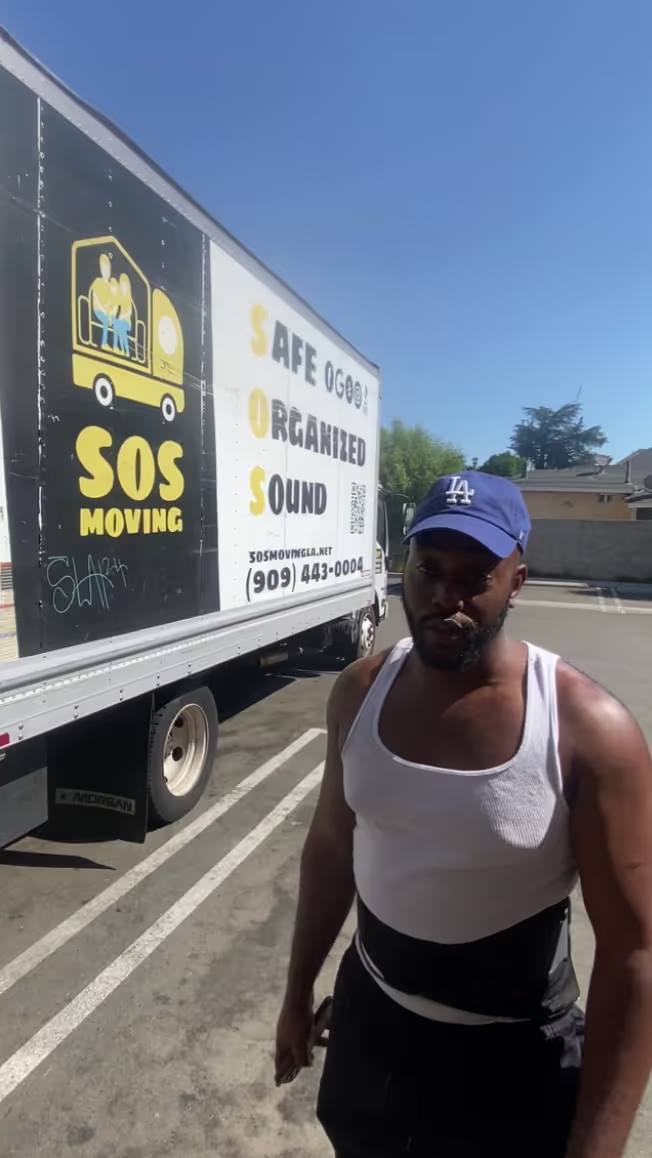
Dispatch runs through one office on 909-443-0004, Monday through Sunday between 8AM and 6PM. Work on the day you call happens when a four-person crew finishes early, so a morning call gives the best odds of a truck that afternoon.
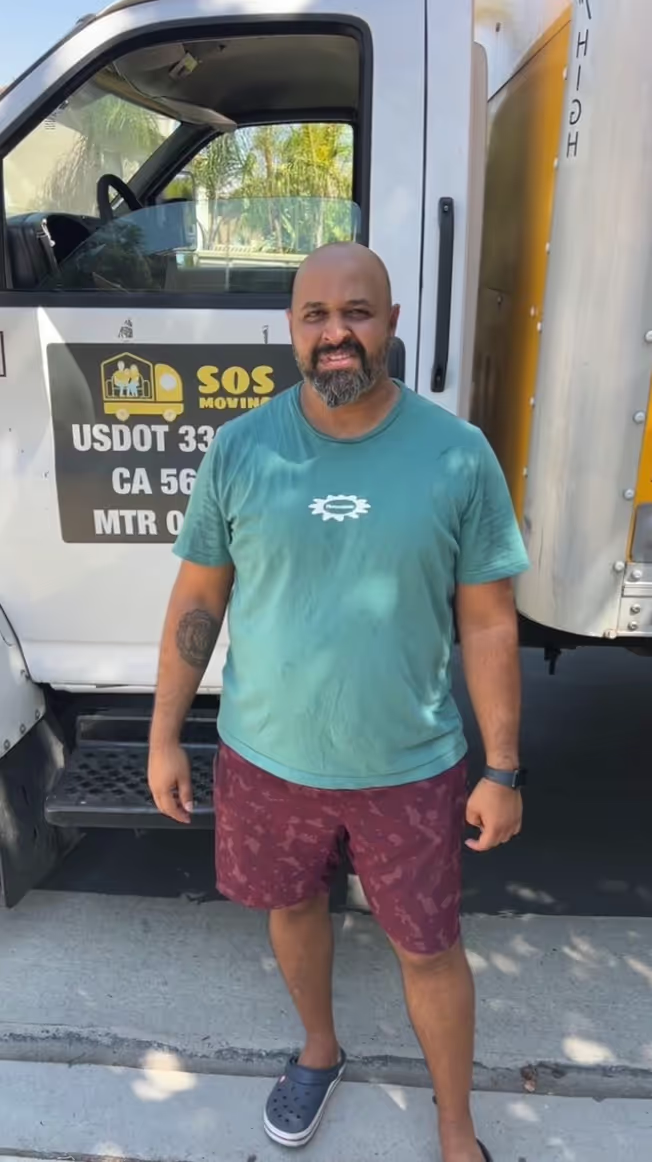
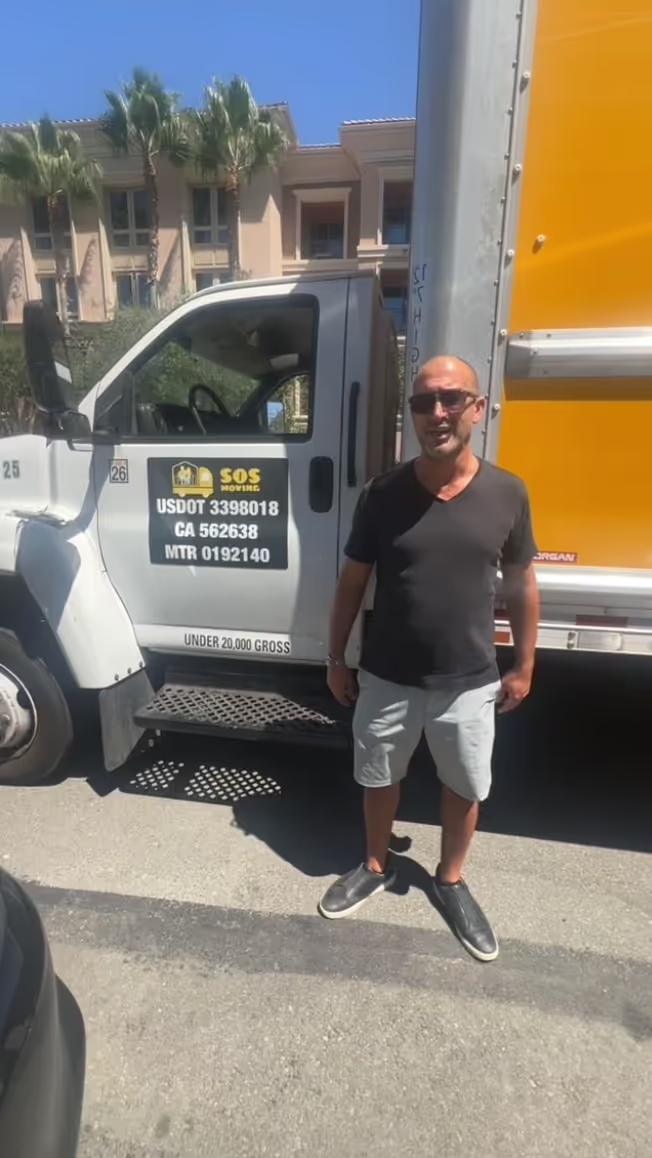
Carrier numbers are public: USDOT 3398018, MC 1153871 and CAL-T0192140. Buildings that ask for a certificate of insurance before they let a crew in get one for $50, ordered a day ahead.


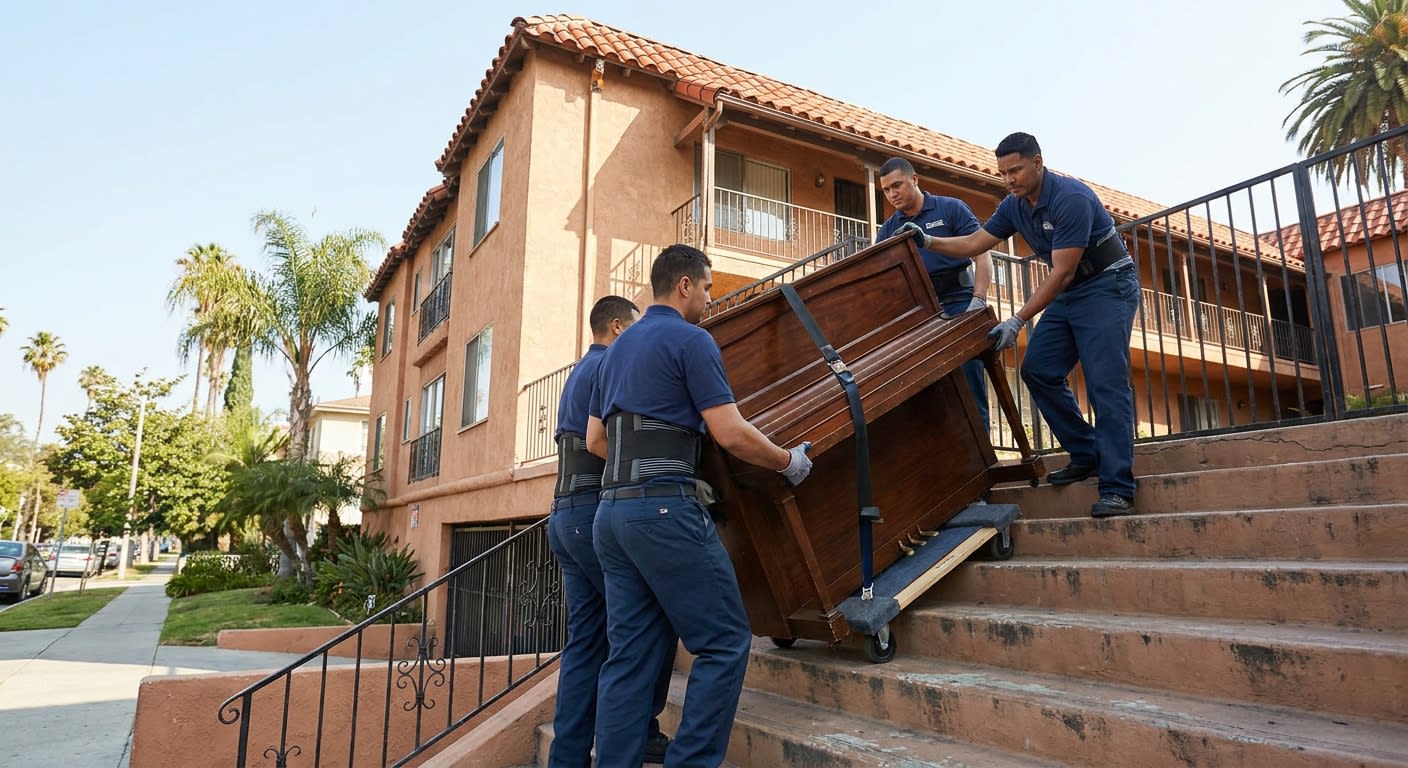
Once the path is clear, the lid and the fallboard are shut and secured, pedals and legs get padding, and the body goes onto the board in blankets. Four sets of hands share the weight on a stair; on a slope the two movers at the downhill end set the pace.
At the new address the sequence runs backwards. The instrument comes off the truck while the room is still empty, so furniture is never carried around it, and it is set down exactly where you want it before the rest of the load starts coming in.
Nothing about that changes the paperwork. The piano is one line on an hourly ticket, not a second job with its own estimate, and the crew that finishes the living room is the crew that finishes the instrument.
The other numbers that can appear on a job here:
Three hours is the floor on every job. Travel time counts double once the drive passes 10 miles, an address 30 or more miles from the yard carries a four-hour minimum, and hours past the eighth are billed as overtime.
Four things decide how a job here is planned: where the truck can stand, what the building wants on paper, what the street does at your door, and how the hours line up against the rest of the house. None of the four is guesswork once the office has the floor, the step count and the instrument type.
The curb is the one piece to settle with you before the day: where the truck may legally stand and whether the block needs a temporary sign. Clearing two car lengths in front of the entrance the evening before saves real minutes, and in a managed building the loading zone should be reserved for the window you booked.
Where a truck cannot stop at the door, the lead walks the carry distance first and brings the board out to meet it. That is slower than a curbside lift, and it sits inside the same 8AM to 6PM day, which is why a long carry is worth mentioning on the first call.
Chevy Chase Canyon is the local case where the paperwork is thinner than people expect. The Chevy Chase Estates Association, founded in 1937 and the oldest association of homeowners in California, is incorporated as a 501(c)(4) social welfare organization: membership is optional, and there are no CC&Rs or resident regulations to file against.
Members carry a decal on the windshield that identifies them as canyon residents if access is ever restricted, and that is a resident marker rather than something a crew can be issued. So the check on moving morning is simply whether the road up the canyon is open.
Several designated historic districts sit inside the city, and two of them turn up on instrument jobs: Cottage Grove and Ard Eevin Highlands. A third address type is the condo stock around Adams Square, the historic business district and neighborhood center at the base of Adams Hill in the south of the city.
None of that changes the rate, but it changes the measuring. On an older street the crew photographs the entry, the turn and the first flight before the day, and the lead decides whether the piano goes through the door upright or on its side while the truck is still in the yard.
Instrument jobs get scheduled early in the day for one reason: the three-hour minimum, the drive and the rest of the household all have to live inside a single 8AM to 6PM shift. An early start leaves room for a long carry without pushing the load into the evening.
Driving beyond 10 miles bills as double travel time, an address 30 miles or more from the yard starts at four hours, and anything past the eighth hour is overtime. A call on the day can still work when a four-person crew clears its first address in time.
Housing types we meet here and what the four movers prepare for each:
| Kind of address in Glendale | What the four-person crew prepares |
|---|---|
| A Chevy Chase Canyon house inside CCEA territory | There are no CC&Rs to file against and no contractor pass to collect, so the crew confirms the canyon road is open on the morning of the move. |
| A Glenoaks Canyon home in a high-fire-hazard area | The canyon association reports the new Zone Zero rules on the first five feet around a house, so blankets, wrap and empty boxes stage on the driveway instead of against the wall. |
| An address in Cottage Grove, a designated historic district | Entry, turn and first flight photographed before the day; frame and railing padded before the board leaves the truck. |
| An address in Ard Eevin Highlands, a designated historic district | The route is walked end to end on arrival and the lead marks pause points, so the grip is reset on a landing rather than mid-flight. |
| A condo or apartment near Adams Square at the base of Adams Hill | Elevator and loading zone reserved by you for the booked window; certificate of insurance $50 when management asks for one. |














Yes. Outdoor steps change the pace rather than the billing — four movers still work by the hour with the $200 instrument add-on on top. Send a photo of the flight when you book so the lead can mark the pause points in advance.
There is nothing to apply for. The Chevy Chase Estates Association keeps membership optional and imposes no CC&Rs or resident regulations, and the windshield decal it hands out identifies residents rather than contractors. We confirm the canyon road is open before the truck leaves.
No. It is a $200 add-on inside an hourly move, which is why it only runs with a crew of four. There is no separate instrument price list and no per-mile rate for a piano.
Often, yes. It depends on a four-person crew being free, and the office answers on 909-443-0004 from 8AM to 6PM every day of the week. A morning call gives the dispatcher room to fit the job in.
The crew carries the instrument in and places it on the spot you point to, and that is where our part ends. Tuning, appraisal, disposal and instrument storage sit outside what SOS does, so most owners book a technician a couple of weeks later, once the piano has settled into its new room.
Clear the carry route, roll back rugs, take door stops out of the way and free the curb in front of the entrance. If the building wants a certificate of insurance, say so a day ahead — it costs $50 and has to exist before arrival.
SOS sells hours, not items. A truck and a crew arrive, the clock starts, and everything that has to leave the house leaves inside that window — the wardrobe, the fridge, the boxes and the piano. The instrument is not a product with its own price list; it is a line on the same ticket.
That structure is what keeps the cost of an instrument job predictable. You are not paying a specialist rate for one hour of piano work and a second rate for the remaining rooms. You are paying for four movers and a truck for as long as the address takes, with a $200 add-on for the piano itself.
Three hours is the floor on any job. Most instrument jobs in the county run past that, not because the piano is slow, but because it is rarely the only thing leaving the house.
It also means the number you hear on the phone is a range of hours rather than a single figure. The office asks what is in the house, how far the truck will stand from the door and what the drive looks like, then blocks out a window with room in it. A job that finishes early is a shorter bill.
A crew of four is a condition, not an upsell. Two people can roll an upright across a flat room; four are what it takes to control one on a stair, on a ramp, or through a turn where the body has to tip.
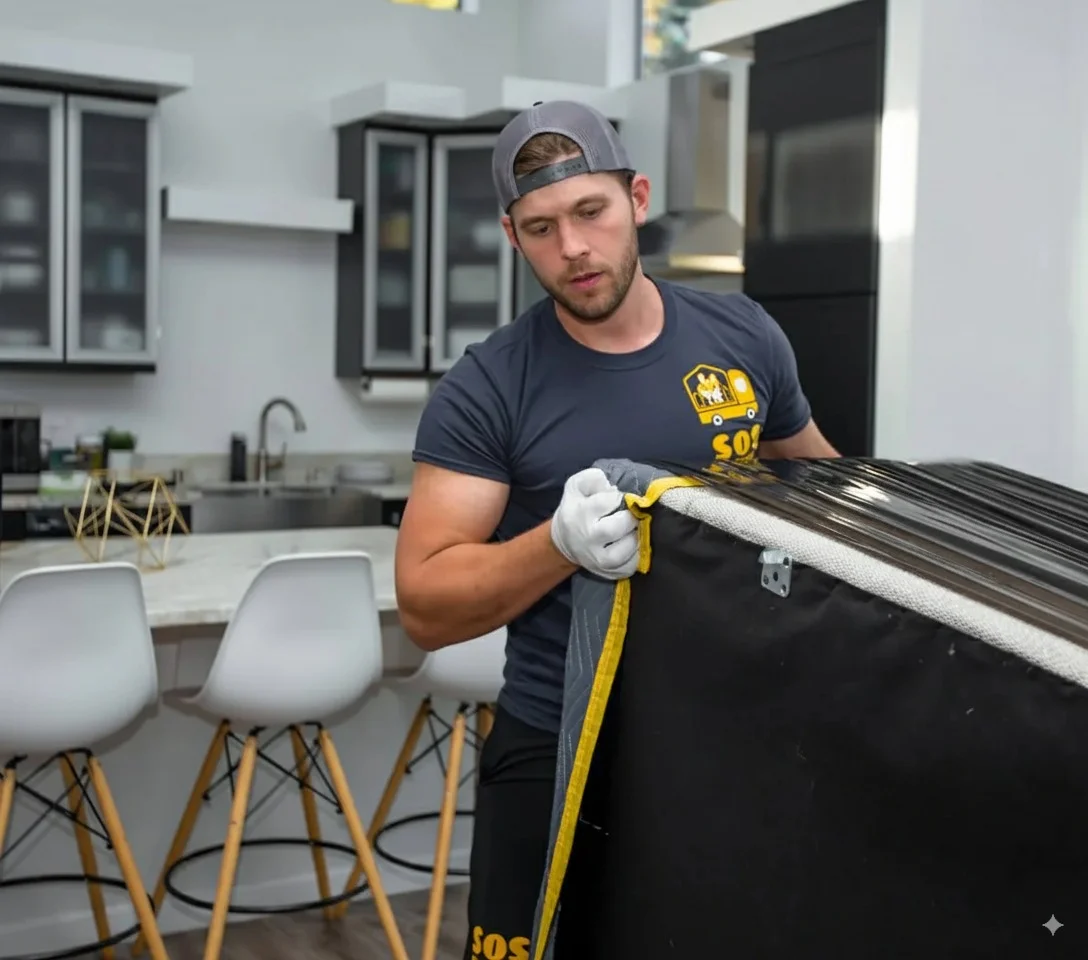
The $200 covers the equipment and the handling an ordinary load never needs: a piano board with its own straps, extra blankets, padding for pedals and legs, corner protection on frames and railings, and the tie-down inside the truck that holds the instrument upright against the wall for the whole drive. All of it arrives with the crew, so the figure does not grow once the job starts.
Rates for four movers with a truck are $199 cash or $209 by card Monday through Thursday, and $215 or $225 from Friday through Sunday. Fuel is $30, and the $50 deposit comes off the final bill rather than sitting on top of it.
Heavy objects that are not instruments — a safe, a slab table, a machine over 300 lbs — carry a $150 charge and can go with three movers. A piano does not fall under that line, which is why the office asks about the instrument before it assigns a crew.
Payment happens at the end of the job, in cash or by card, at the rate matching the day of the week. The gap between the two columns is not a card fee: they are two published rates, and the lead confirms which one applies before the clock starts.
Preparation is mostly about clearance. The crew needs a path wide enough for a board with a person on each side of it, which usually means rugs rolled back, door stops removed, and anything breakable lifted off the route between the instrument and the front door.
Outside, the curb matters more than the driveway. Two car lengths in front of the entrance save the crew a long walk with a loaded board, and in a managed building the elevator and the loading zone should be held for the window you booked.
Paperwork is short but has a deadline. A certificate of insurance costs $50 and has to exist before the crew shows up, not while four movers wait in a lobby, so it belongs in the booking call rather than the morning of.
The last piece is information. Which floor the piano stands on, how many outdoor steps sit between the door and the street, and whether a truck can stop in front of the house — those three answers decide how many hours the dispatcher blocks out.
Glendale sits against hills, and the addresses reflect it. Designated historic districts such as Cottage Grove and Ard Eevin Highlands bring older entries and older stairs, while the condo stock around Adams Square — the historic business district at the base of Adams Hill — brings lobbies, elevators and building managers into the same day.
In the canyons the questions change. The Chevy Chase Estates Association, founded in 1937 and incorporated as a 501(c)(4) social welfare organization, keeps membership optional and imposes no CC&Rs, so there is no gate file to submit and no contractor pass to collect — only the practical check that the road up the canyon is open that morning.
Glenoaks Canyon adds a staging rule worth knowing. The canyon association reports that California’s new Zone Zero requirements keep the first five feet around a house in a designated high-fire-hazard area clear of combustible material such as firewood, fallen leaves and wood mulch, phased in over five years. Our crews stage blankets, wrap and flattened boxes on the driveway instead of against the wall.
On a slope the two movers at the downhill end set the rhythm, and the board stops on landings rather than mid-flight. It is slower than a flat carry, and the hours on the ticket reflect that honestly.
Most callers are not moving an instrument on its own. The piano stands in a living room that also holds a sofa, a wall unit and forty boxes, and all of it has to reach the new address on the same day.
Sequencing is what makes that work. The instrument usually goes on the truck first, while the room is still clear and the crew is fresh, and it comes off first at the other end so that furniture is never carried around it in a tight space.
Travel is part of the bill. Past 10 miles the drive counts double, an address 30 miles or more from the yard starts at a four-hour minimum, and hours past the eighth are overtime — all of it inside an 8AM to 6PM day, because SOS does not run night work.
A single instrument with nothing else moving is still an hourly booking. The truck comes out, the clock starts, and the three-hour floor applies whether that time goes on one piano or on a full apartment. Owners with only an instrument on the list often add a few pieces of furniture, since the hours are paid for either way.
Storage is a separate question with a short answer. A loaded truck can be held overnight for $200 when a closing date slips by a day, but an instrument is not taken into a warehouse as a service, and the office says so on the phone rather than after the truck is full.
The type changes the handling more than the paperwork. An upright or a spinet travels on its back edge on the board; a baby grand or a grand has the lid secured, the legs and pedal lyre removed, and the body wrapped and laid on a skid before it leaves the room. Dimensions, weights and the case-by-case detail live on our piano moving service page, which is the right thing to read before you call.
What decides the final hours is easy to list and hard to guess from a phone call: the steps at each end, the distance from the truck to the door, how much of the rest of the house is going, and the drive between the two addresses. Anyone quoting a flat hour count without asking those four questions is guessing.
Call 909-443-0004 with the floor, the step count and the instrument type, and the office will tell you what the day looks like on the hourly model. That call also settles whether a four-person crew can reach the door today or on the date you had in mind.