


%201.svg)




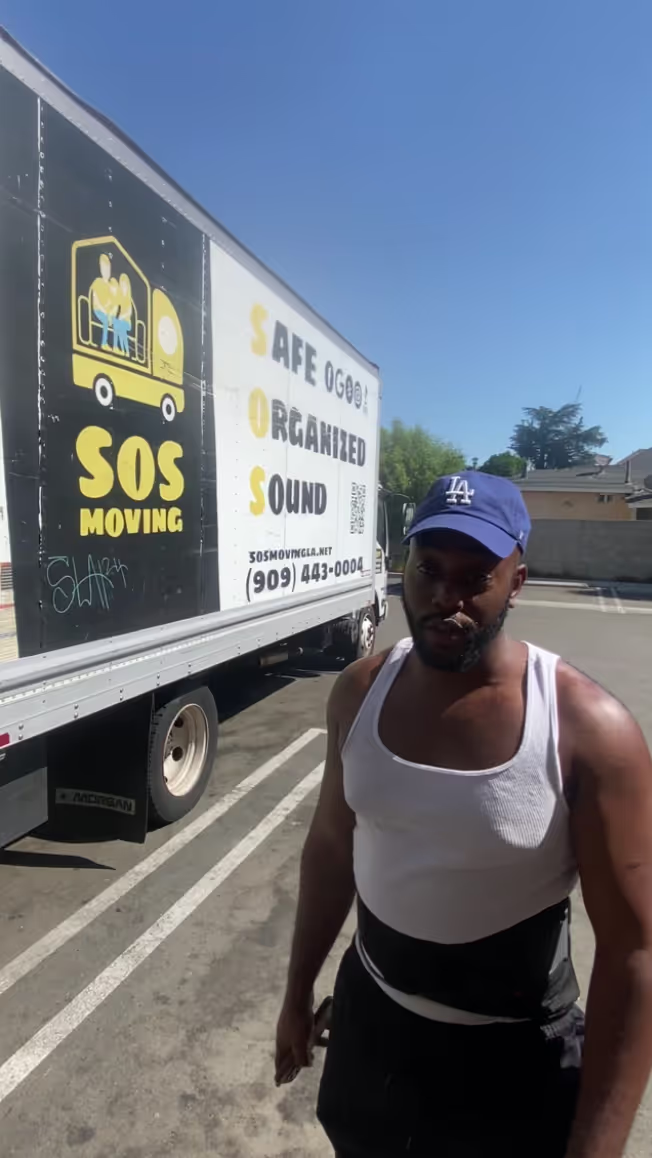
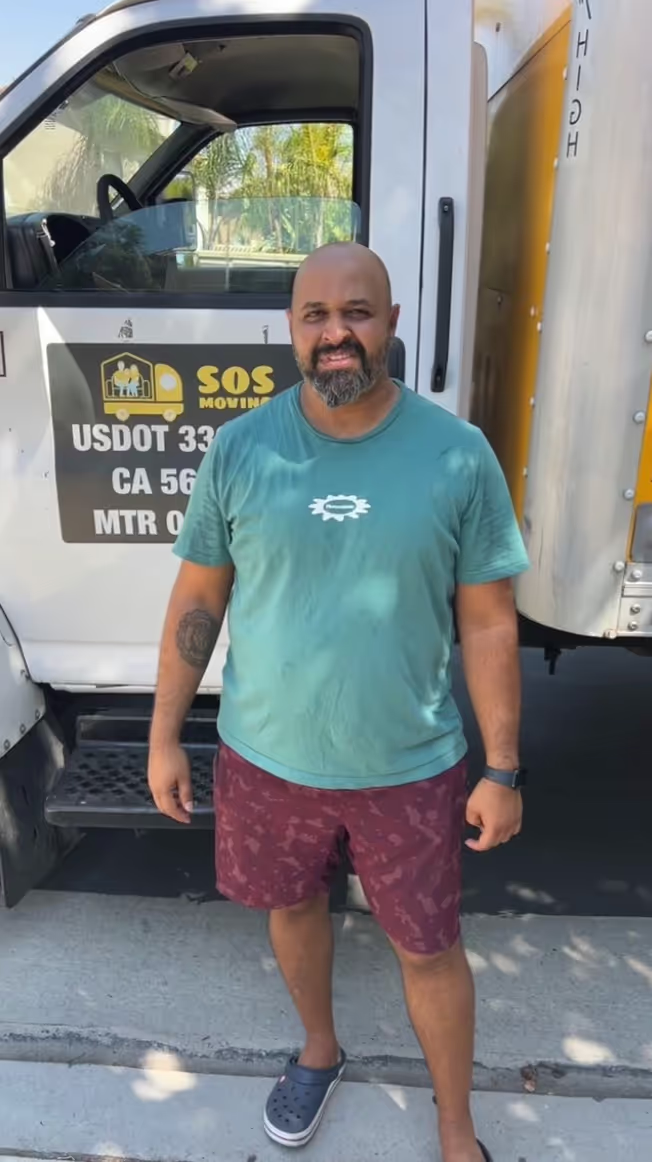
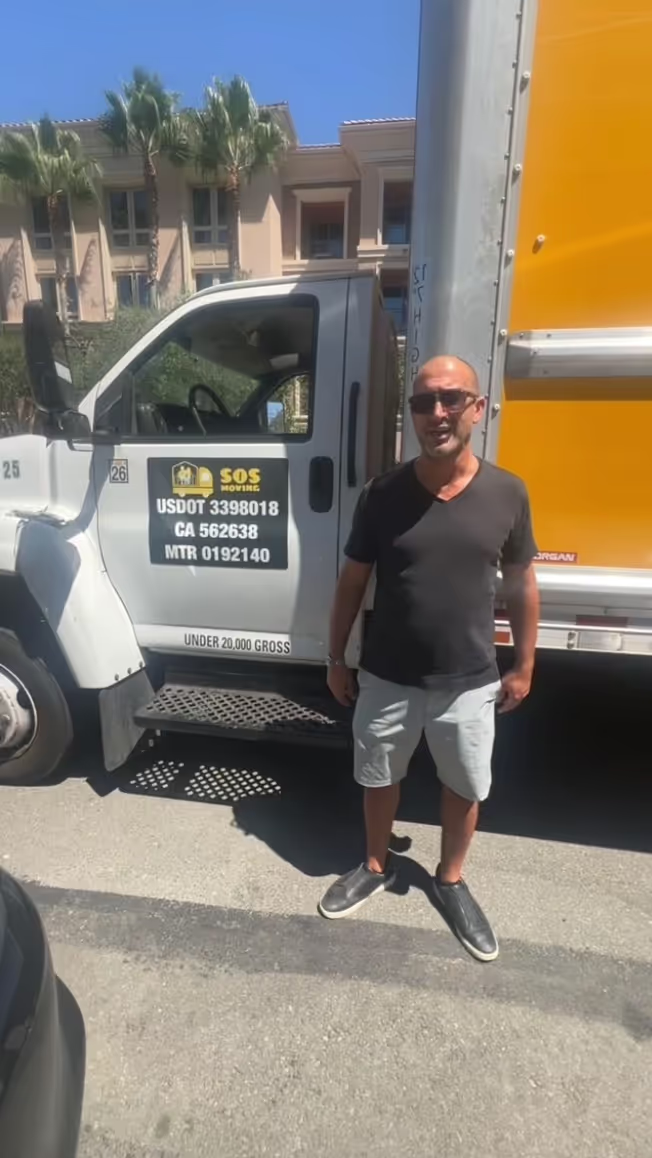


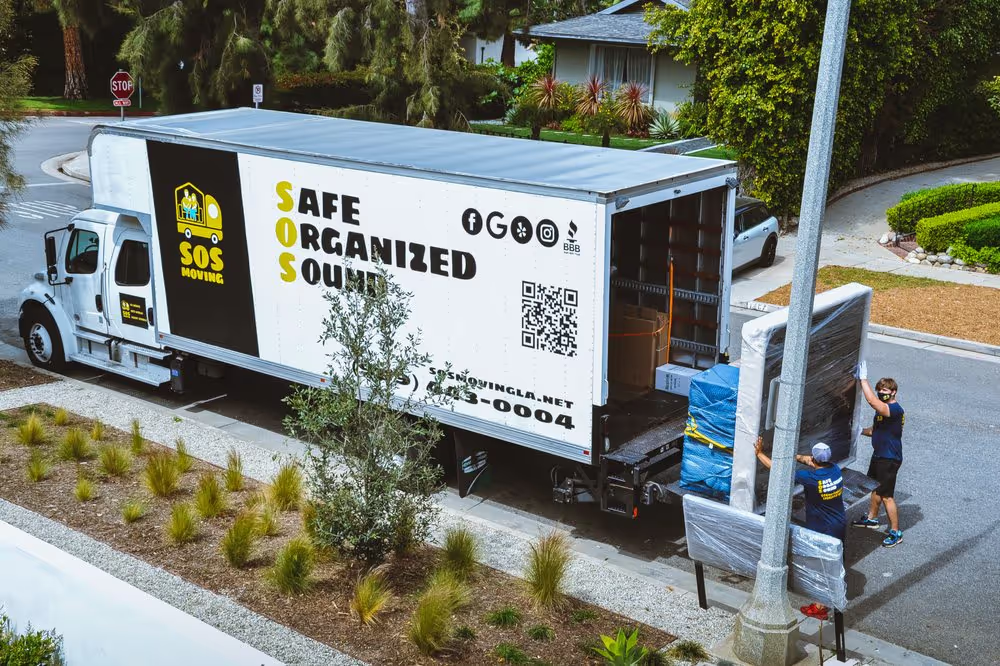
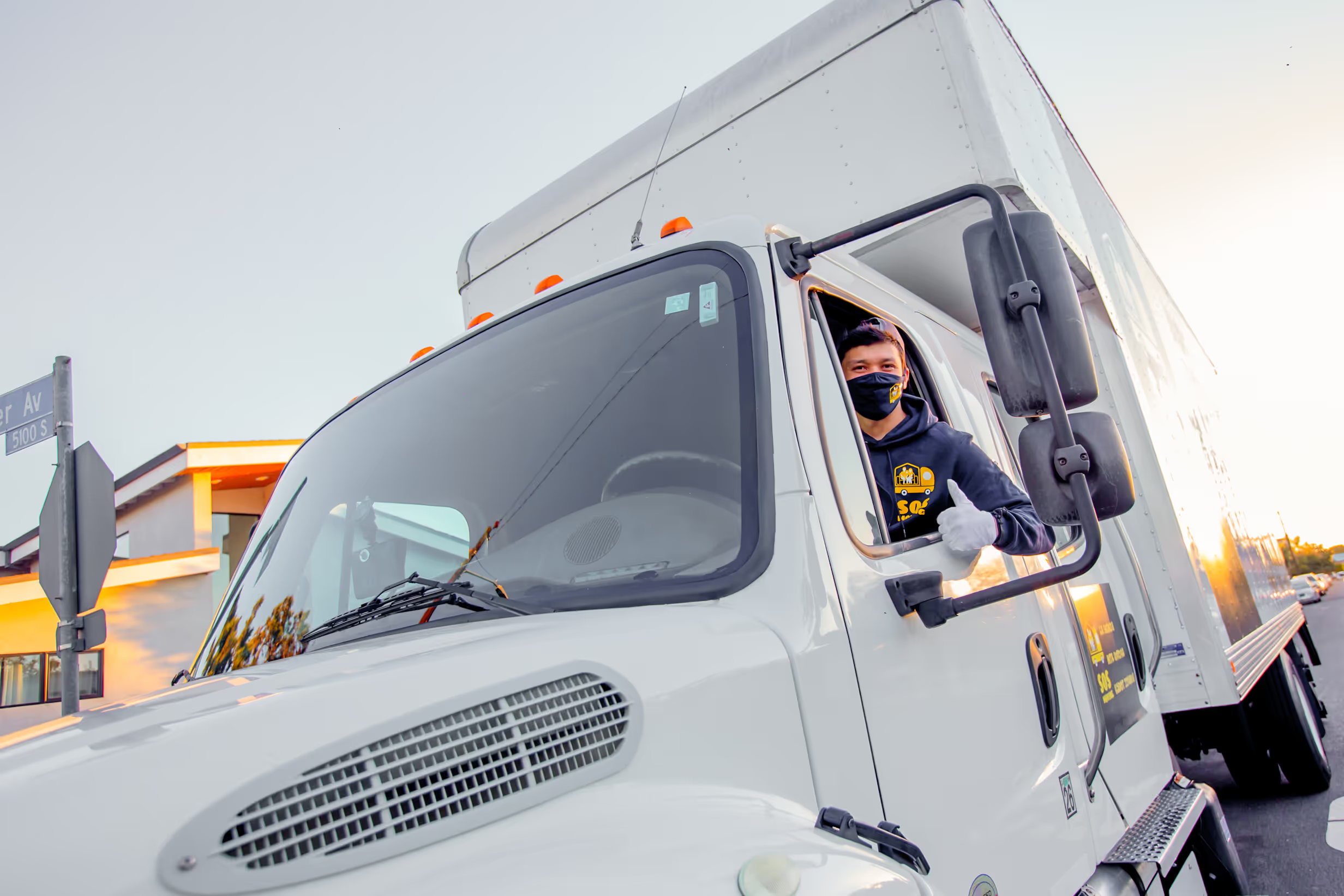
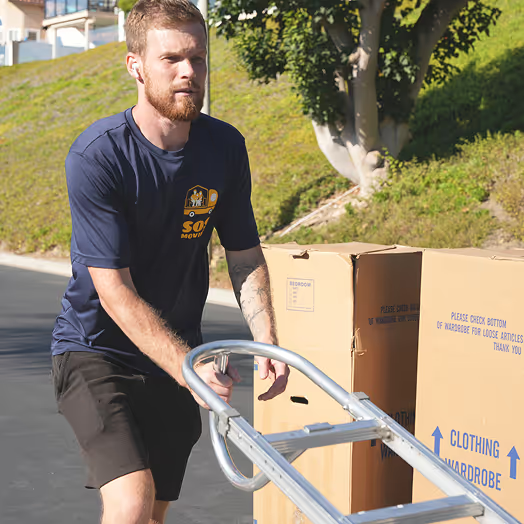
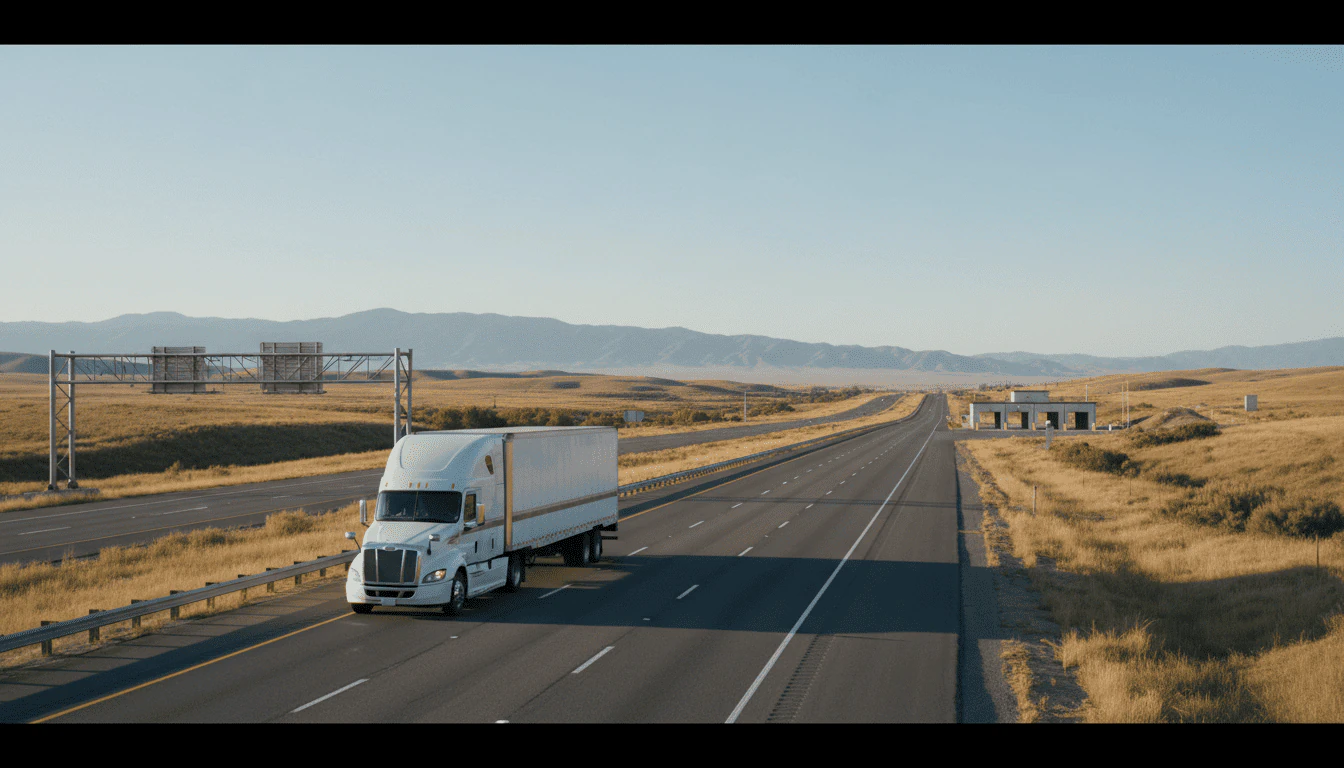
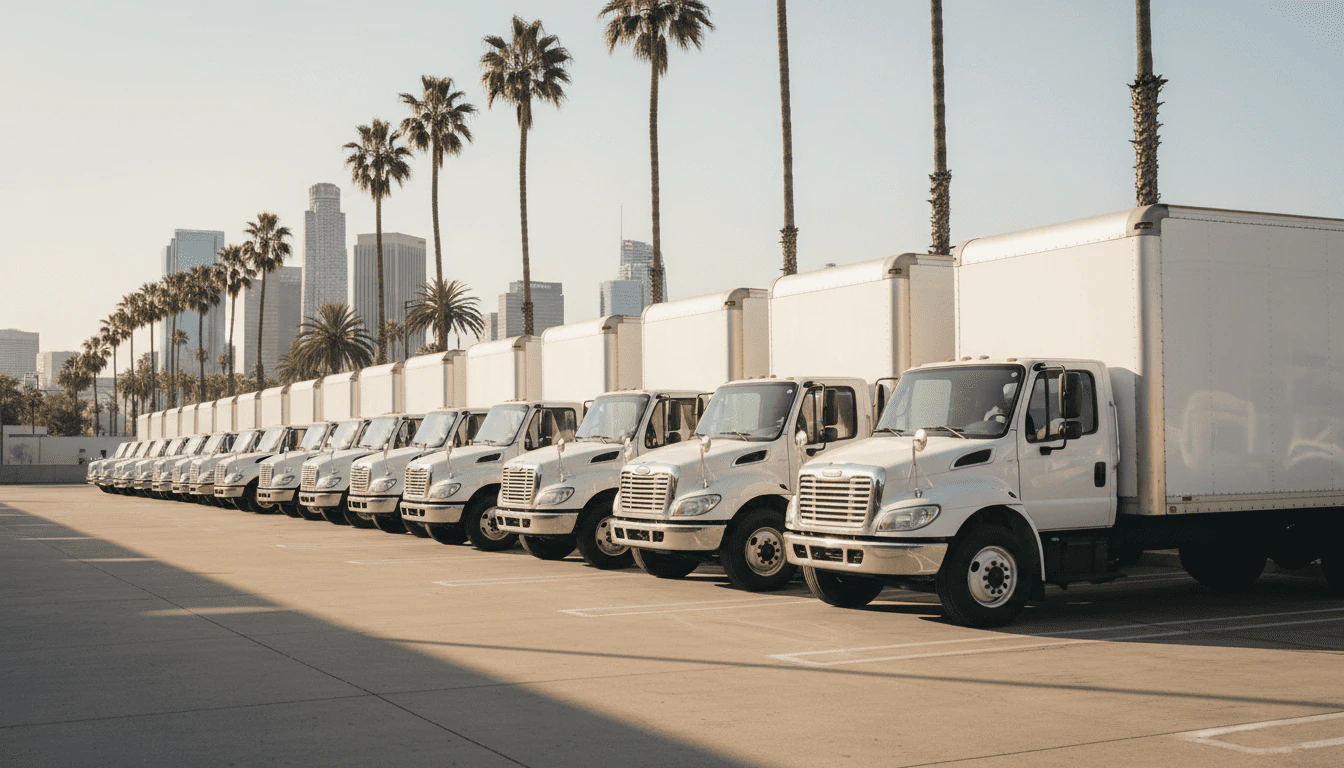
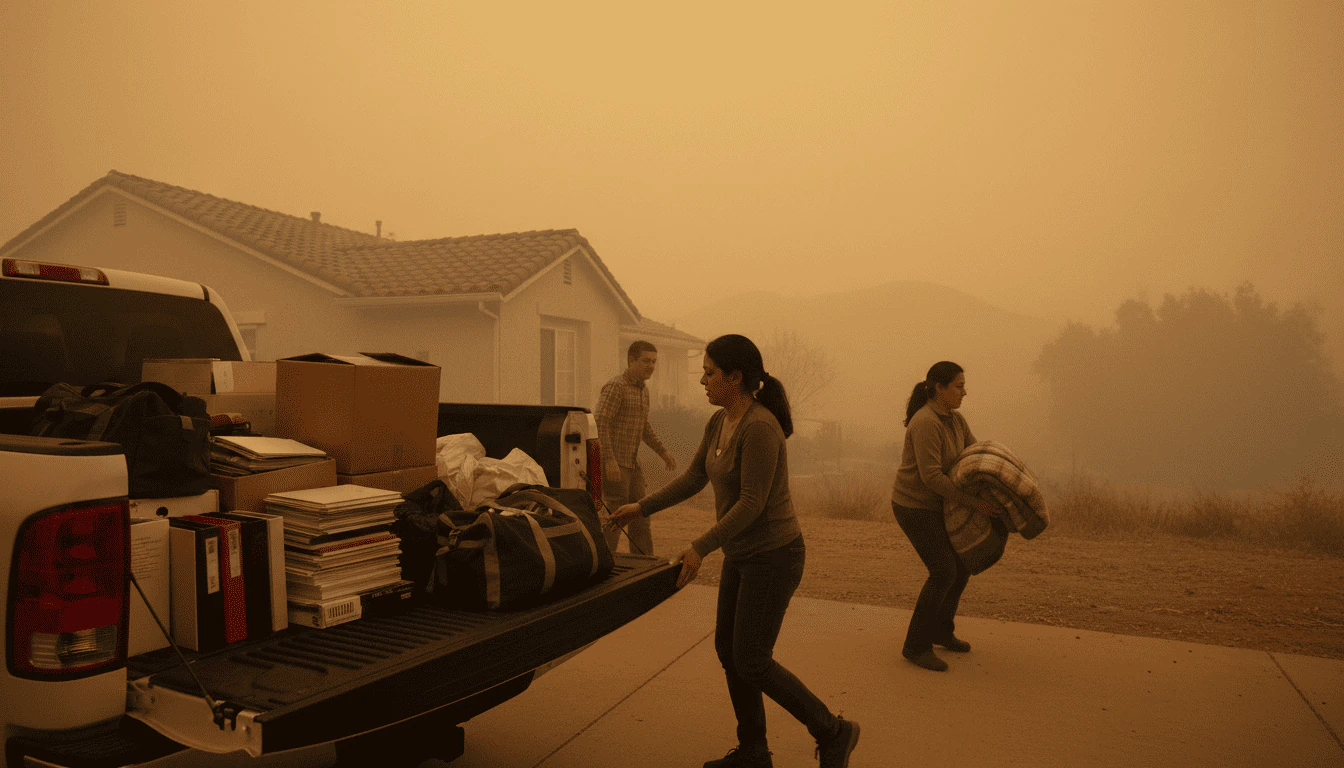
Households hire Anaheim long distance movers when the next address is in another state and everything has to leave on one truck. SOS Moving quotes that work flat-rate on the terms set out on our long-distance moving service page, while our Anaheim movers take the jobs that stay inside Orange County.
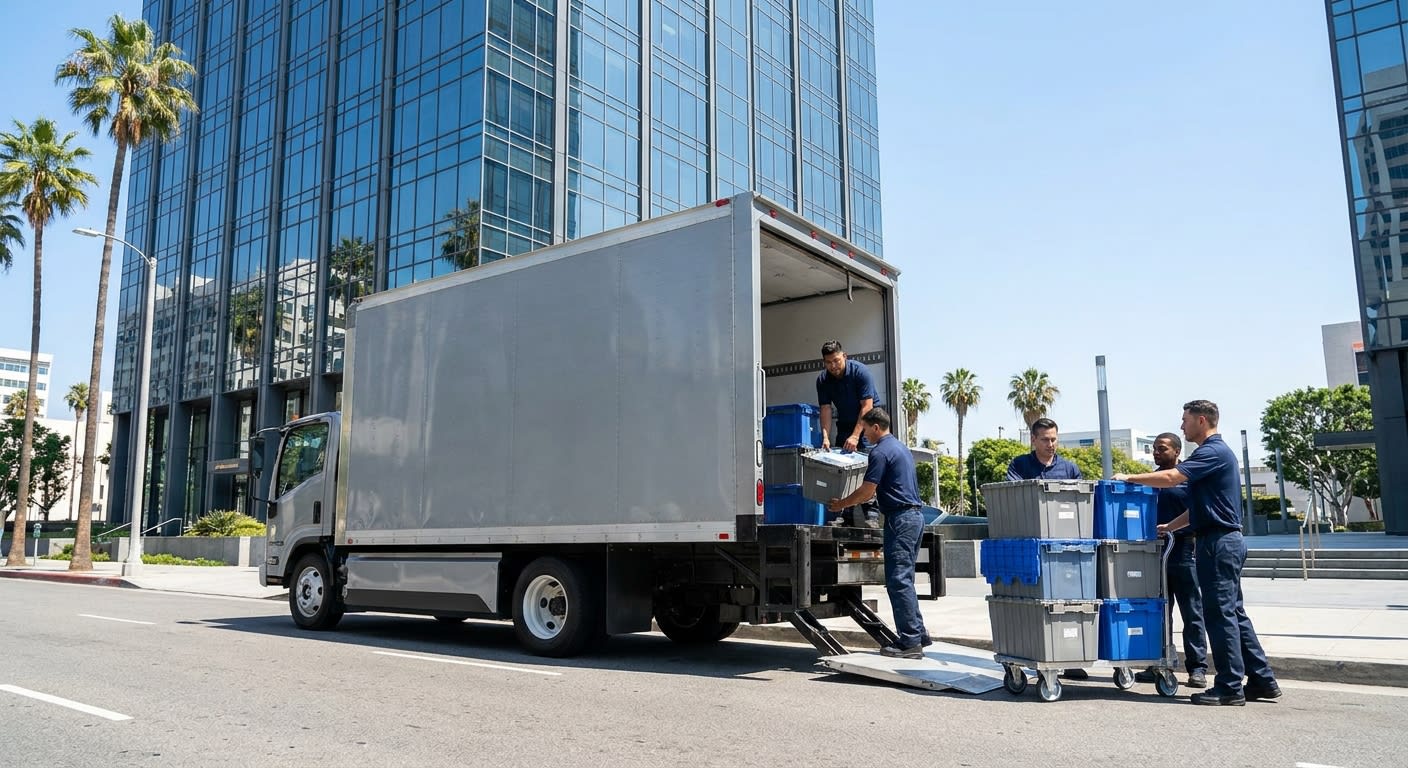
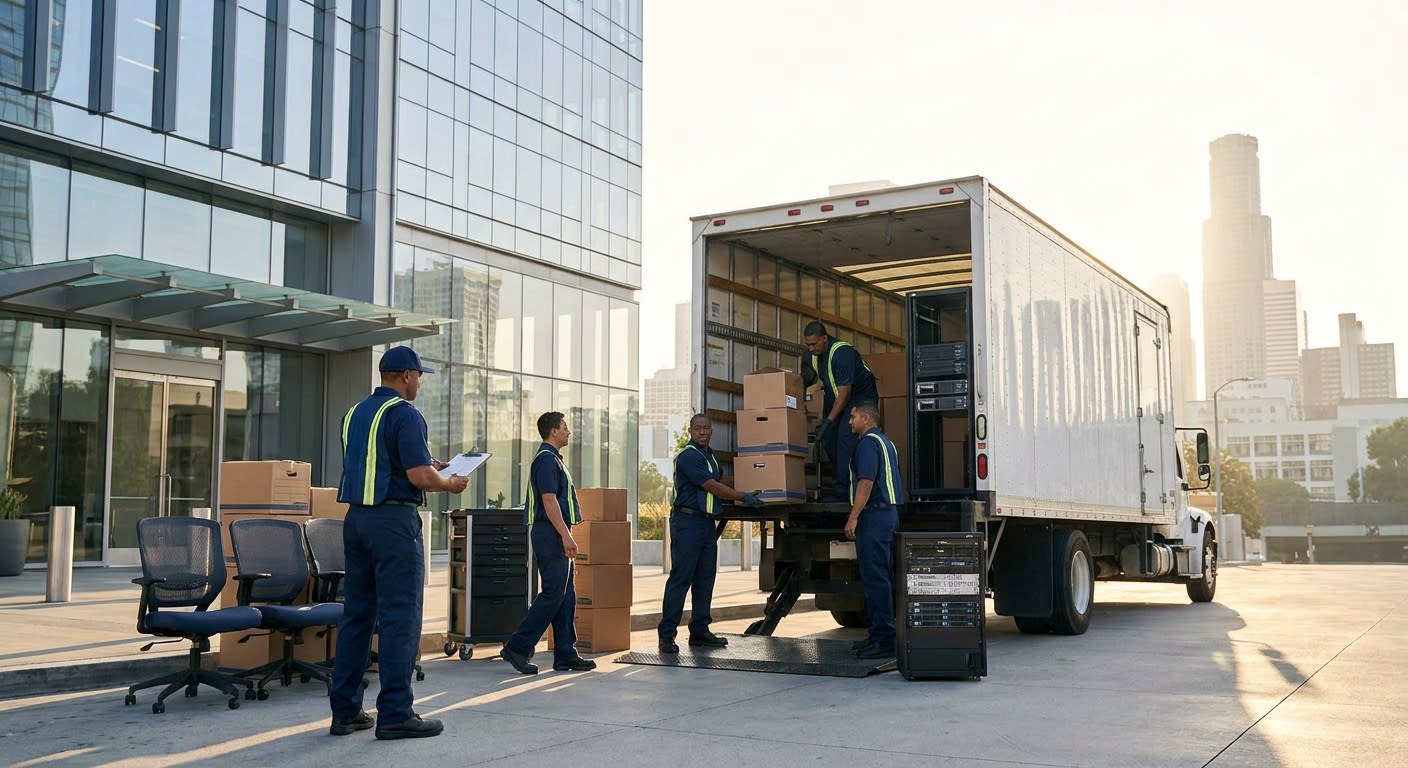
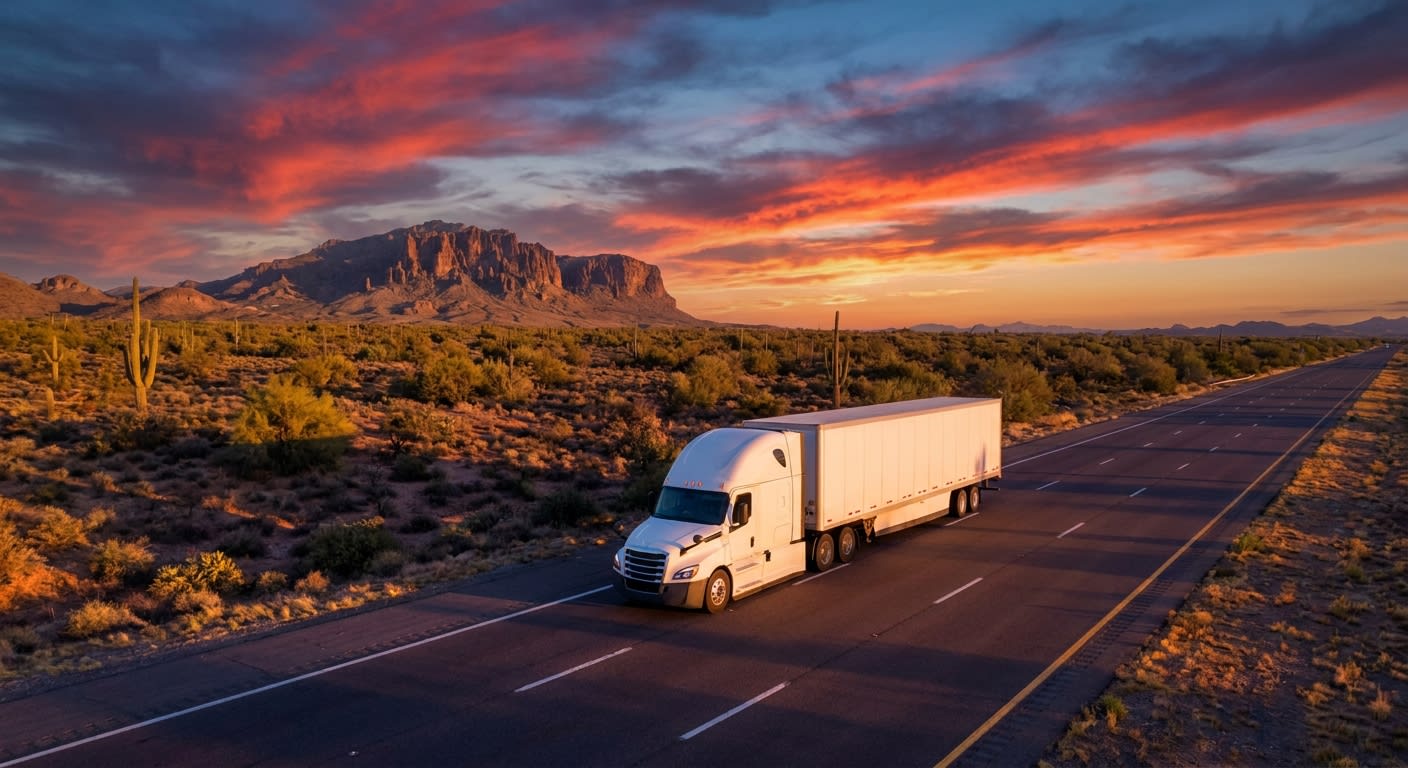
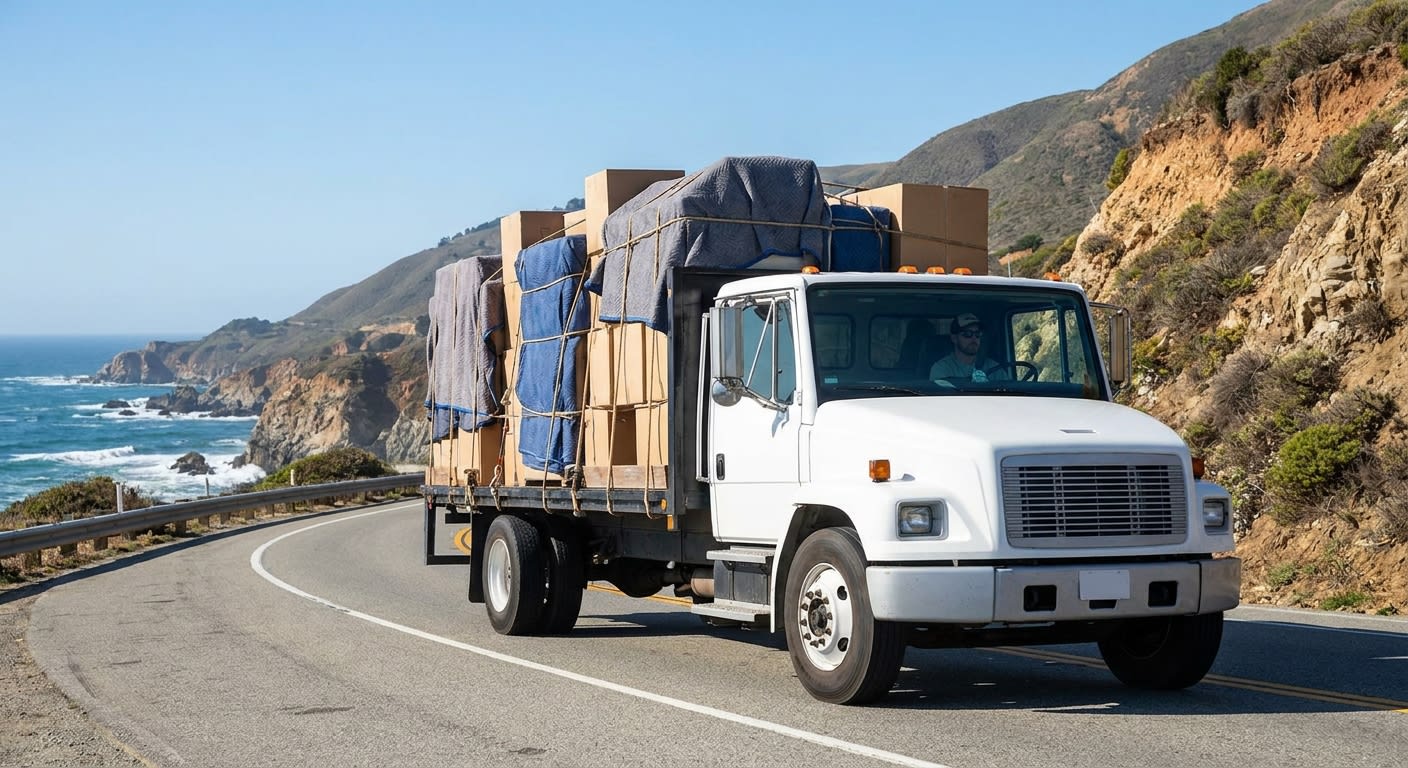
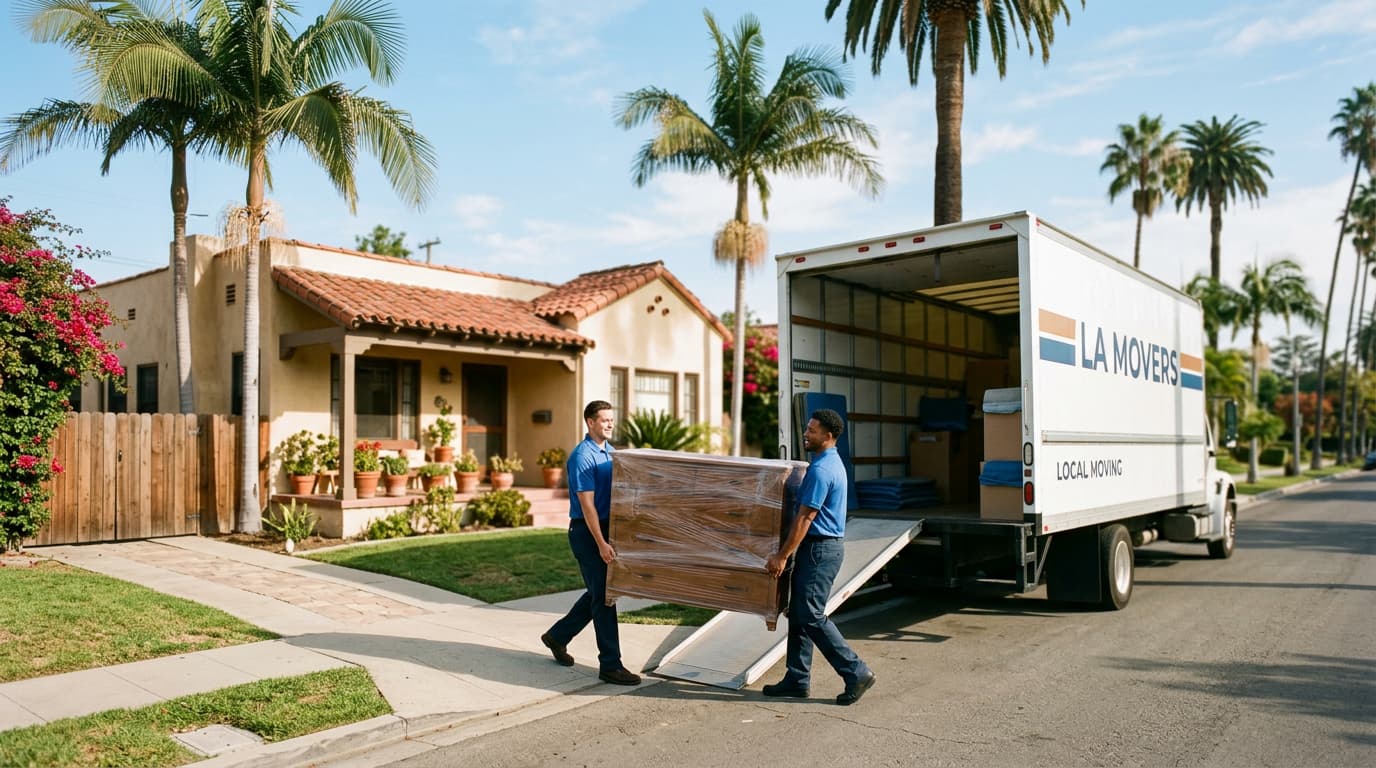
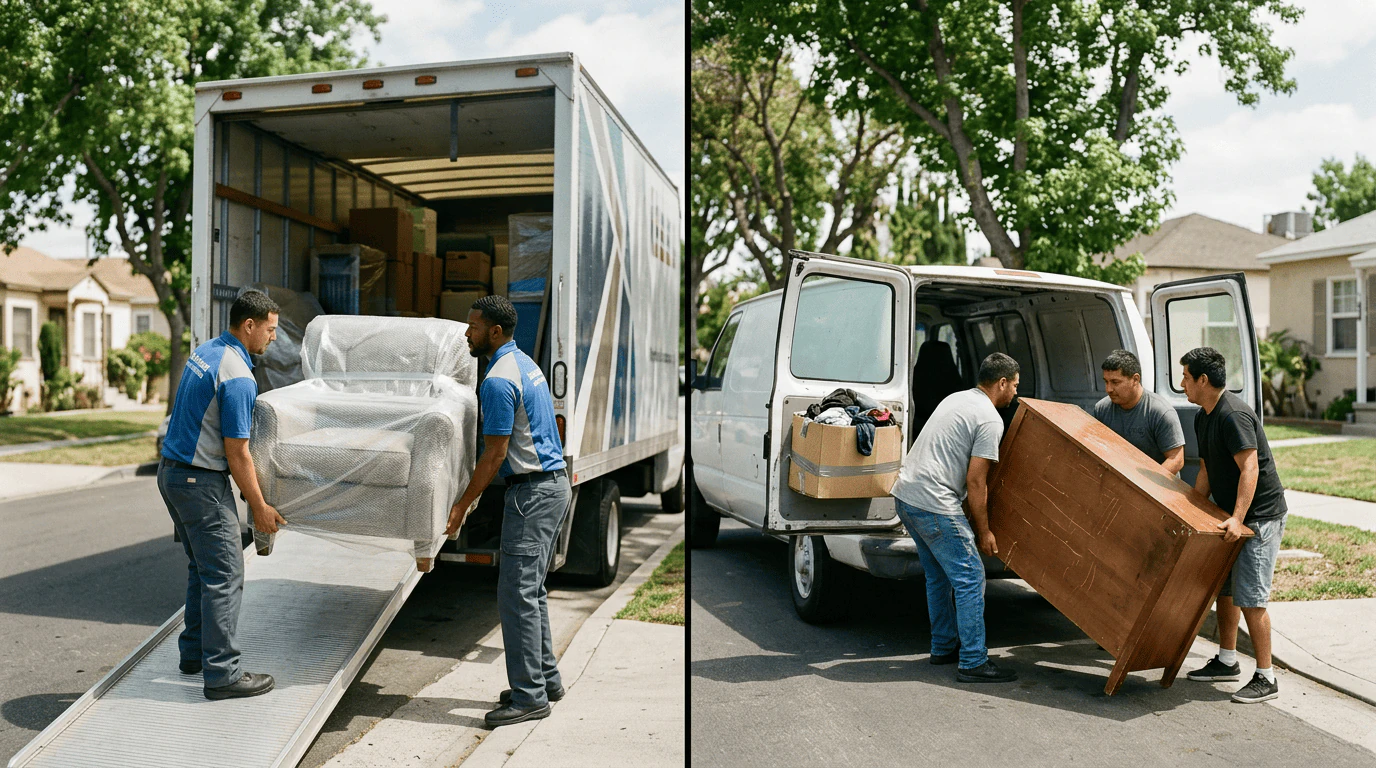
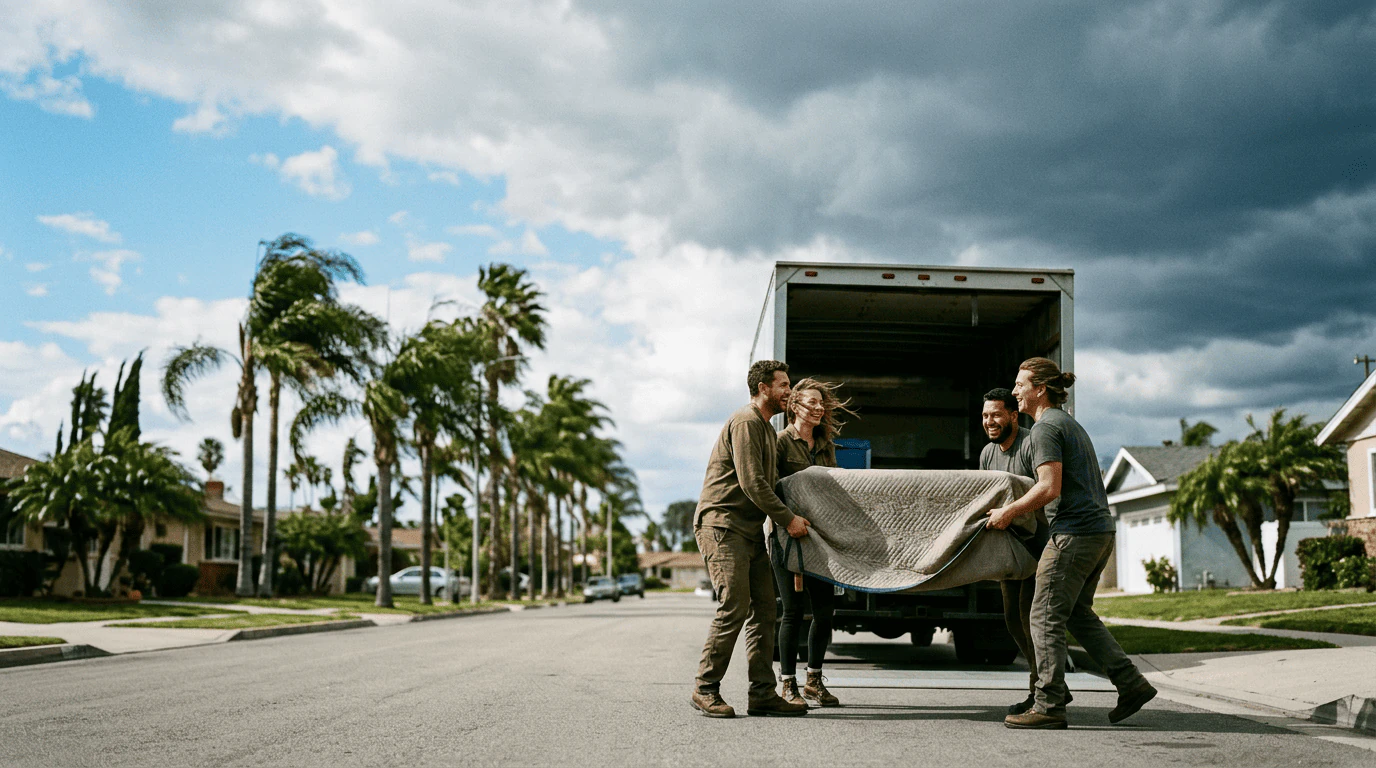
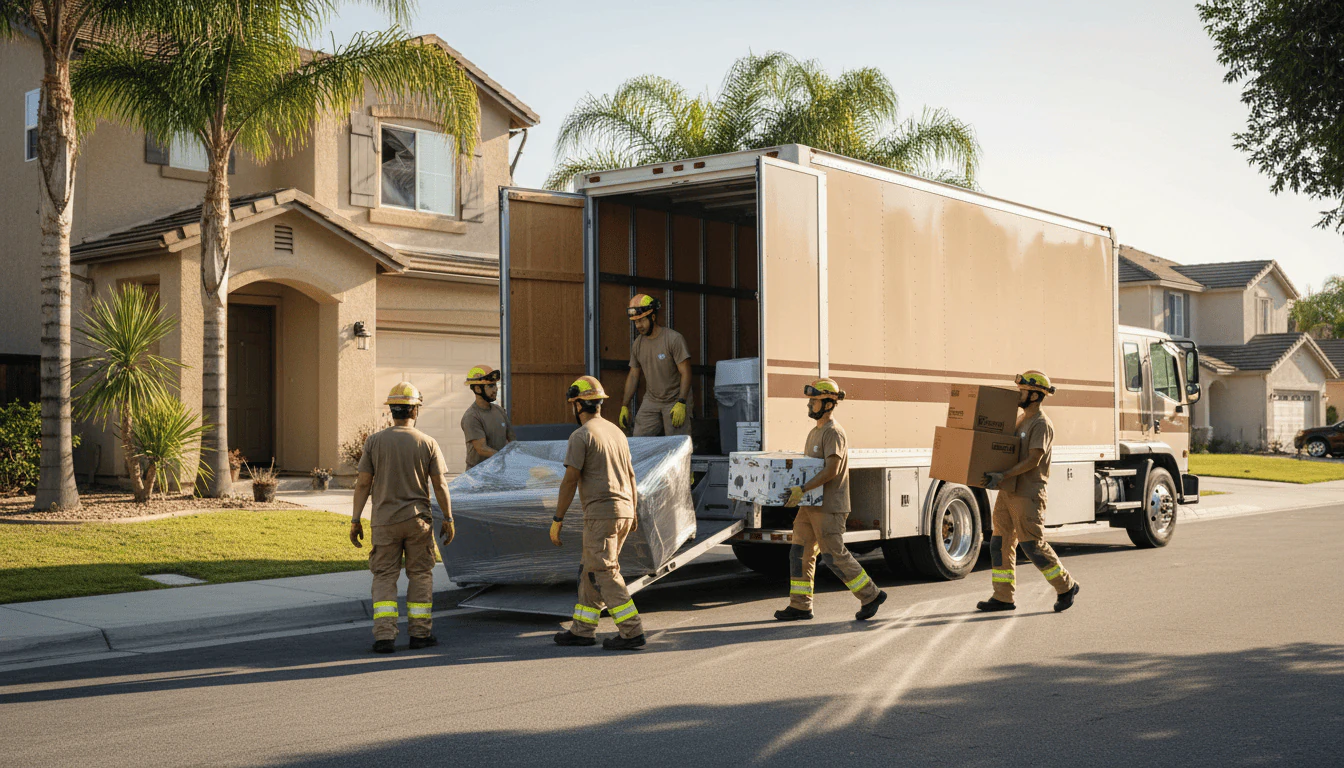
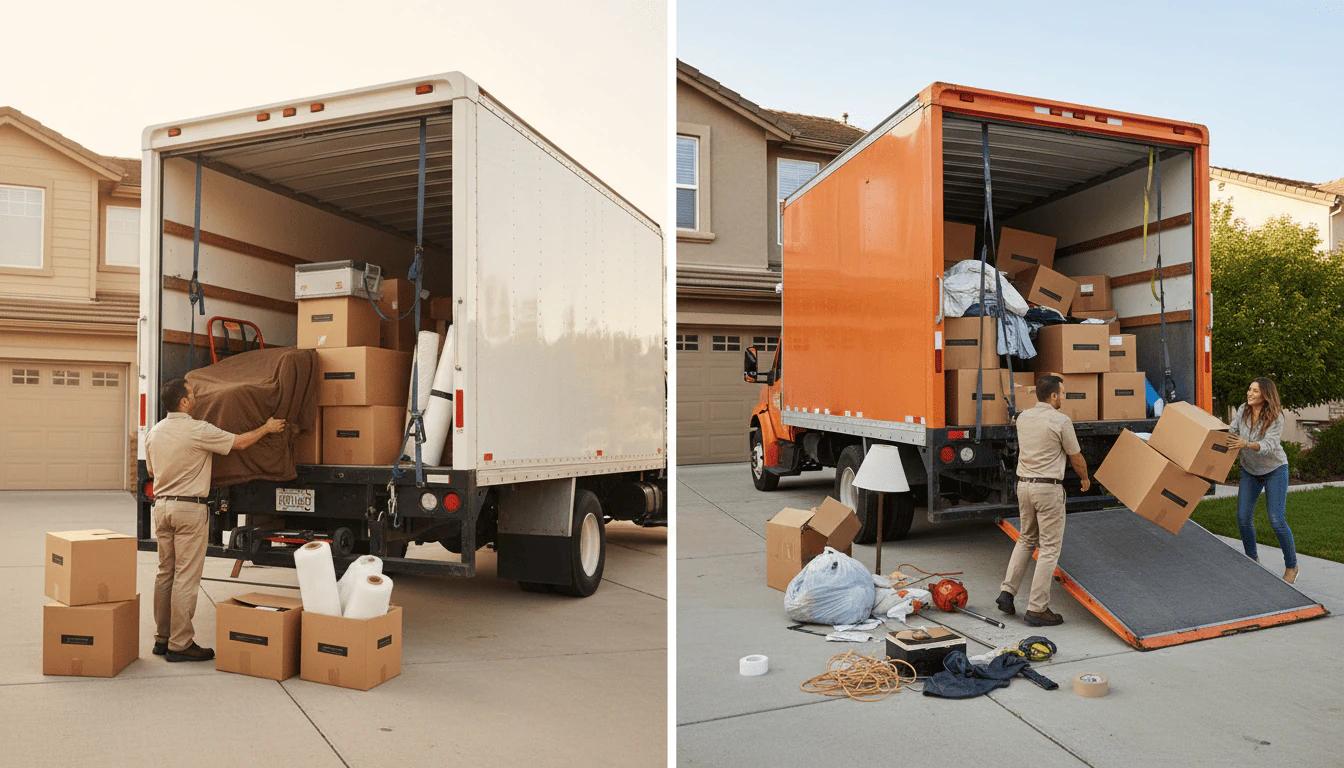
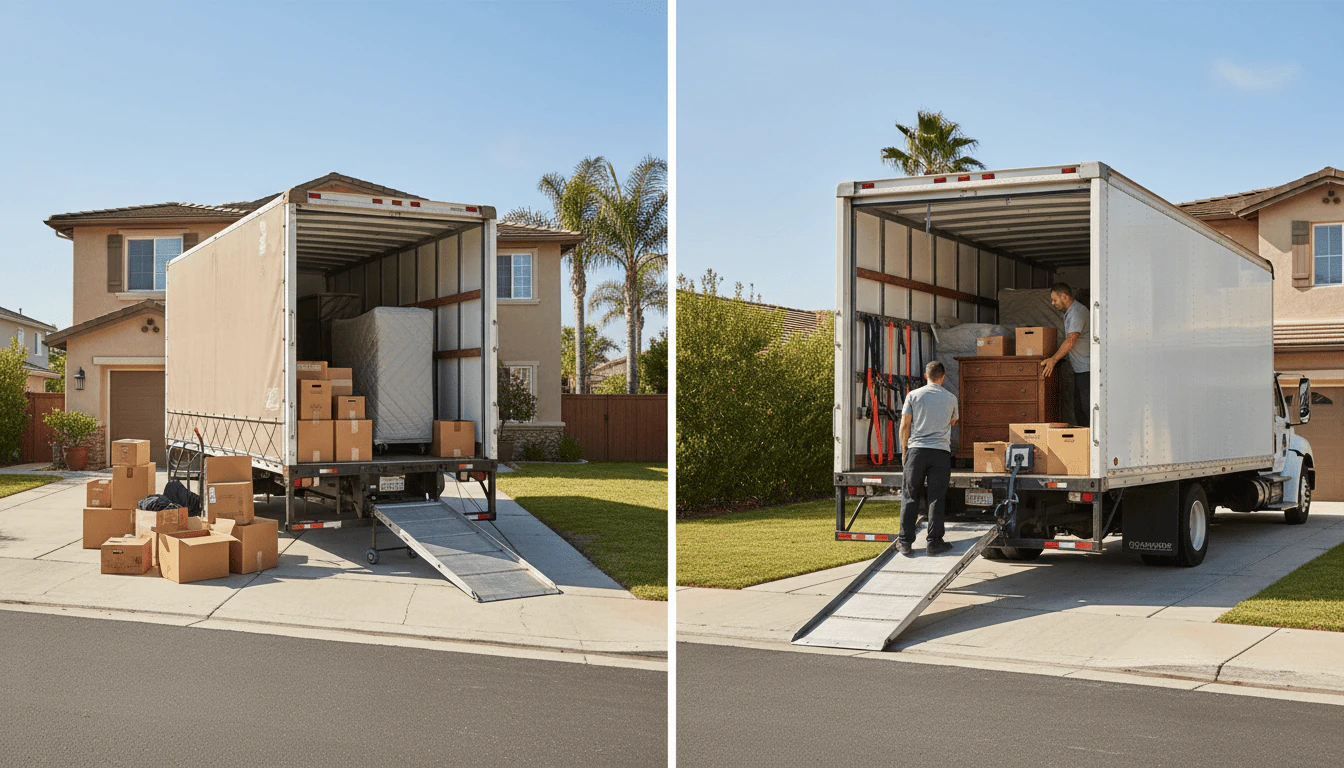
On this service the truck carries one household and nothing else. Nothing is transferred at a terminal, and the crew that wraps your furniture at the kerb is the crew that carries it into the new place.
If a smaller bill matters more than a shorter wait, shared-load shipping charges only for the space your belongings take. It costs less on a long haul and lands later.
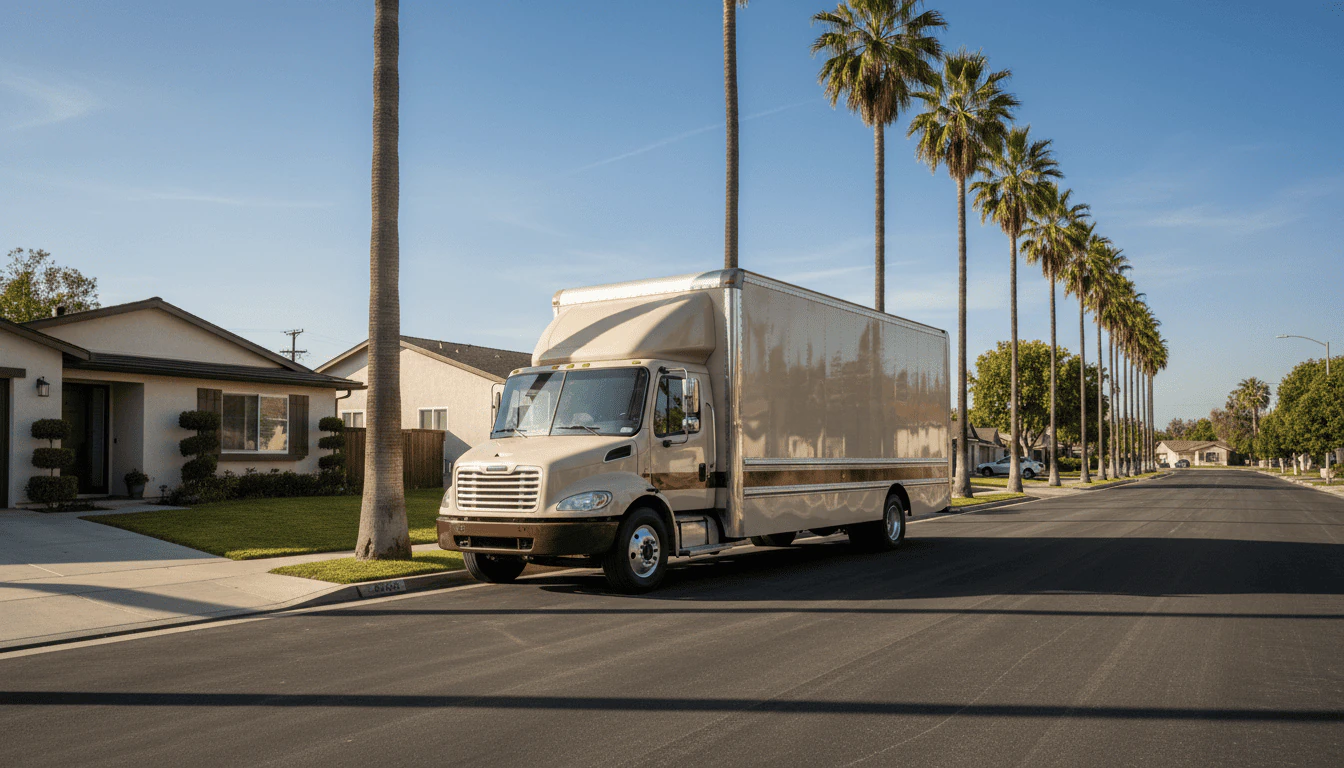
A price starts with three things: a room-by-room inventory, the delivery address, and how close a 26-ft truck can stand to the door at each end. The last one is a local question, and the answer changes with the street, the sweeping day and the building.








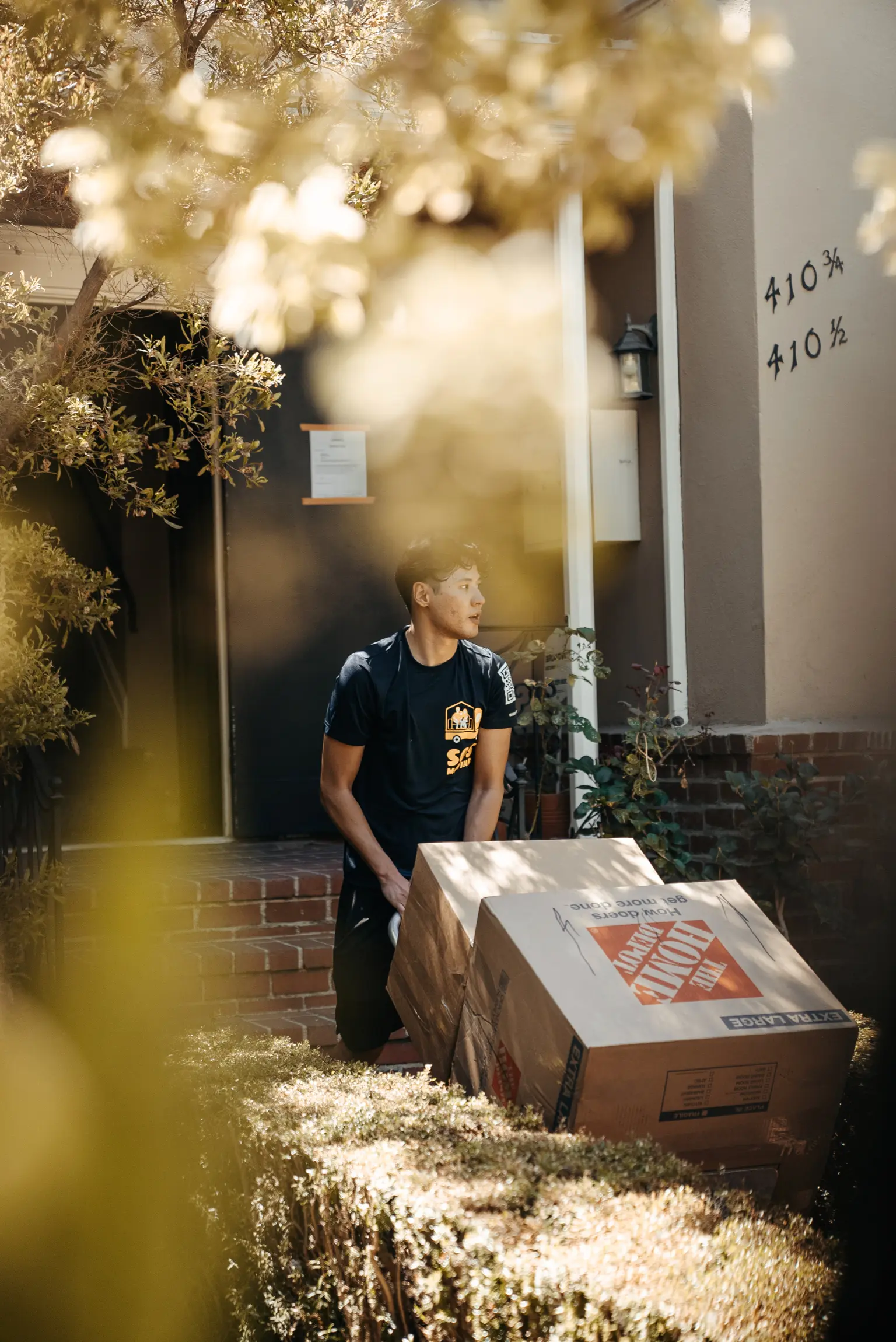
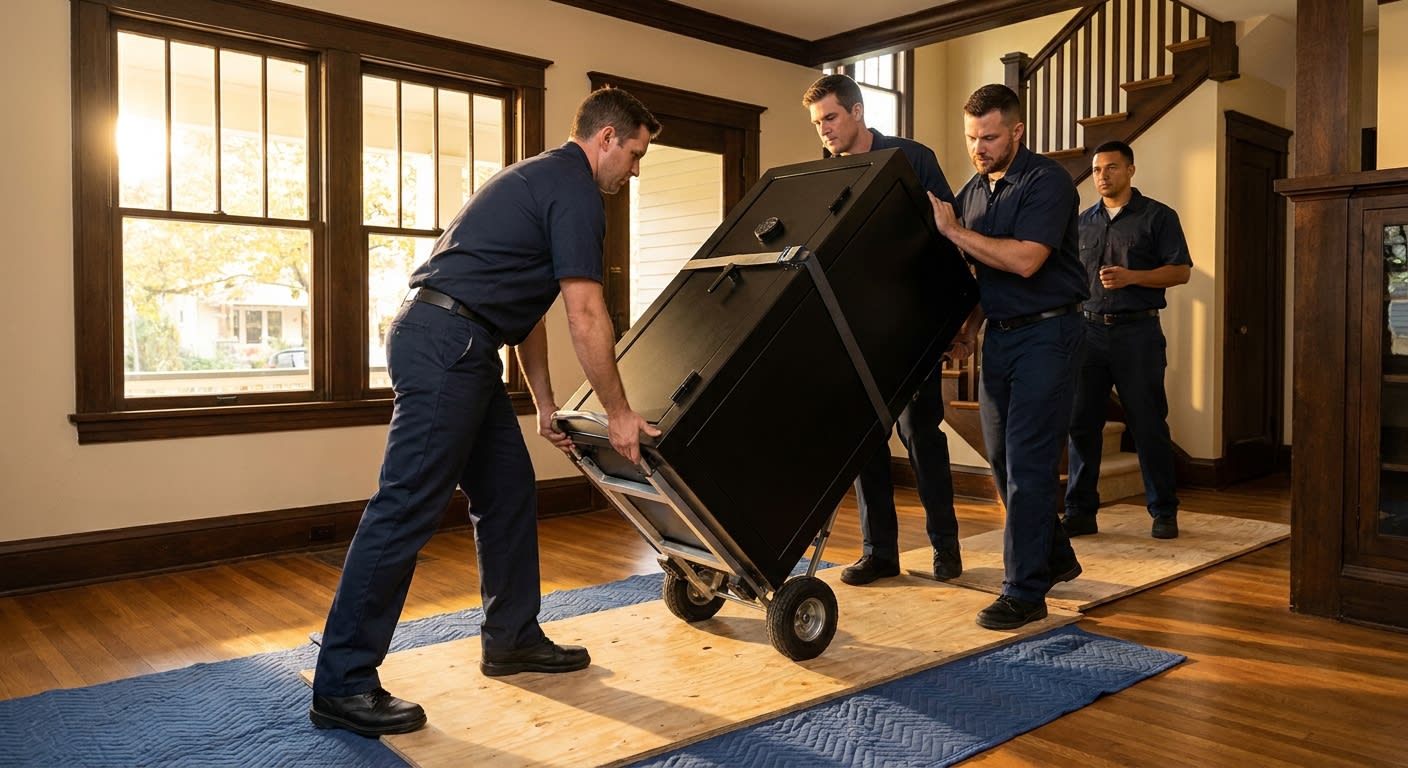
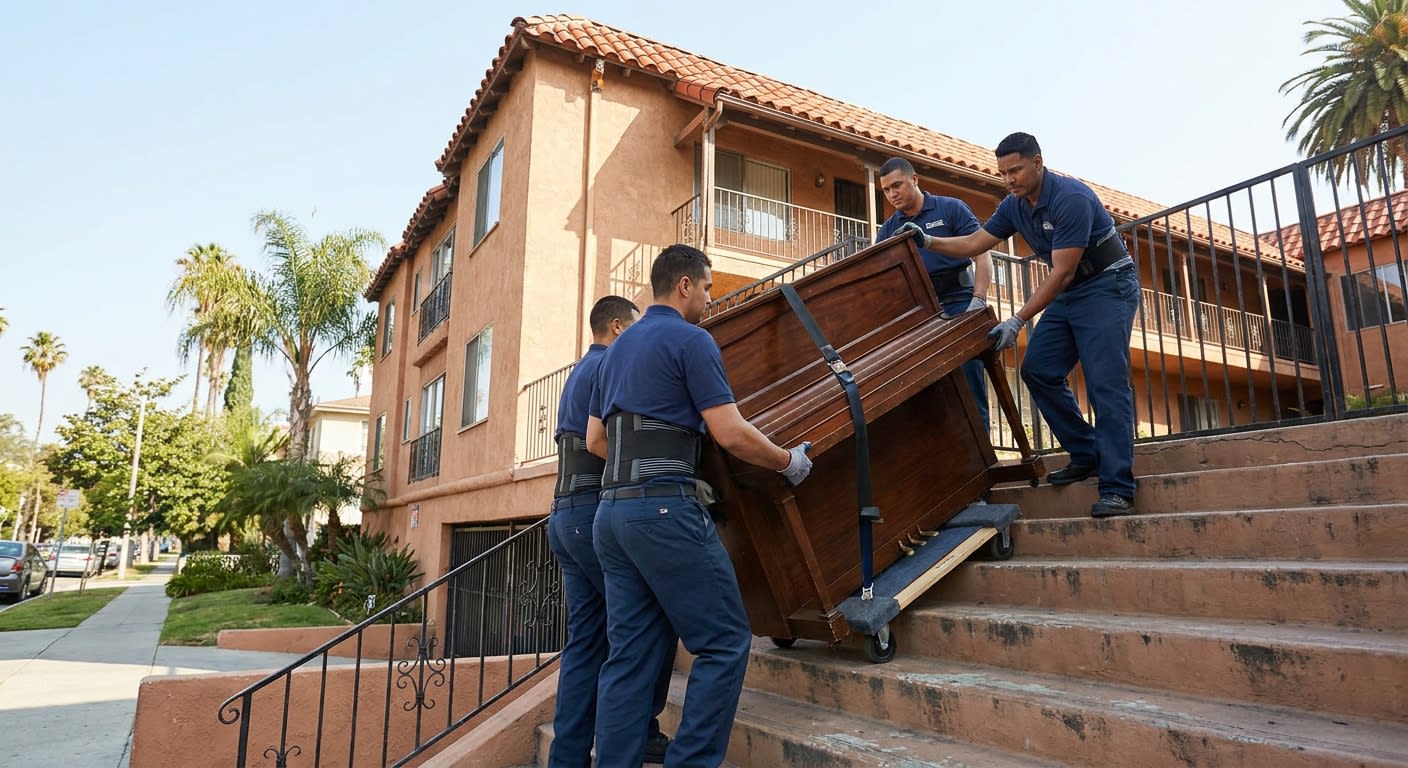
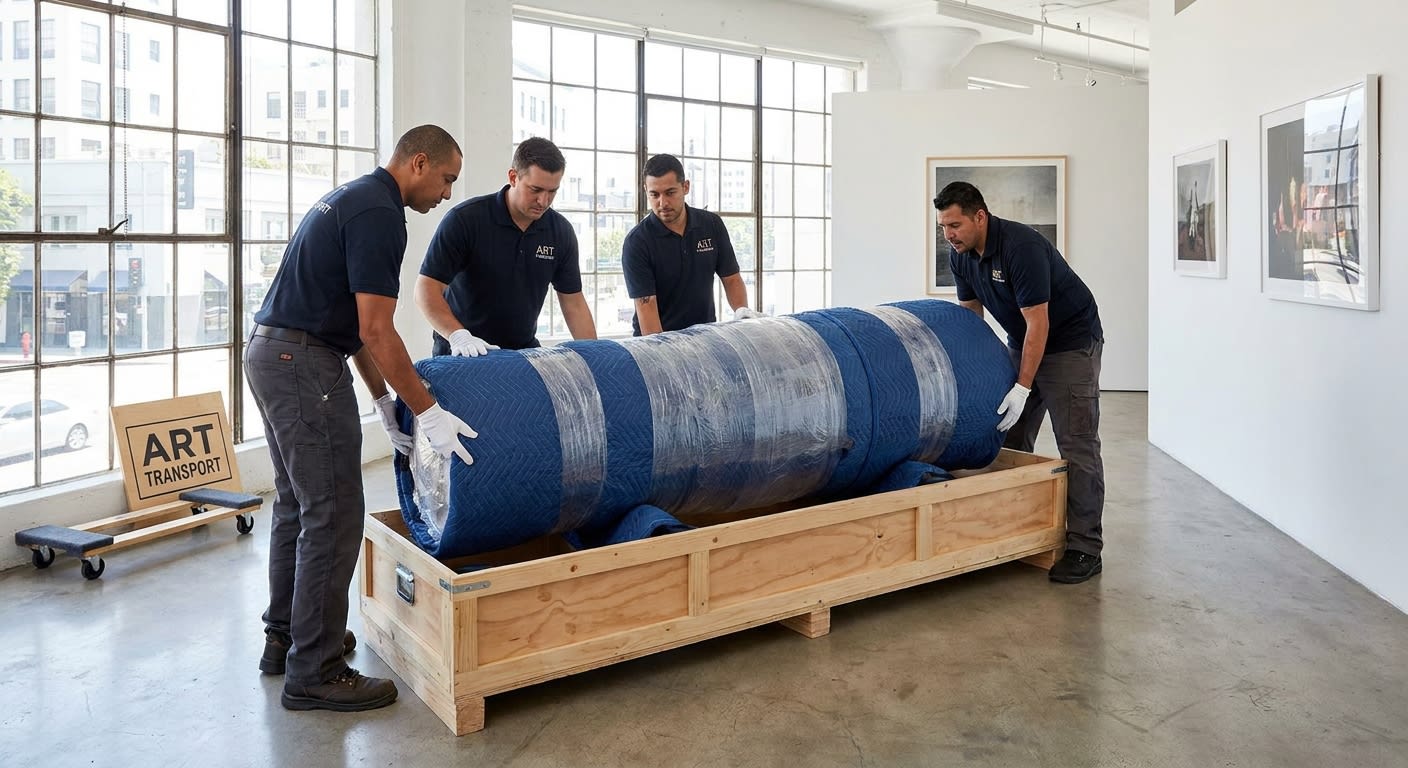
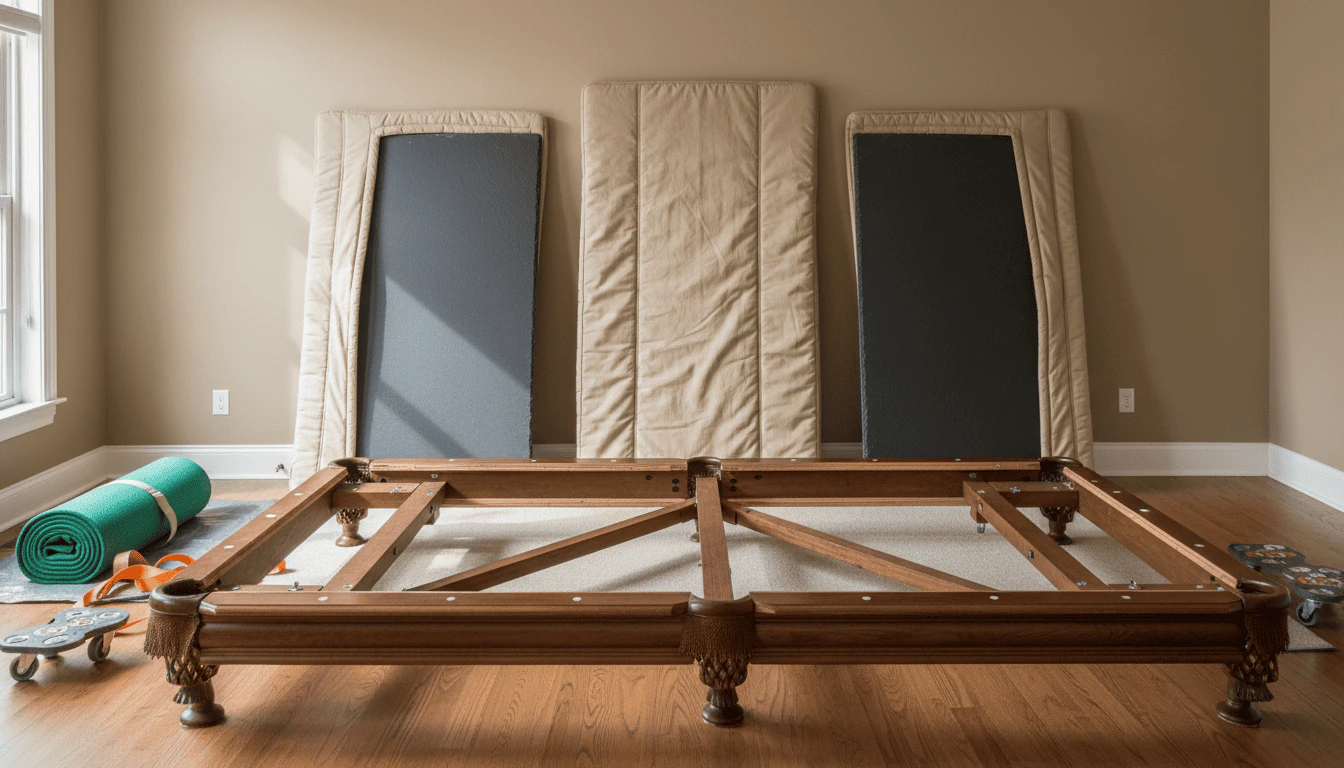
Charged separately, and only where they apply: a certificate of insurance is $50 when a building demands one, a piano is handled by a four-mover crew and adds $200, and any single item over 300 lbs is moved by a three-mover crew for $150.
Booking is held by a $50 deposit that is later taken off the final bill. Hourly rates belong to local work and are never applied to an interstate job, so you see one figure for the truck before anyone is dispatched.
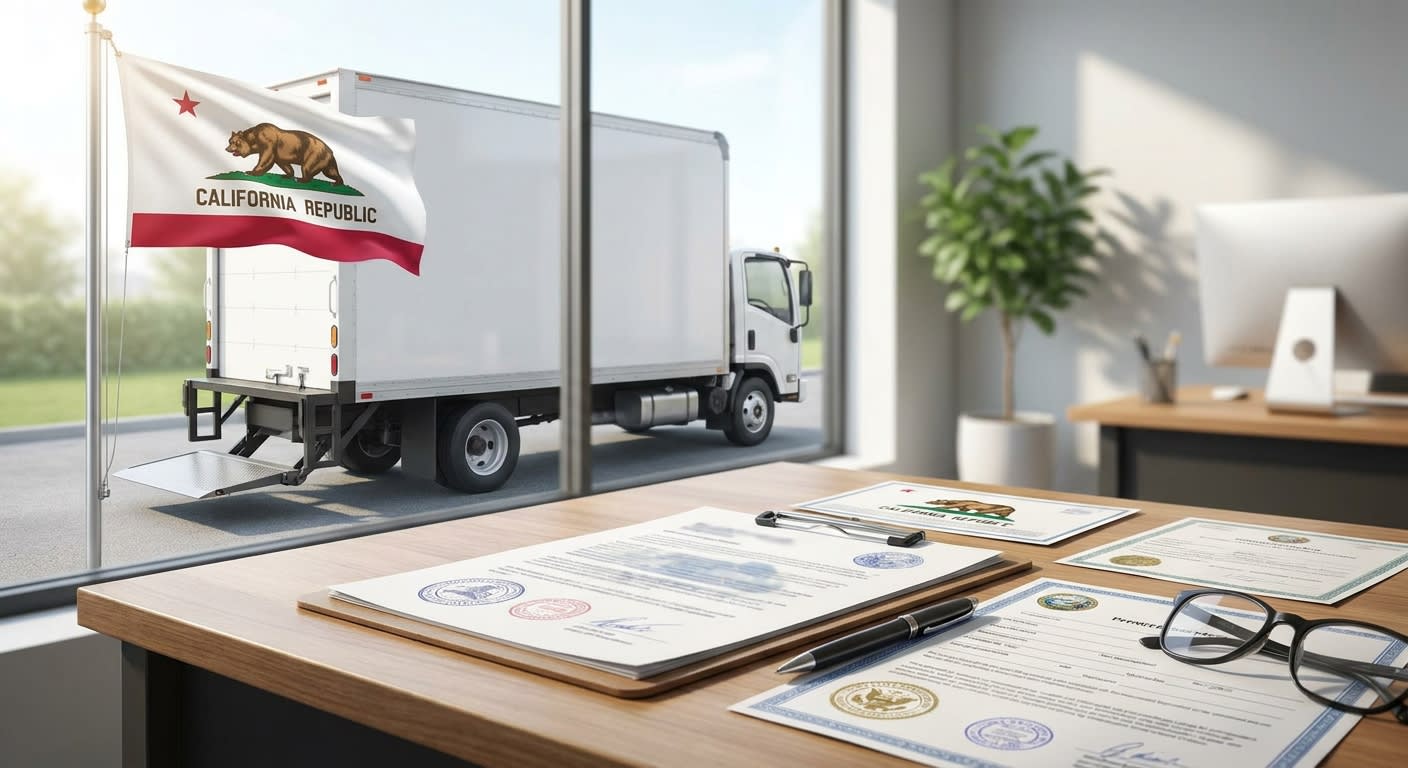
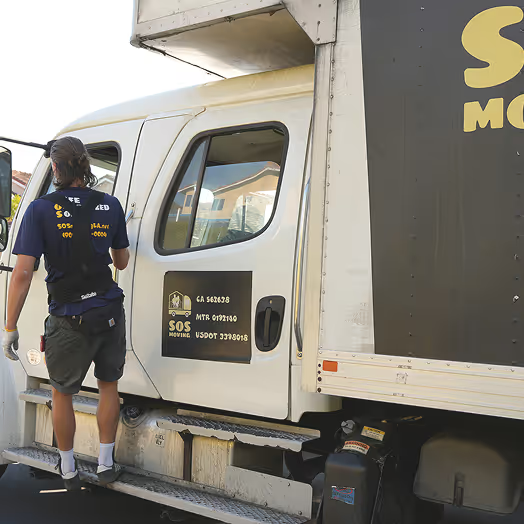
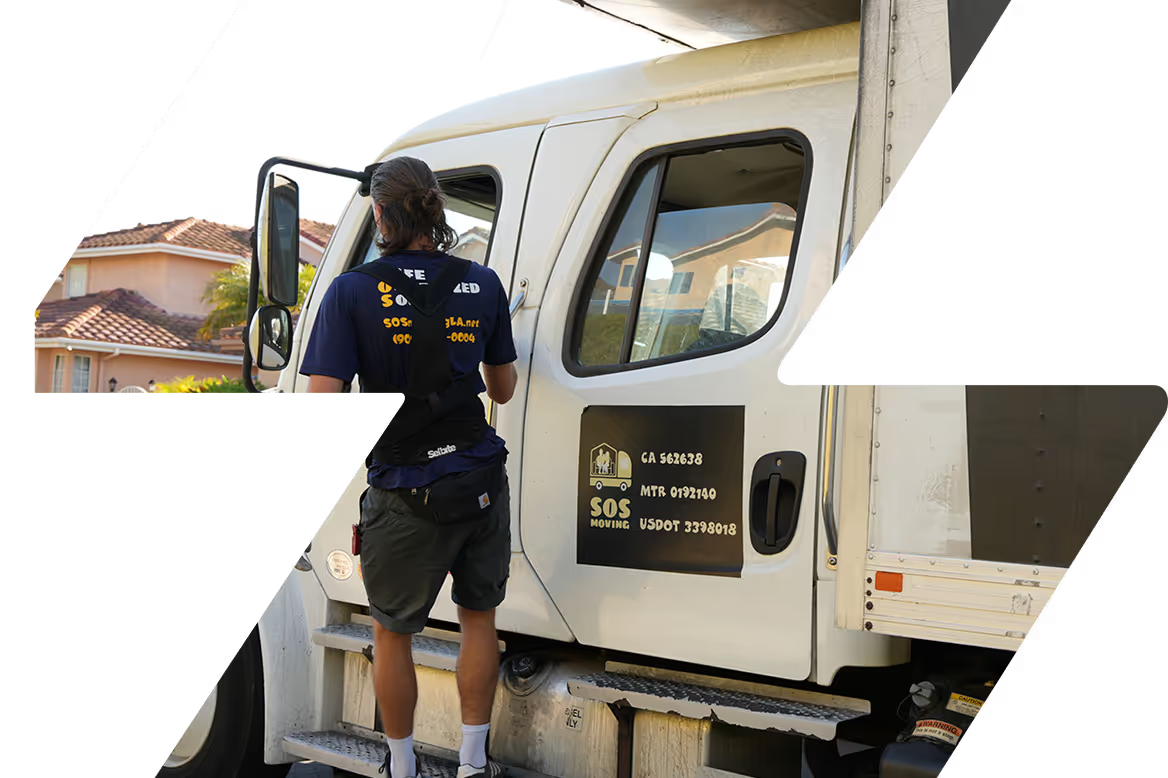
The licences behind that truck are USDOT 3398018 and MC 1153871, with CAL-T0192140 for work that stays inside California. Our office is at 5530 Jillson Street, Los Angeles, and the phones run Monday - Sunday, 8AM - 6PM on 909-443-0004.






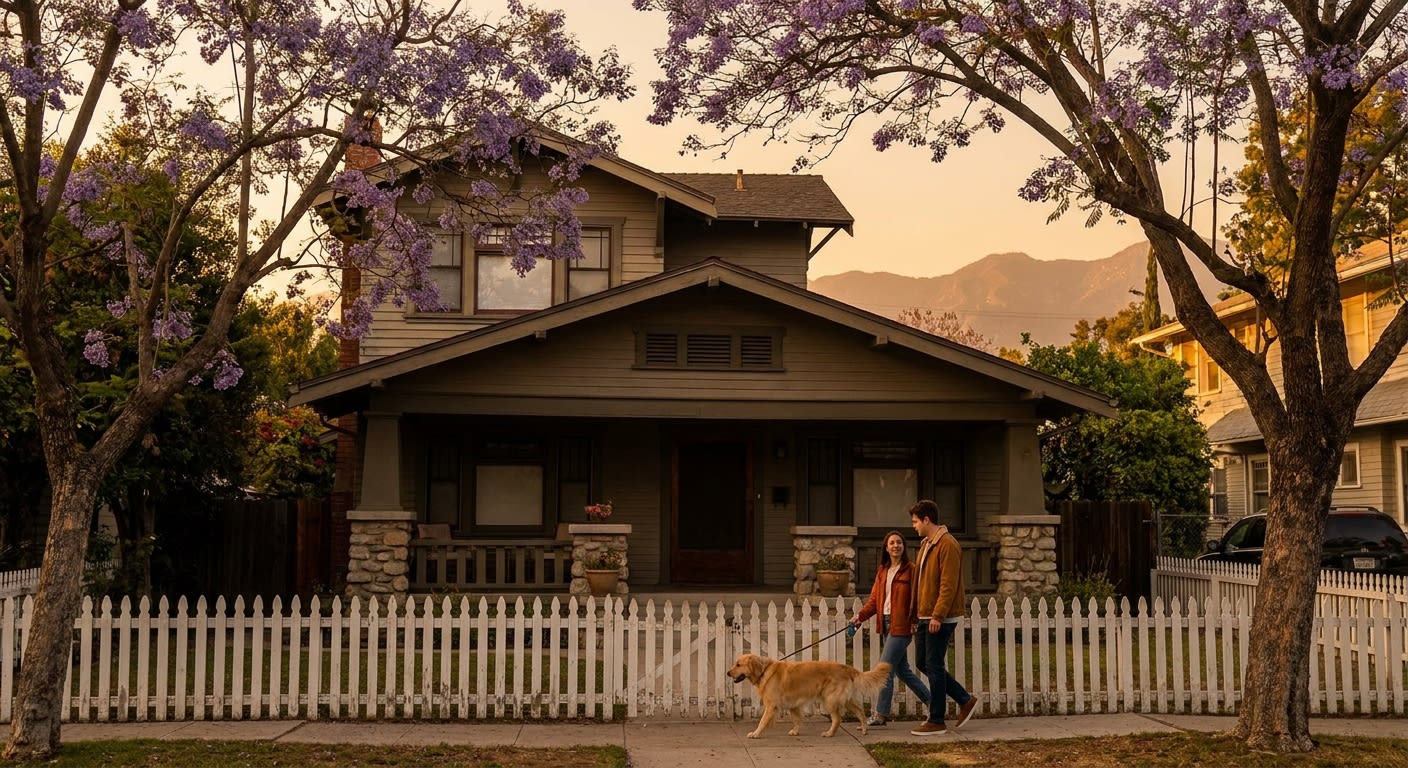
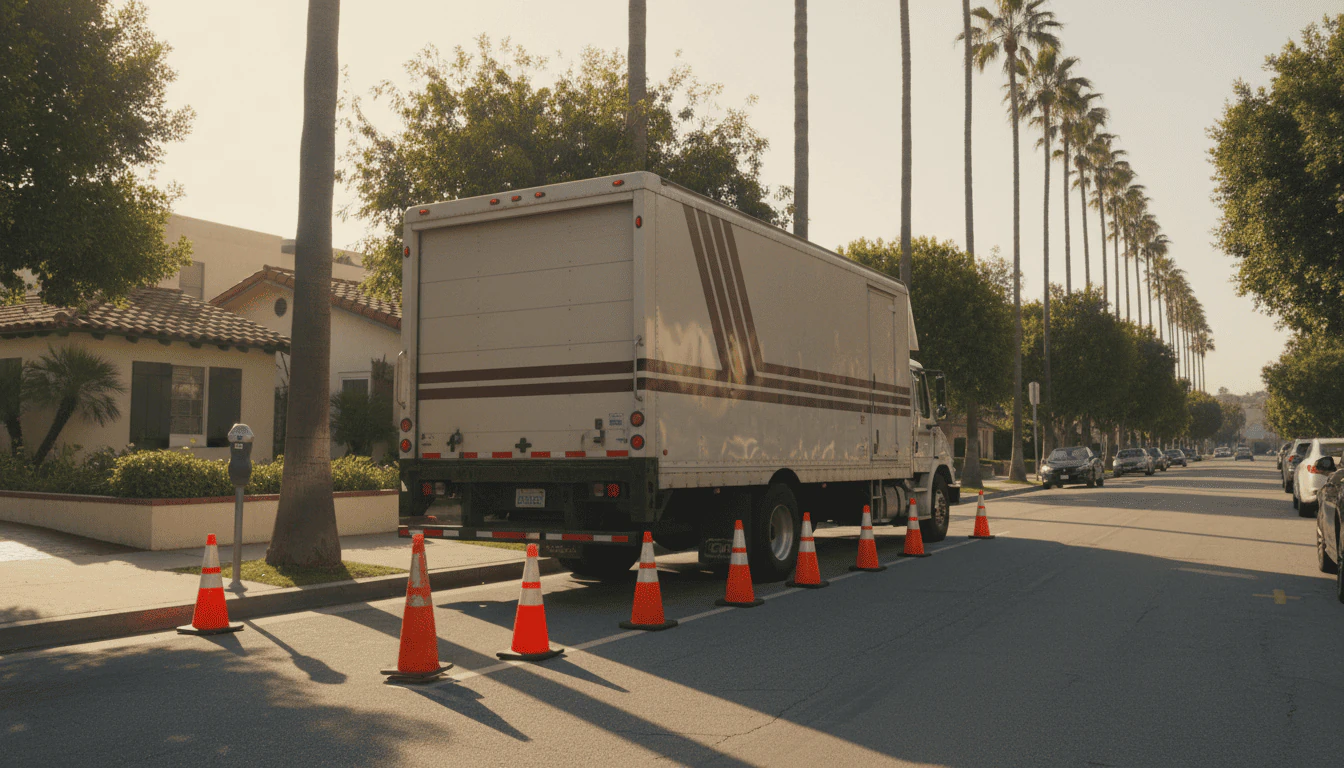
Anaheim sweeps its neighbourhood streets Monday through Thursday. Morning routes run from 8 a.m. to noon and afternoon routes from noon to 4 p.m., and the sweeper can come at any point inside its window, which is why a pickup is planned around the window rather than around a guessed hour.
Street-sweeping tickets are written only where a “No Parking for Street Sweeping” sign is posted, and the signs stand every 250 feet on main streets and at the entrances to neighbourhoods. If the sweeper passes after noon on a morning route, or after 4 p.m. on an afternoon route, there is no ticketing. Fridays cover alleyways and major streets, again with ticketing only where signs exist.
When the kerb genuinely has to be held, the city has a named instrument for it: a Parking Variance, described as a request for temporary parking or no parking for construction and other activities. It goes through the Traffic Engineering Division at City Hall, and it is not something to start on the morning of the move.
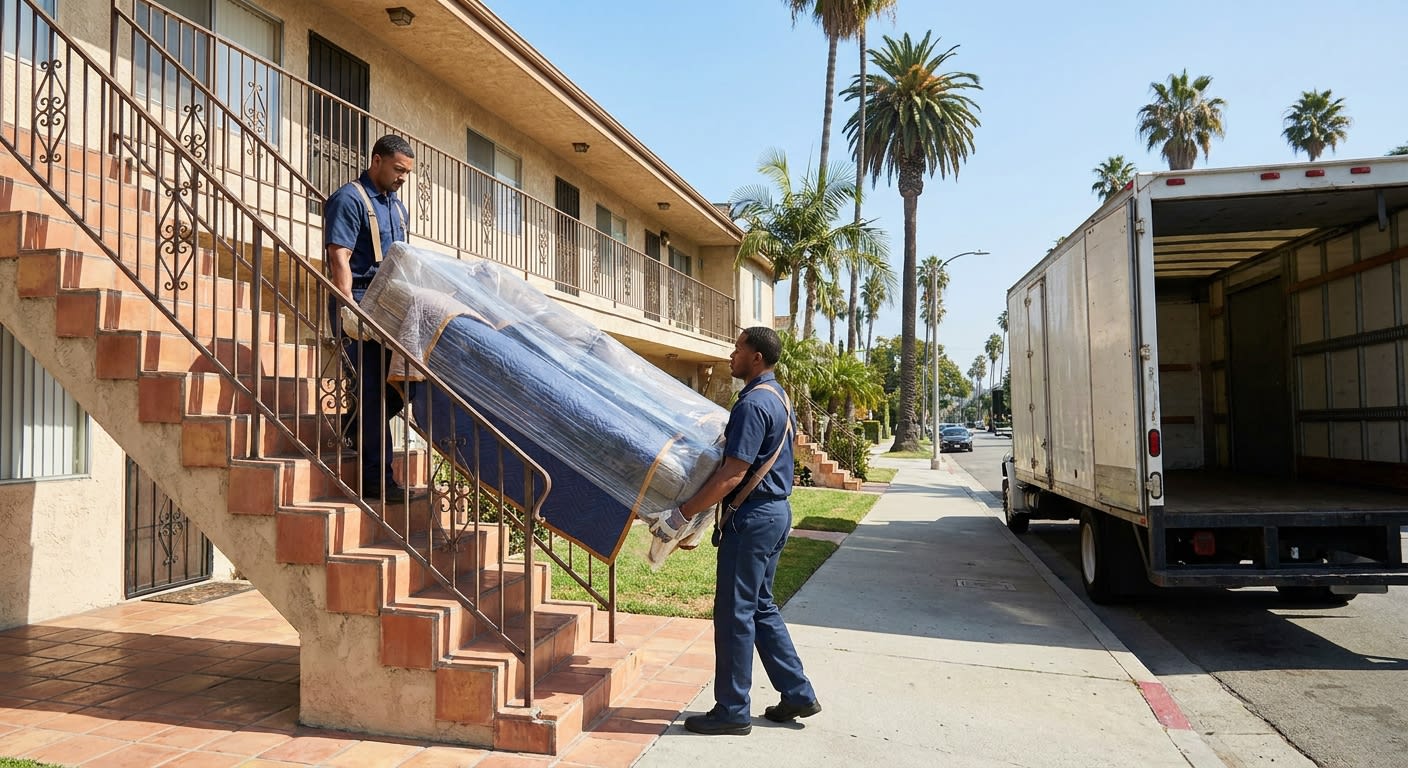
The city parking standard for apartment and condo complexes sets aside only a quarter of a space per unit for guests. A 26-ft truck is not a guest car, so where it stands in a full complex is a question for management before the date is fixed, not a discovery on Saturday morning.
Section .0204 of the same chapter places assigned resident spaces within 100 feet of the unit they serve and unassigned ones within 200 feet. Those figures describe the parking layout rather than the walk to your door, but they tell a crew what kind of complex it is about to work in.
So we ask the HOA or the building manager for four things before booking: move-out hours, lift or loading-area booking, the gate code, and the exact wording for a certificate of insurance. A COI costs $50 where a building requires one, and we order it early rather than argue with a locked service door.
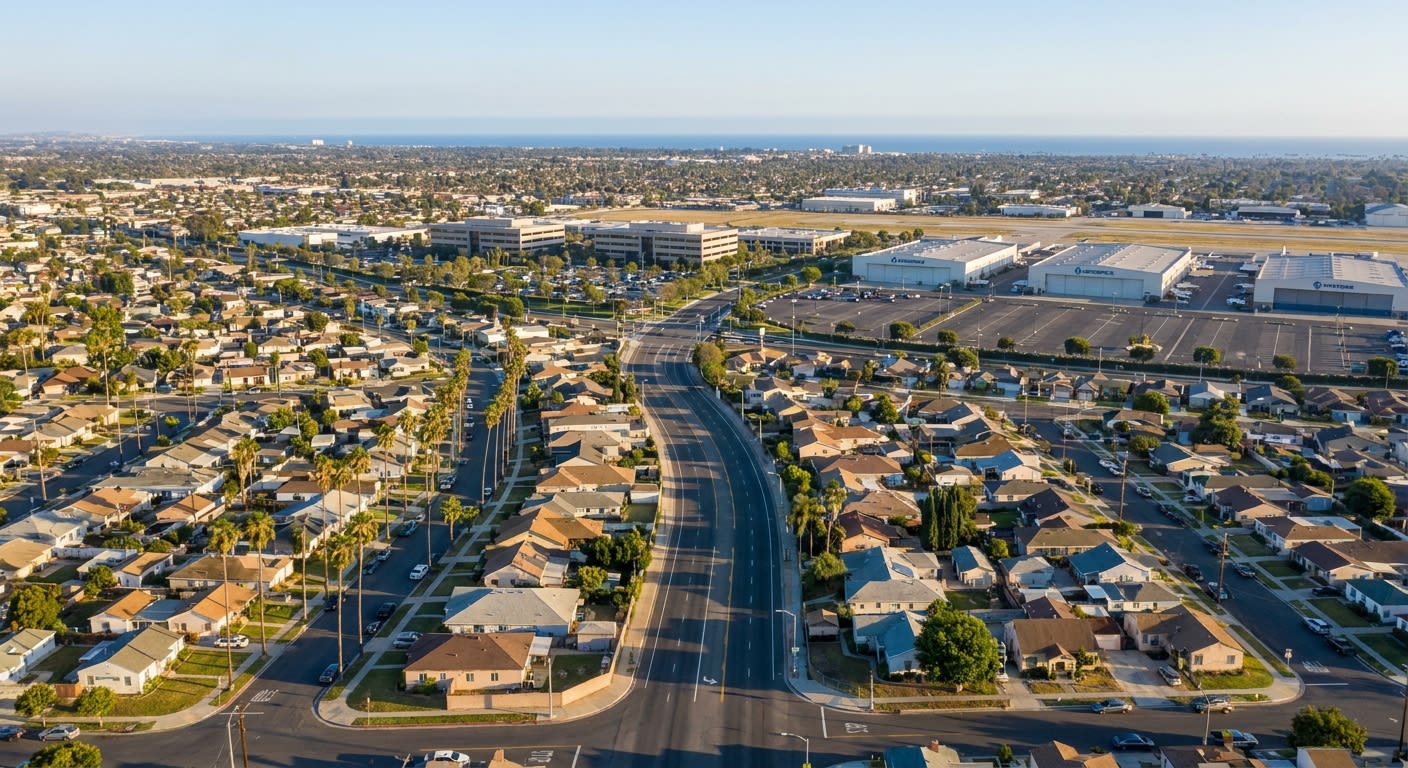
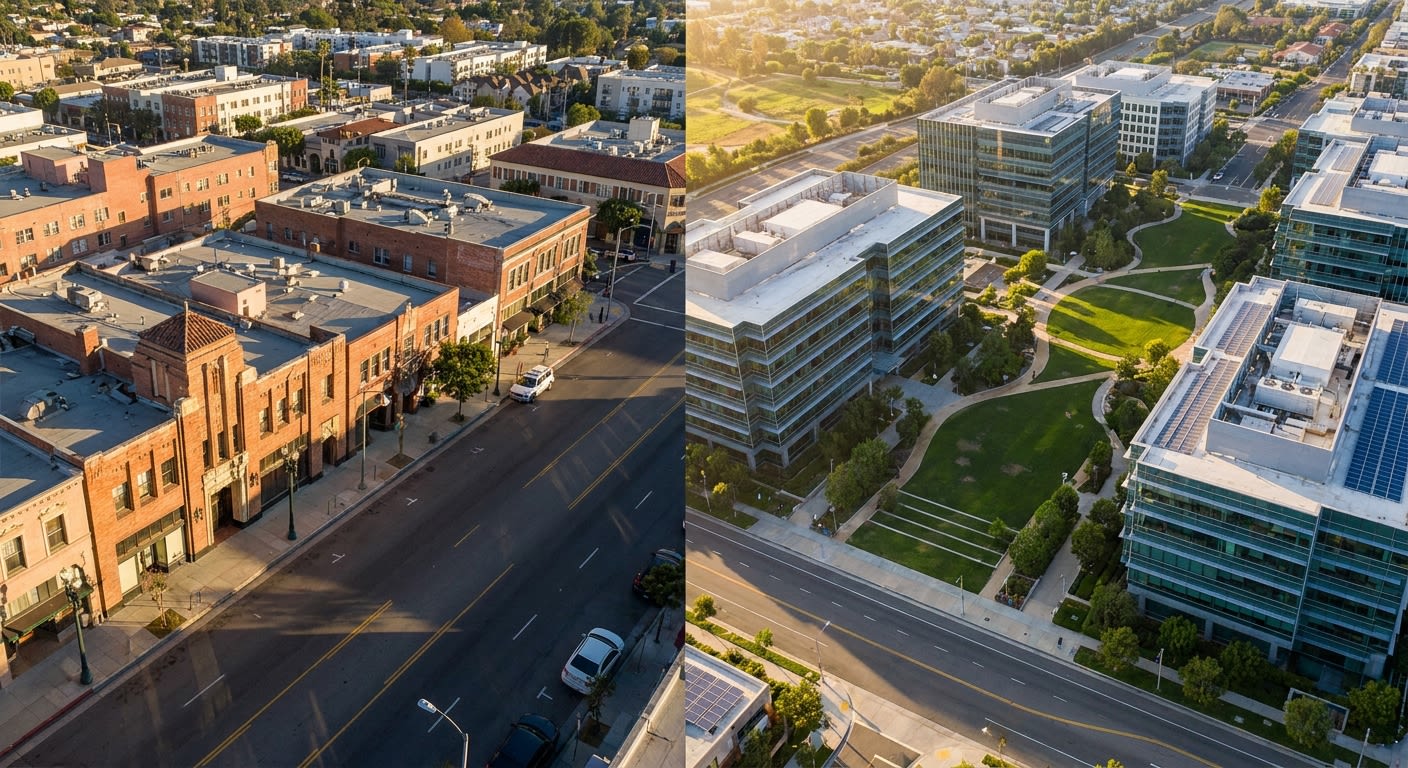
The Platinum Triangle is the district that generally surrounds and includes Angel Stadium, Honda Center and The Grove of Anaheim. Its mixed-use zoning allows homes, shops, restaurants and offices side by side, and the housing built there includes high-rise lofts.
The city also notes that existing industrial businesses are welcome to continue operating in the area. That mix shapes a pickup: a booked lift and a narrow lobby driveway at one address, yard gates and working truck traffic on the street behind it.
Our crews plan the stand for the truck against whichever of those two you are leaving from, and a height clearance is checked before a 26-ft box truck is sent under a residential podium. Elsewhere in the city the pattern is different again, and the walk-through is what settles it.
The city lists access to and within the Platinum Triangle as the I-5, SR-57 and SR-22 freeways, a network of pedestrian-friendly local streets, bikeways, ARTIC, Anaheim Resort Transit and OCTA buses. Which of them a loaded truck uses is decided by the pickup address and the destination, not by the district it starts in.
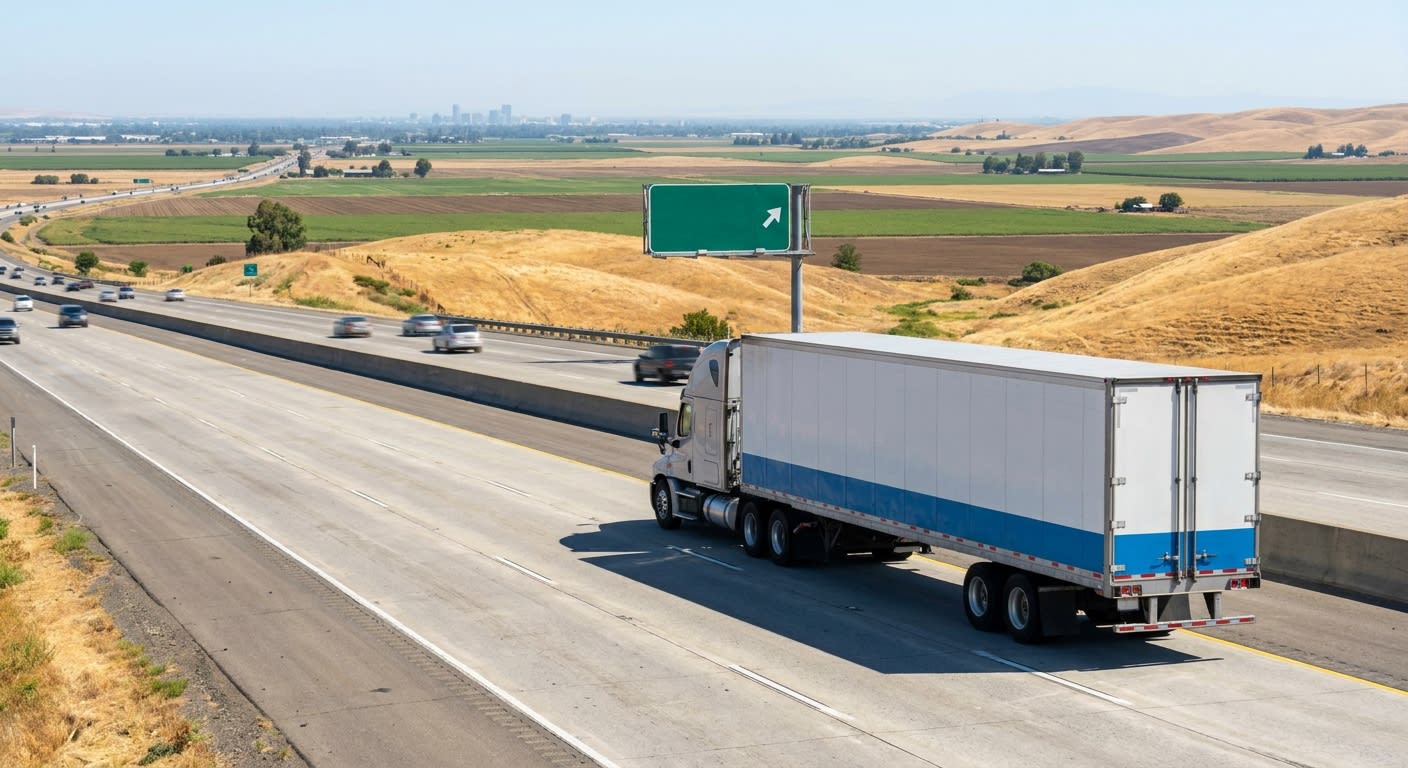
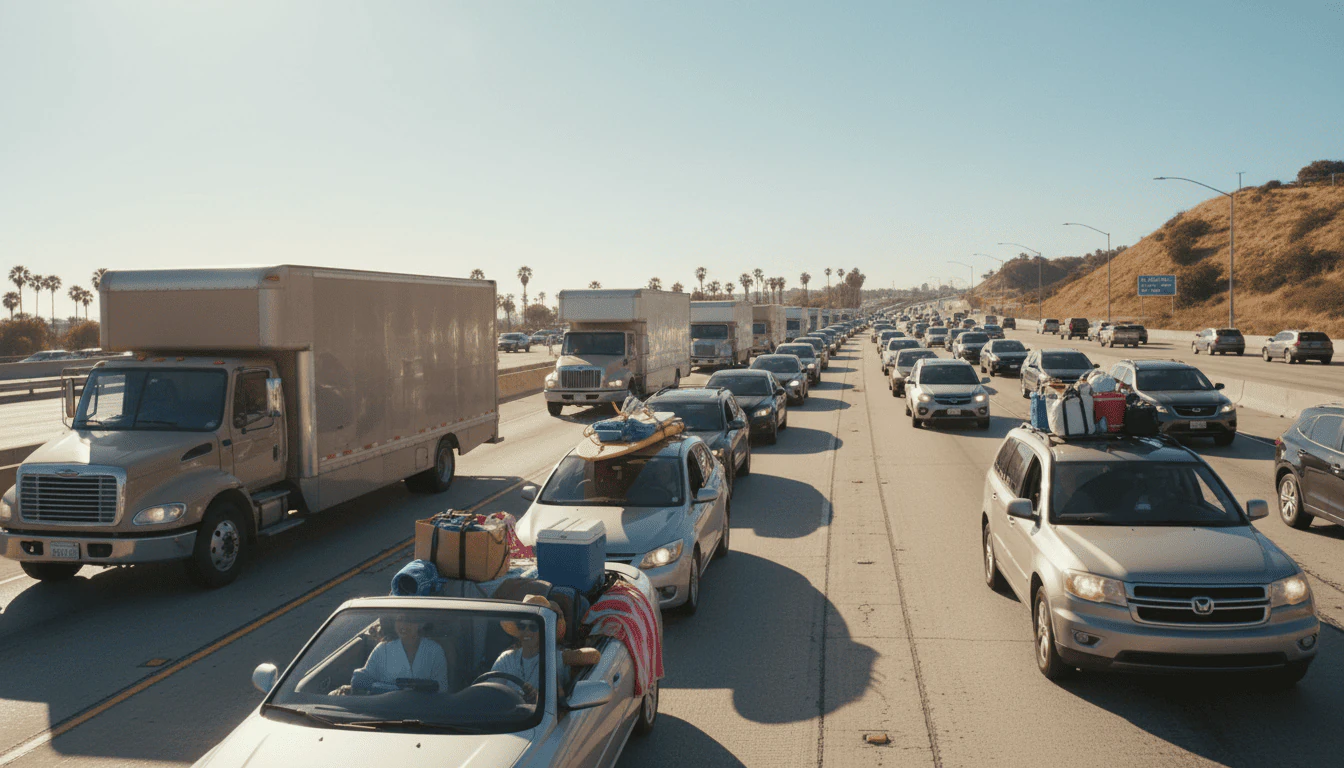
Routes that use the 91 Express Lanes deserve one note. The federal profile of the Orange County segment, between the Riverside County line and SR-55, describes a 10-mile toll facility in the median of SR-91, with two lanes each way separated from five general-purpose lanes by tubular markers.
That same profile records single points of access and egress at each end and no intermediate entrances or exits. A driver who enters stays in until the end of the segment, which makes it a decision taken before the ramp rather than on it.
One local rule closes the day. City code bars any truck or trailer rated at 10,000 pounds or more from parking on an Anaheim street between 3 a.m. and 6 a.m. The rule is city-wide and carries no loading exception, so a loaded truck leaves the kerb instead of waiting out the night in front of the house.
Where we load in Anaheim → what to plan for on loading day:
| Leaving from | What the crew plans around |
|---|---|
| A street posted “No Parking for Street Sweeping” | Neighbourhood routes run Monday through Thursday, mornings 8 a.m. to noon and afternoons noon to 4 p.m. Citations follow California Vehicle Code 22507.6 only where the sign stands, so the truck goes on the side that is not being swept. |
| An alley, or a major street, on a Friday | Friday sweeping covers alleyways and major streets, with ticketing only if signs are posted. We read the block instead of assuming the alley is free that morning. |
| Curb space that has to be held for the truck | The city instrument is a Parking Variance, a request for temporary parking or no parking, handled by the Traffic Engineering Division at City Hall. |
| A condo or apartment with guest parking only | Guest parking is set at a quarter of a space per unit, so the loading spot is booked with management rather than found on arrival. |
| A unit deep inside the complex | Assigned spaces sit within 100 feet of the unit and unassigned ones within 200 feet, so the carry can be long. We measure the real distance at the walk-through. |
| A private street inside a multi-family development | The code requires a sidewalk and a landscape strip on both sides, plus street trees, pedestrian streetlights and curbs, with parallel parking and bike lanes permitted. |
| An address in the Platinum Triangle | Housing here includes high-rise lofts, and the city notes existing industrial businesses are welcome to keep operating in the district, so lift booking and yard traffic both go into the plan. |
| A finish that runs late | A truck rated at 10,000 pounds or more may not be parked on any Anaheim street between 3 a.m. and 6 a.m., so the loaded truck pulls away the same evening. |
An interstate move is quoted flat-rate for the whole truck, so a slow loading day in a condo garage does not change the figure. Hourly rates belong to local work and are not applied here. The quote covers fuel, mileage and road taxes as well as the crew.
As soon as the destination address is settled. Buildings here often want a certificate of insurance and a booked lift, and a Parking Variance from the Traffic Engineering Division is not issued the same morning. A $50 deposit holds the date, and same-day pickups are possible when a crew and a truck are free within our Monday - Sunday, 8AM - 6PM hours.
Only on the side that is not being swept in that window. Neighbourhood sweeping runs Monday through Thursday, mornings 8 a.m. to noon and afternoons noon to 4 p.m., and the sweeper can arrive at any point inside it. Where a “No Parking for Street Sweeping” sign is posted a citation follows California Vehicle Code 22507.6, so we read the signs on your block first.
It depends on the route, so we quote a window rather than a date, from a few days upward. Nothing else travels on that truck, which means the schedule is not affected by anyone else’s shipment. The coordinator calls ahead before the crew arrives.
Tell the coordinator as early as you can. If the gap is a single night, your things stay loaded and secured for $200 and the crew delivers the next day. For a longer wait the load goes into storage in transit, priced before the truck leaves Anaheim rather than improvised at the far end.
Yes: USDOT 3398018 and MC 1153871, with CAL-T0192140 for work that stays inside California. All three are public records. Ask any mover for the first two numbers before you pay a deposit, and check them against the federal register.
An interstate move is five jobs in a row: the estimate, the packing, the loading, the drive and the unloading. A flat price only survives all five if the first one is done honestly, which is why the estimate takes longer than a phone call.
We ask for a room-by-room list that includes the garage, the balcony and anything sitting in a shared storage cage. The pieces people forget are exactly the ones that make a truck too small on the day, and photographs of the awkward items help a coordinator more than measurements do.
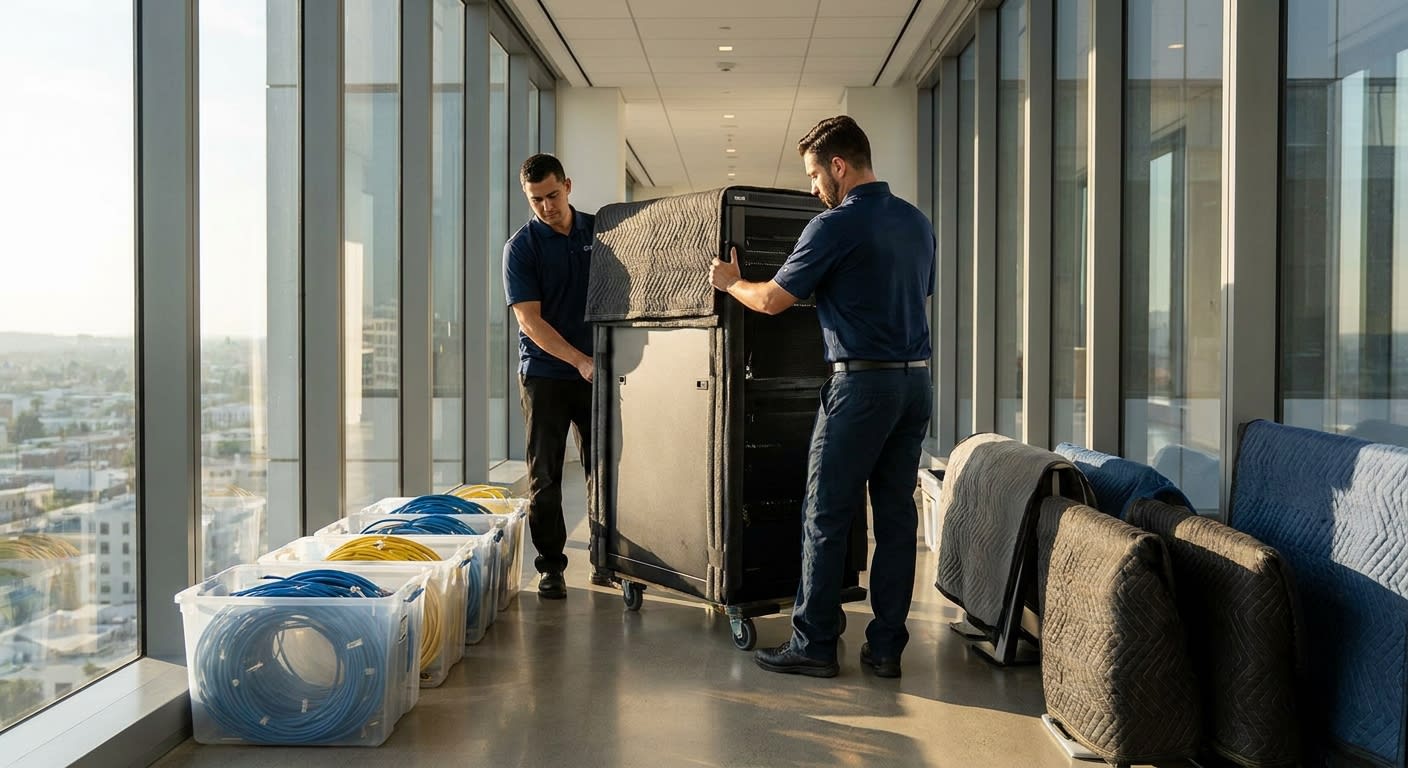
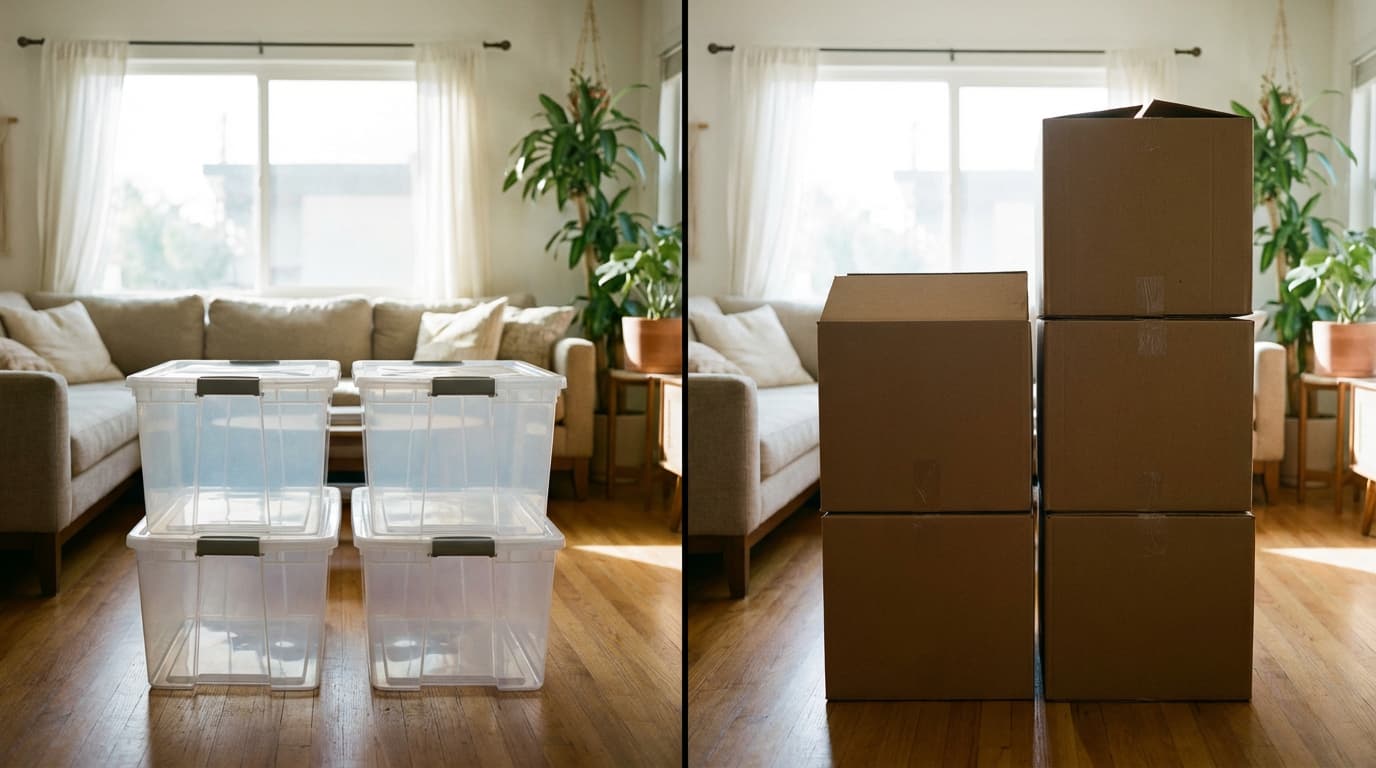
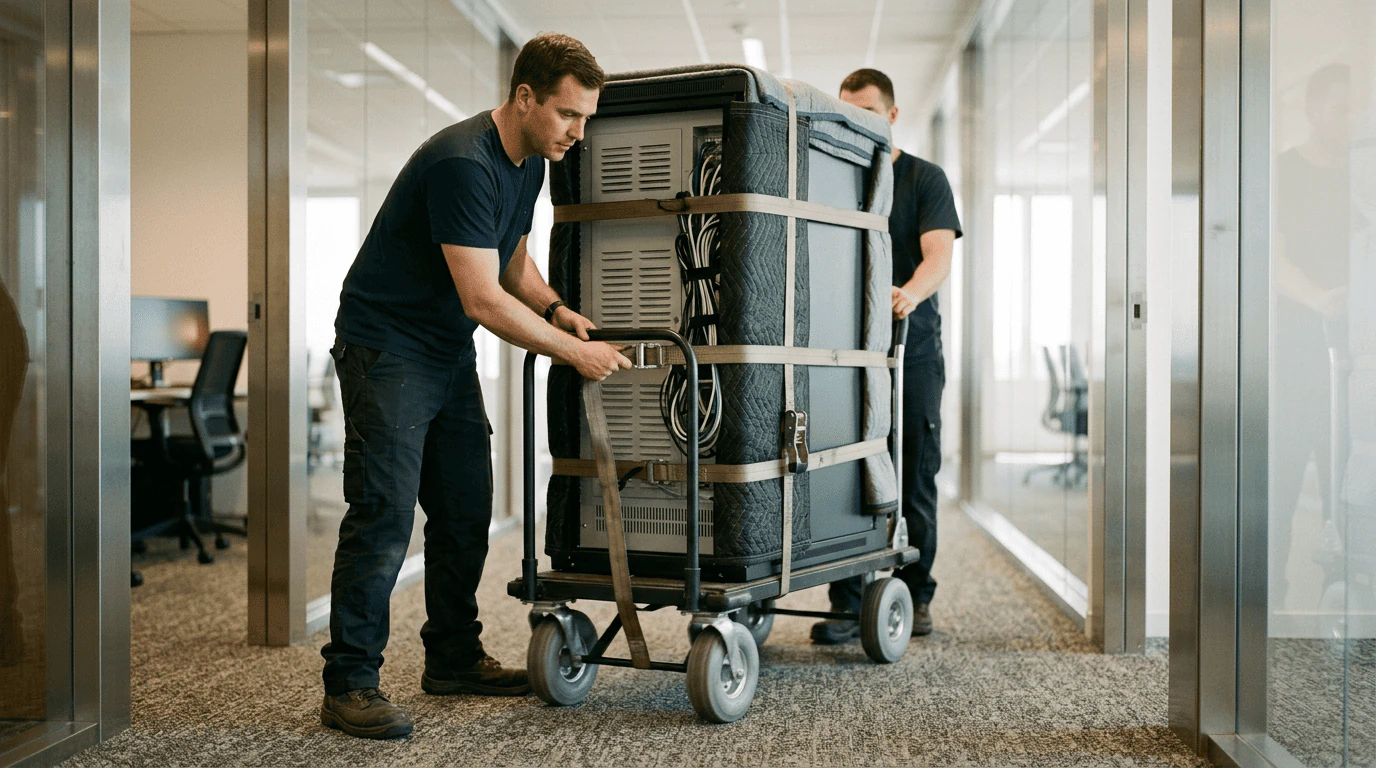
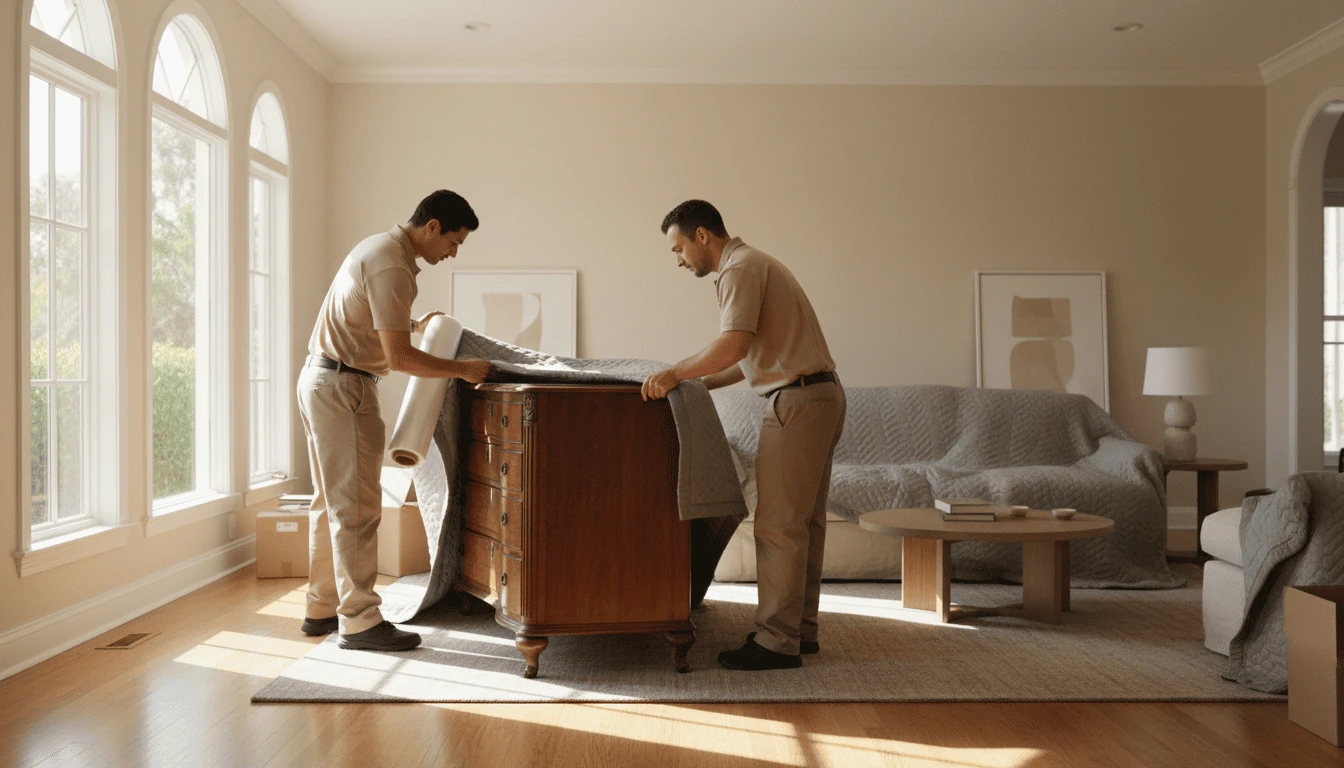
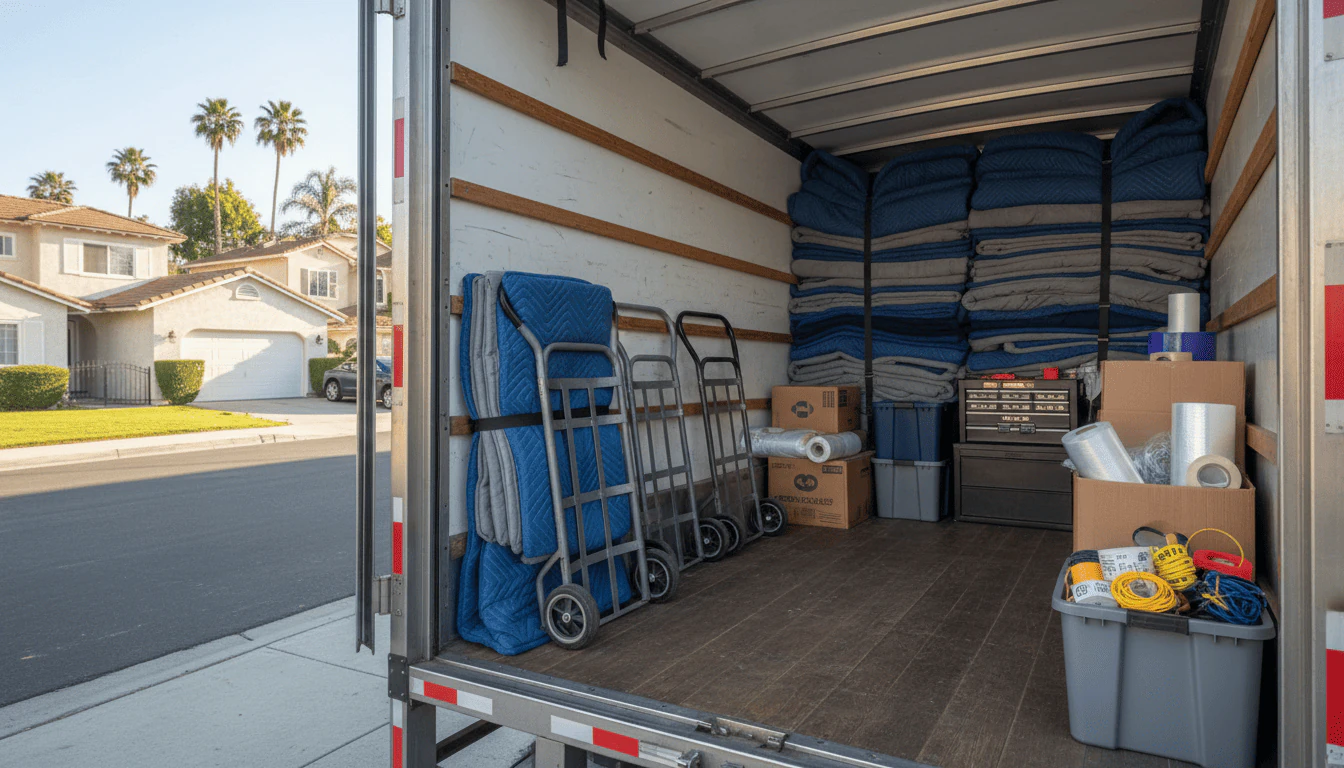
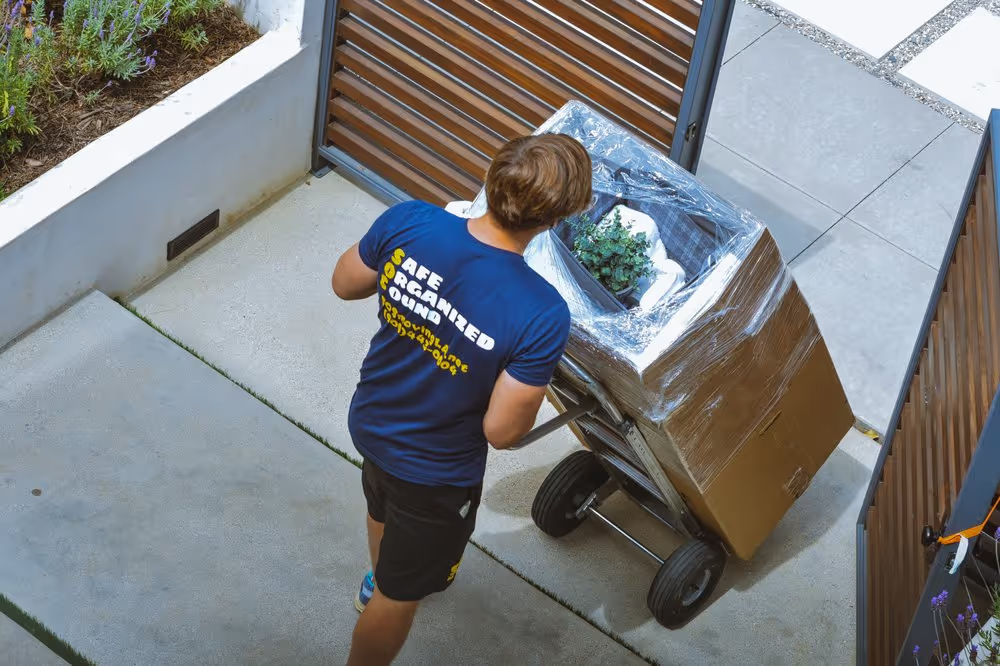
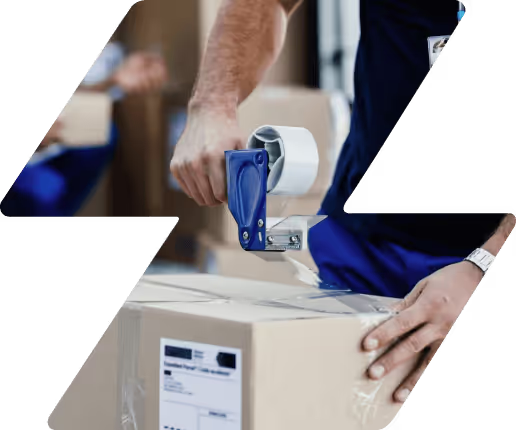
Packing comes next, and it is a choice. You can fill the boxes yourself and leave the furniture to the crew, or hand over the whole job; either way the wrapping on furniture is inside the flat rate and goes on before anything moves toward the door.
Loading is the stage that depends most on the address. A house on a swept street, a condo with a quarter of a guest space per unit and a gated community with its own internal street each need a different answer to the same two questions: where does the truck stand, and how far does the crew walk?
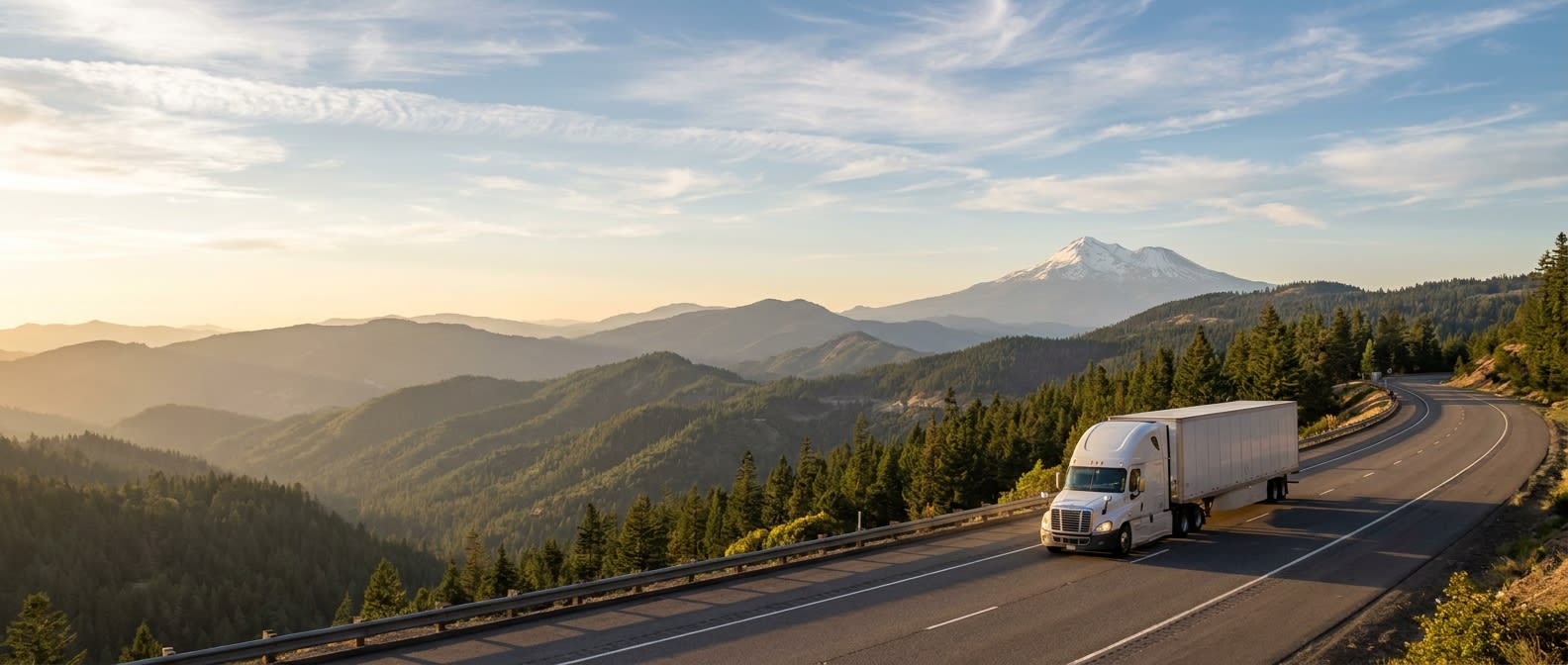
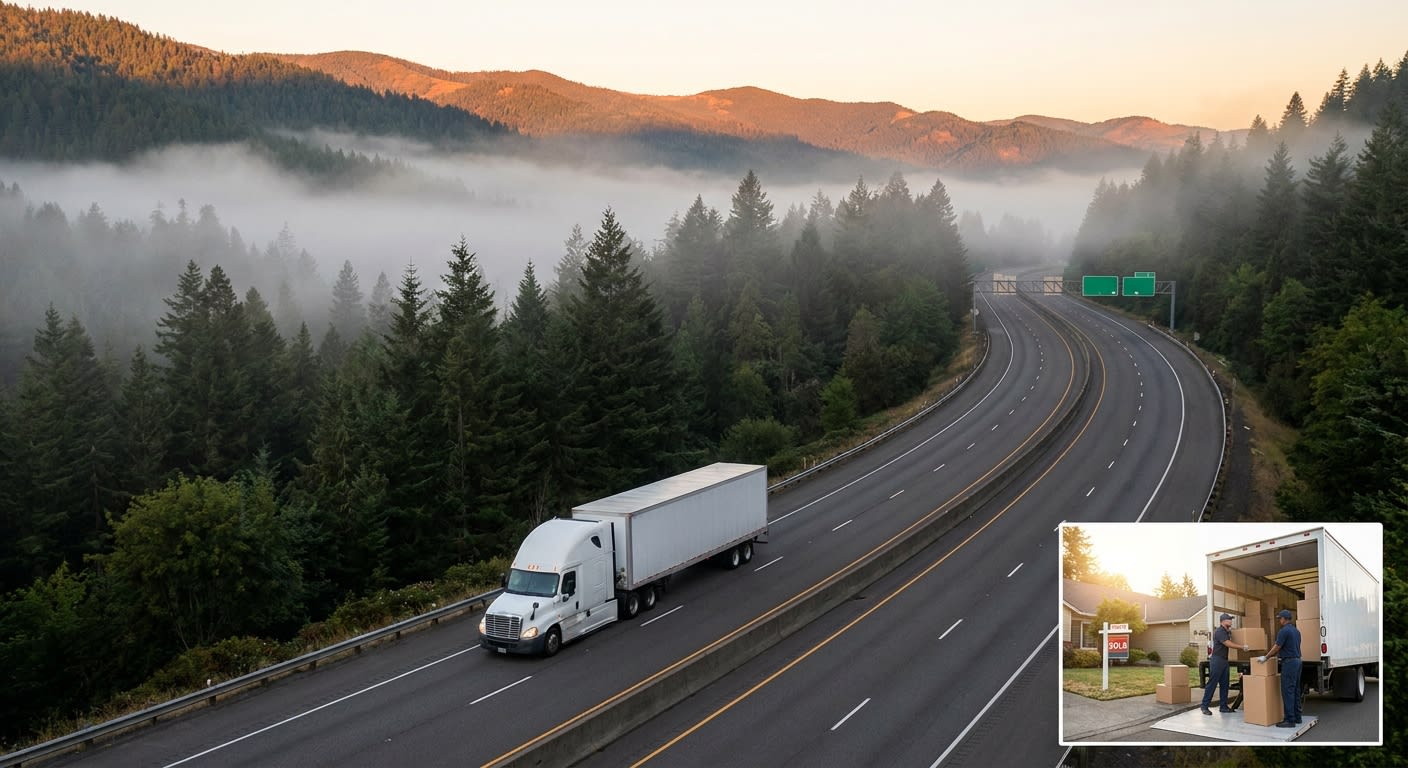
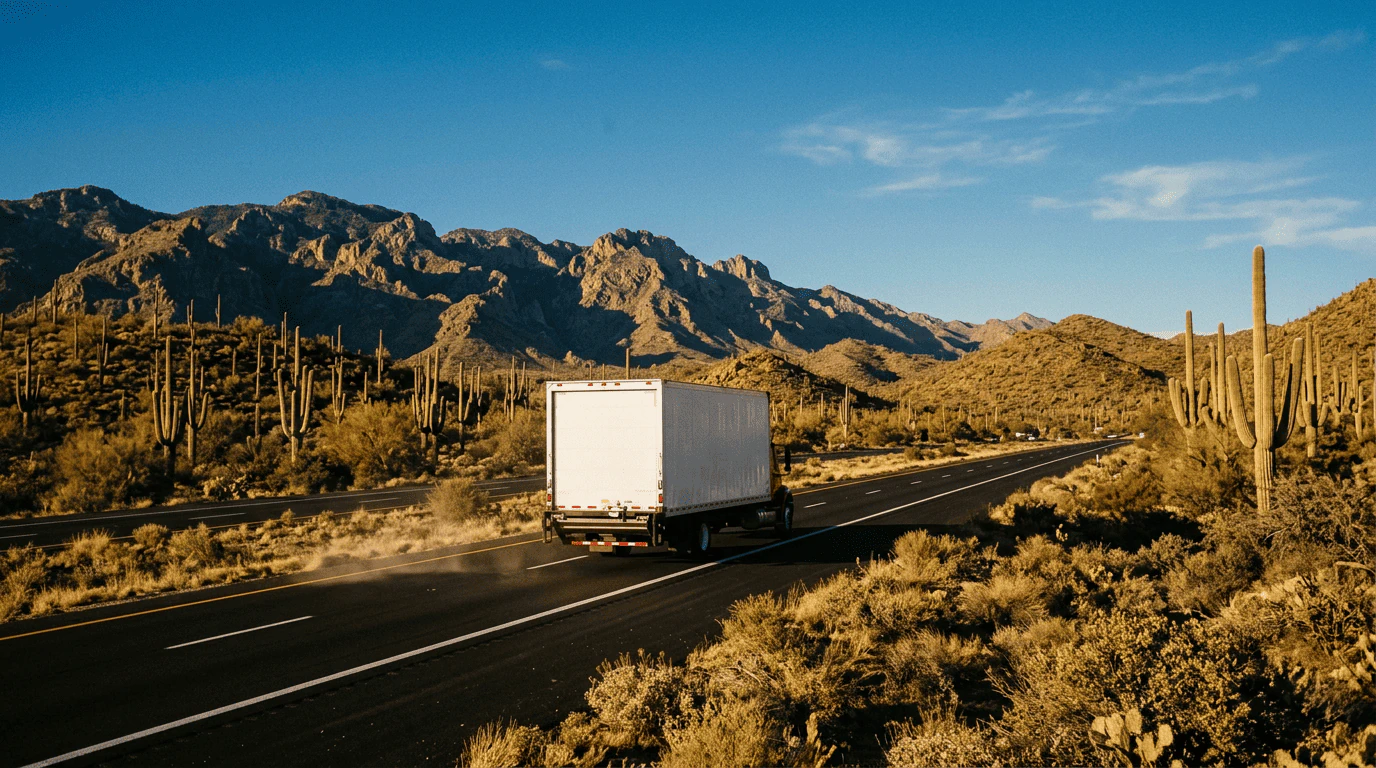
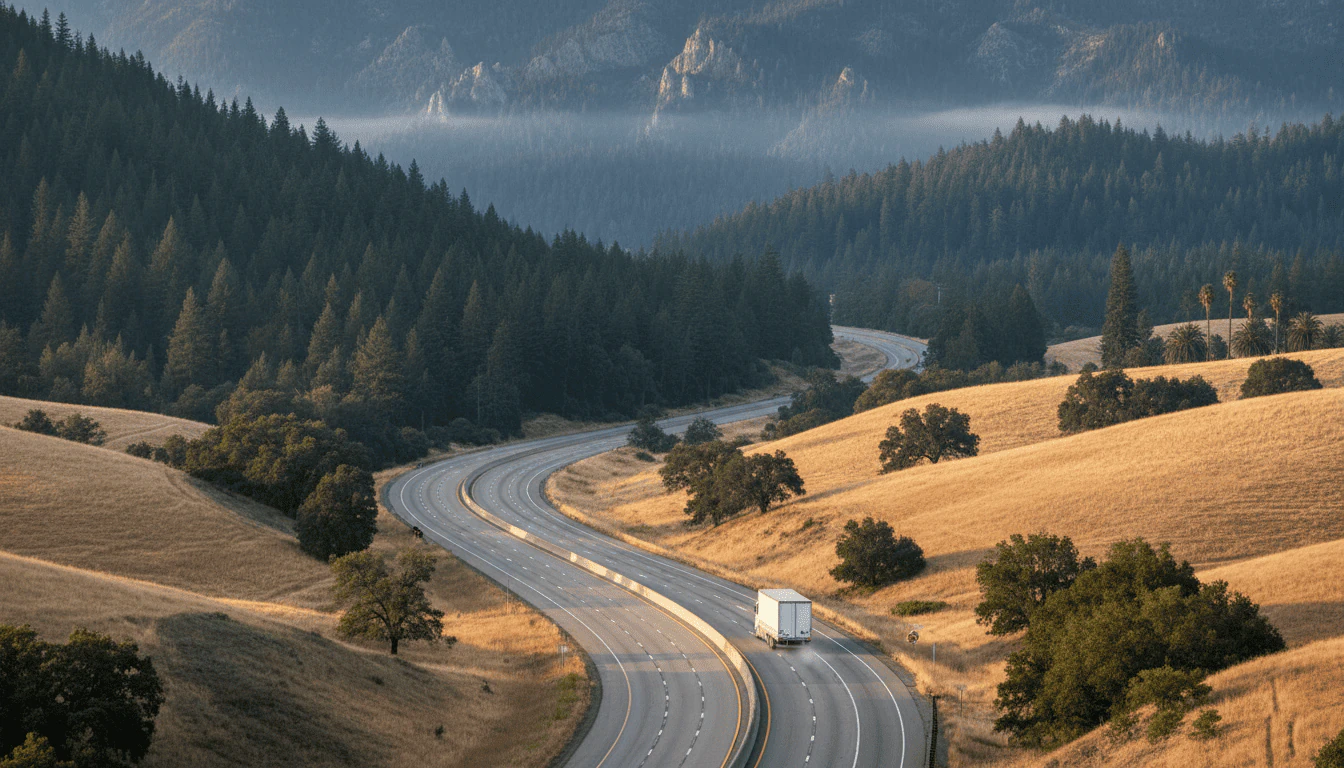
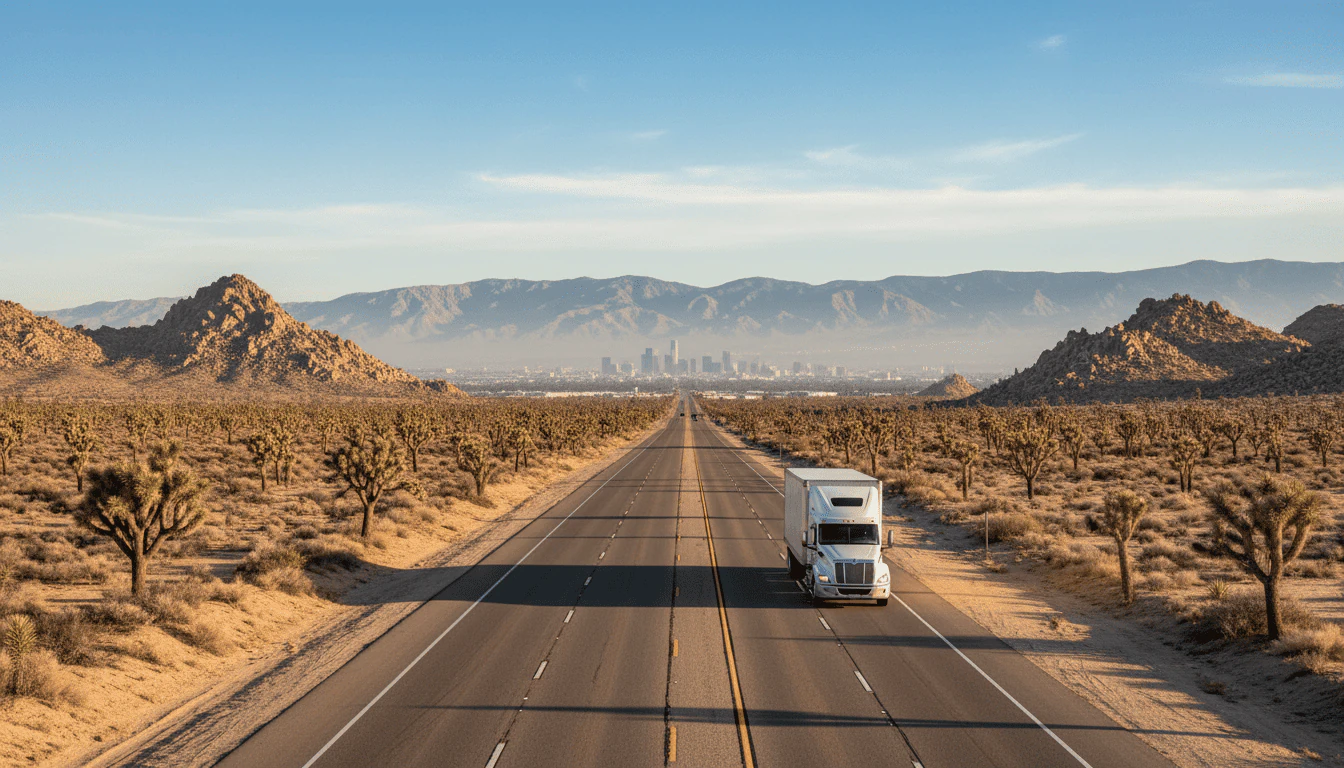
Then the drive. One truck, one household, one crew, so there is no terminal stop, no transfer and no waiting while a second load is found to fill the trailer. Delivery is quoted as a window tied to the route, from a few days upward, and we call before we arrive.
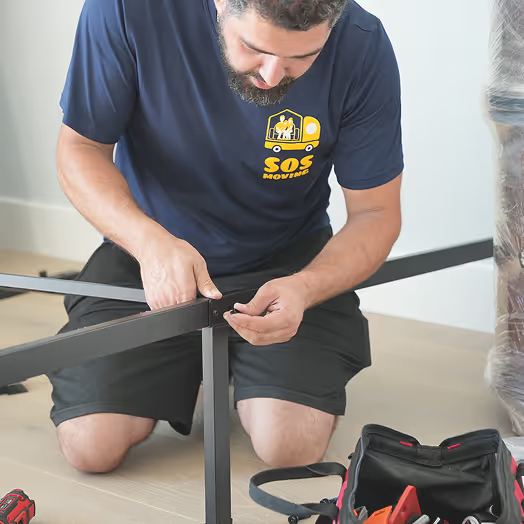
Unloading mirrors the loading. Boxes go to the rooms written on them, furniture is reassembled where it will live, and the balance is settled once you have walked through and looked at what came off the truck.
The calendar belongs in the estimate too. Sweeping runs Monday through Thursday in the neighbourhoods here, and a pickup planned around that window loses far less time than one that meets the signs at eight in the morning.
Any company that carries household goods across a state line has to be registered federally. SOS Moving holds USDOT 3398018 and MC 1153871, and both are public records that can be looked up before a deposit changes hands.
The USDOT number identifies the carrier. The MC number is the operating authority that allows interstate transport for hire, and a company without one is either brokering your move to somebody else or working outside the rules entirely.
In practice the licence turns into paperwork you can hold: a written estimate, an inventory, a bill of lading and valuation coverage included as standard under federal rules. For work that never leaves California the company also holds CAL-T0192140.
It also means a complaint has somewhere to go that is not the mover’s own inbox. That is the honest difference between a licensed carrier and two men with a rented truck quoting a lower number by text message.
Four things decide the figure: how much there is, where it goes, how much of the packing is ours, and how hard the truck is to reach at both ends.
Volume is the biggest lever. A one-bedroom apartment and a four-bedroom house are different trucks and different crews, which is why an inventory matters far more than the square footage written on a listing.
The route sets the driving. A neighbouring state and a coast-to-coast run are not the same job in fuel, hours or crew time, and the delivery window is quoted against the route instead of a fixed calendar date.
Packing is priced by how much of it you keep. Boxes you fill yourself cost nothing, a full pack by the crew is written into the quote up front, and furniture wrapping stays included either way.
Access is the local part, and around here it is rarely trivial. A swept kerb, a guest lot with a quarter of a space per unit, a gate that needs a code and a lift that has to be reserved all cost time, and time inside a flat rate has to be estimated before the day rather than added after it.
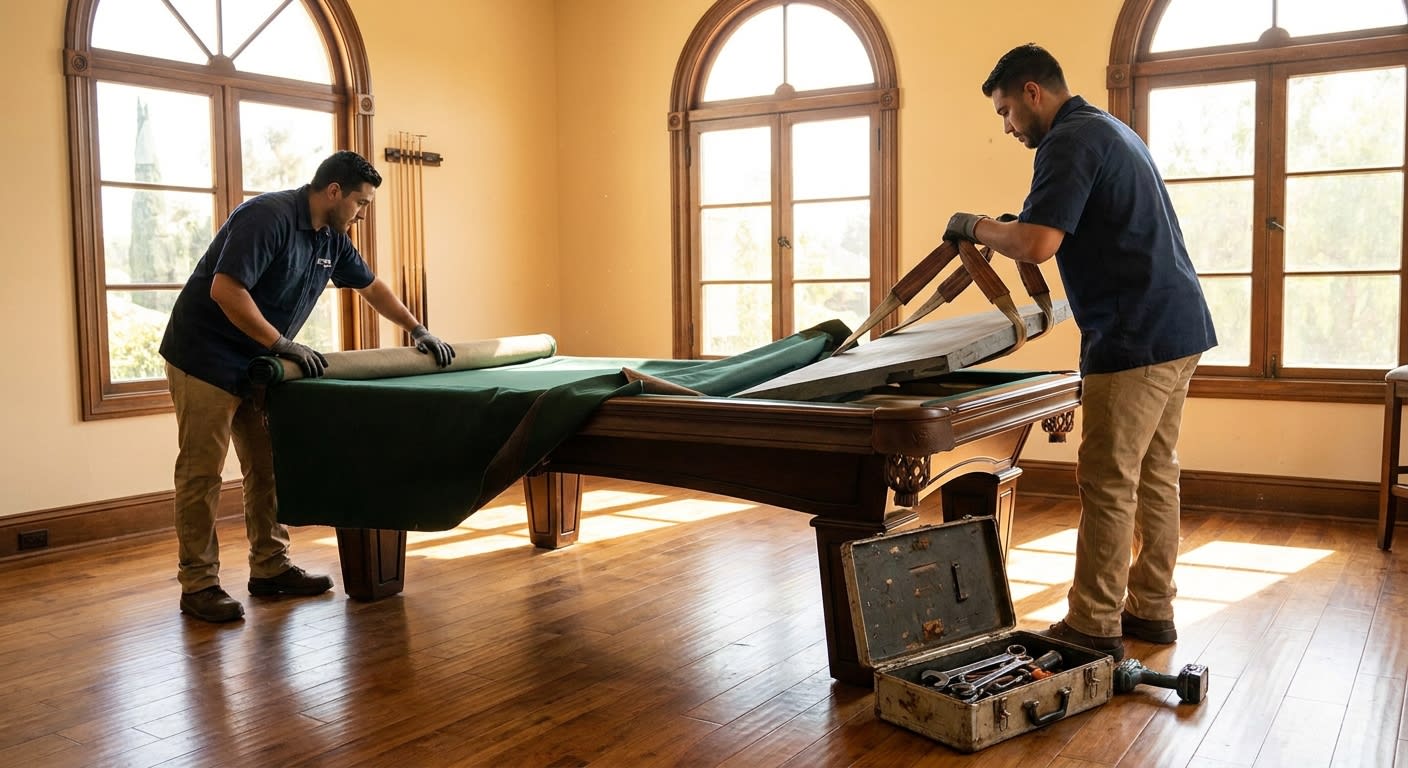
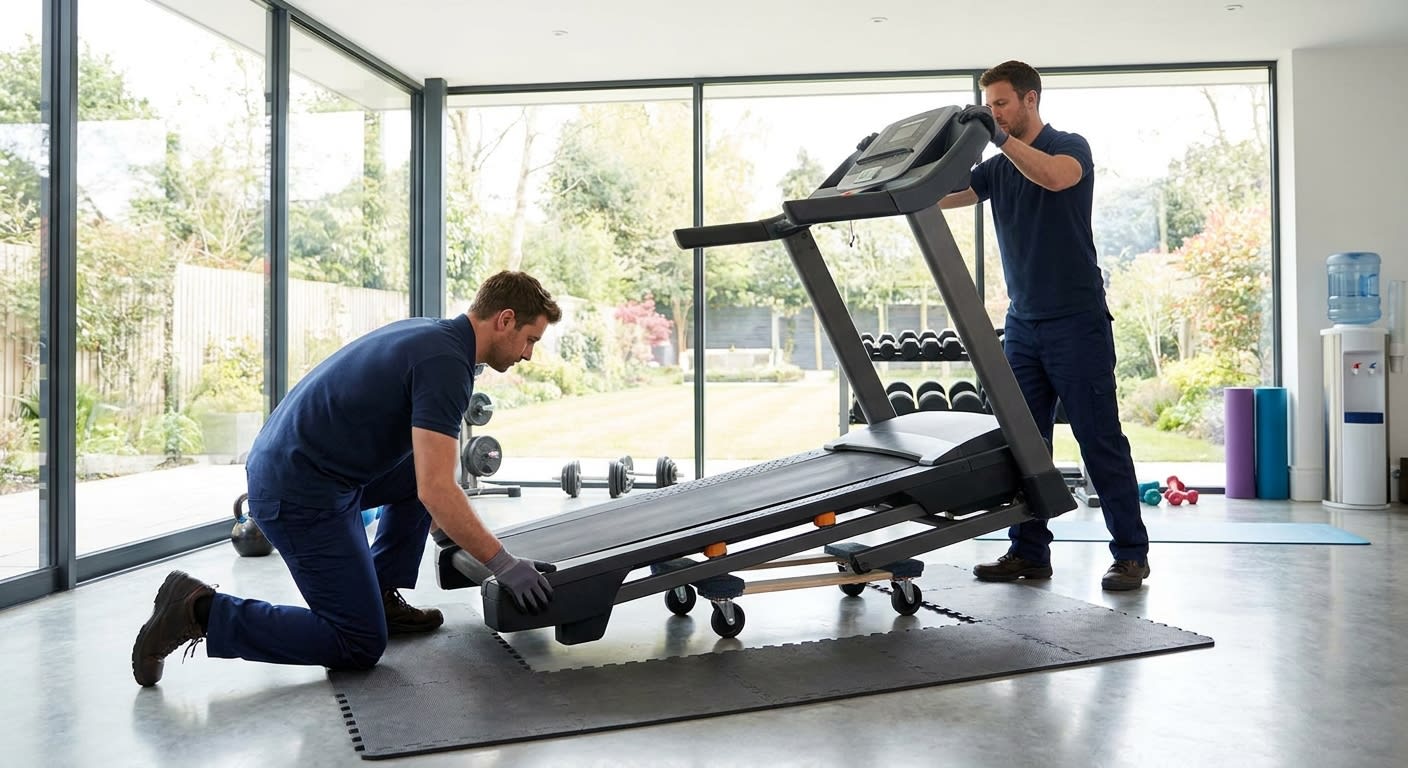
Unusual pieces are priced as their own lines before anyone arrives: a piano is handled by a four-mover crew and adds $200, and a single item over 300 lbs is moved by a three-mover crew for $150.
Most long distance moving companies in Anaheim, CA quote by weight or by volume. We quote the truck, which is easier to check against what actually arrives and does not move when a scale ticket disagrees with the paperwork.
The city’s multi-family parking standard reserves a quarter of a space per dwelling unit for guests, marked as such and reachable from the contiguous street or accessway. That single line explains a familiar scene: a full complex on a weekend morning and no obvious place for a 26-ft truck to stand.
The same chapter puts assigned resident spaces within 100 feet of the unit they serve and unassigned ones within 200 feet. Those distances describe how the parking is laid out, not the walk from a truck to your front door, but they are a fair hint at what the crew will meet.
Private streets inside multi-family developments are built to their own standard: a sidewalk of at least five feet and a landscape strip of at least six feet on both sides, street trees, pedestrian streetlights and curbs, with parallel parking and bike lanes permitted along them. What matters to a crew is which of those features sits between the tailgate and the door.
So the building joins the furniture on the checklist. We collect move-out hours, the lift or loading-area booking, the gate code and the exact wording a certificate of insurance has to carry, and we settle all of it before the date is locked rather than on the morning itself.
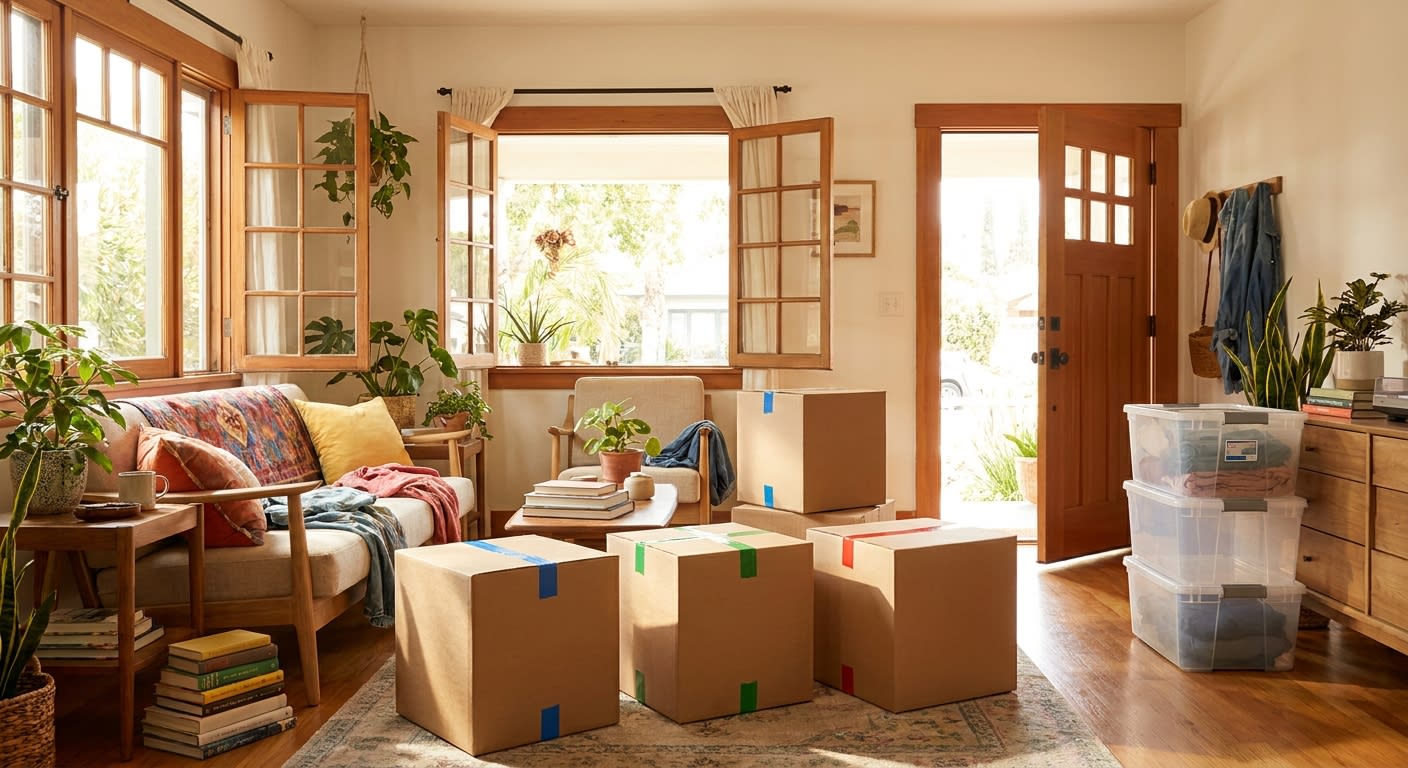
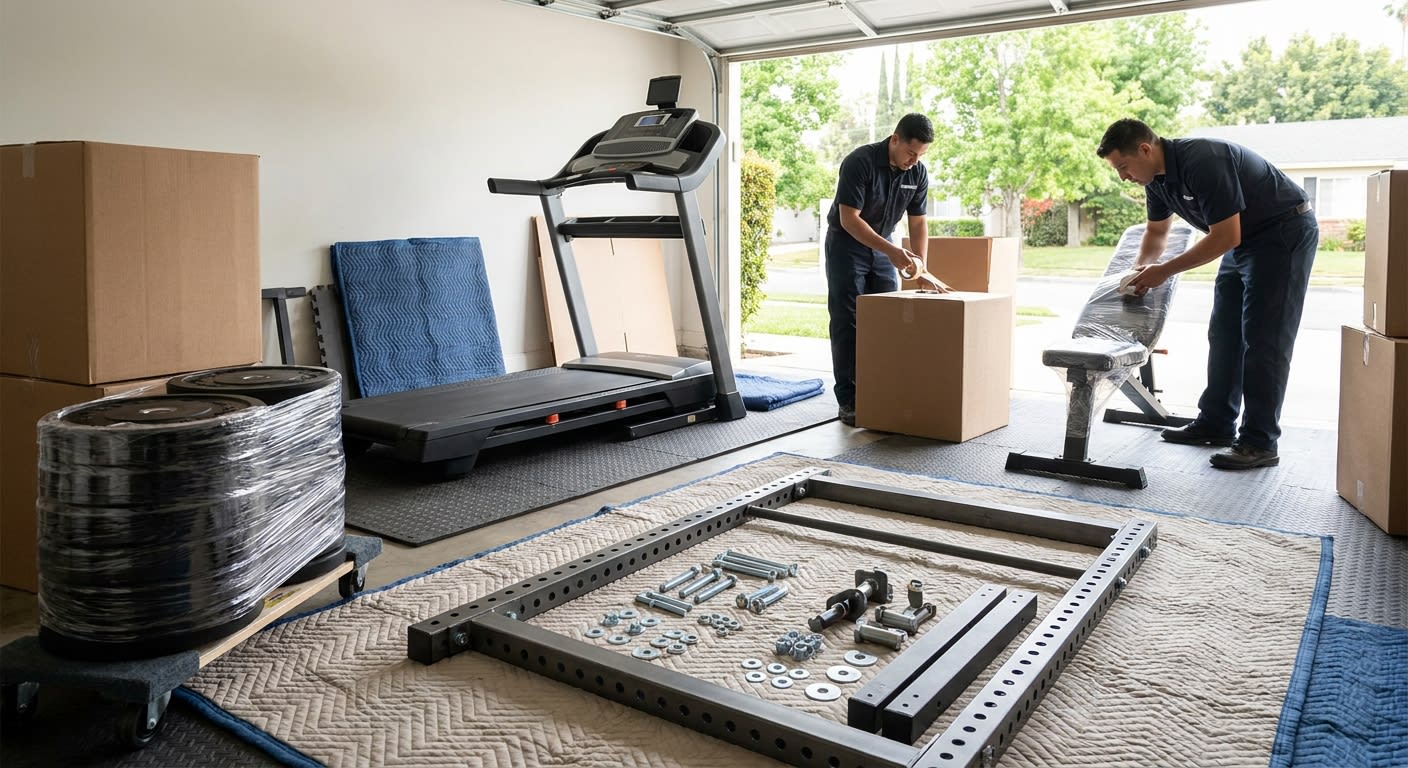
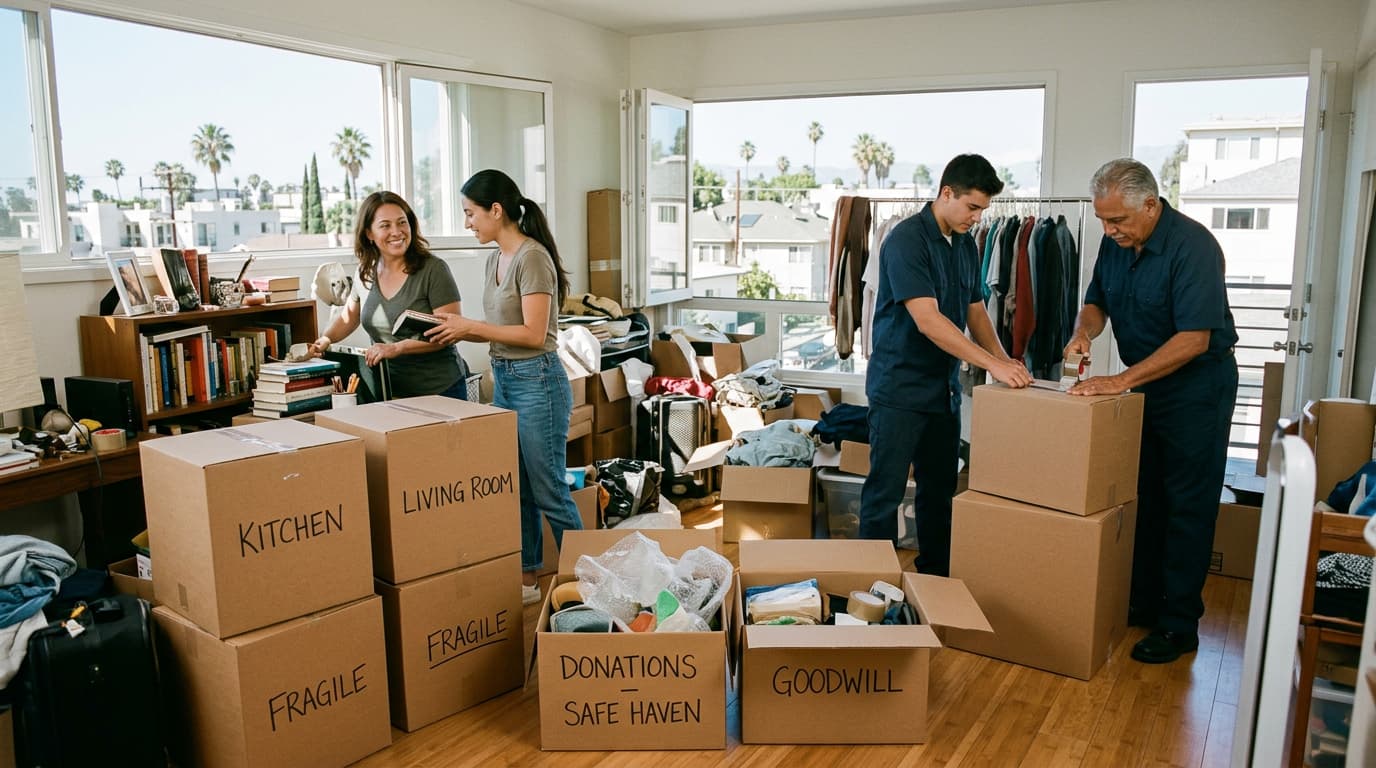
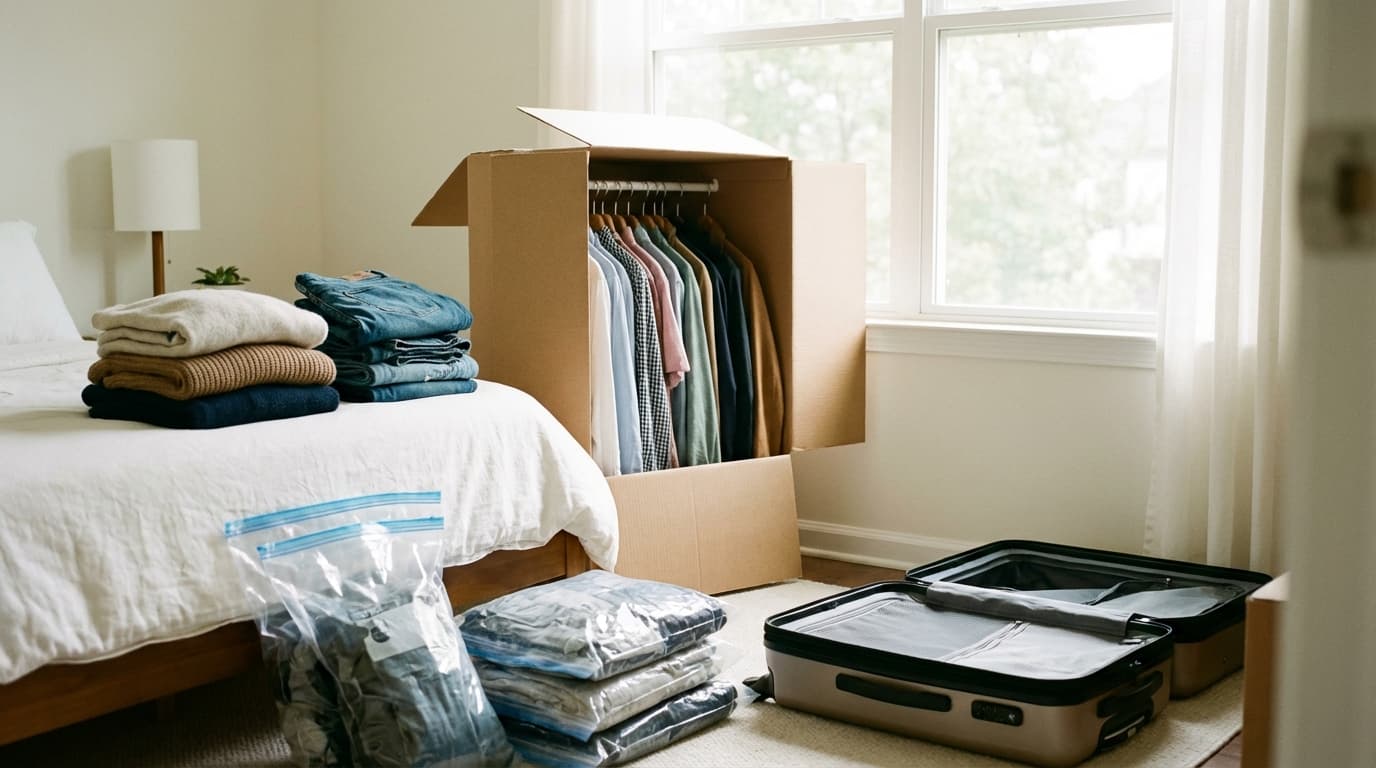
Packing for several days on the road is not packing for a trip across town. Boxes are filled to the top so they cannot collapse under the weight above them, plates travel on edge, and anything glass is double-wrapped and marked on more than one side.
Our packing services can take the whole house or only the kitchen and the fragile shelves, which is where most self-packed damage happens. Furniture wrapping remains inside the flat rate whichever option you choose.
Label by the room the box is going to, not the room it is leaving. The crew reads that label as the box comes off the truck, and a box marked for a room that no longer exists ends up in a hallway.
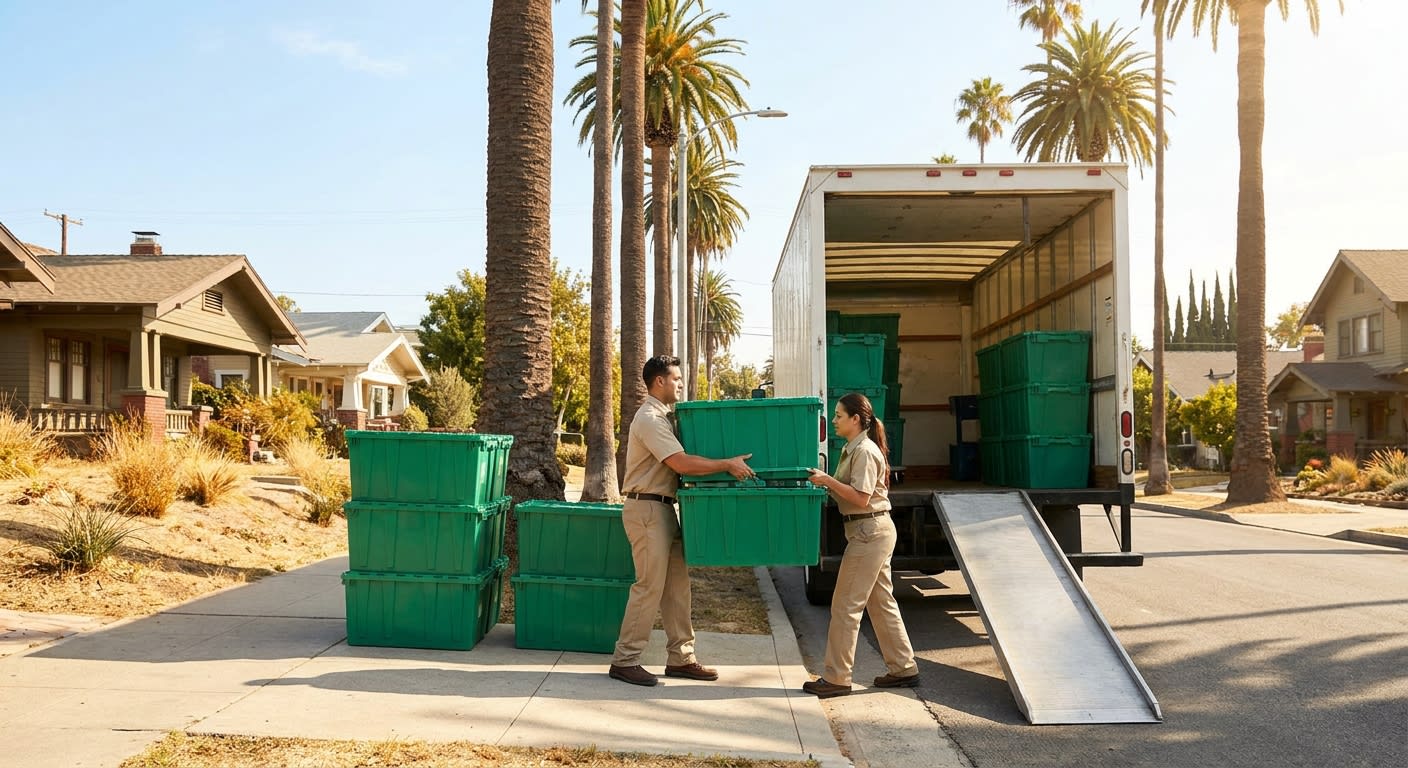
Wardrobe boxes arrive with the crew, so hanging clothes go straight from the rail into the box and back onto a rail at the other end. Nothing on a hanger is folded for the drive, and the boxes go back on the truck once the job is done.
Keep one box out of the load entirely: chargers, medication, tools, bedding, the coffee. It rides in your car, and it is the difference between arriving and arriving comfortably.
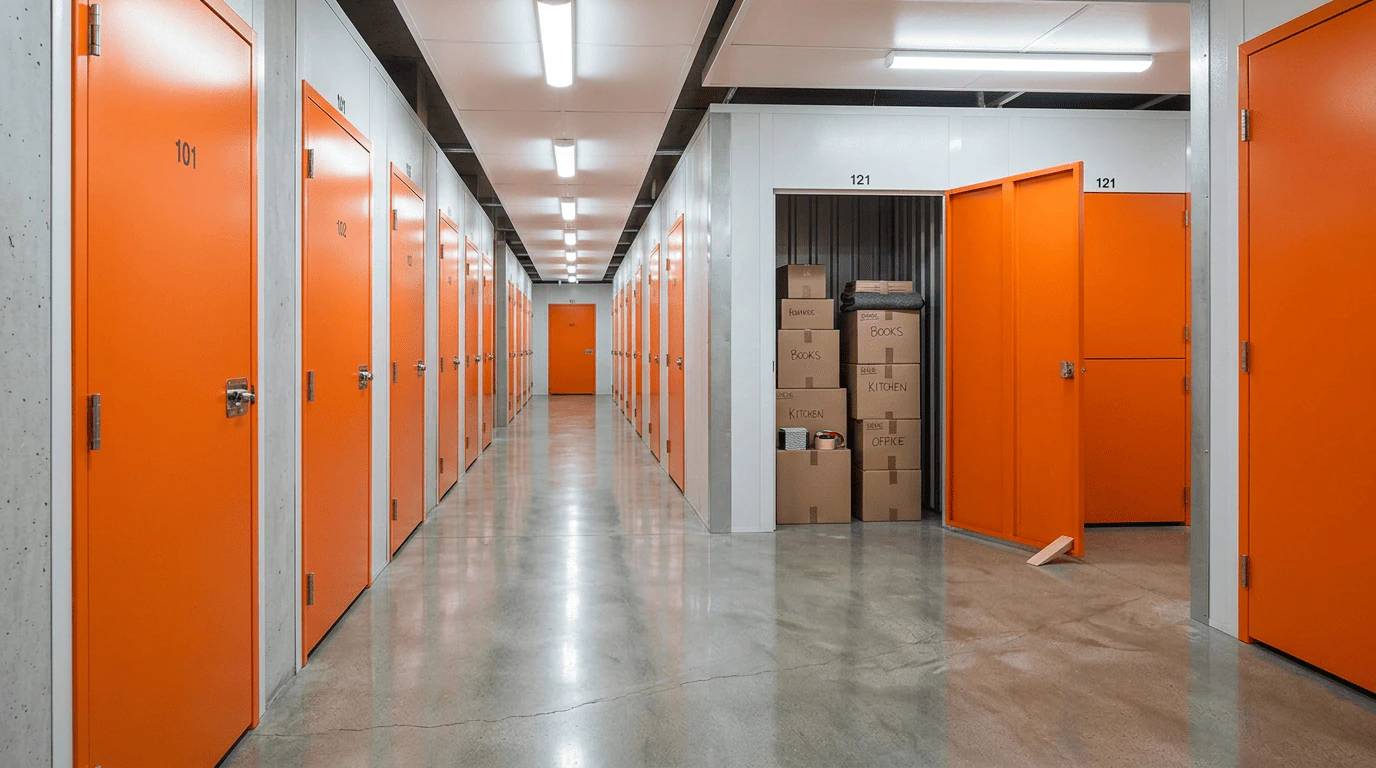
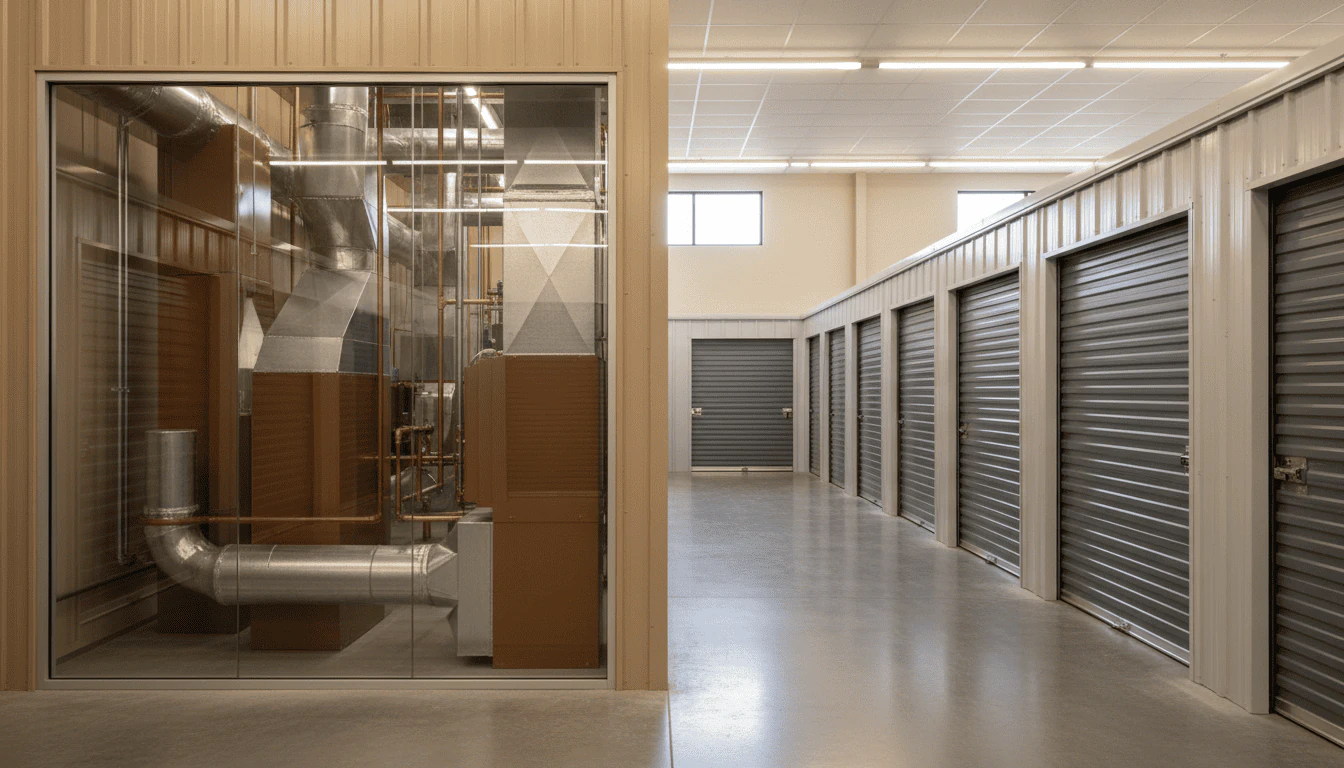
Closings slip and keys arrive late, and a truck that is already loaded cannot wait on a kerb indefinitely. If the gap is one night, your belongings stay loaded and secured for $200 and the crew delivers the following day.
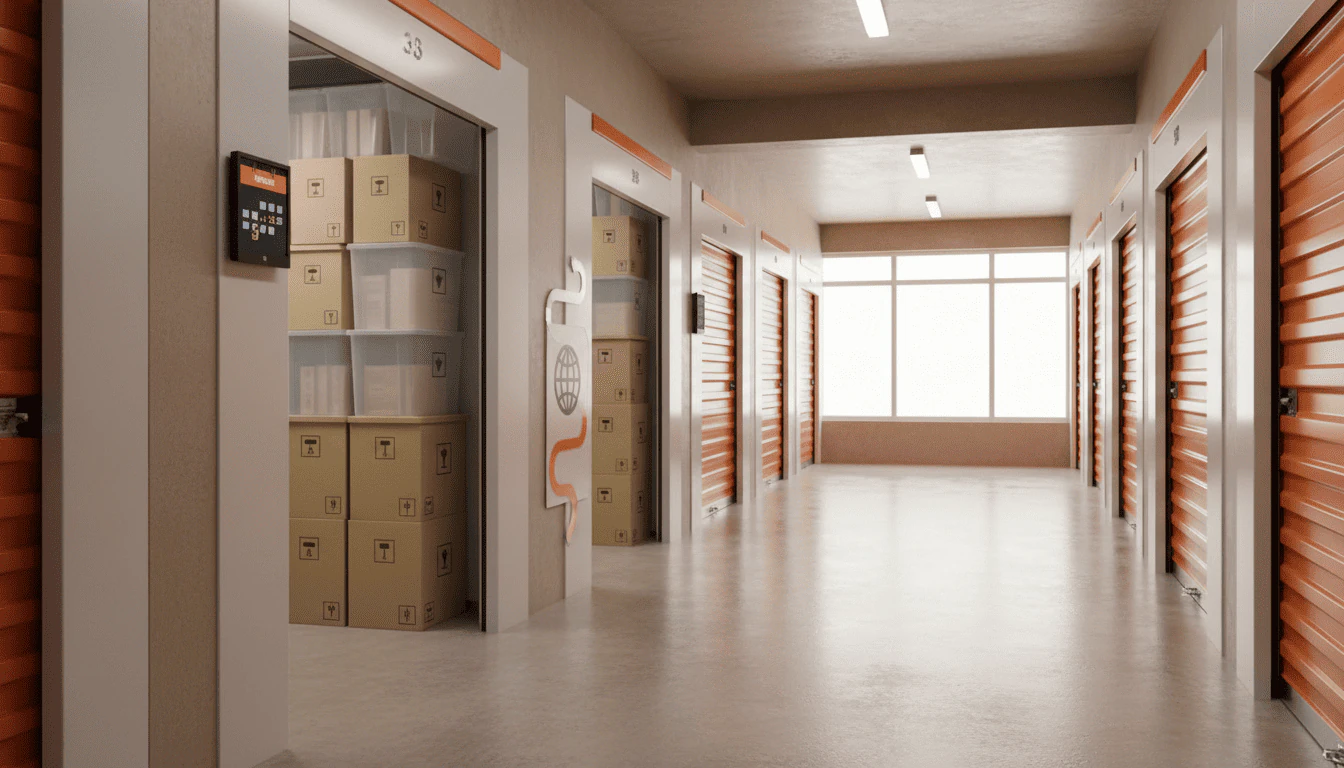
For a longer wait the load moves into storage in transit, quoted before the truck leaves Anaheim so nothing is improvised at the far end. The same household goods stay under the same paperwork, and our storage service handles the interval.
Tell the coordinator the moment a date starts to look uncertain. A change raised a week ahead is a scheduling question; the same change raised on loading morning is a crew standing in your driveway with nowhere to go.